An electric guitar is a four-piece system: the guitar, an amp, a cable, and a tuner. Skip any one and the whole thing fails. The good news: a complete starter rig (guitar, small amp, cable, tuner, picks, strap) is around $400 and will hold up for two solid years of playing.
By Colin B. · Published May 8, 2026 · Last reviewed July 13, 2026
A solid electric setup runs $350-$500: about $230 for the guitar, $80-150 for an amp, and $30-50 for a cable, tuner, picks, and strap.
We earn commission on qualifying Amazon purchases — see our
affiliate disclosure.
Price tiers and budget totals shown above are editorial estimates;
actual Amazon prices vary.
At a glance
Our top pick in each category
The fastest path through this guide — each best-starter pick by category.
Scroll for the budget and upgrade alternatives.
Don't buy a starter 'pack.' Most beginner Amazon listings bundle a guitar with an amp, cable, picks, and strap for $250 total. The math sounds great until you play it: bundles cut corners on every single component, the amp is a 5W toy, and the guitar's setup is so bad it actively discourages practice. Build your rig piece-by-piece. Each component costs more individually but each one actually works.
You don't need a tube amp, distortion pedals, or a wireless system. A simple solid-state practice amp with built-in clean and overdrive channels handles 100% of your first year. Pedals and tube amps are intermediate-and-up purchases. You'll know when you're ready, and you'll know what to buy then.
You don't need a Fender or Gibson to learn on. A $230 Squier Stratocaster (Fender's budget brand) plays nearly as well as a $1,500 Fender Player Strat for your first two years. Spend the money you save on a good amp and lessons. The instrument is rarely the limit on a beginner's progress.
The single most important piece. A good beginner electric has straight frets, a stable neck, and pickups that don't hum like a refrigerator. At the $200-$300 price point, two guitars dominate beginner recommendations: the Squier Affinity Stratocaster (Fender's budget brand) and the Yamaha Pacifica 112V. Both have a similar shape and similar pickup configuration; the choice between them is feel and finish. The Squier Mini is a 3/4-size short-scale option for kids or smaller-framed adults; the Epiphone Les Paul Studio is the upgrade for players who want a richer, heavier sound.
Best starter
Squier (Fender)
Squier Affinity Series Stratocaster
$319.99 as of Jun 22, 2026
★★★★★Our rating· In Stock
The most-recommended beginner electric, full stop. Three pickups with five-way switching, the iconic Strat shape that fits any genre, real Fender DNA at a Squier price. Around $230. The C-shape neck is friendly to small hands; the action arrives playable. Will not be the limit on your progress.
What we like
Fender DNA at a fraction of the price; the shape and pickups are the real thing
C-shape neck fits most hand sizes and arrives playable out of the box
Five-way switching covers blues, rock, funk, and country with one guitar
What to know
Factory setup is decent; a $40 guitar shop adjustment makes it significantly better
★★★★☆Our rating· Only 7 left in stock (more on the way).
The other consensus pick. HSS pickup configuration (one humbucker + two singles) gives you a slightly broader tonal range than the all-singles Strat, better for rock and metal and equal for blues and country. Same price band as the Affinity Strat. Yamaha's quality control is unusually consistent; you almost never get a dud out of the box.
What we like
HSS pickups add humbucker tones the Strat can't do, better for rock and metal
Yamaha's quality control is unusually consistent; you rarely get a bad one out of the box
What to know
Less common in US guitar shops; harder to play before buying than a Squier
Limited Edition Les Paul Studio Deluxe Electric Guitar Wine Red
$$$
★★★★☆Our rating
The Les Paul shape is fatter, louder, with more sustain than a Strat. Two humbuckers give you that thicker rock and blues sound. Around $250-300, slightly above the Squier. Best choice if your favorite music is classic rock, blues, or metal, or just the look.
What we like
Two humbuckers deliver the thick, warm sound classic rock and metal actually need
Looks like the guitars your favorite rock guitarists actually play
What to know
Heavier than a Strat: 9 to 10 lbs on a strap for an hour will wear on you
For kids, smaller-framed adults, or as a couch / travel guitar. 3/4 scale means a shorter reach between frets and easier chord shapes. Same Fender DNA as the full-size Affinity. Around $180.
What we like
Short scale makes barre chords and stretches more reachable for small hands
Same Fender pickups and controls as the full-size Affinity
What to know
Adults will outgrow the short scale in 6-12 months, not a forever guitar
An electric guitar without an amp is roughly silent. A big difference from acoustic. Your first amp doesn't need to be loud, but it needs two things: a clean channel (for the bright, jangly Strat sound) and an overdrive or 'drive' channel (for the dirty, crunchy rock sound). 10-15 watts is plenty for any apartment or bedroom. The cable is the part beginners cheap out on and regret: bad cables crackle, fail, and add hum to everything you play.
Best starter
Fender
Frontman 10G Practice Amp
$89.99 as of Jun 22, 2026
★★★★★Our rating· In Stock
The default starter amp. 10W, 6" speaker, two channels (clean + overdrive), aux in (so you can play along with songs from your phone), headphone out (for silent practice). Around $80. Plenty loud for an apartment; not loud enough to play with a drummer.
What we like
Aux-in and headphone out cover both practice modes: jamming along and silent playing
Two channels (clean + overdrive) handle every tone a beginner needs for year one
What to know
Drive channel sounds flat compared to a modeling amp or dedicated overdrive pedal
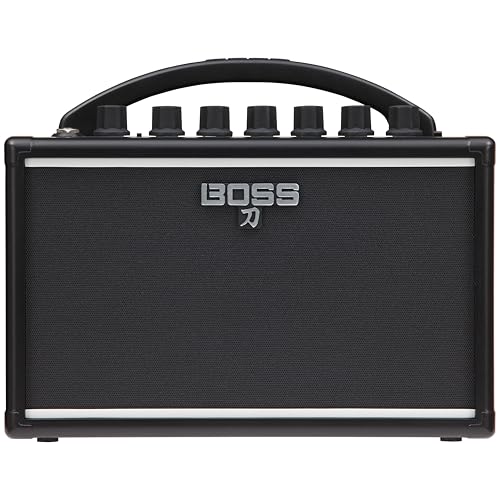
The 'travel and bedroom' amp. 7W, runs on AA batteries, has three voicings (clean, crunch, brown) plus delay and EQ knobs. Around $115. Sounds dramatically better than its size suggests. The right pick if portability matters or if you live in an apartment where loud isn't an option.
What we like
Battery-powered and portable; take it anywhere without needing an outlet
Three voicings (clean, crunch, brown) give you real tonal options in a tiny box
What to know
No headphone out; if silent practice matters, the Frontman 10G is the better pick
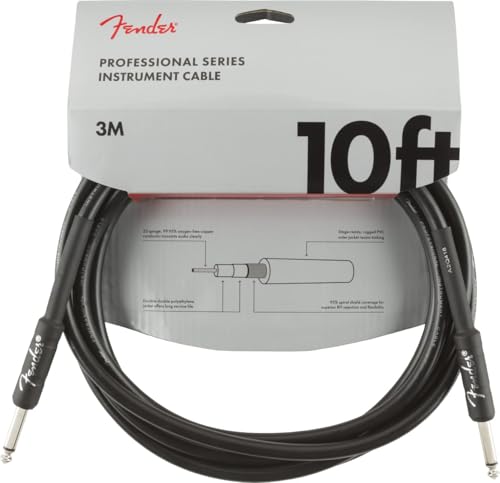
Cheap cables ($8 Amazon specials) fail within months: they crackle when you move, develop hum, or eventually go silent. A real cable lasts a decade. Around $25, has spiral shielding (kink-resistant), heavy-duty strain relief at the ends, and a lifetime warranty. Buy this once.
What we like
Spiral shielding resists hum and kinking; survives years of regular use
Lifetime warranty; this is genuinely the last guitar cable you'll ever need to buy
What to know
Overkill for pure bedroom practice; a cheap cable works fine if you never move it
Electric strings are thinner and easier on the fingers than acoustic strings; most beginners swap to a lighter gauge within a month and never go back. A clip-on chromatic tuner handles tuning in seconds and is the difference between practicing in tune and giving up. Picks for electric tend toward thicker than acoustic, but most beginners try a few thicknesses before settling on a favorite, so a variety pack is the right starter buy.
Best starter
Ernie Ball
Super Slinky 9-42 Electric Strings
$8.99 as of Jun 22, 2026
★★★★★Our rating· In Stock
The most popular beginner electric string set, full stop. 9-42 gauge ('super slinky') is light enough to bend easily, thick enough to sound full. Around $7 a set; a 3-pack is the right buy. Played by Jimmy Page, Angus Young, and roughly half of professional rock guitarists.
What we like
9-42 gauge is light enough for easy bends but sounds full, the default starter choice
Used by Jimmy Page, Angus Young, and most working rock guitarists worldwide
What to know
Uncoated strings corrode faster; sweaty hands mean changing them every 4-6 weeks
The default beginner tuner. Clips to the headstock, displays a clear note name and tuning needle. Around $15. You can also tune through your amp with a built-in tuner or pedal tuner, but the Snark is faster and works on every instrument you'll ever own.
What we like
Clips to the headstock and tunes in seconds; works on any stringed instrument you own
Bright display reads in sunlight; no power needed from the guitar
What to know
Battery drains when left clipped on; remove it after each practice session
Jim Dunlop Pick Variety Pack (Light/Medium 12-pack)
$8.39 as of Jun 22, 2026
★★★★☆Our rating· In Stock
12 picks across light and medium gauges (.46-.73mm), the right range for beginner electric. Try every one for a week, find your favorite, then buy that one in bulk. Around $7. Picks are a religious-war topic among guitarists; only your hand can tell you what feels right.
What we like
12 picks across light and medium gauges lets you find your preference cheaply
Jim Dunlop makes the picks used by most working guitarists; these are the real thing
What to know
Once you find your preferred gauge, you'll buy that one in bulk from here on
A guitar that lives on a stand in your living room gets picked up four times more than one that lives in a case in a closet. The stand is a high-leverage 'consistency' purchase. For learning structure, the same Hal Leonard Guitar Method we recommend for acoustic also covers electric: same chords, same rhythms, same scales. The method book replaces the first six months of paid lessons.
Best starter
Hercules
GS415B Guitar Stand
$$
★★★★★Our rating
The stand professionals use. The 'Auto Grip' yoke locks around the neck under the guitar's weight, so a curious cat can't tip it out. Foam contact points won't damage finishes. Around $40, lasts forever.
What we like
Auto-grip yoke locks the guitar in place under its own weight; cat-proof
Foam contact points are safe on all finishes, including nitrocellulose
What to know
Costs 2-3x more than a basic stand, but you only need to see your guitar fall once
The standard beginner method, used in lessons across the country since the 1980s. Covers acoustic and electric identically: same chords, scales, and rhythm exercises. Around $25. Replaces the first six months of paid lessons.
What we like
Covers acoustic and electric guitar identically; one book, two instruments
Decades-tested curriculum; the go-to method in guitar lessons across the country
What to know
Notation-heavy; pair with free JustinGuitar videos if reading music feels overwhelming
What actually happens in your first 30 days with an electric — riffs come faster than chords, your fingertips still hurt, and the overdrive channel is louder than you think. A practical map of how progress unfolds.
The electric guitar has one big advantage over the acoustic for first-month motivation: riffs sound great immediately. Almost any iconic rock riff — Smoke on the Water, Seven Nation Army, Iron Man, Sunshine of Your Love — is single-note and fits inside the first three frets. You can play a recognizable rock riff in your first 30 minutes of owning the instrument.
That’s the hook. The learning curve underneath it looks a lot like the acoustic curve — sore fingertips, chords that fight you, a wall around chord transitions. But every week of practice produces something cool you can show someone, which is the thing that keeps beginners coming back.
Here’s the realistic week-by-week, assuming 15-20 minutes of daily practice.
Week 1: Plug in, riff, sore fingers
Day one is unboxing, plugging the guitar into the amp with the cable, and getting a sound. Volume on amp at 1, volume on guitar at 10, channel set to ‘Clean.’ Strum a single open string. If you hear a bright, ringing note, you’re set up. (If you don’t, check the cable — it’s almost always the cable.)
Then learn one riff. Smoke on the Water is the canonical first riff: three notes on the third string, easy to read in tab, instantly recognizable. Spend 15 minutes a day this week getting the riff under your fingers, and by Friday you can play it for someone.
Switch the amp to the drive channel and play the same riff. That’s the rock guitar sound. The same notes feel completely different through overdrive — punchier, fatter, more aggressive. This is one of the genuine ‘oh, that’s what this instrument is’ moments.
Also start the chord work. Three open chords: G, C, and D. Same chords as on an acoustic; same shapes; same outcome. Your fingertips will hurt for the first week or two as the skin hardens into calluses. That’s universal — don’t tape your fingers, don’t skip practice, don’t ‘push through’ for an hour. Fifteen minutes a day, every day.
Week 2: Chord transitions
Week two is when you discover that holding a chord and moving between chords are different skills. G is fine. C is fine. Going from G to C takes you four seconds, by which time the song has moved on.
Welcome to the wall. Every guitarist hits it. The fix is the boring practice you don’t want to do: drill the transition itself, in isolation, ignoring rhythm. Set a metronome to 60 BPM. On each click, switch chords: G, C, G, C, G, C. Don’t strum — just place fingers, lift, place again. Ten minutes a day this week.
By the end of week two:
G-to-C is under one second.
G-to-D is similar.
C-to-D is the slow one. Universal — don’t worry about it.
Your fingertips hurt less.
You can play the Smoke on the Water riff cleanly through the overdrive channel without thinking about it.
That second bullet is the electric advantage — riff progress and chord progress happen in parallel, so even on the days when the chords feel hopeless, the riff is still cool.
Week 3: Power chords
Around week three, your method book or YouTube curriculum introduces power chords. These are the rock chord — two-note shapes that you slide up and down the neck.
A power chord is the magic of the electric guitar. Two fingers, two notes, played through overdrive: that’s the entire vocabulary of punk, half of rock, and most of metal. Once you have one shape, you have every power chord — just slide it to a different fret. The shape on the 5th fret of the low E string is an A; on the 7th fret it’s a B; on the 3rd fret it’s a G. One shape, every key, infinite songs.
Spend a few sessions just learning to slide between power chords cleanly. Then play a real song with them. Seven Nation Army is famously playable with one power chord shape. Smells Like Teen Spirit, Sunshine of Your Love, Iron Man — all power chord territory.
This is the moment most electric beginners ‘feel like a guitarist.’ Your hand learns the universal rock-chord shape and the songs unlock fast.
Week 4: Strumming and a fourth chord
Week four is when what your right hand does becomes the main event. The simple ‘down-down-down-down’ strum you’ve been using gets boring fast. Real songs use varied patterns — the universal beginner pattern is ‘down, down-up, up, down-up,’ which appears in roughly half of pop songs.
Practice the pattern on a single chord (let’s say E minor, an easy one) until your right hand does it without thinking. Then add the chord changes. Expect to fall out of the rhythm constantly the first few sessions; this is normal, and it stops being a problem around week 5-6.
Add one more chord this week: Em (E minor). Easiest chord on the guitar — two fingers, no muted strings, sounds great clean or distorted. With G, C, D, and Em you have the four chords of roughly every pop song ever written. Try a four-chord song this week: ‘Stand By Me,’ ‘Let It Be,’ ‘Save Tonight.‘
What month two looks like
By day 30:
You can play 4 open chords cleanly: G, C, D, Em.
You can transition between them in roughly the time of a beat.
You know one strumming pattern that mostly works.
You can play 2-3 power chord shapes anywhere on the neck.
You can play 3-4 recognizable riffs through overdrive.
Your fingertips don’t hurt anymore.
That’s the foundation. The next month adds A, E, F (the painful one — your first barre chord), and the start of pentatonic scale work. The music you can play roughly triples.
What to not do in your first month
Don’t buy effects pedals. Your amp’s overdrive covers everything you need this month.
Don’t restring yet. Factory strings are fine for the first 4-6 weeks. Restringing too early is solving a problem you don’t have.
Don’t crank the volume. Practice at amp-volume 1-2. Loud doesn’t make you better; it just risks your hearing.
Don’t try to play full speed badly. Slow and clean beats fast and sloppy, every time, especially on electric where every wrong note is amplified through the speaker.
Don’t skip JustinGuitar Beginner 1. It’s free, in order, and tested on millions of beginners. The ‘this is too easy’ lessons are the ones fixing the bad habits you don’t know you have.
The first month is endurance. If you finish it, you’ve cleared the chord wall and you have a small repertoire of cool-sounding riffs that aren’t available to acoustic players. Everything past month one is just hours.
Save your money
What you don't need yet
Beginners get pressured to buy a lot of stuff that doesn't help them play
better. Here's what we'd skip on day one.
Effects pedals — Your amp's overdrive channel covers 95% of beginner tones. Pedals are an intermediate-and-up rabbit hole; don't enter year one.
A tube amp — Tube amps sound great but cost $400+ and are overkill for bedroom volume. A solid-state practice amp is the right tool for years one and two.
A second guitar — Tempting after three months. Resist for six. Hours practicing matter more than instruments owned.
Wireless system — Useful when you play live on a stage. Useless in a bedroom. The Fender 10ft cable is the right answer for at least two years.
An amp simulator (Helix, Quad Cortex) — Modeling units replace tube amps for studio-grade tones. They cost $700+. Wrong tool for someone learning their first chords.
Online lesson subscriptions in your first month — JustinGuitar is free and considered the gold standard. Spend zero on instruction until you've worked through Beginner Grade 1.
First week
Your first seven days
A short, real plan to get from gear-on-doorstep to actually playing.
Order the guitar, amp, cable, and tuner. The guitar is useless without all four. Don't order anything else yet. · Buy
When the guitar arrives, plug it into the amp using the cable. Turn the amp's volume to 1, the guitar's volume to 10, channel to 'Clean.' If you hear a bright, jangly sound when you strum, you're set up correctly. · Action
Try the overdrive channel. Switch the amp to drive, lower the volume to 1-2 (drive is much louder). Strum a single open E chord; that's the rock guitar sound. Get the sound in your hands; you've now physically heard the difference between the two channels. · Action
Try every pick in the variety pack across one practice session. Set aside the two or three that feel right; ignore the rest. · Action
Practice 15 minutes a day for the next 30 days. Consistency beats intensity. The skill is not in any single session; it's in the cumulative reps. · Action
FAQ
Common questions
How much should I spend on my first electric setup?
Around $350-$450 total: $230 for the guitar, $80-115 for an amp, $25 for a real cable, $15 for a tuner, $30 for picks/strap/stand miscellany. Below this, you're either skipping the amp (the electric is silent without it) or buying a starter pack with components that don't work. Above this, you're paying for upgrades that won't make you a better player.
Should my first guitar be a Strat or a Les Paul?
Whichever genre you want to play. Strat (Squier Affinity, Yamaha Pacifica): brighter, lighter, better for funk/blues/country/indie. Les Paul (Epiphone Studio): thicker, heavier, better for classic rock, hard rock, and metal. Both work for any genre (your favorite players have used both), but the body shape and pickup voice are different starting points. Pick the one that looks like the music you love.
Can I learn electric guitar without an amp using headphones?
Yes: the Fender Frontman 10G has a headphone out, which silences the speaker and routes the sound to your ears. Useful for late-night practice in apartments. Some beginners go an extra step and use a pocket amp like the VOX amPlug, which plugs directly into the guitar. Either works; just don't try to learn with no amp at all; the unplugged sound is too quiet to hear what you're playing.
Should I learn on electric or acoustic first?
Whichever genre you actually want to play. The 'acoustic first because it's harder' advice is partially true and totally irrelevant: you'll quit if you don't enjoy what you're playing. Pick the instrument you want to hear. The skills transfer between them later.
How long until I can play a real song?
About two weeks for a 3-chord song played slowly, three months for it to sound listenable. The chord transitions are the hard part; your fingers physically learning to move between G, C, and D is what your first month is about. Riff-based rock songs (Smoke on the Water, Seven Nation Army, Iron Man) are accessible faster, week 2-3, because they're single-note melodies.
Do I need to learn music theory?
Not in your first six months. Learn chords, scales, and songs first; theory makes much more sense once you have the patterns under your fingers. Around month 6, learning the basics of keys and chord families dramatically accelerates your progress, but trying to learn theory before you can play sounds and feels disconnected. Don't bother yet.
How often do I need to change strings?
Every 4-8 weeks for daily players, longer for casual. Signs strings are dead: they look dull or grimy, sound muffled, and stop holding tuning. New strings are the cheapest tone upgrade in music: $7 makes a $230 guitar sound like a $400 guitar.
JustinGuitar (Justin Sandercoe) — The most respected free beginner curriculum on the internet. Start with 'Beginner Grade 1.' Everything else eventually points back here.
Marty Music (YouTube) — Best-in-class song tutorials. When you want to learn a specific song, search 'Marty Music [song name]' first.
Paul Davids (YouTube) — Technique, gear, and theory deep-dives. Higher-level than JustinGuitar; great for after your first year.
Rick Beato (YouTube) — Music theory and gear analysis. Not a beginner channel, but the best way to learn how songs work after you can play.
Reddit: r/Guitar — Active community. Excellent NGD ('new guitar day') gear discussions and beginner support.
Reddit: r/guitarlessons — Beginner-focused. Great 'post a video, get feedback' culture. Search before posting.
Sweetwater Forums — Best gear forum if you want detailed reviews and shootouts before upgrading. Less beginner-friendly than Reddit, more depth.
As an Amazon Associate, JustBeginning earns from qualifying purchases.
We may also earn commission from other affiliate programs linked on this
page. Editorial recommendations are independent; we don't choose
products based on commission rates.
Product prices and availability are accurate as of the date and time
indicated and are subject to change. Any price and availability
information shown on Amazon at the time of purchase will apply.


 Best starter