Day hiking is the most accessible outdoor pursuit there is — no overnight gear, no permit lottery, no technical skills required on most trails. The barrier is almost entirely in buying the right first kit and knowing where to go. Both are easy to solve. Here's what you actually need.
By Colin B. · Published May 8, 2026 · Last reviewed June 4, 2026
Osprey Daylite Plus 20L Daypack
— A 20-liter pack that carries everything you need for a day hike without the bulk of a full hiking pack.
Marmot Precip Eco Jacket
— Real waterproofing at an honest price — the rain jacket that earns its place in your pack every trip.
Budget total
$220
Typical total
$430
The low end gets you real trail shoes, a pack, a Nalgene, and a rain shell — everything to start. The spread is in footwear and rain protection: trail runners run $130-150, a good waterproof jacket $130-160.
We earn commission on qualifying Amazon purchases — see our
affiliate disclosure.
Price tiers and budget totals shown above are editorial estimates;
actual Amazon prices vary.
At a glance
Our top pick in each category
The fastest path through this guide — each best-starter pick by category.
Scroll for the budget and upgrade alternatives.
The outdoor industry's job is to convince you that hiking requires an enormous amount of gear. It doesn't. For day hiking — out and back in the same day, no overnight camping — you need good shoes, a pack that fits, water, and weather protection. Everything else is optional until you know you love it and have identified a specific need.
Cotton kills is the outdoor adage, and it's accurate: cotton absorbs moisture and holds it against your skin, which causes chilling when you stop moving or get wet. For your first hike, wear synthetic or wool athletic clothes — running gear works fine. Don't buy 'hiking clothes' before you understand what you're doing with them.
Start smaller than your ambition. The most common beginner mistake is picking a trail that matches what they want to eventually do rather than what they can actually do today. A flat five-mile loop on a well-marked trail is a better first hike than an eight-mile ridge with 2,000 feet of elevation gain. Build up systematically — your fitness, your navigation confidence, and your sense of how your body responds to hiking all improve together.
Trail runners have largely won the day-hiking footwear debate for most people. They're lighter, break in faster, dry quicker when wet, and work on everything except loose scree and technical scrambling. Hiking boots are the right call if you have ankle issues, carry heavy loads, or do sustained steep terrain where the higher ankle cuff earns its weight. Most beginners should start with trail runners and only move to boots if they discover a specific reason.
Footwear — what's the difference?
A few common shapes, each making a different trade.
Trail runners
Lighter, faster break-in, more breathable. Works on most day-hike terrain.
Weight
~12-16oz/shoe (vs. 20-28oz for boots)
Break-in
Minimal — often wearable out of the box
Ankle support
Low cut
Best terrain
Maintained trails, forest paths, moderate terrain
Best for Most day hikers — especially anyone coming from road running or wanting a shoe they can wear casually off-trail
Tradeoff Less ankle protection; less durable on sharp rocks; lighter outsoles wear faster on abrasive terrain
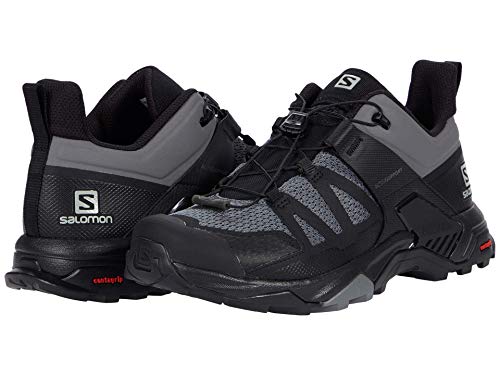
The X Ultra 4 GTX is what most outdoor retailers put beginners in, and they're right to do it. Gore-Tex waterproofing, Salomon's Contagrip outsole (genuinely grippy on wet rock and roots), and a chassis that guides your foot without making it feel locked down. They break in almost immediately. Around $130-150.
What we like
Light enough to feel sneaker-like but properly supportive
Gore-Tex keeps water out for mid-distance hikes
Quick-lace system gets you on trail faster
What to know
Gore-Tex traps heat — hot in summer conditions
Aggressive lugs collect mud and don't release easily
The Moab 3 is the best-selling hiking boot in the US for a reason — it's comfortable out of the box (by boot standards), runs slightly wider than Salomon, and the mid-cut collar provides real ankle support without being restrictive. Vibram outsole. If you're choosing boots over trail runners, start here. Around $130.
Hiking socks matter more than most people expect. Darn Tough's merino wool construction wicks moisture, resists odor, and cushions in the right places. The heel and toe are reinforced where socks actually wear through. Around $25/pair — expensive, but they back every pair with a lifetime guarantee: wear them through, send them back, get a new pair.
What we like
Lifetime warranty — Darn Tough replaces worn-out pairs
Merino wool wicks sweat and stays warm even when wet
A daypack for hiking is different from a school backpack — it sits differently on your body, loads weight through a hipbelt, and has attachment points for trekking poles and water bottles. For day hiking, 15-25 liters is the right range: enough for water, layers, food, first aid, and a few comfort items without making you feel like you're carrying a house. Anything bigger makes you fill it.
Best starter
Osprey
Daylite Plus 20L Daypack
$$
★★★★★Our rating
The Daylite Plus is what Osprey built when they asked what a no-compromises day hiking pack looks like at 20 liters. AirSpeed back panel keeps the pack off your back so heat can escape, a top lid pocket and front pocket handle organization, side mesh pockets fit a 1L Nalgene without squeezing. Osprey's all-mighty guarantee covers it for life. Around $60.
What we like
Osprey's All Mighty Guarantee covers repairs forever
Light enough at 1.5 lbs to forget you're wearing it
Gregory's entry into the 20L daypack category — solid construction, good organization, fits a 2L reservoir for hikers who prefer a hydration bladder over water bottles. Under $65. If you want to carry a CamelBak-style bladder instead of Nalgenes, the Nano 20's reservoir sleeve makes that easier than the Osprey.
What we like
Under $80 from a respected pack brand
Mesh back panel keeps your shirt drier
Two side pockets fit standard water bottles
What to know
No real hipbelt — heavy loads strain your shoulders
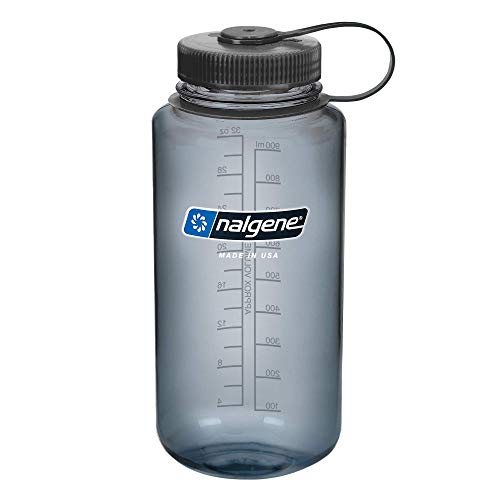
On a day hike, you carry all the water you'll need — there's no reliable source mid-trail unless you have a filter, and day hiking doesn't require one. The standard is roughly 0.5 liters per hour of hiking in mild conditions; hotter weather and harder terrain push that up. For a 4-hour day hike, two 32oz Nalgenes covers you comfortably. Some people prefer a hydration reservoir (like a CamelBak) for hands-free drinking; both approaches work fine.
Best starter
Nalgene
Tritan Wide Mouth Water Bottle 32oz
$16.99 as of Jun 22, 2026
★★★★★Our rating· In Stock
The Nalgene is indestructible, marks in ounces and milliliters, and fits in every daypack side pocket ever made. BPA-free Tritan plastic, dishwasher safe, and the wide mouth accepts ice cubes. Costs $12 and lasts indefinitely. Bring two for hikes over three hours.
What we like
Indestructible — survives drops on rocks
Wide mouth makes filling from streams easy
BPA-free with clear measurement markings
What to know
Heavy compared to thin-walled bottles
Lid is dishwasher-proof but doesn't seal as tight long-term
If you want hands-free hydration, the CamelBak Crux reservoir sits in your pack and runs a bite-valve hose over your shoulder so you can drink without stopping or reaching. The 2L size is right for most day hikes. The Crux's Quick Link system makes cleaning and drying the bladder easier than older CamelBak reservoirs.
Mountain weather changes fast. A jacket you can stuff into your pack and forget about until you need it is one of the most important pieces of your kit — the difference between a memorable afternoon and a miserable slog. There are two tiers here: a packable rain shell (the Frogg Toggs lives at the bottom of your pack, weighs almost nothing, costs $25, and works as emergency rain cover) and a real waterproof-breathable jacket (Marmot Precip, Gore-Tex, $130-160) that's comfortable enough to hike in.
Budget pick
Frogg Toggs
All-Sport Rain Suit
$
★★★★☆Our rating
Not a jacket you hike in — a jacket you jam in the bottom of your pack and forget about until the sky opens. The All-Sport weighs almost nothing, packs to fist-size, costs $25, and keeps you from getting soaked when a thunderstorm appears from nowhere. For beginner day hikers who want real rain coverage without the jacket price, this is a legitimate starting point.
The Precip Eco sits at the best intersection of waterproof performance and price for day hikers. NanoPro membrane (Marmot's proprietary waterproof-breathable fabric) keeps rain out while letting sweat vapor escape — you can actually hike in it without cooking. Packs into its own chest pocket. Around $130-150. This is the jacket you'll still be wearing in five years.
What we like
Real waterproof-breathable shell that lasts seasons
Three items that experienced hikers always carry: a headlamp (so a long day doesn't become an emergency), a compact first aid kit (blisters are inevitable; minor cuts happen), and optionally trekking poles (most day hikers don't need them, but if you have knee issues or are doing steep descents, they make a real difference). You can skip the poles for your first season and add them when you identify a specific reason to.
Best starter
Black Diamond
Spot 400 Headlamp
$$
★★★★★Our rating
400 lumens, IPX8 waterproof, and a proximity mode that automatically dims when you look down so you don't blind your hiking partners. Triple AAA batteries (easy to replace anywhere). The Spot 400 is what most serious day hikers carry — reliable, bright enough to navigate by, small enough to forget it's in your pack until you need it. Around $50.
The most common trail injuries are blisters, minor cuts, and twisted ankles. The AMK Ultralight .5 handles all three: moleskin, bandages, antiseptic wipes, elastic bandage, medical tape. Weighs 2.6oz, fits in any pack lid. Around $20. Purpose-built and light enough that there's no reason not to carry it every time.
What we like
Comprehensive enough for day hikes — bandages to pain meds
Waterproof bag keeps contents dry
Light enough (4 oz) you'll actually bring it
What to know
Restock items after the first use
Doesn't include allergy or anti-diarrheal meds — add your own
Lightweight Aircraft-Grade Aluminum Trekking Poles with Extended Down Grip Plus Tip Kit
$
★★★★☆Our rating
Trekking poles reduce knee impact on descents by 20-30% — measurably, not anecdotally. The Cascade Mountain Tech poles are the best value in the category: quick-lock aluminum construction, cork grips, adjustable 24-54 inches, around $35/pair. If you have knee issues, are doing any significant elevation loss, or are hiking longer distances, poles are the best investment you can make after footwear.
What we like
Carbon construction at a third of premium brands' price
Cork grips warm in cold weather and wick sweat
Quick-lock makes adjusting on trail painless
What to know
Tips wear out and aren't user-replaceable
Locks loosen on rough terrain — check periodically
Day hiking doesn't require a class, a club, or a long gear checklist. You need the right shoes, a pack, water, and a trail you can finish. The skills that matter — reading conditions, managing your pace, making smart decisions mid-hike — come from doing it. Here's what your first outings actually look like.
The single biggest mistake new hikers make is choosing a first trail based on where they want to be eventually rather than where they are now. You see a photo of a spectacular ridge view and pick that trail. It’s 10 miles with 3,000 feet of elevation gain. You’re not ready for it, you have a terrible time, and you’re not sure you want to do this again.
The fix is simple: start small. Not embarrassingly small — just smaller than your ambition.
Choosing your first trail
Before you pick a trail, you need two honest numbers: how far you walk regularly (on flat ground, at any pace), and your current fitness level. A person who walks three miles a day can probably handle a five-mile moderate hike. A person who hasn’t exercised in six months should start at two or three miles with minimal elevation.
The AllTrails formula works: filter by difficulty, length, and elevation gain. Start with trails rated Easy or low-Moderate. Keep the elevation gain under 500 feet per mile — steeper than that is hard even for fit people who haven’t done it before.
Read the reviews before you go. Recent reviews tell you things the official trail description doesn’t: whether the parking lot is full by 8am, whether there’s a tricky creek crossing, whether the trail is muddy after rain. The collective knowledge in recent AllTrails reviews is often better than any guidebook.
Water: 2 liters minimum. About 0.5 liters per hour in moderate conditions; more if it’s hot. Run out of water on trail and you’ll know why this number matters.
Snacks: more than you think you need. Hiking burns more calories than walking and the effort is usually sustained. Pack something substantial — trail mix, bars, a sandwich — not just a handful of almonds.
Rain jacket: stuff it in the bottom of your pack. Mountain weather changes fast, particularly in the afternoon. This is the thing most beginners skip that causes the most misery.
Headlamp: even for morning hikes. Twisted ankle, wrong turn, longer than expected — it happens. A headlamp weighs nothing and changes a scary situation into a manageable one.
First aid kit: the AMK Ultralight kit handles the three things that actually happen: blisters, minor cuts, and twisted ankles.
Phone with offline maps: open AllTrails, download the trail offline before you leave cell service. You will lose cell service.
Leave the camera drone at home. Leave the camp stove. Leave anything that doesn’t have an obvious job for a 4-hour outing.
Pace: the most underrated skill
New hikers almost always start too fast. You’re fresh, you’re excited, the first mile is flat — you walk it at something close to your normal walking pace. By mile three, your legs are heavy and you’re out of steam.
The right hiking pace is slower than it feels like it should be. If you’re breathing so hard you can’t hold a conversation, you’re moving too fast. A test that works: say a full sentence out loud. If you’re breathing too hard to finish it, slow down.
The rough benchmark for planning purposes: 2 miles per hour on flat ground, plus 30 minutes for every 1,000 feet of elevation gain. A 5-mile trail with 1,500 feet of elevation gain is about 3.25 hours of moving time — plus however long you spend at the summit or viewpoint.
Set a turnaround time before you leave. If you haven’t reached the goal by that time, you turn around. The trail will still be there.
Blisters are not a hiking of passage — they’re a signal that something’s wrong with how your shoe fits or how your sock is holding up. You can prevent most of them by catching the warning sign early.
A hot spot is what you feel before a blister forms: a patch of skin that’s warmer, more sensitive, and starting to rub. Stop when you feel one. Take off your shoe and sock, find the hot spot, and apply moleskin. The trick that actually works: cut a hole in the center of the moleskin piece slightly larger than the hot spot, and place the frame around it rather than directly on top. This keeps pressure off the affected skin.
If a blister has already formed, leave it intact if you can. A blister is sterile protection. Only drain it if walking on it is completely untenable — and if you do, do it cleanly with a sterilized needle and keep the skin layer on top.
The long-term fix is sock quality. Cotton socks wet from sweat bunch up and cause friction in specific spots. Merino wool or synthetic hiking socks (Darn Tough, Darn Tough, Darn Tough) wick moisture and resist the bunching that causes hot spots.
Navigation: what you actually need
For day hiking on maintained, marked trails, AllTrails and basic trail-reading are all you need. Most trails are well-signed; most day hikers never need a compass or a topo map.
What you do need to know:
Download the trail offline before you leave cell service. This takes 30 seconds in AllTrails and means you have a working GPS map even when your phone has no signal. Don’t assume you’ll have service. You usually won’t.
Know the trailhead coordinates. Save the parking lot location before you leave so you can navigate back to it if you need to use Apple Maps or Google Maps (which work offline).
Stay on the trail. Shortcutting switchbacks causes erosion and is how people get lost. The trail is a solved problem. Stay on it.
Note the time you started and the turnaround rule. If you’re aiming for a 4-hour hike and you start at 9am, your turnaround time is 11am whether you’ve reached the viewpoint or not. Emergencies happen in the last miles when people push past their turnaround point.
After your first few hikes
By your third or fourth outing, something shifts. The pack doesn’t feel heavy. You stop checking your phone for the mileage every ten minutes. You notice things — the way the light comes through trees, the sound the trail changes when the ground switches from dirt to rock. The hiking becomes the point, not the destination.
That’s when the library of trails you want to do starts growing faster than you can hike them. The goal posts move: once a five-mile trail feels easy, a ten-mile trail is interesting. Once you’ve done 1,500 feet of elevation, 3,000 sounds achievable. The fitness and the ambition compound together.
Your first hike teaches you more about what you need than any gear guide can. By your fifth, you know exactly what your kit is missing and why — and everything you’re carrying that you’ve never touched.
Save your money
What you don't need yet
Beginners get pressured to buy a lot of stuff that doesn't help them play
better. Here's what we'd skip on day one.
A dedicated GPS device — AllTrails on your phone with downloaded offline maps handles 95% of day hiking navigation. A Garmin inReach or similar becomes relevant for remote off-trail travel or international trips — not your first season.
Hiking-specific pants or shirts — Your regular athletic wear works fine to start. Running shorts, synthetic t-shirts, and athletic leggings all meet the 'no cotton' requirement. Buy hiking clothes when you identify something your current athletic wear doesn't do.
A water filter — For day hiking, you carry all the water you'll need. A Sawyer Squeeze or similar filter becomes relevant for overnight backpacking or long remote trails where a water source is planned. Not needed yet.
Gaiters — Gaiters cover the ankle-to-knee gap to keep debris out of boots and trail runners. Useful in snow, deep mud, or sandy desert trails. For most maintained day hike terrain, you won't need them.
A satellite communicator — A Garmin inReach sends SOS messages from anywhere on earth when cell service fails. Essential for solo remote backcountry travel. For day hiking on populated, marked trails, your phone and a trail buddy is sufficient.
Hiking poles with carbon fiber shafts — Carbon shafts shave weight and dampen vibration better than aluminum. The difference matters on 20-mile days. For day hiking, the Cascade Mountain Tech aluminum poles work fine at a fraction of the price.
First week
Your first seven days
A short, real plan to get from gear-on-doorstep to actually playing.
Download AllTrails and pick your first trail based on your current fitness level, not your ambition. Use the filter to find trails rated 'easy' or 'moderate' with under 1,000 feet of elevation gain. Read the recent reviews — they'll tell you about current trail conditions, how crowded it gets, and whether the parking area is annoying. · Learn
AllTrails · The standard for trail finding. Download offline maps before you leave cell service.
Pack the night before. Lay out: trail shoes, pack, two Nalgenes (filled), snacks (more than you think you need), rain jacket, headlamp, first aid kit, phone with AllTrails open and the trail downloaded offline. If it's cold, add a midlayer. If it's sunny, add sunscreen and sunglasses. Start early — parking lots fill up, and afternoon thunderstorms are a real hazard at elevation. · Action
On the trail: start slower than you think you need to. The most common beginner mistake is going too fast at the start and running out of energy two-thirds of the way in. Set a turnaround time before you leave — if you haven't reached the summit or the lake by that time, you turn around. The trail will still be there. · Action
Hot spots on your feet become blisters if you ignore them. Stop, remove your shoe and sock, apply moleskin (cut a hole in the center over the hot spot, not directly on top of it), and put your shoe back on. Five minutes now saves a miserable last two miles. · Action
After your first hike: note what you ran out of (water, snacks, layers) and what you carried that you didn't touch. Adjust your pack for next time. Your kit calibrates itself over three or four hikes — you learn what you actually need vs. what you thought you'd need. · Action
FAQ
Common questions
Trail runners or hiking boots — which should I start with?
Trail runners for most people. They're lighter, break in faster, and work on everything except technical rocky scrambling or heavy pack-carrying. Boots are the right call if you have a history of ankle sprains or are planning hikes with sustained steep terrain. If you're unsure, start with trail runners — you can always add boots later.
How much water should I bring?
About 0.5 liters per hour of hiking in moderate conditions — a little more in heat, a little less on an easy, cool day. For a 4-hour hike, two 32oz Nalgenes (about 2 liters) is the right baseline. Err on the side of carrying more. Running out of water on trail is dangerous and much more common than carrying too much.
What should I pack in my daypack?
Water (2+ liters for a half-day hike), snacks (more than you think), rain jacket, headlamp, first aid kit, phone with offline maps downloaded, sunscreen, and a layer you can add when you stop moving. That's it for most day hikes. Don't overthink the gear list until you've done it a few times and identified something specific you were missing.
Do I need trekking poles?
Not for your first hikes, unless you have knee issues. Poles reduce knee impact on descents by around 20-30%, which becomes meaningful on long days or consistent steep terrain. Try a few hikes first and see if your knees are talking to you. If they are, poles are worth every cent.
How do I find good trails near me?
AllTrails is the standard — search by location, filter by difficulty and length, read recent reviews for current conditions. For national and state parks, the park website usually has a trail map and difficulty ratings. Local hiking clubs and subreddits (search 'r/hiking [your city]') are good for local beta that AllTrails doesn't capture.
What's the right pace for hiking?
A rough benchmark is 2 miles per hour on flat terrain plus 30 minutes per 1,000 feet of elevation gain. But the honest answer is: the right pace is the one where you're breathing hard enough to work but still able to hold a conversation. If you can't talk, slow down. Most beginners start too fast.
AllTrails — The standard trail database — 400,000+ trails worldwide, difficulty ratings, recent reviews with current conditions, offline maps. Download it before your first hike.
REI Expert Advice — REI's editorial team publishes thorough, well-sourced beginner guides. Start with the hiking basics section; the gear guides are good but read them skeptically — they sell what they recommend.
r/hiking — Active community with a good wiki covering gear, fitness, navigation, and trail etiquette. The weekly 'What did you hike this week?' threads give you a realistic sense of what people at every level are doing.
Andrew Skurka — One of the most experienced long-distance hikers in North America. His writing on gear, navigation, and fitness is the most technically rigorous free resource available. More relevant as you advance, but his beginner posts are worth reading early.
National Park Service — Find a Park — If there's a national park or national forest near you, this is the official trail and permit resource. Many parks require day-use reservations for popular trailheads in peak season — check before you go.
As an Amazon Associate, JustBeginning earns from qualifying purchases.
We may also earn commission from other affiliate programs linked on this
page. Editorial recommendations are independent; we don't choose
products based on commission rates.
Product prices and availability are accurate as of the date and time
indicated and are subject to change. Any price and availability
information shown on Amazon at the time of purchase will apply.


 Best starter