Welcome to the fastest-growing sport in America. The good news: pickleball is one of the cheapest sports to start, and you can be playing real games within a week. Here's exactly what you need, and just as importantly, what you don't.
By Colin B. · Published May 8, 2026 · Last reviewed September 10, 2026
Pickleball is still one of the cheapest sports to start. Budget picks get you on court for about $130; our recommended starter picks land under $200, and everything but the balls lasts for years.
We earn commission on qualifying Amazon purchases — see our
affiliate disclosure.
Price tiers and budget totals shown above are editorial estimates;
actual Amazon prices vary.
At a glance
Our top pick in each category
The fastest path through this guide — each best-starter pick by category.
Scroll for the budget and upgrade alternatives.
Don't buy a $200 paddle yet. Beginner paddles in the $60-90 range are genuinely good, and you won't be able to tell the difference until you've played 20-30 games. Spend less now, then upgrade once you know what you actually like: heavier vs. lighter, more power vs. more control.
Borrow before you buy if you possibly can. Most public courts have a few people happy to lend a paddle for a game. Five minutes of holding a real paddle tells you more than an hour of reading reviews.
Indoor and outdoor balls are different. Outdoor balls are harder with smaller holes; indoor balls are softer with larger holes. Buy for where you'll actually play. Most beginners play outdoors, so start there.
The gear
What you actually need
Paddles
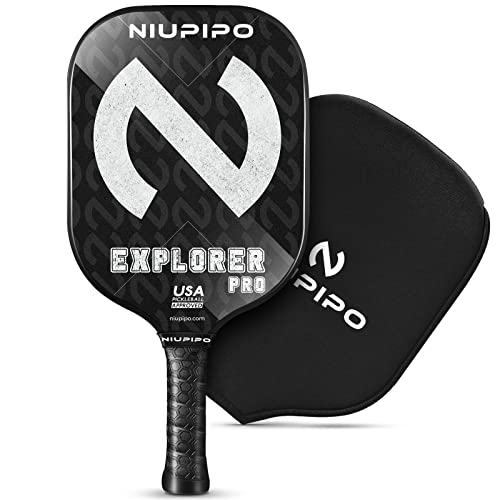
Your paddle is the one piece of gear that genuinely affects how you play, but not as much as the marketing wants you to believe. For your first paddle, you want something forgiving (a larger sweet spot), mid-weight (around 7.8-8.2 oz), and with a comfortable grip. Almost any paddle from a real brand in the $60-100 range will do this. The differences between mid-tier paddles are real but small. Small enough that you should not agonize over the choice.
Paddles — what's the difference?
A few common shapes, each making a different trade.
Standard / Wide-body
Forgiving, balanced. The default starter shape.
Length
~16″
Width
~8″
Sweet spot
Largest
Best for Beginners, dink-heavy play, most recreational players
Selkirk is one of the most respected names in pickleball, and the SLK Halo Control XL is the paddle from their entry line we would hand a friend on day one. Raw carbon fiber face for grip on the ball, a 16 mm core tuned for control, and a padded grip that stays comfortable through a long open-play session. Right around $100.
What we like
Made by one of the most trusted brands in the sport
Raw carbon fiber face gives beginners spin without effort
16 mm control core forgives off-center hits
Padded grip stays comfortable over long sessions
What to know
Elongated XL shape has a smaller sweet spot than a wide-body
Control-first face means less free power on drives
Under $50 and surprisingly competent. The fiberglass face gives you decent power, and the honeycomb core is standard for the category. Not as refined as the Selkirk, but if you're not yet sure pickleball will stick, this is the smart way in.
What we like
Under $50 and shockingly capable for the price
Fiberglass face produces real power for a budget paddle
Often includes a cover and balls for an instant ready-to-play kit
What to know
Edge guard wears faster than premium paddles
You'll outgrow it within 6 months if you play twice a week
When you are ready to spend real money, this is where a lot of players land. Carbon fiber surface with high grit for spin, an elongated shape for reach, and the paddle line built with the world's number one player. Wait until you have played for a few months before pulling the trigger; your game will tell you whether you want power or control.
What we like
Endorsed by the #1 ranked player (what serious amateurs end up on)
Carbon fiber face holds spin better than fiberglass
Elongated shape adds reach without losing balance
What to know
Elongated shape has a smaller sweet spot, punishes off-center hits
Around $160, overkill until you are truly committed
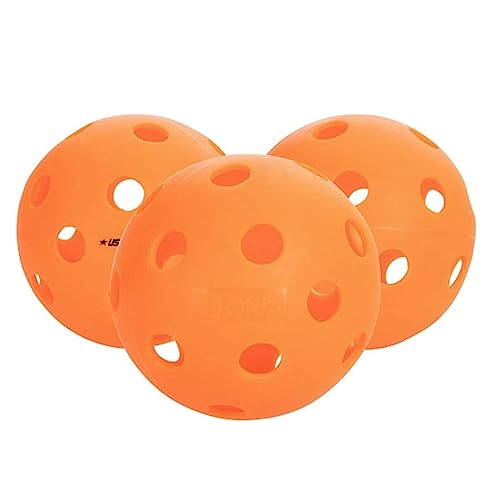
Pickleballs are cheap and they crack. Plan on replacing them. Outdoor balls (harder, 40 small holes) are what you will need for most public courts. Indoor balls (softer, 26 larger holes) are for gym floors. Buy a few packs to start; you will lose two and crack one within a month.
Best starter
Franklin
X-40 Performance Outdoor Pickleballs (3-pack)
$9.97 as of Sep 10, 2026
★★★★★Our rating· In Stock
The X-40 is the official ball of USA Pickleball, the US Open, and the APP Tour, and the de facto standard at public courts. Consistent flight, durable enough, and you will be playing with these in a league eventually anyway. Just buy these.
What we like
Official ball of USA Pickleball, the tournament standard
Consistent bounce and flight across packs
You'll see them at every public court, easy to match play
What to know
Crack faster in cold weather (under 50°F); bring extras
Not approved for indoor wood floors; get indoor balls for that
If you are playing on indoor gym floors, you need indoor balls. The harder outdoor ball skids and bounces wrong on wood. The Onix Fuse Indoor is USAPA approved, has the larger holes and softer feel indoor play calls for, and is the indoor ball you will most often find in a rec-center bin.
What we like
Softer plastic with larger holes, designed for wood floors
Won't skid on gym surfaces the way outdoor balls do
What to know
Less durable than outdoor balls; lifespan is months, not seasons
Do not take these outside; the wind plays havoc with them
This is where we beg you not to cheap out. Pickleball is full of sudden lateral movement, the kind of cuts that running shoes are not designed for. Running shoes have soft, tall heels that roll your ankle when you change direction. Court shoes (tennis shoes count) have flat soles, lateral support, and won't betray you. Ankle injuries are the #1 way new pickleball players end up on the couch for a month.
Best starter
ASICS
Gel-Dedicate 8 Pickleball
$79.95 as of Sep 10, 2026
★★★★★Our rating· In Stock
ASICS sells this version of the Gel-Dedicate specifically for pickleball, and at about $80 it is the sweet spot: flat, stable sole, real lateral support, and a forefoot that holds up where pickleball wears shoes out. It is the pair we would tell a new player to order with their paddle.
What we like
Sold as a pickleball shoe, tuned for sideways movement
Forefoot reinforcement protects exactly where pickleball wears shoes out
About $80, cheaper than most tennis shoes
What to know
Runs snug; order a half-size up if you are between sizes
Firmer court feel than a running shoe, not for casual wear
Right around $70, and the adidas outsole holds up well on outdoor courts, which chew through cheap shoes fast. Not flashy, just dependable lateral support at the lowest price we would trust.
What we like
Around $70 with an outsole that survives outdoor concrete
Wide toe box accommodates orthotics or wider feet comfortably
What to know
Cushioning thins out noticeably after a 90-minute session
Adidas tennis sizing; go a half-size up if between sizes
The Hypercourt Express 2 is a proper tennis shoe that a lot of serious pickleball players end up in. Lighter than the ASICS, more cushioning for back-to-back sessions, and a durable outsole. At $130 it is the step up once you are playing three or more times a week and can feel the difference.
What we like
Lighter and better cushioned than the starter pair
You don't strictly need a dedicated pickleball bag; any backpack will hold a paddle, balls, and a water bottle. But if you start playing regularly, a proper paddle bag has dedicated paddle sleeves (so they don't get scuffed), a fence hook, and a vented shoe compartment. Worth it once you're playing weekly.
Best starter
Franklin
Deluxe Competition Pickleball Backpack
$31.99 as of Sep 10, 2026
★★★★★Our rating· In Stock
An external paddle sleeve, a fence hook so it hangs off the court fence instead of sitting in a puddle, a fleece-lined pocket for your phone, and a separate zip compartment big enough for court shoes or a change of clothes. Everything you need at about $30.
What we like
Fence hook keeps the bag off the ground courtside
Fleece-lined valuables pocket for phone and keys
Separate zip compartment fits court shoes or a change of clothes
What to know
Only one external paddle sleeve; extra paddles ride inside
If you only carry a paddle, a few balls, and a water bottle, a sling is plenty. Franklin's is the official bag of the US Open, costs about $25, and is the right answer for casual play.
What we like
About $25 and made by the biggest name in pickleball gear
Slim profile that does not look overly athletic off-court
A few cheap items that meaningfully improve your experience: overgrip (your paddle's grip will get sweaty and slippery; replaceable overgrip fixes it for $1 a wrap), a sweat towel (the small one that clips to your bag), and an electrolyte mix if you're playing in heat. Total cost under $25.
Best starter
Tourna
Grip XXL Original Overgrip (3-pack)
$8.99 as of Sep 10, 2026
★★★★★Our rating· In Stock
Tennis players have used Tourna Grip for decades for one reason: it works in sweaty hands better than anything else. The XXL roll is long enough to wrap a paddle handle with room to spare. Rewrap every couple of weeks of regular play and your paddle always feels new.
What we like
Racket-sport standard for sweat handling, used for decades
Three rolls cover a couple of months; rewrap every 5 to 8 sessions
What to know
Feels less tacky when dry than competitors (that's by design)
Thin material; won't add cushion like premium overgrips
Pickleball has a deserved reputation for being easy to start. It is, but “easy to start” is doing some work in that sentence. There’s a specific learning curve, with predictable plateaus and predictable breakthroughs, and knowing what’s coming makes the first month a lot less awkward.
This is what your first ten hours actually look like, hour by hour, with the things that matter and the things you’ll be tempted to worry about but shouldn’t.
Hours 1–2: Show up and hit the ball
Most beginners spend their first hour trying to learn the rules before stepping on a court. Don’t. The rules are easier to absorb in five minutes of play than in twenty minutes of YouTube.
Here’s the absolute minimum to know on day one:
Serve underhand, diagonally, into the opposite back court. Paddle below your wrist at contact, ball below your waist. That’s it.
The kitchen. The seven-foot box on each side of the net. You can stand in it; you just can’t hit a volley while standing in it (or while your momentum is still carrying you into it).
The two-bounce rule. After the serve, the receiving team has to let it bounce, then the serving team has to let the return bounce. After those two bounces, anyone can volley anything (outside the kitchen).
You only score on your serve. Games to 11, win by 2.
That’s enough. Anything else you’ll pick up in context.
Hold the paddle the same way you’d shake someone’s hand (that’s a continental grip), and it works for almost every shot. Don’t try to “hit hard.” The faster you swing, the worse a beginner you look. Slow down. Make contact. Get the ball over the net. The point is to keep rallies going, not to win them.
The single best thing you can do in your first two hours is show up to open play at a public court. Most cities have it. Players rotate in and out. You will get to play with people slightly better than you, who will tell you the rules in real time, and you’ll absorb three weeks of theoretical learning in one afternoon.
By hour three, the rules feel like rules instead of trivia, and your eye starts to see the court differently. This is when a few things click:
Where to stand. The most valuable real estate in pickleball is the kitchen line. Both you and your partner want to be at the kitchen line, side by side, parallel to each other. If your partner moves up, you move up. If they go back, you go back. Two players staggered (one up, one back) is almost always losing position. This single insight will improve your game more than any gear upgrade ever will.
Stop swinging hard. Beginners win points early by hitting the ball harder than the other beginners can react. By hour four, that stops working; your opponents have caught up to the speed and now your unforced errors are losing rallies. The transition from “smash it” to “place it” is the first real skill plateau.
The third-shot drop. This is the move that distinguishes pickleball from tennis and is the most distinctive shot in the sport. After the serve and return, the serving team is stuck at the baseline. Hitting a hard third shot from there gets attacked. Instead, you arc a soft shot that drops into the opponent’s kitchen, neutralizing their position and giving you time to sprint up to your own kitchen line.
You won’t be able to do it well in your first ten hours. You should be aware it exists. Watch one short video on the third-shot drop and then forget about it until hour twenty. Don’t drill it yet. You’re not ready, and that’s fine.
Around hour six, the game starts feeling less like a series of awkward attempts and more like an actual rally. The ball goes back and forth a few times. You stop counting the score and start counting the rallies.
This is when dinking stops feeling silly. Dinking is the soft, low, controlled shot you hit from inside the kitchen, dropped just over the net into the other team’s kitchen. To beginners it looks like the players are scared. To anyone who’s played a little, it’s the dance, a patience contest where the first person to lift the ball loses.
You’ll start having dink rallies. They are exhausting in a way you wouldn’t expect. They are also the actual game. Most points at any level above raw beginner are decided in dink rallies, not in big swings.
By hour eight or nine, you’ll start reading opponents, knowing when someone is about to attack, who the weaker player is, where the easy ball is going to come from. This is what makes the sport addictive. It’s strategic in a way that becomes obvious only by playing.
Around hour ten, you’ll have your first really satisfying game. Not a perfect one. A good one. You’ll lose some, win some, hit a few shots that surprise you, miss a few you should have made. You’ll want to come back tomorrow.
Every beginner fails at the same handful of things. You will too. Don’t take it personally:
Foot-faulting in the kitchen. Hitting a volley while your foot is on or over the kitchen line. Everybody does this for the first month. You’ll feel embarrassed when called. You shouldn’t.
Trying to smash everything that’s high. A high ball at chest height feels like a gift. You will smash it into the net or far past the baseline 80% of the time in your first ten hours. Calmer placement beats a hard miss.
Standing too far back. The instinct from tennis or general athleticism is to hover near the baseline. Pickleball rewards the opposite: get up, get to the kitchen, control the net.
Nervous serves. Your serve will collapse the first few times someone good is watching. Goes away with reps. Promise.
Nobody who watches you cares. The other beginners are all making the same mistakes. The good players have already forgotten what it was like.
What to do at hour eleven
A few things change the slope of your improvement curve dramatically once you’ve got the basics:
Find a regular crew. Two or three people at roughly your level who play once or twice a week. You’ll improve faster with people slightly better than you who will keep showing up.
Take one lesson around hour 15–20. Not before; you don’t have enough context to know what to ask. After ten hours of play, a single 60-minute lesson with a competent local coach will identify the two or three things actively holding you back, and you can practice those for the next month.
Watch a tournament match. Pro pickleball is genuinely useful viewing in a way that pro tennis isn’t for most people; the patterns are clear, the strategy is visible, the kitchen play is mesmerizing. PPA Tour finals on YouTube are free.
You’re not a beginner anymore at hour ten. You’re an enthusiastic newcomer with bad habits, which is a much more interesting thing to be.
Save your money
What you don't need yet
Beginners get pressured to buy a lot of stuff that doesn't help them play
better. Here's what we'd skip on day one.
A $250 carbon fiber paddle — You won't feel the difference until you've played 20-30 games. Save the money for now.
A ball machine — Fun toy, but you'll learn faster playing actual games with people who are slightly better than you.
Custom-fitted grips — A $5 overgrip wrap solves the same problem and lets you experiment with thickness.
Pickleball-specific apparel — Any athletic shorts and t-shirt work. The 'pickleball' branded stuff is mostly a markup.
A portable net — Public courts are everywhere and free. Buy a net only if your driveway is your court.
First week
Your first seven days
A short, real plan to get from gear-on-doorstep to actually playing.
Find your nearest public pickleball courts. · Action
Places2Play · USA Pickleball's official court finder
Pickleheads · Player-built court directory with reviews
Order a starter paddle so it arrives before the weekend. · Buy
How much should I spend total to start playing pickleball?
You can be fully equipped for about $130 with our budget picks (paddle, balls, court shoes), or about $190 with our recommended starter picks. The gear lasts; most beginners do not replace anything except balls for the first year.
Can I just use my running shoes?
We strongly recommend against it. Pickleball involves constant lateral movement, and running shoes have soft, tall heels that roll ankles on cuts. Court shoes (tennis shoes work) are the single most important gear purchase for injury prevention.
What's the difference between indoor and outdoor pickleballs?
Outdoor balls are harder with 40 small holes and are designed to fly straight in wind. Indoor balls are softer with 26 larger holes and grip gym floors better. Buy for where you'll actually play; most beginners play outdoors.
Do I need lessons, or can I just show up?
You can absolutely just show up. Pickleball is one of the most welcoming sports for beginners, and 'open play' sessions at public courts will rotate you in with players who'll teach you on the fly. A single lesson after a month of play is more useful than one before you start.
Is pickleball hard on your body?
Less than tennis, more than walking. The most common injuries are ankle rolls (preventable with court shoes) and overuse issues from playing six days a week in your first month. Build up gradually.
What paddle should I buy as a complete beginner?
A mid-weight paddle (around 8 oz) in the $50 to $100 range from a real brand. Our starter pick is the Selkirk SLK Halo Control XL. The differences between paddles in this range are small enough that you should not agonize over the choice; pick one and start playing.
USA Pickleball — The sport's national governing body. Official rules, sanctioned tournaments, ratings system. Bookmark the rules page; you'll come back to it.
Places2Play — USA Pickleball's official court finder. The most complete database of public courts in the US, by city.
Pickleheads — Player-built directory with reviews, schedules, and open-play times. Often more current than Places2Play in major metros.
The Dink — Daily newsletter and news site. Pro tour coverage, gear reviews, beginner content. The closest thing the sport has to its own ESPN.
Pickleball Magazine — Long-running print and online publication. Slower pace, deeper interviews, less tournament-grind.
Briones Pickleball (YouTube) — One of the most-watched coaching channels for beginners. Patient, well-structured, no fluff. Start here for technique.
Primetime Pickleball (YouTube) — Tony Roig's channel. Doubles strategy and shot selection at intermediate-and-up levels. Watch after Briones, not before.
PPA Tour (YouTube) — Free pro-tour matches in full. Watching a finals match is genuinely educational; the patterns are clear once you know what to look for.
r/Pickleball — Active subreddit. Skip the gear-recommendation threads (everyone's biased). Search for technique posts and the wiki.
At the Line — Adam Stone — Recent strategy book. More useful than any beginner book once you've got the basics down. Skip if you're under 10 hours of play.
As an Amazon Associate, JustBeginning earns from qualifying purchases.
We may also earn commission from other affiliate programs linked on this
page. Editorial recommendations are independent; we don't choose
products based on commission rates.
Product prices and availability are accurate as of the date and time
indicated and are subject to change. Any price and availability
information shown on Amazon at the time of purchase will apply.

 Best starter