Great pie is mostly technique: cold butter, a light hand and a hot oven. The gear that helps is cheap and short: a glass pie plate so you can see the bottom crust, a good rolling pin, a pastry blender and a crust shield. Here's what to buy, why the pie plate matters so much, and what to skip.
By Colin B. · Published November 6, 2026 · Last reviewed November 6, 2026
A glass pie plate, a French rolling pin, a pastry blender and a crust shield come to about $70. Add pie weights, a bench scraper and a heavy sheet pan to bake on and you're around $130.
We earn commission when you buy through links on this page, including
Amazon. See our affiliate disclosure.
Price tiers and budget totals shown above are editorial estimates;
actual prices vary.
At a glance
Our top pick in each category
The fastest path through this guide — each best-starter pick by category.
Scroll for the budget and upgrade alternatives.
Start with a glass pie plate. Glass heats slowly but evenly, and you can lift it and see whether the bottom crust is golden or still pale. That one look fixes the soggy bottom problem for most beginners.
Get a standard 9-inch plate. Almost every recipe is written for 9-inch pie plates about 1 1/2 inches deep. Deep-dish plates need more filling and longer baking, which makes following recipes harder.
You probably don't need a food processor. Cutting butter into flour by hand with a pastry blender is easy, keeps the butter in bigger flakes, and gives you a feel for when the dough is right.
The pie plate decides how your bottom crust bakes. Glass heats evenly and lets you see the crust brown. Ceramic looks beautiful and holds heat, but you can't see through it. Metal heats fastest and gives the crispest bottom, which is why many pros use it, but thin crusts can over-brown. A 9-inch plate with a wide rim makes crimping easier.
Pie Plates — what's the difference?
A few common shapes, each making a different trade.
Glass
Even heat and you can see the bottom crust brown. The best first plate.
Heats
Slowly, evenly
Bottom crust
Golden, visible
Price
$13-20
Best for Beginners learning when a crust is fully baked
Tradeoff Can shatter with sudden temperature changes
French ceramic that bakes evenly, holds heat to keep pie warm at the table and goes from freezer to oven safely. A dish you'll keep for decades. About $50. 1,800+ reviews at 4.8 stars.
Heavy-gauge aluminized steel heats fast for a crisp, well-browned bottom, especially for blind-baked shells and custard pies. Made in the USA with a nonstick coating. About $19.
A rolling pin rolls dough to an even thickness, ideally about 1/8 inch for pie. Most pastry bakers prefer pins without handles: a tapered French pin lets you feel thick spots and pivot easily into a circle, while a straight dowel gives the most even pressure across a wide sheet. Solid hardwood is the classic choice. Wipe it clean and never soak it.
Best starter
J.K. Adams
French Tapered Rolling Pin, Maple
$28.99 as of Nov 6, 2026
★★★★★Our rating· In Stock
Solid hard maple, made in Vermont, with tapered ends that make it easy to rotate dough into an even circle. Light enough to control, and you can feel thick spots through your palms. About $29. 2,900+ reviews at 4.7 stars.
A straight, heavier maple dowel that rolls large sheets of dough to a perfectly even thickness. Many bakers keep one alongside a French pin for cookies and big crusts. About $33. 1,600+ reviews at 4.7 stars.
Flaky crust comes from cold butter cut into flour in pea-size pieces. A pastry blender does that quickly without the heat of your hands melting the fat. A bench scraper is the other quiet hero: it lifts and folds sticky dough, cleans the counter, and moves rolled crust into the plate. Both are cheap and last forever.
Best starter
OXO
Good Grips Dough Blender with Blades
$16.99 as of Nov 6, 2026
★★★★★Our rating· In Stock
Sturdy stainless blades cut cold butter cleanly instead of mashing it like wire blenders do, and the soft handle stays comfortable. About $17. 5,000+ reviews at 4.8 stars.
What we like
Cuts butter fast, keeps it cold
Stiff blades don't bend
Dishwasher safe
What to know
Butter can pack between blades, so scrape as you go
A stainless bench scraper with a ruler edge and a comfortable grip. Use it to fold dough, cut butter into cubes, lift crust and scrape the counter clean. About $15. 19,000+ reviews at 4.8 stars.
What we like
Ruler edge for measuring dough
Lifts and moves delicate crust
What to know
Edge isn't sharp enough to cut through hard butter blocks
Pie edges bake faster than the center, so a crust shield covers the rim partway through baking to stop it burning while the filling finishes. Pie weights hold an empty crust in shape during blind baking, the step for custard, cream and pumpkin pies, so the sides don't slump and the bottom doesn't puff up.
Best starter
Antenda
Adjustable Silicone Pie Crust Shield
$7.99 as of Nov 6, 2026
★★★★★Our rating· In Stock
An adjustable silicone ring that fits 8 to 11.4-inch pies, so one shield works on every plate. Much easier than fiddling with strips of foil. About $8. 5,900+ reviews at 4.2 stars.
Reusable ceramic beads that spread heat evenly and hold a blind-baked shell flat. Line the crust with parchment, fill to the top, and bake. About $7. 11,000+ reviews at 4.6 stars.
What we like
Keeps blind-baked crusts flat
Reusable for years
What to know
135 beads won't fill a 9-inch crust; many bakers buy two
The best trick for a crisp bottom crust is baking the pie on something already hot. A heavy sheet pan preheated in the oven gives the bottom a blast of heat and catches drips from bubbling fruit fillings. A baking steel takes it further: it stores a lot of heat and pushes it straight into the bottom crust.
Best starter
Nordic Ware
Naturals Half Sheet Pan
$35.00 as of Nov 12, 2026
★★★★★Our rating· In Stock
A heavy, made-in-the-USA aluminum sheet that won't warp in a hot oven. Preheat it under your pie for a crisper bottom and to catch drips. You'll use it for cookies and roasting too. About $35. 35,000+ reviews at 4.7 stars.
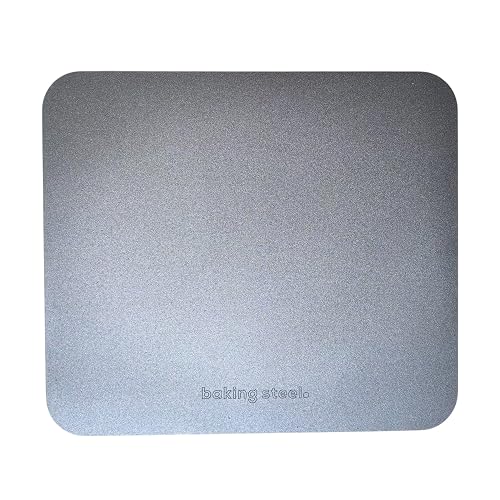
A quarter-inch slab of steel that holds a lot of heat. Put your pie plate on it on the lowest rack and the bottom crust bakes through fast. Great for pizza and bread too. About $80.
The original pre-seasoned baking steel, made in the USA. Holds heat brilliantly for crisp-bottomed pies, pizza and bread. About $139. 600+ reviews at 4.5 stars.
Five pies, each teaching one skill: a flaky all-butter crust, a double-crust fruit pie, a blind-baked shell, a custard filling and a lattice top. Bake them in order and you'll understand pie, not just follow recipes.
Pie has a reputation for being fussy, but almost every problem comes back to two things: temperature and patience. Keep the dough cold, give it time to rest, and bake longer than feels comfortable. These five pies build those habits one at a time.
Pie 1: The all-butter crust (as a simple galette)
Start with crust alone. Whisk 1 1/4 cups flour with 1/2 teaspoon salt. Cut in 1/2 cup (one stick) of very cold butter with a pastry blender until the pieces range from peas to small lima beans. Sprinkle in ice water a tablespoon at a time, tossing with a fork, until the dough just holds together when squeezed. Usually 3 to 5 tablespoons.
Press it into a disk, wrap it and chill at least an hour. Roll it to about 1/8 inch, pile sliced fruit in the middle, fold the edges over and bake at 400°F until deep golden. A galette needs no pie plate, so you learn the dough without worrying about shaping.
Pie 2: A double-crust fruit pie
Make a double batch of dough. Roll the bottom crust about 2 inches wider than your plate, ease it in without stretching, and fill with apples or berries tossed with sugar and a thickener (flour, cornstarch or tapioca). Add the top crust, trim, fold the edges under and crimp. Cut vents.
Bake on a preheated sheet pan on the lowest rack, starting at 425°F for 20 minutes, then 375°F until the filling bubbles thickly in the center vents. Put the crust shield on once the edges are golden. Let it cool at least 3 hours, or the filling will run.
For custard and cream pies, the crust bakes before the filling goes in. Fit the dough into the plate, crimp, then chill it 30 minutes. Line it with parchment, fill to the top with pie weights and bake at 400°F for about 20 minutes. Remove the weights and bake another 10 to 15 minutes until the bottom is dry and golden.
Pie 4: A custard pie
Use your blind-baked shell for pumpkin or a simple custard. Bake at a moderate 350°F so the eggs set gently. It’s done when the edges are set and the center still jiggles slightly, like gelatin. It firms up as it cools. Cracks mean it baked too long or too hot.
Pie 5: A lattice top
Back to fruit, with a woven top. Cut the top crust into strips about 1 inch wide. Lay half across the filling, then fold back every other strip and weave the rest across. Chill the whole pie 15 minutes before baking so the lattice holds its shape.
Soggy bottom: bake lower, longer and on a preheated sheet or steel.
Tough crust: too much water or too much handling. Stop mixing as soon as it holds.
Shrinking: the dough was stretched or not chilled. Ease it in and rest it before baking.
Burnt edges: shield them earlier.
What not to worry about yet
Don’t worry about decorative cutouts, braided edges or perfect crimps. Don’t buy a food processor or a marble board. A crust that tastes great with a slightly lopsided edge is a success.
Save your money
What you don't need yet
Beginners get pressured to buy a lot of stuff that doesn't help them play
better. Here's what we'd skip on day one.
A food processor — It makes dough fast, but it's easy to overwork. Learn by hand with a pastry blender first.
Lattice cutters and crust stamps — A knife and a ruler make a lattice. Decorative tools are fun later, once your basic crust is reliable.
A marble pastry board — A floured countertop works fine. Chill the dough properly and the surface matters much less.
A set of pie plates in every size — One 9-inch plate covers nearly every recipe. Add a metal pan once you start blind baking a lot.
First week
Your first seven days
A short, real plan to get from gear-on-doorstep to actually playing.
Order a 9-inch glass pie plate, a rolling pin and a pastry blender. · Buy
Make an all-butter crust: cut very cold butter into flour until pea-size, add ice water a spoon at a time, then chill the dough at least an hour. · Action
Roll the dough from the center out to about 1/8 inch, turning it a quarter turn every few rolls. · Action
Bake a simple apple or berry pie on a preheated sheet pan on the lowest oven rack. · Action
Lift the glass plate and check the bottom before pulling the pie. You want deep golden, not pale. · Learn
Read a good crust guide before your second pie. · Learn
Glass is best for beginners because you can see when the bottom crust is golden. Metal gives the crispest bottom and is great for blind baking. Ceramic bakes evenly and looks nice, but hides the crust.
Why is my bottom crust soggy?
Usually it's underbaked. Bake on the lowest rack on a preheated sheet pan or steel, bake longer than you think, until the filling bubbles in the center, and use a glass plate to check the bottom.
Butter or shortening for pie crust?
All butter tastes best and makes flaky layers but is less forgiving when warm. Shortening is easier to handle and very tender but tastes of nothing. Many bakers use a mix of both.
Why did my crust shrink in the pan?
The dough was stretched into the plate or not rested enough. Ease it in without pulling, then chill the shaped crust for 30 minutes before baking so the gluten relaxes.
Do I need pie weights?
Only for blind baking, when you bake the crust before adding a filling like custard, cream or pumpkin. Dried beans or rice work in a pinch, but ceramic weights conduct heat better.
What size pie plate should I buy?
A standard 9-inch plate about 1 1/2 inches deep. Most recipes are written for it. Deep-dish plates need more dough and filling and bake longer.
JustBeginning earns commission from affiliate programs. As an Amazon
Associate, we earn from qualifying purchases. This costs you nothing
extra and doesn't change our recommendations.
Prices and availability are accurate as of the date and time
shown and can change; the price on Amazon when you buy is what
applies.
How this works.


 Best starter