Amigurumi is crocheting small stuffed toys: dinosaurs, bunnies, food with faces. It mostly uses one stitch worked in a spiral, so it's one of the friendliest ways to learn crochet, and a first critter takes an evening or two. Here's the kit to start with, the yarn and hook that make it easy, and the trick most beginners miss.
By Colin B. · Published November 5, 2026 · Last reviewed November 5, 2026
A complete beginner kit with yarn, hooks, eyes and stuffing is about $15. A Woobles kit plus your own hook set, cotton yarn, safety eyes, stuffing and markers comes to around $100, enough for a dozen critters after the first one.
We earn commission when you buy through links on this page, including
Amazon. See our affiliate disclosure.
Price tiers and budget totals shown above are editorial estimates;
actual prices vary.
At a glance
Our top pick in each category
The fastest path through this guide — each best-starter pick by category.
Scroll for the budget and upgrade alternatives.
Use a smaller hook than the yarn label says. Amigurumi needs tight, dense stitches so stuffing doesn't peek through. If the yarn suggests a 5 mm hook, try 3.5 to 4 mm. This one change makes beginner toys look far more professional.
Pick smooth, light-colored yarn to learn on. Cotton or smooth acrylic in a light color lets you see each stitch. Fluffy chenille and dark colors look lovely but hide stitches, which makes counting and fixing mistakes much harder.
Safety eyes aren't safe for babies. The washers lock on firmly, but for toys meant for children under three, embroider the eyes with yarn instead.
A good amigurumi kit includes the yarn, a hook, eyes, stuffing and a pattern for one critter, plus video lessons. The best ones are built around a first-timer's sticking points, like starting the magic ring. A kit is the fastest way to a finished toy, and it shows you what to buy for the next one.
Best starter
The Woobles
Crochet Kit for Beginners+ (Fred the Dinosaur)
$29.96 as of Nov 5, 2026
★★★★★Our rating· In Stock
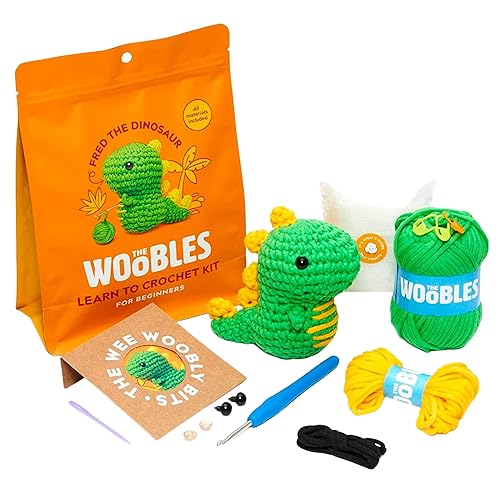
The kit that taught a lot of people to crochet. Chunky, easy-to-see yarn comes with the magic ring already started, so you're stitching right away, and the step-by-step videos are excellent for left- and right-handed crocheters. About $30, 8,100+ reviews.
Everything to make two little axolotls for about $13: four yarns, two hooks, stuffing, safety eyes, markers, a needle, scissors and video tutorials. 2,600+ reviews.
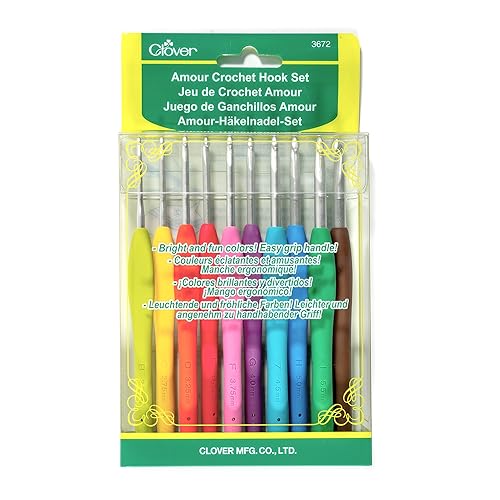
Amigurumi uses small hooks and tight tension, which is hard on the hand. Ergonomic hooks with soft, thick handles make long sessions comfortable. Most amigurumi in worsted-weight yarn uses a 3.5 to 4 mm hook; chunky yarn uses bigger. A set covers you for every yarn.
Crochet Hooks — what's the difference?
A few common shapes, each making a different trade.
Ergonomic set
Soft-grip handles in many sizes. Comfortable and cheap.
Fourteen ergonomic hooks from 2 mm to 10 mm for about $15, so you have the right size for any yarn, including the smaller hooks amigurumi needs. 28,000+ reviews.
Cotton gives crisp, well-defined stitches, holds its shape and doesn't fuzz. Acrylic is cheaper and softer but can fuzz. Chenille makes irresistibly plush toys but hides stitches and is hard to unravel. Learn on smooth worsted-weight cotton or acrylic in light colors, then try chenille.
Best starter
Lion Brand
24/7 Cotton Yarn, White, 3 Pack
$18.00 as of Nov 5, 2026
★★★★★Our rating· In Stock
Smooth mercerized cotton in worsted weight that shows every stitch clearly and holds its shape when stuffed. About $18 for three skeins, plenty for several small toys. 17,000+ reviews.
The plush chenille behind those super-squishy toys, about $14 for two big skeins. Works up fast with a big hook. Save it for your second or third critter.
Safety eyes push through the fabric and lock on with a washer inside, and they go in before you close the head. Fiberfill is the stuffing; use more than you think, packing it firmly so the toy holds its shape.
Best starter
Yexixsr
566PCS Safety Eyes and Noses with Washers
$6.99 as of Nov 5, 2026
★★★★★Our rating· In Stock
Hundreds of safety eyes and noses in many sizes with locking washers for about $7. Enough for years of critters. 9,500+ reviews.
Amigurumi is worked in a spiral with no visible start to each round, so a stitch marker is essential: clip it into the first stitch and move it up each round. A blunt yarn needle sews parts together and weaves in ends.
Best starter
Clover
Quick Locking Stitch Marker Set
$13.70 as of Nov 5, 2026
★★★★★Our rating· In Stock
Locking plastic markers that clip into a stitch and won't fall out, for about $14. Mark the start of every round and you'll never lose count.
Three small toys teach almost everything amigurumi needs: the magic ring, counting in a spiral, increases and decreases, stuffing, eyes and sewing parts together. Here's what each one teaches.
Most amigurumi patterns are built from the same handful of moves. Learn them on three small projects, in order, and you’ll be able to follow almost any beginner pattern you find.
Critter 1: A ball (the whole technique in miniature)
Every amigurumi head and body is basically a ball, so start there.
Magic ring. Make an adjustable loop, crochet six single crochet into it, and pull the tail to close the hole. It takes a few tries; that’s normal.
Increase rounds. Work two stitches into each stitch (12), then every second stitch (18), then every third (24). The ball grows flat at first, then starts to cup.
Even rounds. One stitch in each stitch for a few rounds. Now it’s a dome.
Decrease rounds. Work two stitches together, in the reverse pattern, to close it up. Stuff it firmly before the hole gets too small.
Put a stitch marker in the first stitch of every round and move it up each time. Amigurumi is worked in a spiral, and without a marker you’ll lose count. Count your stitches at the end of every round.
Pick a kit or a free pattern where the body and head are a single piece, like a little chick, a whale or a blob-shaped cat. This adds:
Safety eyes. Push them through between rounds before you close the piece, then press the washer on from the inside until it clicks.
Small details. Tiny ears or a beak, made separately or worked into the body.
Firm stuffing. More than you think. Under-stuffed toys look sad and lumpy.
If your stuffing shows through, your stitches are too loose. Try a hook a size smaller next time.
Critter 3: Something with parts to sew on
Now try a toy with arms, legs or ears made separately: a bunny, a bear or a dinosaur. The new skill is sewing parts on.
Leave a long tail when you finish each part. Pin it in place, look at it from a few angles, then whipstitch it on with a blunt yarn needle, going through the outer loops of both pieces. Placement makes a huge difference to how cute the final toy looks, so take your time.
Don’t worry about the difference between US and UK stitch names until a pattern confuses you (US “single crochet” is UK “double crochet”). Don’t buy fancy yarn yet. And don’t toss your first lumpy critter; keep it. Put it next to your fifth one in a month and you’ll see how far you’ve come.
Save your money
What you don't need yet
Beginners get pressured to buy a lot of stuff that doesn't help them play
better. Here's what we'd skip on day one.
A huge yarn stash — Small toys use little yarn. Buy for the project in front of you.
A yarn winder and swift — Handy for knitters with hanks. Amigurumi yarn comes in ready-to-use skeins.
Blocking mats — Amigurumi gets its shape from stuffing, not blocking.
Pattern books — Thousands of free beginner patterns exist online. Buy books once you know your style.
Wire armatures — For posable toys later. First critters don't need them.
First week
Your first seven days
A short, real plan to get from gear-on-doorstep to actually playing.
It's one of the easier ways to learn crochet. Most patterns use single crochet worked in a spiral, plus increases and decreases. The magic ring is the trickiest part, and kits like the Woobles start it for you.
What yarn is best for amigurumi?
Smooth worsted-weight cotton or acrylic in a light color is easiest to learn on. Cotton shows stitches crisply and holds shape. Chenille makes plush toys but hides stitches.
What size hook should I use for amigurumi?
Smaller than the yarn label suggests, usually one or two sizes down. For worsted yarn, try 3.5 to 4 mm. The goal is stitches tight enough that stuffing doesn't show through.
Are safety eyes safe for babies?
Not for children under three. Even locked washers can fail. For babies and toddlers, embroider the eyes with yarn or felt.
What is a magic ring?
An adjustable loop you crochet into, then pull tight so the center of your piece closes with no hole. It's how most amigurumi heads and bodies start.
How long does it take to make an amigurumi?
A small beginner critter usually takes two to six hours, often spread over a couple of evenings. You get faster quickly.
JustBeginning earns commission from affiliate programs. As an Amazon
Associate, we earn from qualifying purchases. This costs you nothing
extra and doesn't change our recommendations.
Prices and availability are accurate as of the date and time
shown and can change; the price on Amazon when you buy is what
applies.
How this works.
Our top pickThe Woobles Crochet Kit for Beginners+ (Fred the Dinosaur)


 Best starter