Beginner's guide

So you're getting into antique typewriter restoration

Vintage typewriters were engineered to last generations. Most just need cleaning, fresh oil, and a new ribbon to sing again. The tools cost less than a dinner out, the skills transfer across every machine you touch, and nothing beats the sound of a restored Olympia or Royal clacking on paper.

By Colin B. · Published June 9, 2026 · Last reviewed June 9, 2026

The 60-second version

If you only buy 3 things to start:

  1. Universal Typewriter Ribbon 1/2" Black/Red (2-pack) — Universal black/red ribbon that fits most portables. Spools in five minutes, lasts months.
  2. Zoom Spout Turbine Oil — The precision-tip oil every restorer keeps on the bench. One drop frees stuck mechanisms.
  3. iFixit Mako Driver Kit (64 Precision Bits) — 64-bit driver kit with JIS tips — the bits vintage Japanese typewriters actually need.
Budget total
$60
Typical total
$140
A decent portable runs $40-80. Cleaning kit, oil, and ribbons add $40-60. First full restoration under $150 total.

We earn commission on qualifying Amazon purchases — see our affiliate disclosure. Price tiers and budget totals shown above are editorial estimates; actual Amazon prices vary.

At a glance

Our top pick in each category

The fastest path through this guide — each best-starter pick by category. Scroll for the budget and upgrade alternatives.

CategoryTop pickPriceWhere to buy
Cleaning SuppliesTrendboxAnti-Static Electronics Cleaning Brush Set (8-piece)$ See on Amazon →
RibbonsFJA ProductsUniversal Typewriter Ribbon 1/2" Black/Red (2-pack)$ See on Amazon →
LubricantsSUPCOZoom Spout Turbine Oil$ See on Amazon →
Repair ToolsiFixitiFixit Mako Driver Kit (64 Precision Bits)$$ See on Amazon →
Before you buy anything

A few things worth knowing first

Buy a typewriter before you buy any tools. Your first machine tells you exactly what you need: a portable with sticky keys needs different treatment than a desktop with a seized carriage. Don't build a repair toolkit in the abstract.

Condition matters more than brand. A Royal Quiet De Luxe in good working order beats a rare Hermes 3000 with a broken carriage for your first restoration. Look for machines described as 'types but needs cleaning' — that's the sweet spot.

Ribbons are the fastest fix. Before anything else, swap in a fresh universal ribbon and type a test line. Half the time the machine works fine and just needed new ink. Know what you're actually dealing with before you start disassembling.

The gear

What you actually need

Cleaning Supplies

Eighty percent of restoration is cleaning. Decades of dust, dried oil, and ribbon residue pack into every crevice of a vintage typewriter. You need compressed air, natural-bristle brushes in a few sizes, and isopropyl alcohol (90%+) for internal grime. Do not use WD-40 as a lubricant. It is a water displacer that leaves a sticky residue and will gum up the mechanism as it evaporates.

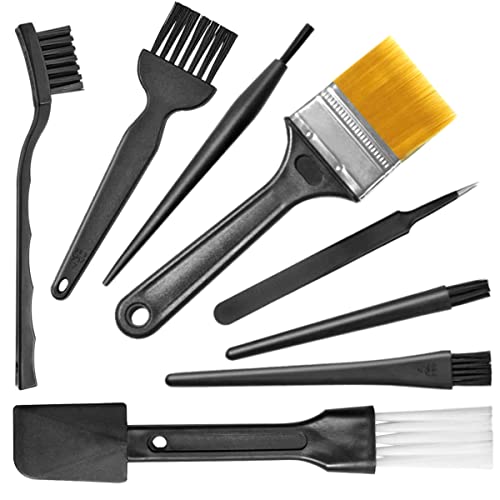
Anti-Static Electronics Cleaning Brush Set (8-piece) Best starter
Trendbox

Anti-Static Electronics Cleaning Brush Set (8-piece)

$15.99 as of Jun 22, 2026

Our rating · In Stock

A range of natural-bristle and nylon brushes in different widths clears type-bar slots, segment grooves, and the platen area without scratching painted surfaces. Covers every size you need in one purchase.

What we like

  • Multiple sizes cover every tight spot in a portable typewriter
  • Soft bristles safe for paint, decals, and chrome trim

What to know

  • Cheaper bristles shed on early uses; flick them out before using
  • Not stiff enough for heavy grease; pair with a cotton swab there
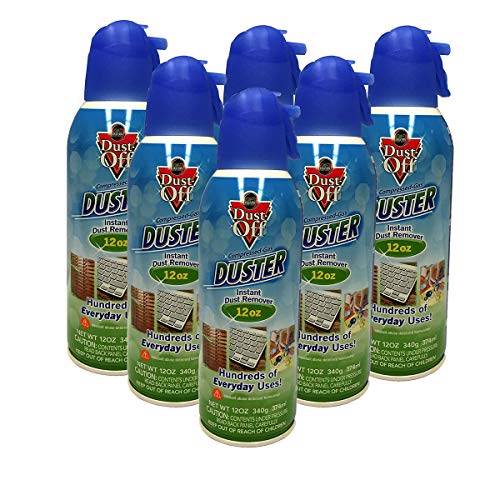
Falcon Dust-Off Compressed Gas Duster (10 oz, 2-pack) Budget pick
Falcon

Dust-Off Compressed Gas Duster (10 oz, 2-pack)

$39.99 as of Jun 22, 2026

Our rating · In Stock

The first pass on any typewriter is compressed air. Blows loose dust and debris out of the segment and carriage before you start with brushes. Keep it upright and don't spray bare metal for too long, condensation can cause surface rust.

What we like

  • Instantly clears loose debris before brush or chemical cleaning
  • Straw tip reaches inside segment slots and carriage rails

What to know

  • Cans empty faster than expected; buy a two-pack
  • Tilting the can sprays liquid propellant, which can damage surfaces
Specialty pick
Sprayway

Rubber Cleaner & Rejuvenator

$$

Our rating

The platen hardens and cracks with age on most vintage typewriters. Platen rejuvenator softens it back toward original firmness, extending its life by years and dramatically improving typing feel. Saves $30-80 over buying a replacement platen.

What we like

  • Restores hardened platens without replacement, saves $30-80
  • Works on feed rollers and other rubber parts too

What to know

  • Takes 24-48 hours to fully absorb; machine is unusable meanwhile
  • Not a permanent fix for severely cracked or crumbling platens

Ribbons

Ribbons are the consumable that keeps restoration satisfying: a fresh ribbon turns a machine from 'kinda works' to 'types beautifully' in under five minutes. The standard size is 1/2-inch wide on a two-spool fitting, which fits most portable typewriters made between 1940 and 1980. Some older machines use wider 13/16-inch ribbons. Check your machine's manual or the Typewriter Database before ordering.

Universal Typewriter Ribbon 1/2" Black/Red (2-pack) Best starter
FJA Products

Universal Typewriter Ribbon 1/2" Black/Red (2-pack)

$11.95 as of Jun 22, 2026

Our rating · In Stock

Fits the vast majority of mid-century portables, and the two-color black/red split is the classic choice. Royal's version is consistently inked and spools cleanly without jamming. Order two packs; you'll swap ribbons more than you expect once you have a working machine.

What we like

  • Fits nearly every mid-century portable with standard 1/2" spools
  • Black/red split suits both drafting and correction marking

What to know

  • Not compatible with pre-1950 wide-ribbon machines
  • Ink fades after 6-12 months of regular use
Pelikan Ink Ribbon Group 163 C for Olympia (Black) Specialty pick
Pelikan

Ink Ribbon Group 163 C for Olympia (Black)

$

Our rating

European portables like the Olympia SM series and Hermes 3000 use a slightly different spool fitting. Pelikan makes the right-spec ribbon for them: dense ink, clean feed, and the brand most European restorers trust by default.

What we like

  • Correct spool fitting for Olympia and Hermes portables
  • Dense, even ink prints cleanly from first key to last

What to know

  • Harder to find in stores; order online in advance
  • Not interchangeable with American-spec spools

Lubricants

Vintage typewriters need light lubrication on specific points: carriage rails, segment rails, and typebar pivots. Use the minimum oil that frees the mechanism. Over-oiling is one of the most common beginner mistakes. Use a pointed oiler bottle, not a spray. Never use WD-40 as a lubricant — it is a water displacer that leaves a sticky residue as it evaporates.

Zoom Spout Turbine Oil Best starter
SUPCO

Zoom Spout Turbine Oil

$15.99 as of Jun 22, 2026

Our rating · In Stock

A very light machine oil with a precision applicator tip. Perfect viscosity for typewriter pivots and carriage rails: thin enough to penetrate seized mechanisms, not so thin it runs everywhere. The standard recommendation across every typewriter community.

What we like

  • Precision tip deposits one drop exactly where needed
  • Light enough for typebar pivots without attracting lint

What to know

  • Small bottle (4 oz) looks slight but lasts through many machines
  • Cap needs to stay on; oil evaporates if left open
Super Lube 21030 Synthetic Grease with PTFE (3 oz) Specialty pick
Super Lube

21030 Synthetic Grease with PTFE (3 oz)

$10.99 as of Jun 22, 2026

Our rating · In Stock

Light oil does not belong on the carriage rack, escapement gears, or carriage return mechanism. Those need grease. Super Lube is the go-to for vintage machinery: synthetic, stable for decades, and won't attack rubber or painted metal.

What we like

  • Synthetic formula stays stable in gear teeth for years
  • Won't dry out, migrate, or attack rubber parts

What to know

  • Easy to over-apply; a pea-sized amount covers an entire carriage
  • Overkill for most portables, which rarely need grease at all

Repair Tools

You don't need a full machine shop to restore a vintage typewriter. Most work requires a quality precision screwdriver set (including JIS bits for Japanese machines), dental picks for clearing debris from the segment, and needle-nose pliers for reconnecting springs. That is the kit. Anything more specialized, buy it when you actually need it for a specific repair.

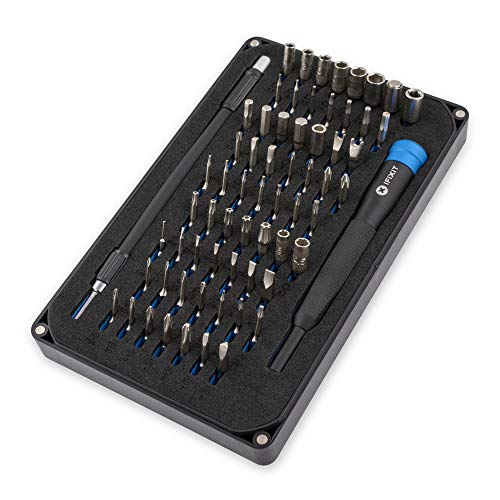
iFixit Mako Driver Kit (64 Precision Bits) Best starter
iFixit

Mako Driver Kit (64 Precision Bits)

$$

Our rating

Includes Phillips, slotted, JIS, Torx, and hex bits — covering every screw in a vintage typewriter. The JIS bits matter: many Japanese portables use JIS screws that a regular Phillips will strip on the first attempt. iFixit bits are precision-machined and won't cam out on soft vintage metal.

What we like

  • JIS bits prevent stripping on Japanese-made portable typewriters
  • Wiha quality means bits hold precise tolerances for years

What to know

  • Premium price vs. no-name sets, though you'll use this forever
  • 26 pieces is more than needed for most typewriter work
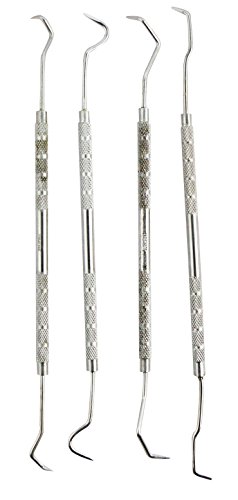
SE Dental Pick Set (6-piece) Budget pick
SE

Dental Pick Set (6-piece)

$10.37 as of Jun 22, 2026

Our rating · Only 8 left in stock - order soon.

The best tool for cleaning debris out of typebar segment slots. Cotton swabs are too wide, brushes too soft. Dental picks reach in and scrape out hardened ink, dust cakes, and dried oil. Also useful for adjusting small springs and popping off platen knobs.

What we like

  • Reach segment slots that brushes and swabs cannot fit
  • Stainless tips last through dozens of machines

What to know

  • Can scratch chrome if used with heavy pressure
  • Only one or two picks in the set actually see regular use
Knipex 31 11 160 Precision Needle-Nose Pliers Specialty pick
Knipex

31 11 160 Precision Needle-Nose Pliers

$39.99 as of Jun 22, 2026

Our rating · In Stock

Spring reattachment, adjusting the margin rack, repositioning escapement components: all need needle-nose pliers with precise jaws. Knipex is what professional repair techs actually use, and the narrow tips fit tight spaces inside a typewriter case without scratching adjacent parts.

What we like

  • Precisely machined jaws grip tiny springs without deforming them
  • Knipex quality means jaws stay aligned through years of use

What to know

  • Expensive for pliers; a budget pair works for occasional use
  • 5-inch length can be awkward in very tight typewriter cases
Going deeper

Your first restoration of an antique typewriter

Most vintage typewriters aren't broken — they're dirty and dry. Here's what the first full restoration actually looks like, step by step.

Hands typing on a vintage typewriter.
Photo by Nastia Petruk on Unsplash

The first thing to understand about antique typewriter restoration is that most machines aren’t broken. They’re dirty, dry, and neglected — which is a very different problem. A typewriter that hasn’t been used in thirty years probably just needs cleaning and fresh oil. Before you diagnose anything more complicated, do the basics first.

This is what your first restoration actually looks like, in the order you should do it.

Step 1: Assess before you touch anything

Pick up the machine, look at it in good light, and type a few characters by hand (press the keys down manually, even if the ribbon is dead). You want to know:

  • Do the type bars move freely, or are some stuck in the segment?
  • Does the carriage advance when you press a key?
  • Does the carriage return work by hand?
  • Is the platen cracked or just hard?

Note what works and what doesn’t. The goal is to understand the machine before you start cleaning so you know what to check after. Photograph everything — top, sides, inside the lid, underneath. You will absolutely forget what a spring looked like before you accidentally knocked it loose.

Do not disassemble anything yet.

person typing using typewriter
Photo by David Klein on Unsplash

Step 2: Install a fresh ribbon

Before anything else, swap in a new ribbon. This takes five minutes and tells you immediately whether the machine actually types or has a deeper problem.

Most mid-century portables use a standard 1/2-inch ribbon on two spools. Open the ribbon cover, note how the old ribbon threads through the vibrator (the U-shaped guide that lifts the ribbon to meet the type), and duplicate that path with the new ribbon. Wind the take-up spool until the ribbon is taut. Type a test line.

If the characters come out clear and even, the machine works. You’re now restoring it for appearance and feel, not functionality — a much easier project. If characters are faint or uneven, the problem might be ribbon tension or a worn-out platen, not the typewriter mechanism itself.

Step 3: Clean the exterior

Start outside before you go inside.

Use a soft cloth lightly dampened with water for painted surfaces. For the chrome trim and key rings, a cotton ball with a small amount of Flitz or Brasso (applied sparingly) removes oxidation without scratching. For the keycaps, a damp cotton swab cleans the legends without pulling them off — avoid acetone or alcohol on painted keycap legends, they’ll lift right off.

The case often has decades of grime in the seams. An old toothbrush with a drop of dish soap handles this without affecting the paint.

The goal is a machine that looks cared-for, not showroom-new. Patina on the chrome is fine. A thick layer of grease and dust is not.

gray Royal typewriter near white flowers in vase on brown table
Photo by Diane Helentjaris on Unsplash

Step 4: Clean the segment and type bars

The segment is the fan-shaped casting that holds all the type bars in their slots. It fills up with ink residue, dust, and dried oil over decades and is the most common cause of stuck or sluggish type bars.

Apply 91% isopropyl alcohol directly into the segment with an eyedropper or a cotton swab soaked through. Work each type bar up and down by hand — gently — to break up the gunk. Use a dental pick to scrape debris from between the slots. Keep applying alcohol and working the bars until every bar moves freely without any drag.

Do not rush this. Ten minutes with isopropyl alcohol frees more stuck type bars than any amount of mechanical force.

Dry the segment with compressed air before oiling.

Step 5: Oil the pivot points

Less oil than you think. A single drop of light machine oil (Zoom Spout or equivalent) on each type bar pivot — the little steel pin each type bar rotates on — is the complete treatment for a sluggish mechanism. Apply, work the bar, move on. If a bar is already moving freely, skip it.

Also oil: the carriage rail (a single thin line of oil along the full length), the carriage return mechanism (one drop at the pivot), and the escapement (the ratchet mechanism under the carriage — one drop at the gear-on-gear point).

Keep oil away from the platen, the feed rollers, and the ribbon vibrator. Oil on rubber causes the rubber to swell, crack, or get tacky. Oil on the ribbon vibrator transfers to the ribbon and then to your paper.

Step 6: Test and adjust

Type a full page. Look for:

  • Uneven ink density — usually a ribbon tension issue or a worn platen. If the platen is very hard, apply platen rejuvenator and retest in 48 hours.
  • Characters that don’t advance the carriage — usually the escapement; a drop of oil at the gear contact usually resolves it.
  • Sticky keys on specific letters — check that type bar in the segment; it likely needs more alcohol treatment.
  • Key caps that wobble — often the key rings have come loose. A small amount of super glue on the underside of the ring resets them.

Adjust the margin settings and line spacing while you’re at it. These are usually stiff from decades of non-use; working them back and forth a few times loosens them up.

person holding white printer paper
Photo by Denise Jans on Unsplash

What a finished restoration actually looks like

A well-restored portable typewriter types consistently on every character, advances the carriage cleanly on each keystroke, carriage-returns without binding, and feeds paper straight. The type impression is even across the line. It smells faintly of oil, not of dust and neglect.

It doesn’t need to look new. The patina on a well-used machine is part of what it is. What matters is that the mechanism works the way it was designed to work.

Your first restoration will take three to five hours, mostly in the cleaning phase. The second will take half that. By the fifth machine, you’ll be doing the whole job in under two hours and starting to notice the subtle differences in mechanism design that make one machine more satisfying to type on than another.

Save your money

What you don't need yet

Beginners get pressured to buy a lot of stuff that doesn't help them play better. Here's what we'd skip on day one.

  • Ultrasonic cleaner — Useful for deep-cleaning type faces, but an $80-150 investment you don't need until you're restoring machines regularly.
  • Parts donor machines — Don't buy a second typewriter for parts before you know what your first machine actually needs.
  • New-production typewriters (Royal Epoch, Brother) — Not vintage machines and not restorable in the same sense. Not what this hobby is about.
  • Spray lubricants (WD-40, CRC 3-36) — These are cleaners, not lubricants. They leave a residue that gums up mechanisms as they evaporate.
  • Professional platen lathe — Used to re-cut hardened platens. Overkill; rejuvenator handles 90% of platen issues without it.
First week

Your first seven days

A short, real plan to get from gear-on-doorstep to actually playing.

  1. Find your first machine at a local thrift store, estate sale, or Facebook Marketplace before paying eBay prices. A machine described as 'types but needs cleaning' is ideal. · Action
  2. Install a fresh ribbon before diagnosing anything else. A surprising number of 'broken' typewriters just needed new ink. · Buy
  3. Order the basics: light oil, detail brushes, compressed air. You'll use all three on every machine you restore. · Buy
  4. Look up your specific model on the Typewriter Database to note production year and known common issues. · Learn
  5. Clean the exterior first: compressed air, then a lightly damp cloth, then brushes for crevices. Photograph before and after. · Action
  6. Watch a Phoenix Typewriter restoration video for your specific model before disassembling anything. · Learn
FAQ

Common questions

How much should I spend on my first typewriter?

$40-80 for a portable in rough-but-working condition. Avoid 'for parts only' machines as your first project. Check eBay, Etsy, local thrift stores, and Facebook Marketplace. Estate sales often have the best prices and honest condition photos.

What's the most common problem with vintage typewriters?

Dried oil and accumulated grime, which makes the mechanism sluggish or seizes individual type bars. In most cases, cleaning the segment with isopropyl alcohol and re-oiling the pivot points is the complete fix. The second most common problem is a dead ribbon: swap in a fresh one first.

Are all typewriter ribbons the same size?

No. The most common size is 1/2-inch wide on a standard two-spool fitting, which fits most mid-century portables. Some older machines use wider 13/16-inch ribbons. Check the Typewriter Database for your model's ribbon spec before ordering.

What machines should beginners avoid?

Anything 'for parts only' or with a broken carriage return, damaged platen, or missing key caps. Electric typewriters from the 1970s-80s require electronics knowledge that's a different hobby. Stick to manual portables for your first few restorations.

Do I need special skills to start restoring typewriters?

No. Mechanical intuition helps but isn't required. The most important habit is photographing everything before you disassemble it. The typewriter community on Reddit, YouTube, and various blogs documents nearly every repair in detail.

How do I unstick type bars?

Apply a small amount of isopropyl alcohol to the jammed type bars in the segment and work them gently by hand. Do not force them. If alcohol doesn't free the bars after several applications, let it soak for 30 minutes and try again. Avoid penetrating oils at this stage.

Going further

Where to next

Browse by category

Authoritative sources

  • Typewriter Database — Serial number lookup, model registry, and community wiki. First stop for any unfamiliar machine.
  • Phoenix Typewriter (YouTube) — Best video tutorials for restoring common vintage portables. Covers Olympia, Royal, Smith Corona, and more.
  • r/typewriters — Post photos of your machine for instant ID help and condition assessment from the community.
  • The Typewriter Revolution — Richard Polt's definitive book on vintage typewriters. Best overview of models, history, and restoration basics.
  • Oz.Typewriter Blog — Robert Messenger's long-running blog. Deep technical and historical content on specific models.