Disney pin trading is the rare collecting hobby with a built-in social layer: you can trade face-to-face with cast members and fellow collectors at every Disney park worldwide. The entry cost is low, the community is passionate, and new pins drop constantly. Here's what you actually need to get started.
By Colin B. · Published June 9, 2026 · Last reviewed June 9, 2026
A starter lanyard, a display book, and 10-15 tradeable pins gets you fully set up for under $100. The ongoing cost is pins — Disney releases new ones weekly.
We earn commission on qualifying Amazon purchases — see our
affiliate disclosure.
Price tiers and budget totals shown above are editorial estimates;
actual Amazon prices vary.
At a glance
Our top pick in each category
The fastest path through this guide — each best-starter pick by category.
Scroll for the budget and upgrade alternatives.
Learn to spot scrappers before you buy anything. 'Scrapper' pins are unauthorized copies of Disney pins — same design, but rejected from Disney's factory and sold by resellers. They look identical to real pins but feel lighter, have blurry graphics, or rubbery posts instead of metal. Cast members are required to trade with any pin at the parks, but other collectors will judge scrappers. Stick to Disney Store, shopDisney.com, or licensed retailers for tradeable pins.
Tradeable pins and display pins are different budgets. Park trading works best with open-edition, lower-cost pins in the $8-15 range — you're giving these away. Your display collection can include limited editions and higher-value pins you'd never trade. Keep those two budgets separate from day one.
Mystery pins are the best value in the hobby, but they're exactly that: a mystery. You get real licensed Disney pins at a fraction of retail, but you control nothing about which characters appear. If you need specific characters, buy individual pins. If you just want a pile of tradeable pins, mystery boxes beat everything else.
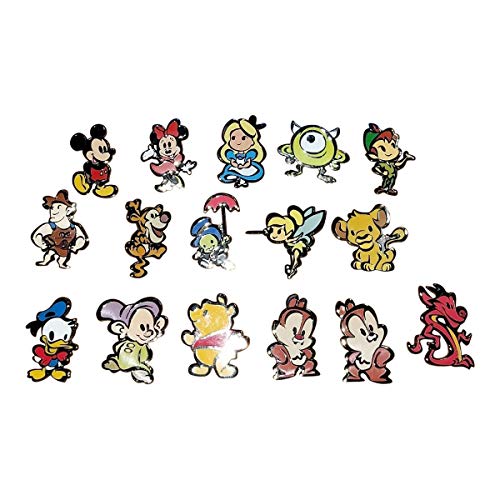
Your first 10-15 pins are your trading currency. You want licensed Disney pins that are visually interesting enough for other collectors to want, but cheap enough that handing them away doesn't sting. Mystery pin sets hit this balance perfectly: you get official Disney-licensed pins at $3-6 each instead of $12-15 retail. The tradeoff is no character control. If you want specific characters for display, buy those individually — but for trading, mystery sets are the move.
Starter Pins — what's the difference?
A few common shapes, each making a different trade.
Open Edition
Widely available, lower cost, great for trading. No collector cachet.
Price
$8–$15 each
Availability
Parks, shopDisney, Amazon
Trade value
Low–medium
Best for Building a trading stash, beginners, park visits
Tradeoff Experienced collectors may pass; everyone already has Mickey
Limited Edition (LE)
Numbered run, higher value, sought by serious collectors.
Price
$20–$80+ each
Availability
Parks, D23, special events
Trade value
High
Best for Display collection, high-value trades, dedicated collectors
Tradeoff Expensive to trade away; most collectors hold rather than trade these
Mystery / Blind Bag
Random licensed pins in bulk at the best per-pin price.
Price
$4–$7 each (in sets)
Availability
Parks, Amazon, specialty shops
Trade value
Low–medium
Best for Building trading stash fast on a budget
Tradeoff Zero character control; duplicates guaranteed in large pulls
Best starter
Disney
Parks Mystery Pin Collection Bag (5 random pins)
$$
★★★★★Our rating
Official Disney Parks-sourced mystery pins at roughly $6 each — the most cost-effective way to build a trading stash. Every pin is licensed, which matters when trading with other serious collectors. You get 5 random pins; expect a mix of characters and series, some you will love, some you will trade immediately. That is the point.
What we like
Official Disney-licensed pins at a fraction of individual retail price
Great variety helps you find what themes you love before spending more
Makes an instantly shareable trading stash without a big upfront cost
What to know
No character control — duplicates happen, especially in small sets
Packaging sometimes slightly damages pin backing on arrival
A curated set of open-edition Disney pins sold as a ready-to-trade pack. Good for people who want a guaranteed character mix (Mickey, Minnie, castle) rather than a random pull. Slightly higher per-pin cost than mystery bags but you know what you're getting.
What we like
Known character mix, no surprises — good for gift buyers
Open-edition pins cast members will happily trade
What to know
Common characters mean other collectors may already have them
Higher per-pin cost than mystery sets of the same total count
Hercules and Meg 25th Anniversary Pin (Limited Edition)
$$$
★★★★☆Our rating
A limited-edition anniversary pin is the right entry into LE collecting: a beloved film, a numbered edition, and a design serious collectors actually want. The 25th anniversary Hercules pin is the kind of piece that anchors a display and commands real trade value.
What we like
High trade value with serious collectors who actively seek them
Limited runs mean they hold or gain value over time
What to know
Reseller markups can be 2-5x original retail price
Hard to authenticate; forgeries exist for popular limited editions
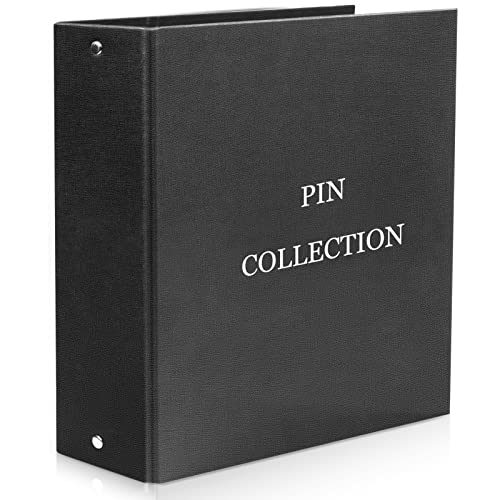
Display books — padded binders with pages of pin-sized loops — are how most collectors store and show off their pins at home. A basic 4-page book holds 96 pins and fits in most tote bags. You'll want one for your home display collection and possibly a smaller one you bring to trade shows or meets. The quality range is wide: cheap knockoff books have loops that scratch pin backs; good ones hold pins snug without marking them.
Best starter
tutata
Enamel Pin Display Binder (280-slot)
$25.99 as of Jun 22, 2026
★★★★★Our rating· In Stock
A proper pin binder with 280 properly sized loops — enough capacity to grow into for years without buying a second book. The black cover looks clean, the loops hold standard Disney pins without scratching, and the binder format lets you flip through your collection fast when trading.
What we like
Properly sized loops hold standard Disney pins without scratching
Zipper closure keeps pins from falling during transport
96-pin capacity is enough to display a real starter collection
What to know
Oversized or jumbo pins won't fit the standard loops
Limited color options; Loungefly releases special editions that sell out fast
A compact faux-leather mini backpack with removable pin-display pages inside — so your collection travels with you and is instantly viewable when you open it. Serious park traders use these because they look intentional, not like you stuffed pins in a random bag.
What we like
Tote and display book in one — less to carry on park days
Interior pages visible when unzipped, making trades fast
What to know
Expensive ($60-80); overkill until you visit parks regularly
Bulk doesn't suit all-day park walks without a stroller
A lanyard is how you wear pins at the parks and signal to cast members and other collectors that you're ready to trade. Disney sell official lanyards at the parks; Amazon has functional equivalents for less. You want a lanyard with a trading pouch — a small zippered pocket — so you can carry 5-8 tradeable pins without them scratching each other. Wearing a full display of 40 pins on a lanyard looks great but makes trading awkward; most experienced collectors wear 5-10 pins on the lanyard and keep extras in a pouch.
Best starter
Disney
Mickey and Minnie Lanyards with Zip Pouch (2-pack)
$24.87 as of Jun 22, 2026
★★★★★Our rating· Only 4 left in stock - order soon.
The official Disney lanyard 2-pack with zip pouches — you get two safety-breakaway lanyards, each with a zippered pocket for trading pins. The 2-pack means a partner or kid can join you, or you have a spare. Cast members recognize these immediately and will approach for trades.
What we like
Safety breakaway clip prevents injury in crowded parks
Zippered pouch keeps trading pins separate from display pins
Immediately recognizable signal to cast members you want to trade
What to know
Pins scratch each other on the strap without rubber backs
Park pricing is $15-25; Amazon often has the same for less
Two lanyards for the price of one park lanyard. Useful if you're taking kids who also want to trade, or if you want a backup. The breakaway safety clip is present on reputable listings; check reviews to confirm.
What we like
Two lanyards for the price of one — great for families
Functionally identical to park lanyards for everyday wear
What to know
Safety breakaway quality varies; verify before wearing at parks
Once your trading stock grows past what fits in a lanyard pouch, you need a small case or padded pouch to carry extra pins to trade meets and park visits. Velvet-lined coin pouches work; purpose-built pin trading pouches are better because the loops hold each pin individually and prevent scratching. Most serious traders carry 20-40 pins to a meet — a flat pouch keeps them organized without a full display book.
Best starter
Pin Travel Case for Disney Pins and More
$64.95 as of Jun 22, 2026
★★★★★Our rating· In stock
A hard-shell travel case explicitly marketed for Disney pin collections. Foam interior with individual slots keeps pins scratch-free in transit. Opens flat for fast browsing during a trade. Compact enough to fit inside a park bag without taking over.
What we like
Hard-shell protection keeps valuable pins scratch-free in transit
Opens flat for fast browsing during a trade — no digging required
50-60 pin capacity handles a full trading stash
What to know
Adds real bulk and weight — not for light park days
Hard case is overkill for cheap trading pins; better for valuable ones
A small velvet-lined zippered pouch that slides into any bag pocket and holds 15-20 pins without scratching them. Not purpose-built for pins, but the velvet lining is gentle on enamel and it costs under $12. A good bridge between your lanyard pouch filling up and needing a full display case.
What we like
Under $12 and fits in any bag pocket without adding bulk
Velvet lining won't scratch enamel pins during transport
What to know
Pins aren't held individually — shift around if overfilled
No clear organization; harder to browse quickly at a trade meet
Disney pin backs are tiny, and you will lose them. The original metal butterfly backs fall off easily; rubber locking backs are the upgrade that keeps pins on lanyards and clothes without constant checking. Buy a bag of 100 rubber backs in your first week — you'll use all of them eventually. Also worth knowing: a PinPics account (free) is the hobby's definitive pin database and trading registry.
Locking rubber backs click onto Disney pin posts and require a deliberate squeeze to remove. You stop losing pins immediately. At $8-10 for 100, it's the cheapest meaningful upgrade in the hobby. Replace all your metal backs on your first lanyard before your first park visit.
What we like
Locking mechanism stops pin loss on lanyards and clothing
100-pack means you won't run out for a long time
Universal fit on standard Disney pin posts
What to know
Slightly harder to remove intentionally during trades — minor friction
Some very thin pin posts need the pinch backs, not locking rubber
Enamel Pin Display Board 9x12in with Clear Front (EVA Foam)
$18.59 as of Jun 22, 2026
★★★★☆Our rating· Only 6 left in stock - order soon.
A 9x12 foam-backed display board with a clear protective front — a real wall or shelf display for your 24-48 favorite pins. EVA foam holds pins securely, the clear cover protects from dust, and it looks deliberate on a shelf or desk. Dedicated it to one character or park for maximum effect.
What we like
Turns your favorite pins into real wall art, not just binder contents
Forces curation — only your best 24-48 pins make the wall
What to know
Foam softens over time, pins can loosen without locking backs
Portable Double-Sided Pin Storage Case (46 Compartments)
$
★★★★☆Our rating
A 46-compartment two-sided organizer that keeps spare backs, trade-stock pins, and duplicates all separated and scratch-free. The double-sided design doubles your capacity without doubling the footprint. Under $10 and the cheapest organizational upgrade in the hobby.
What we like
Keeps spare backs, loose pins, and trade stock all in one place
Under $10 — the cheapest organizational upgrade in the hobby
What to know
Fixed dividers may not fit oversized or jumbo pins
Not padded; don't use for displaying valuable pins long-term
Pin trading looks simple — swap a pin, walk away happy. But there's a whole language underneath it: scrappers vs. licensed, open edition vs. limited, how to read a trade board. Learn it in your first month and the hobby opens up fast.
Pin trading sounds like a kids’ thing. Walk up to a cast member, swap a pin, done. And at that surface level, it is. But underneath it there’s a real collector’s hobby — with its own vocabulary, its own market dynamics, its own community drama (yes, scrappers are a whole thing), and a depth that sneaks up on you fast.
This is what the first month actually looks like, what to learn early, and what to ignore until later.
Week 1: Learn the rules before you make a mistake you can’t undo
The Disney pin trading system has exactly one rule that actually matters for a beginner: any cast member wearing a lanyard with pins on it will trade one pin for one pin, no questions asked, no cash involved. That’s it. You don’t need to sweet-talk anyone. You don’t need a special pass. You just need a licensed Disney pin on a lanyard and the willingness to walk up and ask.
What trips up beginners is the scrapper question. Scrappers are pins manufactured on Disney’s machinery, rejected from the official factory line for quality issues, and then sold to vendors who move them at huge discounts. They look almost identical to real Disney pins — same image, same enamel, same general size. The difference is in the feel: scrappers are slightly lighter, have blurrier graphics under close inspection, and often use soft rubber pin posts instead of the metal posts on real Disney pins.
Cast members are required by policy to trade any pin on any lanyard, including scrappers. But here’s why you still shouldn’t use them: other collectors will notice. The pin trading community, especially at meet-ups and online on PinPics, runs on reputation. Showing up with scrappers as your trading stock marks you as someone who doesn’t care about the ecosystem. It’s a small thing, but this is a hobby where relationships matter.
The safe sourcing list is short: Disney Parks, the Disney Store, shopDisney.com, Target’s official Disney section, and Amazon sellers with Disney authorization. If a deal seems impossibly cheap for a well-known pin design, it’s probably a scrapper.
Week 2: Figure out what you actually want to collect
Disney makes thousands of pin designs. Without a focus, you end up with a random accumulation that grows without meaning. Most collectors find their niche naturally in the first few weeks — it’s usually one of these patterns:
Character focus. You love Figment, you love Stitch, you love Haunted Mansion. You target pins from that character’s universe specifically and build a cohesive set. This is the most common path and the easiest to explain to other traders.
Park and attraction focus. You collect pins from a specific park (Disneyland vs. Disney World vs. Tokyo Disneyland) or a specific attraction. Space Mountain collectors exist. Jungle Cruise collectors exist. These tend to be deeper dives with higher average value per pin.
Series completion. Disney releases pins in sets — complete series of 12 characters, or annual park icon pins, or event-exclusive series. Completionists go after the full set. This can be expensive and time-consuming, but there’s a satisfying endpoint.
Trading stock only. Some collectors don’t collect at all — they flip. They accumulate cheap open-edition pins, trade them for higher-value limited editions, and work up the value chain. This is a real strategy and some people do it well.
You don’t need to decide in week two. But pay attention to which pins you’re reluctant to trade away. That tells you where your collection actually wants to go.
Week 3: Understand the value hierarchy
Not all Disney pins are worth the same in trade. Learning the rough hierarchy saves you from making trades you’ll regret and helps you propose trades other collectors will take seriously.
Limited Editions (LE) are at the top. These have a printed edition size on the back (usually “LE 250” or “LE 1000”). The smaller the number, the rarer and more valuable. Event-exclusive LEs from D23 or special park events trade at a premium.
Open Editions (OE) are the common pins you find everywhere. Mickey ears, castle silhouettes, park icons. They’re great for cast-member trading because cast members must accept them, but experienced collectors may politely decline a trade that’s all common OEs for something they’re actually seeking.
Mystery pins have variable value — they’re official but randomized, so their trade value depends entirely on the character or series. A mystery pin that turned out to be a highly sought character trades like a regular OE of that character.
Scrappers have no trade value in the serious collector community, even if they look identical to real pins.
The practical implication: if you want to trade with another collector (not just a cast member), the trade should feel roughly balanced by value. Offering five common OEs for a LE-250 pin you found online is unlikely to land. Check PinPics and completed eBay listings to get a feel for what pins are actually worth before proposing a trade.
After a month, you have a real decision to make about what kind of collector you want to be.
The casual path means keeping a lanyard with 8-10 pins, trading opportunistically with cast members at park visits, and enjoying the social ritual without pressure. This is a completely valid way to do the hobby. You’ll spend $50-100 a year on fresh trading stock and have a small but curated display at home. The hobby stays light.
The serious path means PinPics, local meet-ups, targeted acquisitions, a real display strategy, and probably an ongoing monthly spend. You start tracking your “want list” and “have for trade” lists. You join trading communities online. You start noticing when new pin series drop and whether they fit your focus.
Neither is better. The hobby accommodates both. What it doesn’t accommodate well is starting serious and then feeling obligated to stay serious — buy at the pace your enthusiasm actually supports, not the pace that looks most committed.
One thing both paths share: get to a local pin trading meet-up within your first month if there’s one anywhere near you. Meet-ups are held at hobby shops, Disney fan clubs, and sometimes at parks themselves. Seeing a table covered with thousands of pins, with traders who’ve been doing this for twenty years, is genuinely exciting. It also calibrates your value sense faster than any online guide.
Save your money
What you don't need yet
Beginners get pressured to buy a lot of stuff that doesn't help them play
better. Here's what we'd skip on day one.
A UV display case — UV protection matters for high-value limited-edition pins after years of display. Worry about it once you have pins worth protecting.
Pin trading bags with hundreds of slots — A 4-page display book and a lanyard get you through your first year. Giant carry bags are for vendors and superfans who bring 300+ pins to trade meets.
Limited edition pins as a first purchase — LEs are for display and high-value trades. Build your trading vocabulary with open-edition pins first so you know what characters and series you actually love.
Scrapper pins to pad your trading stock — Tempting because they're cheap, but other serious collectors will spot them and it damages your reputation in the trading community.
A dedicated storage cabinet — A binder and a few frames handle years of casual collecting. Furniture is a problem for your 1,000th pin, not your 50th.
Disney Auctions or secondary market deep dives — The secondary market for rare pins is real but involves authentication skills you'll develop naturally over 6-12 months of collecting.
First week
Your first seven days
A short, real plan to get from gear-on-doorstep to actually playing.
Order a mystery pin set so you have trading stock before your next park visit. · Buy
Create a free PinPics account and start logging what you have. · Action
PinPics · The community database for every Disney pin ever made
Learn the Disney trading rules: cast members keep their trading board visible and will trade any pin on it for any pin on yours (one-for-one). No cash involved. · Learn
Visit a park or Disney Store with 5-10 pins on your lanyard and trade with at least one cast member. · Action
Find a local pin trading club or meet-up — the hobby is more fun in person than online. · Action
r/DisneyPinSwap · Active online trading community if you can't get to a meet
FAQ
Common questions
What are 'scrapper' pins and how do I avoid them?
Scrappers are unauthorized copies of Disney pins rejected by the factory and sold by resellers. They look nearly identical but feel lighter, have blurry graphics, or use rubbery posts instead of metal. Buy from the Disney Store, shopDisney.com, or reputable Amazon sellers. If a deal seems too cheap for a recognizable pin, it probably is.
Can I trade with cast members even if I'm not a big collector?
Yes. Disney's trading program is explicitly inclusive. Any licensed pin on any lanyard can be traded one-for-one with any pin on a cast member's trading board. You don't need experience or an impressive collection. Show up with 5 pins and a lanyard and cast members will trade with you.
How much should I spend to start?
You can start with $40-50: a 6-pack mystery blind bag for trading stock ($25-30), a basic lanyard ($8-12), and a pack of locking pin backs ($8-10). A display book adds $20-25 if you want to display what you collect. Total real starter kit under $75.
Are mystery pins worth it?
For trading stock, yes — they're the best value in the hobby at $4-7 per licensed pin. For display, only if you love surprises. You have zero character control, so if you need a specific character, buy that pin individually.
What's the difference between open edition and limited edition pins?
Open editions are produced continuously and widely available in parks and online. Limited editions have a numbered production run (usually 250-5,000 pieces), are sold at specific events or parks, and have higher trade and resale value. Start with open editions; collect limited editions once you know what you love.
Do I need to go to Disney parks to trade pins?
No. Online trading on PinPics, r/DisneyPinSwap, and Facebook groups is active. Local Disney fan clubs and pin meet-ups happen in most metro areas. Parks are fun but not required to participate in the hobby.
PinPics — The definitive community database for Disney pins. Log your collection, find traders, authenticate pins. Every serious collector uses it.
Disney Pin Trading (Official) — Disney's official explanation of park trading rules. Simple, authoritative, and the only rules that cast members follow.
r/DisneyPins — Active subreddit for sharing, discussing, and identifying pins. Good for authentication questions and community knowledge.
r/DisneyPinSwap — Dedicated trading subreddit. Offers, ISO posts, and vouches. The most reliable online trading community after PinPics.
Disney Pin Blog — News on new pin releases, event announcements, and trading resources. Best way to stay ahead of what's coming out.
As an Amazon Associate, JustBeginning earns from qualifying purchases.
We may also earn commission from other affiliate programs linked on this
page. Editorial recommendations are independent; we don't choose
products based on commission rates.
Product prices and availability are accurate as of the date and time
indicated and are subject to change. Any price and availability
information shown on Amazon at the time of purchase will apply.
Our top pickDisney Parks Mystery Pin Collection Bag (5 random pins)