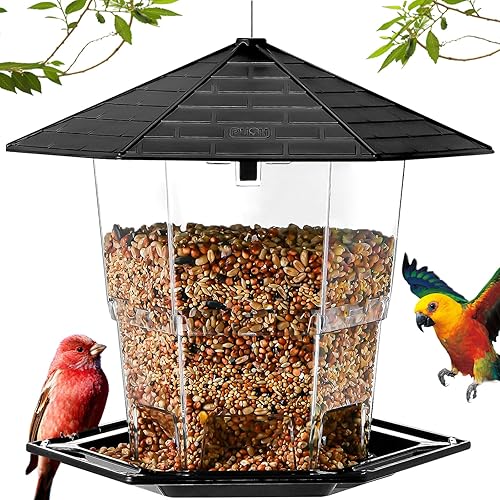
Hang one good feeder full of the right seed and within a week or two you'll have chickadees, finches and cardinals outside your window every morning. It's the easiest way into birds there is. Here's the feeder and seed to start with, how to beat squirrels, and whether a camera feeder is worth it.
By Colin B. · Published November 5, 2026 · Last reviewed November 5, 2026
A simple hanging feeder and a small bag of sunflower hearts is about $35. A squirrel-proof feeder, a 25 lb bag of black oil sunflower and a pole with a baffle comes to around $155, and the pole and feeder last for years.
We earn commission when you buy through links on this page, including
Amazon. See our affiliate disclosure.
Price tiers and budget totals shown above are editorial estimates;
actual prices vary.
At a glance
Our top pick in each category
The fastest path through this guide — each best-starter pick by category.
Scroll for the budget and upgrade alternatives.
Start with one feeder and black oil sunflower seed. It attracts more kinds of birds than anything else, from chickadees and titmice to cardinals and finches. Cheap mixes are full of milo and filler that birds kick onto the ground, which draws rats and pigeons.
Decide how you'll handle squirrels before you buy. Either buy a feeder built to defeat them, or put the feeder on a pole with a baffle at least 5 feet off the ground and 8 to 10 feet from trees, fences and roofs they can jump from.
Place feeders either within 3 feet of a window or more than 30 feet away. Close up, birds can't build enough speed to hurt themselves on the glass. In between is where window strikes happen.
Tube feeders hold sunflower and mixed seed and suit small clinging birds. Hopper feeders hold more and suit bigger perching birds. Platform trays feed nearly everything, including ground feeders like juncos and doves, but they also feed squirrels. For a first feeder, a squirrel-resistant tube is the one that keeps working without frustration.
Feeders — what's the difference?
A few common shapes, each making a different trade.
Squirrel-proof tube
Weight-activated ports close when a squirrel or big bird climbs on.
Birds
Small to medium
Price
$57-130
Best for Anyone with squirrels, which is almost everyone
Squirrel Buster Standard Squirrel-Proof Bird Feeder
$57.08 as of Nov 5, 2026
★★★★★Our rating· In Stock
The feeder that ends the squirrel fight for most people. When a squirrel climbs on, its weight pulls a shroud down over the ports and it gives up. 1.3 lb capacity, four stainless perches, and it comes apart for cleaning. About $57, 12,000+ reviews.
A simple, cheap hanging feeder for about $13 with a push-latch lid that's easy to fill. 7,000+ reviews. Fine for a balcony or a first test, as long as squirrels can't reach it.
The big version: 5.1 lb of seed, six ports and a cardinal ring that gives bigger birds room to perch, with the same weight-activated squirrel shroud. About $129, worth it once you're refilling the Standard every other day.
A hanging tray in weatherproof recycled plastic lumber with a mesh bottom that drains. About $28. It brings in ground feeders like juncos, doves and cardinals that ignore tube feeders.
Seed is where most beginners go wrong. Cheap mixes are bulked up with milo and millet that most feeder birds toss out. Black oil sunflower has thin shells and lots of fat, and nearly every feeder bird eats it. Sunflower hearts are the same seed with no shells, so there's no mess under the feeder. Buy one of those and skip the rest.
Best starter
Wagner's
Black Oil Sunflower Wild Bird Food, 25 lb
$41.98 as of Nov 5, 2026
★★★★★Our rating· In Stock
The seed that brings the most species, in a 25 lb bag for about $42. That's a season of feeding for one or two feeders. 13,700+ reviews.
The same sunflower with the shells removed, so nothing piles up under the feeder and nothing sprouts in your lawn. About $15 for 5 lb. Ideal for patios, balconies and decks.
A pole with a baffle is the most effective squirrel defense there is. A cone or tube baffle under the feeder stops anything climbing up. It only works if the pole stands where squirrels can't jump onto the feeder from above or the side: about 5 feet up and 8 to 10 feet from trees, fences and roofs.
Best starter
Gtongoko
92 Inch Shepherds Hook Pole with 19 Inch Squirrel Baffle
$56.99 as of Nov 5, 2026
★★★★★Our rating· In Stock
A tall double-hook pole with a ground base and a 19 inch baffle for about $57. It gets feeders up and away from jump points, and the baffle stops climbers. 1,600+ reviews.
Camera feeders record every visitor and identify the species in an app. They're genuinely fun and great for kids, but they hold less seed, need Wi-Fi at the feeder and cost far more than a regular feeder. The biggest difference between brands is whether bird ID needs a paid subscription. Buy a regular feeder first and add a camera if you get hooked.
Best starter
NETVUE by Birdfy
Smart Bird Feeder with 2K Camera
$129.99 as of Nov 5, 2026
★★★★★Our rating· In Stock
A solar-powered camera feeder with unlimited AI bird ID on the free plan, so there's no monthly fee for the main feature. About $130, 1,300+ reviews.
The best-known camera feeder, with 2K video and photos, AI species ID and alerts. About $189, but its AI features need a premium subscription, so budget for that.
Birds don't show up the day you hang a feeder. Here's what the first month really looks like, from the empty first week to your first regulars, and the small fixes that bring in more species.
Bird feeding is the most patient hobby there is in week one and the most rewarding by week four. You do very little: hang a feeder, keep it full and clean, and learn the names of who turns up. The birds do the rest.
Week 1: Hang it, then wait
Placement does most of the work:
Near cover. Birds like a tree or shrub within 10 to 15 feet, so they can dart to safety. Too close and squirrels and cats use it as a launch pad.
Close to a window, or far from it. Within 3 feet or beyond 30 feet keeps window strikes down.
Where you’ll see it. Your kitchen or desk window. You’ll watch it far more than you think.
Fill it with black oil sunflower and then wait. It’s normal for a new feeder to sit untouched for days. Birds are cautious about anything new.
The first visitors are usually chickadees, titmice or house finches. They’re bold, curious and quick to tell the neighborhood. Once one bird is using the feeder regularly, others follow.
Start learning names now. A free ID app that recognizes birds from a photo or from their song makes this easy, and knowing who’s who is half the fun.
Week 3: Squirrels, and other problems
By now squirrels have probably found it too. If your feeder isn’t squirrel-proof, the fix is placement: a pole with a baffle, 5 feet up, 8 to 10 feet from anything they can jump from. Squirrels are clever, but they can’t fly.
Other common week-three problems:
A mess under the feeder. Switch to sunflower hearts, which have no shells.
Bully birds. Grackles and starlings can take over. Feeders with short perches or weight-sensitive ports help.
Seed going moldy. Fill less at a time in wet weather.
Take the feeder down, scrub it with a weak bleach solution (about 1 part bleach to 9 parts water), rinse well and let it dry fully. Every two weeks is a good rhythm. Dirty feeders spread disease between birds.
Once you have regulars, it’s easy to bring in more species. A platform tray brings ground feeders like juncos and doves. A nyjer feeder brings goldfinches. Suet in winter brings woodpeckers. Add one thing at a time and see who comes.
What not to worry about yet
Don’t buy a pile of feeders and seed blends. Don’t worry if a day goes by with no visitors; weather and hawks change things. One clean feeder with good seed, in the right spot, will turn your window into the best show in the house.
Save your money
What you don't need yet
Beginners get pressured to buy a lot of stuff that doesn't help them play
better. Here's what we'd skip on day one.
Five different feeders — One good feeder with sunflower brings most backyard birds. Add others once you know who visits.
Fancy seed blends — Black oil sunflower beats nearly every mix. Add nyjer for goldfinches or suet in winter later.
A heated birdbath — Water is great for birds, but start with a feeder. Add a birdbath in your second season.
Binoculars — Nice for the far side of the yard, but feeder birds come close. Your eyes and a phone camera are fine.
Hummingbird feeders — A separate project with sugar water and frequent cleaning. Start with seed.
First week
Your first seven days
A short, real plan to get from gear-on-doorstep to actually playing.
Pick a spot within 3 feet of a window or more than 30 feet away, away from where squirrels can jump. · Action
Put a reminder on your calendar to clean the feeder every two weeks. · Action
FAQ
Common questions
What's the best bird seed for beginners?
Black oil sunflower. It attracts more species than any other seed, from chickadees and nuthatches to cardinals and finches. Sunflower hearts are the same seed without shells, for no mess.
How long does it take birds to find a new feeder?
Usually a few days to three weeks. Put it where birds can see it from nearby trees or shrubs, keep it full, and they'll come.
How do I keep squirrels away from my bird feeder?
Use a weight-activated feeder like the Squirrel Buster, or mount the feeder on a pole with a baffle at least 5 feet up and 8 to 10 feet from anything a squirrel can jump from.
How often should I clean my bird feeder?
About every two weeks, more often in wet weather. Scrub it with a weak bleach solution (about 1 part bleach to 9 parts water), rinse well and let it dry fully before refilling. Dirty feeders spread disease.
Is it bad to feed birds?
No, as long as feeders are clean and seed is fresh. Feeding doesn't make birds dependent; they still get most food in the wild. In bear country, take feeders down from spring to late fall.
Are camera bird feeders worth it?
They're fun, especially with kids, and the photos are great. But they cost more, hold less seed and need Wi-Fi. Check whether bird ID needs a subscription before you buy.
Project FeederWatch (Cornell Lab) — The Cornell Lab's feeder bird program. Great guides to which foods attract which birds, plus a winter count you can join.
All About Birds (Cornell Lab) — The best free bird ID guide online, with photos, songs and range maps for every North American species.
Merlin Bird ID app — Free app that identifies birds from a photo or their song. It's how most beginners learn who's at the feeder.
National Audubon Society — Guides to bird-friendly yards, native plants and keeping feeders safe for birds.
JustBeginning earns commission from affiliate programs. As an Amazon
Associate, we earn from qualifying purchases. This costs you nothing
extra and doesn't change our recommendations.
Prices and availability are accurate as of the date and time
shown and can change; the price on Amazon when you buy is what
applies.
How this works.
Our top pickSquirrel Buster Standard Squirrel-Proof Bird Feeder


 Best starter