Flag football is about to get a lot bigger: it joins the Olympics at LA 2028, and rec leagues are filling up with first-timers. The good news is that you need no pads, and the gear that matters is a good pair of shoes. Here's what to buy and what to skip.
By Colin B. · Published November 1, 2026 · Last reviewed November 1, 2026
Flag football is cheap compared with tackle. Budget picks run about $95 for belts, cleats, gloves, and a ball; our recommended starter picks, agility kit included, land near $190. Your league usually supplies belts and game balls, so you may spend less.
We earn commission on qualifying Amazon purchases — see our
affiliate disclosure.
Price tiers and budget totals shown above are editorial estimates;
actual Amazon prices vary.
At a glance
Our top pick in each category
The fastest path through this guide — each best-starter pick by category.
Scroll for the budget and upgrade alternatives.
Ask your league before you buy anything. Most leagues supply belts and game balls, and many ban metal spikes or limit which cleats you can wear. A two-line message to the organizer saves you $50.
Know your field surface. Grass wants molded cleats; artificial turf and gym floors want turf shoes. Buying the wrong one is the most common beginner mistake, and turf shoes on wet grass are an ankle injury waiting to happen.
Spend on shoes, not accessories. You don't need pads, helmets, or a $90 jersey. A pair of shoes that matches your field and a water bottle will get you through the first season.
The gear
What you actually need
Flag Belts
The belt is the one piece of gear every player in a flag league needs, and your league will usually hand you one. Buy your own if you want to practice with friends, run a pickup game, or coach a kid's team. Look for a quick-release buckle, an adjustable waist that fits adults, and three flags per belt (the NFL FLAG standard). Don't pay for brand names: belts are close to commodities, and the cheap ones work fine for pickup games.
Best starter
Hilhook
14-Player Flag Football Belts (42 Flags)
$
★★★★★Our rating
Fourteen belts and 42 flags for about $36 is the cheapest way to host a real pickup game, which is how most beginners actually learn. Quick-release buckles and an adjustable waist up to 45 inches mean one size fits most adults and teens.
What we like
Enough belts for a full 7-on-7 game plus subs
Quick-release buckle comes off fast between plays
One adjustable size fits most teens and adults
What to know
Generic brand; the Velcro and stitching are fine, not heirloom
Colors vary by pack, so check the listing before you order
About $15 gets you adjustable belts for adults and youth, end-zone cone markers, and a carry bag. It is the pack to buy if you just want to see whether your friends will actually show up on Saturday.
What we like
Includes end-zone cones, so you can mark a field right away
Adjustable belts fit both adults and kids
Under $15 from a name-brand sports company
What to know
Fewer belts than the 14-player sets
Cones are lightweight and slide around on wet grass
Champion has been selling flag belts to schools and rec leagues for years. The quick-release triple-flag set is the closest thing to what a league will hand you on game day, and it is sized to your waist.
What we like
Quick-release triple flag design matches what leagues use
Sold in sized belts, so adults get a proper fit
Built for school gym classes, so it takes abuse
What to know
Roughly $40 for 12 belts, more than the generic sets
Medium/large belt fits 32-39 inch waists; check the size before ordering
This is the decision most first-timers get wrong. Flag football is played on grass, turf, or a gym floor, and the right shoe depends on which. If your league plays on natural grass, molded football cleats are the safe pick. If it plays on artificial turf (common at rec parks and indoor facilities), a turf shoe with a nubby sole grips better and is easier on the knees. Many leagues ban metal spikes, and none of them want you in baseball cleats, so ask before you buy. Sizes sell out one at a time on Amazon, so check the size you need before you commit.
Cleats and Turf Shoes — what's the difference?
A few common shapes, each making a different trade.
Molded cleats
Rubber studs for grass and soft fields. The default for football cleats.
Surface
Grass, some turf
Studs
Molded rubber
Price
$50-140
Best for Leagues that play on natural grass
Tradeoff Studs can catch on some artificial turf, which is hard on knees
A real football cleat at about $52, which is the sweet spot for someone not sure they'll play more than a season. The molded sole bites into grass for cutting and quick starts.
What we like
Molded cleats grip well on grass and soft fields
Around $52, a fraction of a pro-level cleat
From a major football brand, so fit and build are consistent
What to know
Not ideal on hard artificial turf
Lighter padding than pricier cleats; fine for flag, not for long days on concrete
The pick if your league plays on turf or in a gym. At about $50, a soccer-style turf shoe is a cheaper and arguably better fit for flag than a football cleat, because the sole is made for turf traction.
What we like
Turf outsole suits artificial fields and gyms
Around $50, cheaper than most football cleats
Low-profile design works for running routes and cuts
What to know
Not made for wet natural grass
Not marketed as a football shoe, so ankle support is minimal
A step up with more cushioning and a more aggressive stud pattern. Wait until you've played a few games and know what surface you're on. Prices swing a lot by size and color; look for a deal near $90.
What we like
Better cushioning and fit than entry cleats
Aggressive stud pattern grips well for hard cuts
Looks like what the better players wear
What to know
Often $110-140 at full price, a lot for a beginner
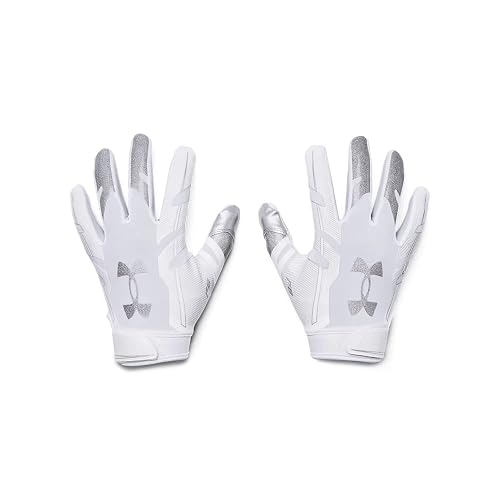
Gloves are optional, but they're the cheapest way to look and feel like a better receiver. Sticky palms help you hold on in cold or wet weather, and they make dropped passes a little less frequent. They don't replace good hands: practice catching first. If you play in warm weather or only occasionally, skip gloves for your first couple of games and see whether you miss them.
Best starter
Nike
Vapor Jet 8.0 Adult Football Receiver Gloves
$$
★★★★★Our rating
The gloves you will see on most rec-league receivers. A tacky palm grips the ball in cold and rain, and the slim fit leaves your fingers free. Around $31.
What we like
Tacky palm holds onto the ball in cold or wet weather
Slim fit lets you feel the ball
Name-brand quality at around $31
What to know
Palm grip wears out after a season or two of regular play
Padded and durable, with a firm palm grip. A good pick for cooler climates and for players who also take a few hits in practice or play tackle-adjacent sports.
What we like
Durable construction lasts longer than budget gloves
Your league will bring game balls, but you want one for practice. Buy by age: adults and teens 14 and up use the full-size ball, younger kids use a smaller youth ball that's easier to grip and throw. A leather or composite ball feels like the real thing; rubber is a great backyard and park ball that holds up to grass, pavement, and dogs.
Best starter
Wilson
NFL The Duke Football
$$
★★★★★Our rating
Wilson makes the actual NFL ball, and The Duke is the official-size version for players 14 and up. A deep-grain cover gives you the feel of a real game ball.
What we like
Official size and feel, the ball you'll see in the league
Flag football rewards the player who can start, stop, and change direction without getting flagged, so agility drills are the best use of your time between games. A ladder and cones cost less than a pair of cleats and fit in a car trunk. Do ten minutes before a game or twice a week at home; you'll feel the difference within a month.
Best starter
YISSVIC
Agility Ladder and Cones (20 ft)
$
★★★★★Our rating
Around $17 gets you a 20-foot ladder with 12 adjustable rungs, 10 cones, and a carry bag. It is enough to build a full footwork and cutting circuit.
Flag football is easy to understand and surprisingly hard to do well. Here is what your first month actually looks like, from your first pickup game to your first interception.
Flag football looks like tag with a ball, and for about ten minutes it feels that way. Then you try to cover a receiver who changes direction and realize it’s a game of space, timing, and speed. Knowing what the first month looks like makes it a lot less humbling.
Week 1: Learn where to stand
Don’t worry about plays yet. The biggest difference between a beginner and an experienced player is positioning, and you can learn it in a single game by watching.
The rules that matter on day one:
No contact. No blocking, no tackling, no diving, no stiff-arms. You stop the runner by pulling a flag.
Aim for the flag, not the body. Pulling the flag off the hip is the whole job on defense.
Don’t guard your flags. Hands off the belt. A runner who swats or covers the flags can get a penalty.
One handoff, then everyone is eligible. Rules vary by league, so ask the ref or read the league page.
Rec leagues differ on rush rules and scoring, so ask the organizer for the league’s rule sheet before game one.
Week 2: Pull flags properly
The most common beginner mistake is chasing the ball carrier’s body. Keep your eyes on their hips, get your feet under you, and reach for the flag as you arrive. Don’t lunge. A missed lunge puts you on the ground and the runner gets a free first down.
Spend ten minutes with a friend practicing: one runs, the other works on closing the gap and pulling a flag. You will get faster at it than you expect.
On offense, practice one route at a time. A simple hitch, a slant, and a go route will cover most of what a beginner needs. Learn the footwork, then add the rest.
Week 3: Catch with your hands, not your chest
Beginners trap the ball against their body. It works until it doesn’t. Practice catching the ball with your hands, thumbs together for balls above the waist and pinkies together for balls below it. Reach out and catch the ball away from your body.
Gloves help in the cold but aren’t a substitute for this. If you’re dropping passes, work on the basics before spending money.
By now you can pull flags, catch the ball, and run a route. What’s left is reading the game. Notice where the defense is standing before the snap. Watch the quarterback’s eyes. Learn which of your teammates is faster than the defender covering them.
Flag football rewards the player who can read the game. A smart player of average speed beats a fast player who guesses.
The mistakes everyone makes
Wearing the wrong shoes. Turf shoes on wet grass slip; cleats on hard turf catch. Match the shoe to the field.
Guarding the flags. Even by accident, it’s a penalty in most leagues.
Lunging for the flag. You’ll miss, and the runner will keep going. Get close, then reach.
Skipping the warm-up. You will sprint, stop, and cut in the first minute of play. Do five minutes of jogging and dynamic stretching.
Beginners get pressured to buy a lot of stuff that doesn't help them play
better. Here's what we'd skip on day one.
Pads, helmet, or mouthguard — Flag football is non-contact, so none of it is required. Some leagues recommend a mouthguard; ask.
Pro-level $150+ cleats — You won't feel the difference until you've played a full season. Start with an entry cleat and upgrade once you know your position and surface.
A branded jersey — Your league will give you a pinnie or team shirt. Save the money for shoes.
Compression gear and arm sleeves — Fine if you like them, but they won't make you faster. Wait until the cold shows up.
First week
Your first seven days
A short, real plan to get from gear-on-doorstep to actually playing.
Message your league organizer and ask what gear they supply, what surface you'll play on, and whether cleat rules apply. · Action
Order cleats or turf shoes that match your field. · Buy
Learn the basics: no contact, no blocking, pull the flag to stop the runner, and you can't dive or stiff-arm. Check the official rules for your league. · Learn
NFL FLAG · The official NFL flag football program: rules, leagues, and a league finder
Throw and catch for 15 minutes on two different days. Even a bad quarterback is better than a good one who never practices. · Action
Play in a pickup game or sign up for a rec league. Your first season is about learning where to stand. · Action
FAQ
Common questions
How much does it cost to start playing flag football?
About $95 with budget picks (belts, cleats, gloves, a ball) or about $190 with our recommended starter picks. If your league supplies belts and balls, you only need shoes, which means $50 or less.
Do I need cleats for flag football?
Not always. On turf or a gym floor, a turf shoe or even a good pair of cross-trainers works. On natural grass, molded cleats grip noticeably better. Ask your league what surface and cleat rules apply.
Can I wear baseball or soccer cleats?
Soccer cleats work on grass in most leagues. Baseball cleats with a toe stud are often banned, and metal spikes almost always are. Check with your league.
What is the difference between flag and tackle football?
There is no tackling or blocking in flag football. Defenders stop the ball carrier by pulling a flag from the belt, which is why speed and agility matter more than size and why pads aren't needed.
Is flag football good exercise?
Yes. It's short bursts of sprinting, cutting, and catching, with very little contact. A one-hour game is a solid interval workout, and it's far easier on the body than tackle.
As an Amazon Associate, JustBeginning earns from qualifying purchases.
We may also earn commission from other affiliate programs linked on this
page. Editorial recommendations are independent; we don't choose
products based on commission rates.
Our top pickUnder Armour Spotlight Hammer Football Cleats

 Best starter