Etching cream turns clear glass frosted wherever it touches, so with a stencil you can put a name, a monogram or a pattern on a glass, a jar or a mirror in an afternoon. Here's what cream to buy, how to cut stencils by hand or with a cutting machine, which glass etches well, the safety gear you need for an acid product, and when a rotary engraver makes more sense.
By Colin B. · Published November 19, 2026 · Last reviewed November 19, 2026
A small bottle of etching cream, a roll of stencil vinyl, a craft knife, a weeding tool, nitrile gloves and safety glasses come to about $40. Add a larger reusable cream and a tool kit for about $90. A rotary engraver adds about $40.
We earn commission when you buy through links on this page, including
Amazon. See our affiliate disclosure.
Price tiers and budget totals shown above are editorial estimates;
actual prices vary.
At a glance
Our top pick in each category
The fastest path through this guide — each best-starter pick by category.
Scroll for the budget and upgrade alternatives.
Etching cream is an acid product. Most creams use ammonium or sodium bifluoride, which can burn skin and eyes and gives off fumes. Wear nitrile gloves and eye protection, work near an open window or fan, and keep it away from kids, pets and food prep areas. Rinse any skin contact with lots of running water right away.
Not all glass etches the same. Ordinary soda lime glass, like most drinking glasses, jars, vases and mirrors, frosts evenly. Borosilicate glass such as Pyrex and some coated or tempered glass etch weakly or blotchy. Test a spot on the bottom first.
The stencil does most of the work. Clean edges come from a stencil that is pressed down hard with no bubbles or lifted corners. Adhesive stencil vinyl cut by hand or on a Cricut or Silhouette gives the sharpest results.
Cream works on flat or gently curved surfaces. For tight curves, fine shading or deep cuts, a rotary engraver or sandblasting is the better tool. Most people start with cream because it is cheap and quick.
The gear
What you actually need
Etching cream
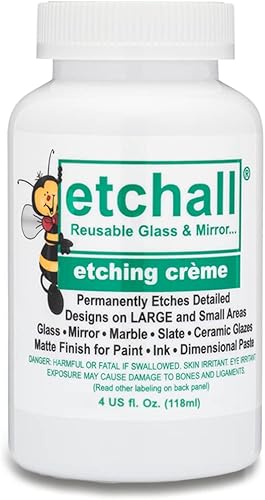
Etching cream is a thick paste that eats a thin layer off the glass surface and leaves it frosted. You brush it on over a stencil, wait a few minutes, and rinse it off. Most creams contain bifluoride salts, so they need gloves, eye protection and ventilation. A 3 oz bottle covers dozens of small designs if you only put it where the stencil is open. Some creams can be scraped back into the jar and reused.
Best starter
Armour Etch
Glass Etching Cream, 2.8 oz
$13.99 as of Nov 19, 2026
★★★★★Our rating· In Stock
The cream most beginners start with and most tutorials are written for. It works fast, frosts ordinary glass evenly, and the small bottle is enough to learn on before you commit to a bigger jar. Sold by TuSu Goods. About $13.99, 4.6 stars from 9,938 ratings.
The same cream in a bigger jar. Worth it once you are etching sets of glasses, jars for gifts or larger panels, and the cost per ounce drops a lot. Keep the lid tight. Sold by TuSu Goods. About $30, 4.6 stars from 2,042 ratings.
A slower cream you leave on for about 15 minutes, then scrape back into the jar and reuse. Good for large designs where you want lots of cream on the glass without wasting it. Sold by WeSupplyDIY. About $30, 4.6 stars from 513 ratings.
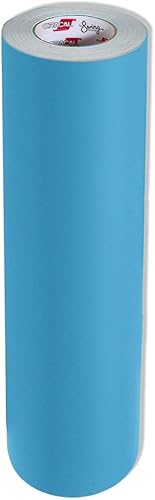
The stencil decides how clean your edges look. Adhesive stencil vinyl sticks tight to glass so cream can't creep under, and it peels off without residue. You can cut it with a craft knife or a cutting machine like a Cricut or Silhouette. Premade reusable stencils are the fastest way to start. Regular permanent vinyl works in a pinch, but it leaves more residue and can lift on curves.
Best starter
ORACAL
Oramask 813 Stencil Film, 12 in x 20 ft
$22.99 as of Nov 19, 2026
★★★★★Our rating· In Stock
A low-tack translucent stencil film made for painting and etching. It cuts cleanly by hand or by machine, you can see through it to line up your design, and it comes off glass without sticky residue. Sold by VViViD Vinyl. About $23, 4.5 stars from 3,786 ratings.
Premade reusable adhesive letter stencils. Press them onto glass, etch, peel and reuse. No cutting needed, so you can etch initials on your first night and learn how cream behaves before you make your own. Sold by Plus One Products. About $9.95, 4.4 stars from 141 ratings.
Transfer tape lifts a weeded stencil off its backing and puts it on the glass in one piece. It keeps the small parts of letters, like the middle of an O, in place while you position it. Sold by Amazon. About $10.99, 4.4 stars from 2,054 ratings.
You need a sharp blade to cut stencils, a hook to weed out small pieces, and something flat to press the stencil down. A foam brush or plastic spatula spreads cream thick and even. Avoid metal brushes in cream. A self-healing cutting mat protects your table and helps the blade glide. Change craft knife blades often, since a dull tip tears vinyl and leaves ragged edges.
Best starter
Cricut
Basic Tool Set, 5 Piece
$13.49 as of Nov 19, 2026
★★★★★Our rating· In Stock
A weeder, a scraper for burnishing, tweezers, a spatula and scissors in one set. The weeder and scraper are the two tools you will reach for on every stencil, cut by hand or by machine. Sold by Amazon. About $13.49, 4.9 stars from 45,531 ratings.
The classic pen-sized craft knife for cutting stencils by hand. Fine tip for tight curves and small letters, and replacement blades are cheap and sold everywhere. Sold by JA Wholesale LLC. About $9.99, 4.7 stars from 3,746 ratings.
A self-healing mat with a printed grid. It keeps your craft knife from sliding, protects the table, and the grid helps you cut straight lines and center designs. Sold by Anezus Direct. About $8.99, 4.7 stars from 21,626 ratings.
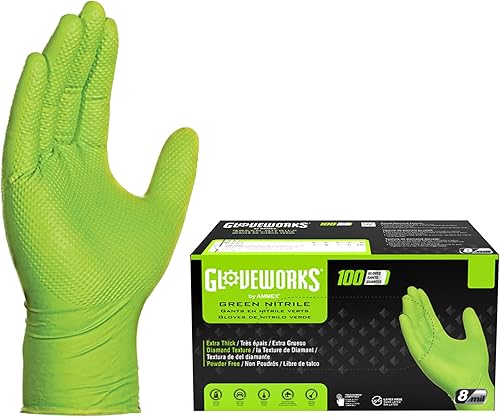
Etching cream can burn skin and eyes, so gloves and eye protection are not optional. Use nitrile, not thin latex or vinyl gloves. Wear safety glasses at minimum, or splash goggles if you work with larger amounts or rinse in a deep sink where splashes happen. Work with a window open or a fan pulling air away from you. Keep the cream, the rinse area and your tools away from food and kids.
Best starter
Gloveworks
Green Nitrile Gloves, 8 Mil, Chemical Resistant
$26.95 as of Nov 19, 2026
★★★★★Our rating· In Stock
Thicker than standard exam gloves, so they hold up better to cream and to scraping stencils. A box lasts a long time, and you can change gloves as soon as one gets cream on it. Sold by ZOOMGET. About $27, 4.7 stars from 11,401 ratings.
Light, comfortable safety glasses that protect against splashes from the front and sides. Fine for small brush-on projects and for rotary engraving dust. Sold by Amazon. About $9.59, 4.2 stars from 4,570 ratings.
Sealed goggles with indirect vents, made to block chemical splashes. Worth it if you etch larger pieces, rinse in a deep sink, or wear glasses that don't fit under safety glasses. Sold by Authorized New Age America Seller. About $18.70, 4.5 stars from 7,339 ratings.
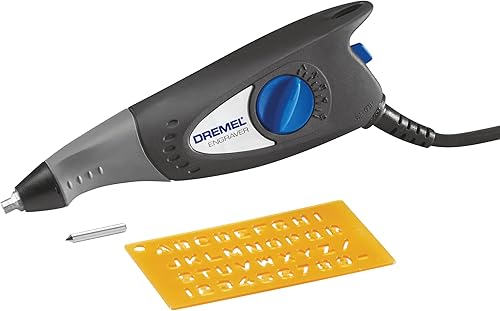
A rotary engraver scratches the glass with a spinning diamond or carbide bit. It is slower than cream but needs no stencil, works on tight curves, and lets you shade and draw freehand. Keep the glass damp, wear safety glasses, and practice on a jar before a gift. Many people use both: cream for clean lettering and an engraver for fine detail.
Best starter
Dremel
Engraver Rotary Tool with Stencils, 290-02
$14.48 as of Nov 19, 2026
★★★★★Our rating· In Stock
A simple pen-style engraver that vibrates a carbide tip instead of spinning a bit. It is easy to control for writing names and simple line art on glass, metal and wood. Sold by Amazon. About $14.48, 4.4 stars from 7,715 ratings.
A cordless rotary tool with variable speed. Add diamond burrs and it handles shading, fine lines and deeper engraving on glass, plus many other craft jobs. Sold by Amazon. About $64, 4.6 stars from 10,911 ratings.
Glass etching is quick to learn. A month is enough to etch clean letters on a drinking glass, cut your own stencils, frost a jar or mirror, and know when cream is the wrong tool. Here's a week-by-week plan.
Etching is mostly prep. Clean glass, a tight stencil and a thick coat of cream give you a crisp frosted design. Rushing any of the three gives you blotches and fuzzy edges.
Week 1: Set up safely and etch one letter
Pick a spot with a window or fan, away from the kitchen counter where you prep food. Lay down newspaper. Put on nitrile gloves and safety glasses before you open the cream. Clean a plain glass with rubbing alcohol and let it dry. Press on a single premade stencil letter and rub every edge down with a craft stick. Spread the cream on thick, about 1/8 inch, so you can’t see glass through it. Wait the time on the label, then rinse it off under running water with your gloves still on.
Draw or print a simple shape and tape it under a sheet of adhesive stencil vinyl. Cut along the lines with a sharp craft knife and change blades often, because a dull blade tears vinyl. Peel out the parts you want frosted. That step is called weeding. Use transfer tape to move the stencil onto the glass, then burnish it hard. Look at it from the inside of the glass for bubbles or lifted edges and fix them before the cream goes on.
Try a mason jar, a vase or a small mirror. Larger areas need more cream and an even layer, so use a foam brush and work quickly. Halfway through, stir the cream gently with the brush to keep the etch even. For a mirror, etch the front glass side, not the silver backing. Rinse until no grit is left and peel the stencil under water.
Tight curves like wine glass stems make stencils wrinkle. Cut small relief slits in the vinyl so it lies flat. If you want fine shading, freehand lines or deep carving, try a rotary engraver with a diamond bit instead of cream. Wear safety glasses and keep the glass damp to cut down on dust. By the end of the month you’ll have a box of practice glasses and a good sense of which tool fits which project.
Clean a plain drinking glass with rubbing alcohol so the stencil sticks and the cream etches evenly. · Action
Etch a simple premade stencil, like a single letter, and time it by the directions on the bottle. · Action
Cut your own stencil from adhesive vinyl with a craft knife and etch it on a jar. · Action
Test etch the bottom of a Pyrex dish or tempered glass to see how weakly it frosts. · Learn
FAQ
Common questions
Is glass etching cream dangerous?
It can be. Most creams contain bifluoride salts that burn skin and eyes and release irritating fumes. Wear nitrile gloves and eye protection, work with ventilation, and wash any contact off with running water for several minutes. Read the safety data sheet before you start.
How long do I leave etching cream on?
Follow the label. Armour Etch is usually left on for a few minutes, while Etchall is left on for about 15 minutes. Leaving it much longer does not make a deeper etch. It just raises the chance of the cream creeping under the stencil.
Why did my etching come out blotchy?
Usually the glass was not clean, the cream was spread too thin, or the glass is borosilicate or coated. Clean with rubbing alcohol, apply a thick, even layer, and stir it gently with a brush halfway through.
Is etched glass dishwasher safe?
Yes. Acid etching changes the glass surface itself, so it will not wash off or fade. The frosted area can hold grease and fingerprints, so a quick scrub helps keep it looking clean.
Can I etch with a Cricut?
A Cricut or Silhouette cuts the stencil, not the glass. Cut adhesive stencil vinyl, weed out the parts you want frosted, transfer it to the glass, then apply cream by hand.
JustBeginning earns commission from affiliate programs. As an Amazon
Associate, we earn from qualifying purchases. This costs you nothing
extra and doesn't change our recommendations.
Prices and availability are accurate as of the date and time
shown and can change; the price on Amazon when you buy is what
applies.
How this works.

 Best starter