USPSA and IDPA are the fastest-growing competitive shooting sports in the US. The learning curve is steep, the gear costs real money, and the payoff is unlike any other sport: moving through a stage under the clock, reading targets, making decisions under pressure. Here's what you need to compete in Production class from day one.
By Colin B. · Published June 7, 2026 · Last reviewed June 7, 2026
Pistol ($500-800), holster ($150-300), belt ($80-150), mag pouches ($80-150), safety gear ($50-100). Buy it right the first time.
We earn commission on qualifying Amazon purchases — see our
affiliate disclosure.
Price tiers and budget totals shown above are editorial estimates;
actual Amazon prices vary.
At a glance
Our top pick in each category
The fastest path through this guide — each best-starter pick by category.
Scroll for the budget and upgrade alternatives.
Your first 10-20 matches will be more about safe gun handling than about score. Production class is the right division to start: no expensive modifications, no optics, and the rules are designed for box-stock pistols. Your GLOCK or M&P is already legal.
Visit a local club match before buying anything. USPSA and IDPA clubs hold monthly matches for $15-25 to enter, and every experienced shooter will let you watch, lend you gear, and tell you honestly what to buy. This is the shooting sports equivalent of open play.
Budget $1,000-1,600 to start properly. A reliable pistol ($500-800), competition holster ($150-300), competition belt ($80-150), and magazine pouches ($80-150) is what a complete Production setup costs. Cutting corners on the holster and belt leads to malfunctions during a stage.
Production class is designed for the pistols most people already own or can buy off the shelf: GLOCK 17, GLOCK 34, Smith and Wesson M&P 2.0, CZ Shadow 2, SIG P320. The rules are minimal (10-round magazines, no compensators, no optics), which keeps costs focused on the pistol itself. Pick a 9mm striker-fired or DA/SA gun you can shoot well, and buy it at a local FFL dealer. Amazon does not sell complete firearms.
Pistol — what's the difference?
A few common shapes, each making a different trade.
Production
Iron sights, stock trigger, 10-round mags. The right starting division.
Optics
Iron sights only
Magazines
10 rounds max
Modifications
Stock or minor internal
Best for All new competitors; any Production-approved 9mm pistol
Tradeoff Reload-limited vs. Limited class; compensates with more available holster options
Carry Optics
Adds a red dot optic. Same 10-round limit and stock rules otherwise.
Optics
Red dot required
Magazines
10 rounds max
Modifications
Optic mount and internal mods
Best for Shooters comfortable in Production who want to add a red dot
Tradeoff Additional cost ($300-600 for a quality red dot) and new aiming system to learn
Limited
High-capacity magazines, external mods allowed. Skip for year one.
Optics
Iron sights only
Magazines
High capacity (140mm)
Modifications
External thumb rests, grip work
Best for Experienced competitors ready to invest in a purpose-built competition gun
Tradeoff Equipment cost jumps significantly; diminishing returns until fundamentals are solid
Best starter
GLOCK
34 Gen 5 MOS
$$$
★★★★★Our rating
The GLOCK 34 is the most popular Production class pistol at USPSA matches by a wide margin. The 5.31-inch barrel gives a longer sight radius than a standard G17, and the MOS variant is pre-milled for a red dot when you eventually move to Carry Optics division. Parts are everywhere, the platform is proven, and it was designed with competition in mind. Buy through a local FFL dealer.
What we like
Most popular Production class pistol at USPSA matches nationwide
5.31-inch barrel delivers a longer sight radius than a standard G17
MOS pre-milled for a red dot when you move to Carry Optics
What to know
Not sold on Amazon; requires FFL dealer or FFL transfer purchase
Long grip prints noticeably if you also carry concealed off-range
If you already shoot M&P, you're already Production-legal. The 5-inch barrel model runs under $600 street price and is genuinely competitive. The Gen 2 trigger is a real step up from the original, and M&P's aftermarket parts ecosystem is as deep as GLOCK's. A solid choice for anyone who finds the GLOCK grip angle awkward.
What we like
Under $600 street price, the most affordable serious Production option
Grip angle suits shooters who find the GLOCK angle uncomfortable
M&P ecosystem means parts and holsters are available everywhere
What to know
FFL dealer purchase only; no Amazon option
Trigger remains second-tier to a tuned GLOCK or CZ out of the box
The dominant DA/SA choice in Production class worldwide. Its double-action first pull is smoother than almost any other out-of-the-box competition gun, the bore axis sits lower than a striker-fired pistol, and it has won Production class at multiple USPSA nationals. Expensive and worth it once you've shot enough to feel the difference.
What we like
DA/SA trigger is the most refined out-of-the-box action in Production
Low bore axis reduces muzzle rise for faster follow-up shots
Has won Production class at USPSA Nationals; the serious competitor's choice
What to know
DA first pull requires real dry-fire investment to master under pressure
At 46 oz loaded, demands a robust belt that won't sag during a stage
Your holster is mandatory safety equipment in every USPSA and IDPA match. It must hold the pistol securely while you sprint between positions and release cleanly every single draw. A regular concealed-carry holster is the wrong tool: it's built for concealment and retention, not competition speed and repeatability. Competition holsters (Safariland, CR Speed, Ghost) sit outside the waistband on the strong side and are adjustable for draw angle and height. Your pistol's first 500 draws should happen at home with an empty gun.
Best starter
Safariland
014 Open-Class Competition Holster
$$$
★★★★★Our rating
The most widely used competition holster on the market, from first match to Grand Master level. ALS thumb retention requires a deliberate deactivation on the draw, which keeps your pistol secure through dynamic movement across barricades and obstacles. Mounts directly to any competition belt via MOLLE or direct-attach. Get your pistol-specific model number from the Safariland fit guide.
What we like
ALS retention keeps the pistol secure through dynamic movement and falls
Used by Production class competitors from first match to nationals
Pistol-fit database covers every major USPSA-legal production gun
What to know
Thumb deactivation adds a step; practice 500 draws at home before competing
Model-specific; confirm your exact pistol fit before ordering
A popular upgrade once you've outgrown the Safariland's ALS system and want a lighter, more streamlined draw. The Eclipse uses a retention detent you release with your thumb on the draw, with an adjustable retention screw to dial in exact break-out force. Blade-Tech makes models for every major Production-class pistol and they're widely stocked at gun stores.
What we like
Adjustable retention screw lets you dial exact break-out force
Lighter and more streamlined than the Safariland ALS system
What to know
Thumb detent requires dedicated practice before competing
Less margin for error than ALS retention if draw technique is imperfect
A competition belt does two things a dress belt or duty belt can't: it holds your holster and mag pouches in the exact same position every single stage, and it's rigid enough to stay in place when you're sprinting, kneeling, and leaning around cover. Most serious Production shooters run a two-piece inner/outer system: a flexible inner belt threads through pants loops; a stiff outer belt clicks onto it via velcro. The outer holds gear. Do not show up to your first match with a leather dress belt.
Best starter
Double Alpha Academy
DAA Premium Belt
$$
★★★★★Our rating
The inner/outer belt system that most Production class winners actually use. The flexible inner threads through pants loops; the stiff outer clicks on and locks your holster and pouches in the same position every stage. Holds a heavy CZ Shadow 2 without sagging after a 5-stage match. Available in 1.5-inch width, which is what most competition holsters and pouches are built for.
What we like
Inner/outer velcro interface locks gear in identical position stage to stage
Stiff outer keeps holster and pouches from shifting during sprints
1.5-inch width fits all major competition holsters and pouches
What to know
Two-piece system adds 2-3 minutes to your gear setup each match
Velcro attracts range debris after a few matches; brush clean regularly
A single-layer competition belt that won't make you look like you showed up from work. Polymer-reinforced stiffener keeps your holster from drooping without the two-piece bulk. The right answer if you want something that works before you decide whether the inner/outer system is worth the upgrade.
What we like
Single-layer simplicity, faster to put on than an inner/outer system
Polymer stiffener keeps holster position consistent across a match
What to know
Less rigid than inner/outer under a heavy pistol; can shift mid-stage
Sizing in 2-inch increments; falls between sizes for some waist measurements
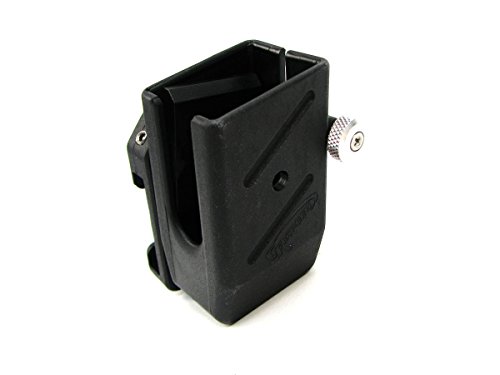
Production class allows unlimited magazine changes and most stages are designed around them. Every competitor runs at least two double-stack mag pouches on the weak side, positioned for a fast reload draw. Position matters as much as the pouches themselves: most right-handed shooters run pouches at 8-10 o'clock, bullets forward, adjusted to their wrist height. Practice your reload draw at home before your first match so it's automatic.
Best starter
Blade-Tech
Classic Double Stack Double Mag Pouch
$39.61 as of Jun 22, 2026
★★★★★Our rating· In Stock
The standard entry-level competition mag pouch. Injection-molded Kydex holds magazines securely through dynamic movement while releasing cleanly on a practiced draw. Tension screws let you dial in exactly how hard the magazine releases. Compatible with all major 9mm double-stack magazines including GLOCK and M&P.
What we like
Tension screws let you dial the release from firm (practice) to fast (match)
Kydex holds magazine position through sprints, kneels, and barricade drills
Compatible with most 9mm double-stack magazines including GLOCK and M&P
What to know
Model-specific; order the exact fit for your magazine, not just your caliber
Kydex edge can scratch magazine basepads over hundreds of reps
The magazine pouch that production class nationals winners actually run. Dual polymer tension adjustment gives you precise control over release speed per pouch. Designed to position the magazine at exactly the right angle for a straight, consistent reload draw. Sold in pairs with a single UBL mount.
What we like
Per-pouch tension adjustment for precise release control in competition
Angle-adjustable mount positions magazine at ideal draw angle
What to know
Premium price over Kydex alternatives; more than most beginners need
Fewer retail stockists than Blade-Tech; may require a direct order
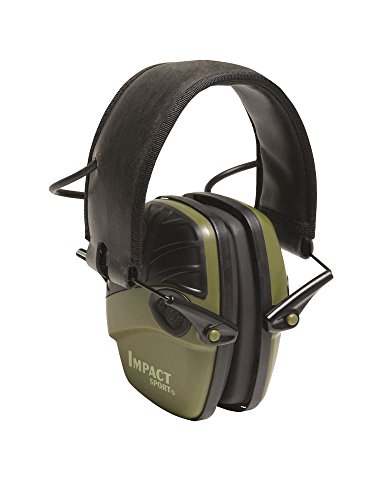
Hearing and eye protection are mandatory at every USPSA and IDPA match, no exceptions. Electronic hearing protection is the meaningful upgrade here: it cuts out on gunshots (130+ dB for a 9mm) but amplifies normal conversation, so you hear range commands and coaching clearly between shots. Buy electronic ears once and keep them for years. Safety glasses need wraparound coverage; sunglasses with open sides don't count at most ranges.
Best starter
Walker's
Razor Slim Electronic Ear Muffs
$$
★★★★★Our rating
The most popular electronic ear protection in the sport for a reason: slim profile that fits comfortably under cheek weld, 23 dB NRR for meaningful suppression, and clear omni-directional microphones that amplify range commands. Battery life runs 30+ hours on a pair of AAAs. If you buy one piece of safety gear for practical shooting, make it these.
What we like
Slim profile fits under cheek weld during rifle stages without interference
Electronic suppression lets you hear range commands and conversation clearly
30+ hour battery life on AAAs; won't die mid-match on a single charge
What to know
Electronic suppression adds a slight delay vs. passive muffs (imperceptible in practice)
Mic quality on voice amplification is functional, not audiophile-grade
The other electronic muff that's everywhere at USPSA matches. Slightly more profile than the Walkers, but same electronic suppression concept at a lower price. A reliable first pair if you find the Walkers out of stock or over budget.
What we like
Lower price than Walker's with the same core electronic suppression feature
Familiar foldable design that stores flat in a range bag
What to know
Bulkier than Slim profile; cheek weld can be affected on rifle-stage crossover
Stereo amplification feels slightly less natural than Walker's mic placement
Wraparound coverage with ANSI Z87.1 impact rating. Dual-lens design reduces fogging by creating an air gap between lenses. Comfortable enough to wear for a 6-stage outdoor match in summer. Range regulations require coverage on all sides; standard sunglasses don't qualify at most clubs.
What we like
ANSI Z87.1 impact rating meets every USPSA and IDPA range requirement
Dual-lens gap reduces fogging during hot outdoor matches
What to know
Tinted lens limits visibility in shaded indoor bays
Foam gasket traps sweat in hot conditions; can fog lenses from inside
USPSA and IDPA reward people who think fast, move efficiently, and stay composed under a running clock. Here's what actually happens between showing up at your first match and feeling like you belong on the range.
Practical shooting is one of the few sports where the gap between a beginner and an intermediate competitor is almost entirely mental. The physical skill ceiling is high, but the basics are learnable fast. What separates someone who shoots their first match nervous and scattered from someone who shoots it confident and deliberate isn’t talent. It’s knowing what to expect.
This is what your first competitive season actually looks like.
Before your first match: the non-negotiables
Before you enter a match, you need two things dialed in that have nothing to do with marksmanship: the draw and the administrative load.
The draw is the sequence from holster to first shot. In competition, it starts from a surrender position (hands above shoulders) on the start signal. That means your draw happens entirely from muscle memory — you can’t think your way through it under the beep. Most range officers won’t let you compete until they’ve seen you demonstrate a safe draw three times. Practice it 200 times at home with an empty gun before you touch a live round at a match.
Administrative handling means loading, unloading, and clearing the firearm on command, correctly, every time. Range officers give commands in a specific sequence (“make ready,” “load and make ready,” “unload and show clear”). Know what each one means and what to do. An RO who has to repeat a command twice is already thinking about whether to pull you off the stage.
You don’t need to be accurate to start. You need to be safe and predictable. Every experienced shooter at the match was where you are now, and they’ll be patient as long as you handle the gun correctly.
A USPSA or IDPA match is organized into stages. Each stage is a unique scenario: a set of targets at varying distances, positions to shoot from, movement paths between positions, and sometimes props (doors to open, walls to shoot around, ports to shoot through). The stage brief is posted on paper and read aloud by the range officer before shooting starts.
Here’s the key: you get to walk through the stage before you shoot it. Everyone does this. Walk slowly, figure out your order of targets, decide where you’ll reload, visualize your feet landing in each position. The shooters who beat you aren’t physically faster — they’re more deliberate in the walkthrough.
On the start signal, the stage is running. You move, shoot, reload, and move again. The range officer follows at your shoulder calling any rule violations. When the last round is fired, you unload and show clear to the RO.
You will make mistakes on your first match. Your stage plan will fall apart at some point and you’ll improvise badly. You’ll forget a target. You’ll fumble a reload. All of this happens to every first-timer. The goal isn’t to shoot a clean first match. The goal is to finish every stage safely and understand what went wrong.
The skills that actually improve your score
Practical shooting scores are a function of points (how accurately you hit targets) and time (how fast you run the stage). At the beginner level, time almost always dominates. A 5-second stage run with D-zone hits beats a 9-second run with A-zone hits.
This sounds like it rewards sprinting. It doesn’t. What it rewards is not wasting time on things that don’t change your score:
Transitions between targets. Moving your eyes to the next target before the gun gets there. This sounds obvious; it takes three months of practice to make automatic.
Movement to positions. Getting to the next shooting position efficiently. Not running so fast you arrive off-balance, but not walking when you should be jogging.
Reloads. A competition reload should happen while you’re moving between positions, not while standing still at a target. Standing to reload is a penalty not assessed by the RO — it’s assessed on the timer.
Trigger control. The single most common beginner mistake is moving the gun between shots. Not swinging wildly, just the tiny flinch that pulls a shot out of scoring zones. Dry-fire, dry-fire, dry-fire. An A-zone hit takes no more time than a C-zone miss.
The fastest way to improve your stage times isn’t physical conditioning. It’s 15 minutes of dry-fire practice daily for the first year. Draw, transitions, reloads, on a snap-cap or empty chamber, in your living room. Steve Anderson’s dry-fire program (free on YouTube) is where most competitive shooters start.
Things every beginner fails at (and that’s fine)
Forgetting a target. Everyone does this. You run through your stage plan, get to the end, and realize you missed the hardest-to-see target at the back of the bay. At USPSA, each missed target is a 10-second procedural penalty. At IDPA it’s 5 seconds. Learn to add a final scan before running to the end of a stage.
The reload panic. You plan to reload at position 3 while moving to position 4. Position 3 arrives faster than expected, your footwork is off, and you freeze with a partially empty gun. Practice the reload until it’s automatic — not accurate, automatic. It should happen whether or not you’re thinking about it.
Tunnel vision on the sights. Under stress, beginners stare at their front sight through every shot. Good Production shooters shoot at close targets (under 10 yards) with a flash front sight and both eyes open. It feels wrong. It’s faster. Let the front sight land in your peripheral vision; only hard focus on it for 15+ yard shots.
Arriving at positions moving too fast. Speed between positions is great. Arriving at a position skidding into your first shot is not. Decelerate two steps before your shooting position. You shoot better from stable feet.
After your third or fourth match, the chaos starts to resolve. You stop being overwhelmed by the administrative complexity and start actually thinking about shooting.
This is when you want to focus on two specific things:
Dryfire your draw to 0.8 seconds. An 0.8-second draw from surrender to first shot is the benchmark for a competitive beginner. It’s not elite. It’s the minimum that means your draw is off the list of things costing you time. Get there and stop thinking about it.
Learn stage breakdown by priority. Every stage has a sequence of target engagements. The right sequence minimizes movement and covers every target exactly once. Figuring out the optimal sequence is a learnable skill. After each match, compare your stage plan to the plans of competitors who beat you. Ask them why they shot targets in a different order.
Practical shooting rewards people who think tactically and execute consistently. The ceiling is very high, and the floor is surprisingly accessible. Show up to a match as a spectator first. Sign up for your first match as soon as you’re confident handling a live firearm safely. Everything after that is practice.
Save your money
What you don't need yet
Beginners get pressured to buy a lot of stuff that doesn't help them play
better. Here's what we'd skip on day one.
Custom trigger job — A stock Production-legal trigger is all you need for the first year. Wait until your draw and grip are consistent before changing the trigger feel under you.
Magwell — Speeds up reloads but Production class rules restrict which magwells are legal. Learn the standard reload first, then add one after year one if your reloads are your weakness.
Personal shot timer — Every club match provides a range officer with a timer. Borrow the club's for your first few months; buy your own only when you're doing structured dry-fire practice at home.
Red dot sight — Iron sights are mandatory in Production class. A red dot is what you add when you move to Carry Optics, which is at minimum your second year in the sport.
Match-grade ammunition — Production class requires minor power factor (125 PF in 9mm), which most bulk FMJ practice loads already meet. Save match-grade ammo for when you're running at regional or national level.
First week
Your first seven days
A short, real plan to get from gear-on-doorstep to actually playing.
Attend a local USPSA or IDPA club match as a spectator. Most clubs welcome non-shooters to walk the bays and watch. Two hours of observation will teach you more than a month of YouTube. · Action
Order your competition holster once you've chosen your pistol. Confirm the exact model number for your specific gun from the manufacturer's fit guide. · Buy
Buy your pistol at a local FFL dealer and run 50-100 rounds through it before your first match to confirm reliability. · Action
Start 15 minutes of dry-fire draw practice daily. The competition draw from a retention holster needs to be automatic before you're on a hot range with a loaded gun. · Action
Read the USPSA Production equipment rules before your first match. The approved-gun list is at uspsa.org. Your pistol needs to be on it. · Learn
Do I need a special license to compete in USPSA or IDPA?
You need the same legal rights to own a handgun that any private citizen has in your state. USPSA and IDPA require no additional permits for the sport itself. Some states have specific transport rules for taking a pistol to a competition venue; check with your local club or an attorney familiar with your state's laws before your first match.
What's the difference between USPSA and IDPA?
USPSA scores on a combination of hit points and time (called hit factor), rewards movement strategy, and runs a wider range of equipment divisions. IDPA is more scenario-based, has simpler rules, and is generally more beginner-friendly at the club level. Both reward the same core skills. Try an IDPA match first; if you get hooked, add USPSA.
Can I use my everyday carry pistol?
Probably yes in IDPA's Stock Service Pistol (SSP) division, which was designed for standard-capacity service pistols. For USPSA, check the Production-approved gun list at uspsa.org before showing up. The list is updated regularly and your pistol's exact model and generation need to be on it.
How much does it cost per match?
Local club matches run $15-25 to enter and use 100-200 rounds of ammo. At $0.30-0.40 per round for 9mm FMJ, budget $50-80 per match in ammo plus entry fee. Regional and national matches cost more ($75-150 to enter). Stick to club matches for the first year.
Is this dangerous for beginners?
Practical shooting has an excellent safety record precisely because every match has range officers supervising every stage. An RO will stop the stage at any unsafe action. The rules feel strict the first time you encounter them; by match three they feel like common sense. Attend as a spectator first, then take a new-shooter orientation before competing.
What division should I start in?
Production class for USPSA, Stock Service Pistol (SSP) for IDPA. Both are designed for box-stock service pistols with standard magazine capacity, which keeps equipment costs manageable. Don't enter Open or Limited class as a beginner: the equipment is expensive and you can't leverage it until your fundamentals are solid.
USPSA — United States Practical Shooting Association. The sanctioning body for USPSA competition in the US. Find clubs, match calendars, and the official rulebook. The Production-approved gun list is in the equipment appendix.
IDPA — International Defensive Pistol Association. Simpler rules and a more beginner-accessible club environment than USPSA. A good first organization for new competitors.
Practiscore — The universal match registration and results platform for USPSA, IDPA, and most other shooting sports. Use this to find and sign up for local matches.
Brian Enos Forums — The main online forum for practical shooting competitors. The gear subforum is the most useful resource for Production class equipment questions from shooters who've actually run the gear.
Steve Anderson (YouTube / Dry Fire Reloaded) — The definitive dry-fire training resource. Anderson's focused approach to building a consistent draw stroke is the standard for new competitors. Watch before your first match.
Ben Stoeger (YouTube / Books) — 14-time US National Champion and full-time practical shooting coach. His books and YouTube channel are the practical reference for Production class competitors who want to understand the game, not just participate in it.
r/competitionshooting — Smaller than r/guns but far more focused on USPSA and IDPA. Gear questions, stage walkthroughs, and training discussions from people who actually compete.
As an Amazon Associate, JustBeginning earns from qualifying purchases.
We may also earn commission from other affiliate programs linked on this
page. Editorial recommendations are independent; we don't choose
products based on commission rates.
Product prices and availability are accurate as of the date and time
indicated and are subject to change. Any price and availability
information shown on Amazon at the time of purchase will apply.
Our top pickWalker's Razor Slim Electronic Ear Muffs