Welcome to Japanese chess, the game where captured pieces switch sides and rain back down on the board as your own. Shogi is harder than Western chess and more interesting. The rules take one afternoon to learn. The strategy will outlast you. Here is exactly what you need to start.
By Colin B. · Published June 6, 2026 · Last reviewed June 6, 2026
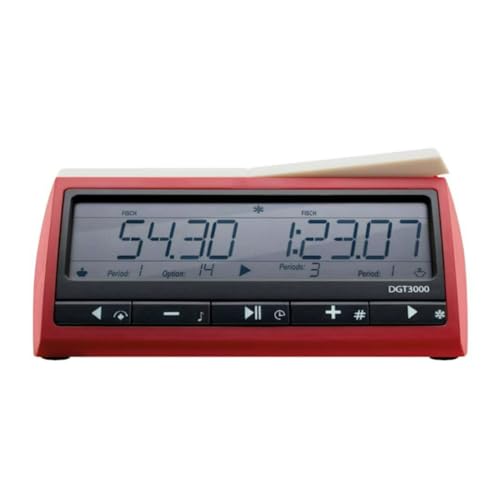
DGT 3000 Digital Chess Clock
— A digital clock with byoyomi support, the time control format used in every serious shogi club.
Budget total
$30
Typical total
$65
A starter set and a good beginner book is all you need. Online play at Lishogi is free and excellent.
We earn commission on qualifying Amazon purchases — see our
affiliate disclosure.
Price tiers and budget totals shown above are editorial estimates;
actual Amazon prices vary.
At a glance
Our top pick in each category
The fastest path through this guide — each best-starter pick by category.
Scroll for the budget and upgrade alternatives.
Play on Lishogi.org before buying anything. It is free, runs in your browser, and has a practice mode that teaches you each piece's movements interactively. After two hours there you will know whether shogi is going to stick.
Do not buy a premium wooden set first. Tournament-grade koma and boards cost $100 to $400 and require climate-aware storage. Start with a $25 plastic set. If you are still playing in three months, you will know exactly what you want to upgrade to.
The drop rule is the thing. Shogi is not just chess with more pieces. When you capture an opponent's piece, you hold it in hand and can drop it anywhere on the board as your own piece on a future turn. This one rule changes everything about how the game is played, and it takes more than a few games to fully feel.
A shogi set is a 9x9 board plus 40 pieces (20 per side). Beginner sets typically use wooden or pressed-plastic koma with a paper or folding board. Traditional boards are thick wooden slabs; practical beginner sets use folding or paper formats that store flat. For your first set, a basic import in the $20 to $35 range is the right call: adequate for learning and good enough for years of casual play. Tournament-quality boards add cost and care requirements you do not need yet.
Shogi Sets — what's the difference?
A few common shapes, each making a different trade.
Standard 9x9
Full shogi on the regulation board. The real game, played competitively worldwide.
Board
9x9 squares
Pieces
40 total, 20 per side
Piece types
8 distinct types
Best for Anyone learning real shogi, the only format that counts toward ranking
Compact magnetic version for play anywhere. Pieces snap in place.
Size
Compact, fits in a bag
Pieces
Magnetized plastic
Portability
Pocket or daypack
Best for Commuters, travelers, anyone short on table space
Tradeoff Small pieces harder to see and handle for extended sessions
Best starter
Yellow Mountain Imports
Shogi Set
$16.99 as of Jun 22, 2026
★★★★★Our rating· In Stock
Yellow Mountain Imports has been supplying traditional Japanese games to Western buyers for years. This set comes with traditional wooden koma pieces, a paper shogiban game board, and koma-dai stands. Nothing premium, all functional, and YMI's US-based customer service handles damaged-arrival issues reliably.
What we like
Traditional wooden koma pieces feel more authentic than plastic
Paper board folds flat and stores easily in a drawer
Koma-dai stands for captured pieces included in the set
What to know
Paper board develops crease lines faster than vinyl or wood
Piece kanji takes 2-3 sessions to learn; no English labels
A folding magnetic shogi board with snap-in pieces, compact enough to take anywhere. Pieces lock in place so nothing scatters mid-game or mid-commute. Fine for learning at a kitchen table or introducing someone new to the game.
What we like
Magnetic pieces won't scatter mid-game on any surface
Pocket-sized for learning anywhere, commutes included
What to know
Small piece size makes extended sessions tiring on the eyes
No koma-dai tray; you hold captured pieces in your hand
A genuine Japanese-market import: shin-katsura folding wood board, quality pressed pieces with inked kanji, and koma-dai stands all included. The resistance and feel of a real Japanese board is noticeable after a paper set. Buy this once you know shogi will stick.
What we like
Genuine Japanese-market set at a reasonable import price
Folding board, pressed pieces, and koma-dai stands all included
What to know
Japanese-language listing; use product photos to assess condition
Shin-katsura is mid-grade wood, not premium hon-katsura
Shogi has a small but excellent English-language bibliography. Two books cover 90% of what a new Western player needs: an introductory text that teaches piece movements and the drop rule, and a deeper strategy book for once you are playing regularly. YouTube and Lishogi's built-in lessons fill the gaps for free. Don't buy more than two books at the start. The game is learned at the board, not the page.
Best starter
Ishi Press
Shogi for Beginners by John Fairbairn
$57.07 as of Jun 22, 2026
★★★★★Our rating
The standard English introduction to shogi. Fairbairn covers all the piece movements, the drop rule, promotion, and basic opening and endgame concepts in clear language. Reads in an evening and stays relevant for your first several months of play. The right book to read before or alongside your first online games.
What we like
The standard English introduction, trusted by Western clubs for decades
Covers piece movements, drop rule, promotion, and basic strategy
Short enough to read in one sitting before your first real game
What to know
Older printing; notation style differs slightly from modern online tools
Goes light on opening theory; you will want a second book within months
The deepest English-language shogi book available. Hosking covers openings, middle-game principles, and endgame theory at a level that will keep intermediate players busy for a year. Read Fairbairn first. Come to Hosking once you have played 20 or more games online.
What we like
The most comprehensive English shogi strategy book in print
Opening, middle game, and endgame theory all in one volume
What to know
Not a beginner book; assumes you already know all the pieces
Harder to find in stock than Fairbairn; prices fluctuate on Amazon
Most beginner shogi is played without a clock, but the moment you join a club or enter a tournament you will need one. Shogi uses byoyomi time controls, where each player gets a main time budget plus a fixed allotment per move they can fall back on indefinitely. This is very different from Western chess time controls, so make sure your clock supports it. Any modern digital clock handles byoyomi; analogue clocks do not. There is no rush to buy one; get it when you join a club.
Best starter
DGT
3000 Digital Chess Clock
$89.95 as of Jun 22, 2026
★★★★★Our rating· Only 17 left in stock - order soon.
DGT is the brand trusted by the World Chess Federation, and the DGT 3000 supports byoyomi natively, which most Western chess clocks do not. You can set up a standard club shogi time control in about 30 seconds once you know the menu. It also works for Western chess, so it doubles if your game interests expand.
What we like
Byoyomi time control supported natively, essential for shogi clubs
DGT is the trusted standard at competitive chess and shogi events
Works for Western chess too, so it serves double duty
What to know
Menu takes one read-through of the manual to navigate
Overkill until you are playing timed games regularly
A highly programmable digital clock popular in Western chess clubs. Supports byoyomi-style time controls via delay mode programming. Less intuitive than the DGT 3000 for shogi-specific setups, but lower priced and widely available used.
What we like
Widely available, popular in Western chess and shogi clubs
Durable construction that survives years of club use
What to know
Byoyomi requires a delay-mode workaround; not as clean as DGT 3000
Button layout can feel stiff compared to newer digital models
Shogi has a reputation as impossibly hard. That is both true and misleading. The rules are not complicated (you can learn all eight piece types in an afternoon). What is hard is the thing at the center of the game: the drop rule, which makes captured pieces switch sides and allows them to be dropped back onto the board as your own. This one mechanic means that the game never simplifies the way chess does. Threats come from everywhere, including pieces that were in your opponent’s hand a move ago.
The first month is about getting comfortable with that reality, not conquering it. Here is how to spend it.
Start on Lishogi.org. It is free, runs in any browser, and has an interactive tutorial that teaches you each piece’s movement one at a time. Spend an hour there before touching a physical board.
The eight piece types in standard shogi are: the King (gyoku), Rook (hisha), Bishop (kaku), Gold General (kin), Silver General (gin), Knight (keima), Lance (kyosha), and Pawn (fuhyo). The last three (Knight, Lance, and Pawn) are restricted to forward movement only. The Knight moves in an L-shape but only toward the opponent. The Lance moves only straight forward. The Pawn moves one square forward.
Pieces promote when they reach the opponent’s far three rows. Promoted pieces are flipped to reveal their promoted face and gain new movement powers. The Rook and Bishop become especially powerful when promoted (Dragon King and Dragon Horse). Promotion is often the decisive factor in the middle game.
After the tutorial, play five games against the weakest Lishogi AI. Do not worry about strategy. Focus on seeing all 40 pieces on the board, spotting when promotion zones come into play, and not losing your King to a piece you forgot existed. You will lose. That is the point.
Week 2: Feel the drop rule in your hands
The drop rule is the thing that makes shogi shogi. When you capture an opponent’s piece, it becomes yours. On any future turn, instead of moving a piece already on the board, you can drop that captured piece onto any empty square (with a few restrictions: pawns cannot be dropped on the last rank, and you cannot drop a pawn on a file where you already have one). The piece is now yours and moves according to its standard rules.
This changes everything. In chess, simplification toward an endgame is a coherent strategy. In shogi, trading pieces does not empty the board. It fills your hand. A position with ten pieces on the board and twenty in hand is still wildly complex. The game almost never simplifies.
In week two, play ten games and pay attention exclusively to the pieces in each player’s hand. Watch how your opponent accumulates hand pieces. Notice when dropping a Pawn in an unexpected square creates an unstoppable threat. Notice when you drop a piece at the wrong moment and your opponent drops back with something worse.
At this stage, Lishogi’s move analysis tool is your best friend. After each game, click through the analysis and look for the moments where the engine says you diverged from the best line. The engine’s suggestions will often involve drops you did not consider.
Shogi has a rich opening theory. Beginners do not need to study it systematically, but you should know one or two common openings well enough to not fall into early traps. The most beginner-friendly opening is Ranging Rook (furibisha), where you slide the Rook to a central file and build a castle formation around your King. It is flexible, hard to punish before you understand what you are doing, and gives you a clear plan in the early game.
The most common beginner castle is Yagura (Fortress), which tucks the King behind three Gold Generals. It is not impregnable, but it is solid and easy to remember. There are dozens of castle formations in shogi; you only need one to start.
By week three, you should be playing human games online. Lishogi’s lobby will match you with players around your level. You will lose many of these games. What matters is the moment after the game, when you look at the board and try to identify the move where things went wrong. Usually it is somewhere in the middle game, where you dropped a piece too early or left your King exposed while pursuing an attack on the other side of the board.
One session per week studying a game from the Lishogi analysis tool, stepping through the AI suggestions and asking why, will improve you faster than three sessions of casual play.
What to expect at the end of month one
At the end of your first month, you will be able to:
Name all eight piece types by kanji without looking at a guide
Play a complete game from start to finish without pausing to check piece movements
Form a basic castle opening and begin an attack
Recognize when your King is in danger from a drop rather than a move
Lose gracefully, quickly, and with something to learn from the game
You will not be good. You will be at the point where the game starts to feel intentional rather than accidental, and that is the moment shogi becomes genuinely interesting. Most players report that the first month is frustrating and the second is when they understand why people spend decades on this game.
Find a regular game against a human opponent who is slightly stronger than you. The community on Lishogi is active and welcoming to beginners. Introduce yourself in chat at the end of a game. You will find people happy to talk about why a particular drop was decisive.
Save your money
What you don't need yet
Beginners get pressured to buy a lot of stuff that doesn't help them play
better. Here's what we'd skip on day one.
A tournament-grade wooden board — Board quality affects atmosphere, not gameplay. Learn on paper or basic wood and upgrade only once you are playing in clubs or hosting regularly.
Shogi piece flashcard decks — Playing five games online teaches the pieces faster than any flashcard set. Your brain learns kanji from context, not drills.
A chess clock before joining a club — Most beginners play untimed for months. A clock is useful eventually but there is genuinely no rush. Buy it when you need it.
Advanced strategy books — Joseki and endgame theory books assume patterns you haven't seen yet. Play games online rather than reading theory you can't apply.
Shogi apps or paid software — Lishogi is free, excellent, and runs in any browser. It has puzzles, analysis, online play, and a piece tutorial. Nothing you pay for does it better.
First week
Your first seven days
A short, real plan to get from gear-on-doorstep to actually playing.
Create a free account on Lishogi and complete the piece-movement tutorial. · Action
Lishogi · Free browser-based shogi with tutorials, AI, and analysis
Play 5 games against the weakest Lishogi AI. Focus on seeing all 8 piece types and where pieces promote, not on winning. · Action
Order a starter shogi set so you have a physical board to study and replay positions at the table. · Buy
Play your first human game on Lishogi. The lobby has players at every level. Losing fast and often is the right way to learn. · Action
FAQ
Common questions
How is shogi different from chess?
The biggest difference is the drop rule: when you capture an opponent's piece, you hold it and can drop it onto any empty square on a future turn as your own piece. This means the game rarely simplifies toward an endgame and threats appear from anywhere on the board at any time. Shogi also has 8 piece types versus 6 in chess, pieces promote when they enter the opponent's territory, and draws are nearly impossible. Most chess players find shogi harder but also more interesting.
Do I need to read Japanese to play?
No. Beginner sets include piece guides, and Lishogi lets you toggle icons that look like Western chess pieces. Once you play a few dozen games the kanji become familiar from context. Most Western players recognize all 40 pieces by shape within a few weeks.
Is shogi hard to learn?
The rules take one afternoon. The strategy takes years. Shogi is widely considered harder than chess, primarily because the drop rule creates exponential move possibilities. The practical advice: learn the rules, play against AI for a few hours, then find human opponents online. Don't study theory before you've played 20 games.
Where do I find opponents online?
Lishogi.org is the best starting point for Western players: free, browser-based, large international player pool, puzzles, and analysis. 81Dojo.com is the other major English-friendly platform, with a larger Japanese player base and a formal ranking system worth joining once you're playing regularly.
How much does it cost to start?
About $25 to $35 for a decent starter set and $12 to $18 for Shogi for Beginners. Everything else (online play, analysis, AI practice) is free. You can play serious shogi for years on that initial investment.
Are there shogi clubs in the West?
Yes, though smaller than chess clubs. The US Shogi Federation and British Shogi Federation both maintain club directories. Major cities in the US, UK, Germany, and France have active clubs. Online communities through Lishogi and Discord are more accessible if you are not near one.
Lishogi — The Lichess equivalent for shogi. Free, browser-based, with piece tutorials, AI practice, online play, puzzles, and game analysis. The first thing every new Western player should use.
81Dojo — The other major English-friendly shogi platform. Larger Japanese player base and a formal ELO-style ranking system. Create an account here once you are playing regularly.
US Shogi Federation — Official US governing body. Maintains a club directory and tournament calendar. Worth checking once you have played online for a month and want local opponents.
British Shogi Federation — UK equivalent. Club directory, a beginners' guide, and news about UK and European tournaments.
International Shogi Network (YouTube) — English commentary on high-level games. The best way to see the drop rule and advanced patterns in action before you face them yourself.
World Shogi Forum — Long-running English-language discussion forum. Good for tournament news, book recommendations, and connecting with Western players.
As an Amazon Associate, JustBeginning earns from qualifying purchases.
We may also earn commission from other affiliate programs linked on this
page. Editorial recommendations are independent; we don't choose
products based on commission rates.
Product prices and availability are accurate as of the date and time
indicated and are subject to change. Any price and availability
information shown on Amazon at the time of purchase will apply.