Playing board games alone isn't a consolation prize. It's a different hobby entirely. You set your own pace, pick the exact game that sounds good tonight, and focus completely without negotiating with anyone else. Here's what to buy, what to protect your cards with, and the gear that actually changes the experience.
By Colin B. · Published June 11, 2026 · Last reviewed June 11, 2026
A single solo game covers the whole entry cost. Sleeves, dice towers, and inserts are upgrades you add as you get deeper into the hobby.
We earn commission on qualifying Amazon purchases — see our
affiliate disclosure.
Price tiers and budget totals shown above are editorial estimates;
actual Amazon prices vary.
At a glance
Our top pick in each category
The fastest path through this guide — each best-starter pick by category.
Scroll for the budget and upgrade alternatives.
Solo board gaming is a different hobby than regular board gaming. The best solo games aren't just 'games that work with one player.' They're designed around the solo experience, with a built-in opponent system or a puzzle structure that fills the role of other players. Check that any game you buy explicitly supports solo before committing.
Your first game matters a lot. Don't chase complexity too early. A medium-weight game like Wingspan or Cascadia gives you something to actually finish in an evening. Spirit Island and campaign games are exceptional, but they're week-three purchases, not week-one.
Sleeves are not optional once you care about your games. A standard game like Wingspan has 170+ cards you'll shuffle hundreds of times. Unsleeved cards get bent, grimy, and worn. A $15 pack of Dragon Shields turns a $60 game into something that lasts a decade.
The right starter game does two things: it's genuinely fun to play alone, and it doesn't require two hours of rulebook study before you see a single card. Look for games with a built-in automa (automated opponent) or a clear solo scoring target. The titles below cover the range from quick and beautiful to complex and campaign-driven. Start in the middle, not at the deep end.
Solo Games — what's the difference?
A few common shapes, each making a different trade.
Light (under 60 min)
Quick and simple. Done in an evening, ideal for testing the hobby.
Complexity
Low
Play time
30-60 min
Replay value
Moderate
Best for First-time solo gamers, tight schedules
Tradeoff Light games can feel thin once you want more depth
Wingspan is the most recommended solo gateway game for a reason. You play as a bird enthusiast filling your wildlife preserve. The solo mode pits you against an automa that's satisfying to beat. The cards are beautiful, the bird facts are charming, and the engine-building mechanic makes each game feel different. An evening with Wingspan is an evening well spent.
What we like
Built-in automa opponent with adjustable difficulty
Engine-building mechanic means every game plays differently
Bird fact cards are genuinely interesting between turns
What to know
Box insert terrible; sleeves required, barely fits after
Twenty-five dollars, thirty minutes, and you'll understand why it won the Spiel des Jahres. You're placing tiles and wildlife tokens to build a Pacific Northwest habitat. The solo mode gives you a scoring target to beat. Light, beautiful, and genuinely replayable without buying a single expansion.
What we like
Award-winning design, rules explained in under 10 minutes
30-minute sessions fit easily into any weekday evening
What to know
Puzzle-focused solo; less narrative than campaign games
Can feel repetitive after 20+ plays without expansions
The gold standard of solo board gaming. You play as a nature spirit defending an island from colonial invaders. Complex, asymmetric (each spirit plays completely differently), and strategically demanding. No other game in the genre has its combination of depth and replayability. Wait until you've finished five sessions of something lighter first.
What we like
Each of the 8 spirits plays completely differently
Solo difficulty scales with spirit choice, not just settings
Deep strategy that rewards study without requiring it to start
What to know
Steep learning curve; first game takes 3+ hours with rules
Premium price ($60-70); invest only once you love the hobby
The only game on this list designed exclusively for one player. Friday is a deckbuilder where you help Robinson Crusoe survive long enough to escape the island. Plays in 30 minutes, fits in a small box, and teaches deckbuilding mechanics better than any tutorial. A great second game, or a first for minimalists.
What we like
Purpose-built solo design, not a multiplayer mode bolted on
Teaches deckbuilding in 30 minutes, a gateway to a whole genre
What to know
Short enough that some players want more after 10 games
Your games come with cards. You will shuffle those cards hundreds of times. Without sleeves, they'll bend, mark, and degrade within a season of regular play. Sleeves add shuffle-feel, protect against moisture, and let a $60 game last a decade. Buy them for any game you care about. Three standard sizes: Standard (63x88mm, fits most games), Mini Euro (44x68mm, for small-card games like Friday), and Tarot/Large for oversized cards.
Best starter
Dragon Shield
Standard Classic Card Sleeves (100 ct)
$12.29 as of Jun 22, 2026
★★★★★Our rating· In Stock
Dragon Shield is the standard recommendation for a reason. They're thick, shuffle smoothly without sticking, and outlast cheaper sleeves by years. The Classic clear-face shows card art; the Matte version adds grip. A single 100-pack covers Wingspan and most medium-weight games with room to spare.
What we like
Industry-standard quality, preferred by serious hobbyists
Smooth shuffle without sticking, handles thousands of cycles
Available in six sizes covering every card format
What to know
Pricier than generic brands (about 15 cents per sleeve)
Standard size only; buy Mini Euro separately for small cards
Fantasy Flight Supply Standard Card Sleeves (Gray, 50 ct)
$
★★★★☆Our rating
Fantasy Flight games (Arkham Horror, etc.) use a non-standard card size that only FFG sleeves fit correctly. If you own any FFG game, these are the right ones. Also available in standard gray for general use at a lower cost than Dragon Shield.
What we like
Sized correctly for Fantasy Flight card dimensions
Lower cost per sleeve than Dragon Shield for tight budgets
What to know
Thinner than Dragon Shield, more prone to wear over time
50-count packs mean buying multiple packs for larger games
Mayday Premium covers obscure sizes Dragon Shield doesn't stock: Tarot, square tiles, large Euro. If your game has oversized or irregular cards, Mayday is where to look. The 100-pack price is reasonable for specialty sizing.
What we like
Covers obscure sleeve sizes Dragon Shield does not make
Clear non-yellowing material with reasonable thickness
What to know
Quality control inconsistent between batches
Less smooth than Dragon Shield for heavy shuffling games
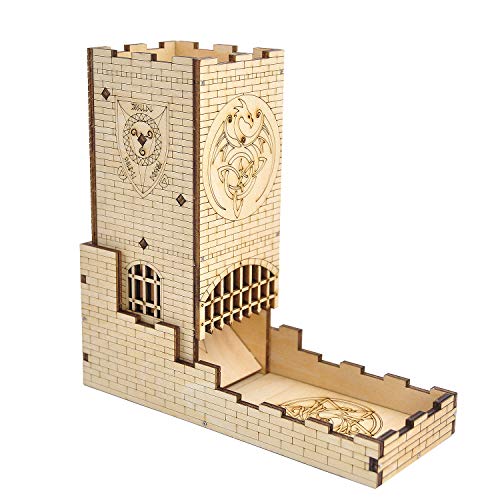
Many solo games involve rolling dice, and nothing interrupts a focused session like dice skating off the table. A dice tower is a small structure you drop dice through; they tumble inside and land randomized in a tray at the bottom. A tray-only setup works for games with fewer dice. Either option keeps rolls from disturbing card layouts mid-game. Skip this category if your game barely uses dice; come back when you need it.
Best starter
CZYY
Castle Dice Tower with Tray
$16.99 as of Jun 22, 2026
★★★★★Our rating· In Stock
A laser-carved wood dice tower with a matching tray, well under $25. Dice drop cleanly without bouncing, the tray catches them, and the folded design stores flat. Looks good on a gaming table and doesn't look like a toy. The most straightforward upgrade for any dice-heavy solo session.
What we like
Keeps dice rolls consistent and contained mid-game
Flat-fold design stores inside a game box or flat on a shelf
What to know
Tray is compact; holds 4-5 dice maximum
No weighted base; a nudge from a game box can tip it
No tower, just a tray. For games where you only roll a few dice at a time and a full tower feels like overkill. The magnetic lid doubles as a rolling-surface lid to keep dice contained. Fits in a bag, stores flat, costs under $20.
What we like
Magnetic lid snaps shut to contain dice between rolls
Slim profile fits in a bag for gaming away from home
What to know
No randomization tower; just catches and contains the roll
Leather smell fades, but noticeable for the first few uses
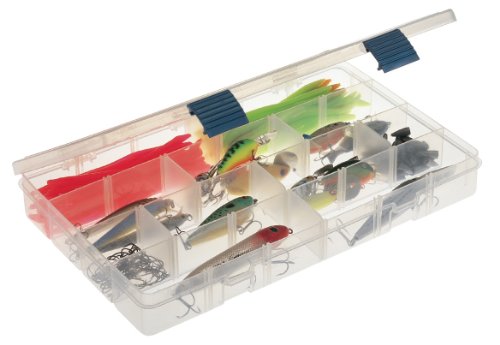
The original box insert in most board games is molded to hold unsleeved components in display position. Once you sleeve cards and punch tokens, nothing fits back in. A proper organizer sorts components by type, keeps sleeves from bending, and makes setup dramatically faster. For solo gaming where you're managing everything yourself, setup time matters more than it does in a group game.
Best starter
Plano
3700 Prolatch StowAway Organizer
$
★★★★★Our rating
The Plano 3700 is the unofficial standard organizer of the board gaming hobby. Its adjustable dividers fit tokens, meeples, and small tiles; compartments snap shut so nothing shifts. A $12 tackle box that makes every component-heavy game dramatically faster to set up. Buy two for large games.
What we like
Adjustable dividers fit any token or meeple size
Latches snap shut; nothing shifts during transport
What to know
Too small for sleeved cards; pair with a card storage box
Plastic feel, not the most attractive table accessory
For card-heavy games, a BCW storage box holds sleeved cards without bending them. The 800-count box fits most medium games fully sleeved. Stackable, durable cardboard, and available in bulk packs. The workhorse solution for anyone who owns more than two card games.
What we like
Holds 800 sleeved cards, enough for most medium games
Durable cardboard, stacks cleanly on a shelf
What to know
Not game-specific; you still need to label card groups
★★★★☆Our rating· Only 1 left in stock - order soon.
Folded Space's EVA foam inserts transform your favorite game. All cards sort by deck, tokens have trays, setup goes from rummaging through baggies to pulling exactly what you need. The foam fits sleeved cards and stacks perfectly inside the original game box. Worth every dollar for a game you'll play 50+ times.
What we like
EVA foam holds sleeved cards without bending
Cuts setup time from 10 minutes to under 3
What to know
Game-specific; buy only for games you play regularly
A neoprene play mat does two practical things: it keeps cards from sliding around on a slick table, and it protects them from scratches. The third thing it does is make the experience feel like a game rather than a homework assignment. Skip it in year one unless you're on a glass or high-gloss laminate surface where cards slide everywhere. A 24x36-inch mat covers most solo layouts.
Best starter
Jigitz
Large Neoprene Tabletop Gaming Mat (24"x36")
$$
★★★★★Our rating
A 2x3 foot neoprene mat sized right for most solo game layouts. Anti-slip rubber backing, stitched edges that won't fray, and a smooth surface that cards glide on without flying. Rolls up for storage. Good materials at an honest price for the category.
What we like
Anti-slip backing keeps the mat from sliding on wood or glass tables
A basic neoprene mat under $15 that does the job for smaller-footprint solo games. 24x14 is tight for games with large spreads, but perfect for card-forward games played at a kitchen table corner.
What we like
Under $15 and functional for small-footprint solo games
Lightweight and easy to store rolled in a drawer
What to know
Smaller than most solo game layouts; cards may hang off edges
Edge stitching quality inconsistent between batches
Solo gaming has a specific learning curve: the first game is a mess, the second game is when you start making real decisions, and by the fifth you understand why people love this.
The first time you sit down alone with a board game, two things happen: you feel slightly self-conscious about playing by yourself, and the rules make a lot less sense than they seemed during the how-to-play video. Both are completely normal. Both pass quickly.
Solo board gaming has a real learning curve, but the plateau is short. By the time you’ve finished your tenth session, you’ll understand why this hobby has its own subreddits, its own YouTube channels, and a community of people who specifically prefer it to group gaming.
Here’s what those ten sessions actually look like.
Sessions 1-2: Survive the rules
The number one mistake new solo gamers make is reading the rulebook cold. Don’t. Find a “how to play” video for your specific game on YouTube first (Watch It Played and JonGetsGames are the best channels). Watch the full tutorial, then open the rulebook as a reference while you play. The video gives you a mental map; the rulebook gives you the details.
Your first game is a teaching game. Play it openly. Look things up. Misunderstand rules and notice it mid-game. Some people call this “playing wrong” and treat it as a failure. It isn’t. It’s how you learn a game faster than any other method.
The specific things that will be unclear on session one:
When exactly you take your main action vs. bonus actions (every game has its own terminology)
How the win condition actually works in practice (the rulebook describes it abstractly; you’ll get it after you see it happen)
What the automa does when you’re not sure (default: check the BGG forum for your game; someone has asked your exact question)
Sessions 3-5: The real decisions begin
By session three, you stop reading the rulebook mid-turn. The basic action sequence is in your head. Now you start making actual strategic decisions instead of procedural ones.
This is when the game reveals itself. Most good solo games have a core tension between two things you want: building your engine vs. responding to the threat the game poses. In Wingspan, that’s placing birds for long-term engine power vs. responding to the automa’s round goals. In Spirit Island, it’s developing your powers vs. immediately pushing back invaders.
Don’t optimize yet. Play the way that seems interesting. Lose. Understand why you lost. That understanding is the game teaching you.
What “losing” means in solo gaming. Solo games have no opponents to blame. If you lose, it’s your choices. This sounds harsh; it’s actually one of the reasons people like solo gaming. The feedback is clean. You made a suboptimal decision in round four; the game shows you the consequences in round seven. Once you start seeing these chains of cause and effect, the game transforms from a random outcome into a puzzle you can actually solve.
Around session six or seven, something clicks. You sit down, set up without consulting the rules, make a plan on the first turn, and feel the game responding to your decisions rather than overwhelming them.
You’ll start noticing the second and third layer of strategy. In most good solo games, there’s an obvious first layer (place the high-point card, push back the invader, build the engine), and then there’s a subtler layer under that (when to pivot, which end-state you’re building toward, how to read the automa’s trajectory).
The replay value question. People who try solo gaming and don’t continue usually cite two things: “I beat it and now it’s done” or “I always lose and it feels punishing.” Both are solvable.
If you beat a game and feel finished: increase the difficulty. Most solo games have escalating difficulty settings. Winning on the base difficulty is session one of a harder game, not the end of the hobby.
If you always lose and it feels unfair: you’re probably playing a game that’s too complex for where you are. Back up. Play Cascadia or Friday for a few weeks. Come back to the hard game with more understanding.
Around session ten, you’ll know whether you want to go deeper or try a different game. Both are the right answer.
What to track while you learn
Most solo games come with score sheets or a way to record your result. Use them. Write your score, the difficulty you played at, and one sentence about what felt wrong. This sounds like homework; it actually accelerates your improvement dramatically because most solo game mistakes are subtle and repeat across sessions.
For games without built-in score tracking (Wingspan uses a physical scorepad; Spirit Island does not), a piece of paper works fine.
When to add a second game
The instinct is to buy more games faster than you’re actually playing them. Resist it. The BGG community calls this “the pile of shame” for a reason.
A good heuristic: when you’ve played your first game fifteen times and feel the replay value narrowing, that’s when to add a second game. Not at five plays, not at three. Fifteen plays is where most good solo games have given you most of what they have at the base difficulty, and you’ll have the experience to know what kind of game you want next.
Save your money
What you don't need yet
Beginners get pressured to buy a lot of stuff that doesn't help them play
better. Here's what we'd skip on day one.
Kickstarter exclusive editions — The base game tells you whether you love it. Deluxe components and Kickstarter exclusives add cost before you know if the game is for you.
Sleeves for every game you own — Only sleeve games you play regularly. A game that sits on the shelf doesn't need $15 of sleeves.
A dedicated gaming table — Your kitchen table is fine for years. A gaming table is a year-three purchase for someone who's all-in.
Custom premium dice sets — The dice that came with your game are perfectly functional. Upgrade only if they're unpleasant to roll or genuinely hard to read.
A library of 20 games — Depth over breadth. Two well-loved games you play constantly beat twenty untouched ones.
Expansion content before finishing the base game — Finish the base game 10-15 times first. The base game is usually enough for months, and expansions make more sense once you understand what the base lacks.
First week
Your first seven days
A short, real plan to get from gear-on-doorstep to actually playing.
Pick one game and order it. Don't buy two at once; finish one before judging whether you want more. · Buy
Watch a 'how to play' video on YouTube before reading the rulebook. Visual walkthroughs take 20 minutes and make the rulebook make sense on first read. · Learn
Watch It Played · Clearest board game tutorials on YouTube, led by Rodney Smith
JonGetsGames · Solo-gaming focused tutorials and reviews
Order card sleeves when you order your game. Sleeve before your first play. · Buy
Play your first game as a learning game. Don't track score. Just follow the rules and see what happens. · Action
Play a second game immediately or the next day. The first game is a tutorial. The second game is when you make actual decisions. · Action
Find r/soloboardgaming and BoardGameGeek. Both have game-specific strategy threads that will make your third game significantly better. · Learn
r/soloboardgaming · Active community for solo gaming discussion and recommendations
BoardGameGeek · The definitive database for board game info, ratings, and forums
FAQ
Common questions
Is solo board gaming actually fun, or is it a last resort?
It's a real hobby with its own culture, not something people do because they can't find opponents. The best solo games are designed specifically for one player and are more satisfying alone than they'd be with four people around the table.
How much should I spend on my first solo game?
Expect $40-65 for a quality mid-weight game. Cascadia ($25-35) is the best budget entry. Wingspan ($55-65) is the most recommended starter. Don't spend $80+ until you know the hobby is for you.
Do I need to sleeve my cards?
If you're going to play the game more than 10 times, yes. Unsleeved cards bend, mark, and degrade quickly. A $15 pack of Dragon Shield sleeves protects a $60 game for a decade.
What is an automa and why does it matter?
An automa is an automated opponent system that simulates what another player would do. Automa rules deal the opponent's turn from a simple card system, so you don't need to control two positions. Wingspan's automa is the most famous; it's easy to learn and surprisingly competitive.
Is BoardGameGeek worth using?
Yes, for game-specific info it's essential. BGG has forums, rulebook clarifications, solo strategy threads, and every expansion indexed. Use it for 'how to play X optimally' searches once you've finished a few games.
How do I know if a game has a good solo mode?
Check the BGG listing under 'Best with.' Games rated 'Best with: 1' have been specifically designed or playtested for solo. Read the solo reviews in the BGG forums; they'll tell you whether the solo mode is actually good or just a checkbox the publisher added.
BoardGameGeek (BGG) — The definitive board game database. Every game's solo rating, user reviews, variant rules, and complete component list. Bookmark it.
r/soloboardgaming — Active Reddit community for solo gamers. Good for 'which game next' questions and solo-specific strategy.
JonGetsGames (YouTube) — Solo-gaming focused tutorials and reviews for popular solo titles. Essential for visual learners.
Watch It Played (YouTube) — Rodney Smith's tutorials for most major board games. The clearest how-to-play format in the hobby.
Rahdo Runs Through (YouTube) — Richard Ham's critical reviews are the most reliable in the hobby. His final thoughts segments are worth watching before any large purchase.
Stonemaier Games Blog — Jamey Stegmaier's blog on game design and strategy. The Wingspan design posts explain how the automa system works.
As an Amazon Associate, JustBeginning earns from qualifying purchases.
We may also earn commission from other affiliate programs linked on this
page. Editorial recommendations are independent; we don't choose
products based on commission rates.
Product prices and availability are accurate as of the date and time
indicated and are subject to change. Any price and availability
information shown on Amazon at the time of purchase will apply.