Taekwondo has one of the clearest gear ladders in martial arts: day one is just a dobok and a mouthguard, month two adds sparring equipment, and competition gear only matters when you're entering tournaments. Here's exactly what to buy at each stage, and what you can skip until you actually need it.
By Colin B. · Published June 11, 2026 · Last reviewed June 11, 2026
Day one is just $40–70 for a dobok. Add $80–130 for sparring gear when your school introduces contact, usually around month two. Full kit runs $150–250 total.
We earn commission on qualifying Amazon purchases — see our
affiliate disclosure.
Price tiers and budget totals shown above are editorial estimates;
actual Amazon prices vary.
At a glance
Our top pick in each category
The fastest path through this guide — each best-starter pick by category.
Scroll for the budget and upgrade alternatives.
Check your school's dobok requirements before ordering anything. Many schools specify a brand or style, usually a WTF-approved uniform in white. Some schools loan a dobok for the first month; others want you in one on day one.
Don't buy sparring gear yet. Most taekwondo classes don't start contact sparring until week four to eight. Ask your instructor what gear is required and when. Some schools have loaner sparring sets for beginners; no need to spend $100 on day one.
The white belt that comes with your starter dobok is fine for now. Schools issue official rank belts as you test up; the one in the kit is just a placeholder.
Your dobok is the white uniform you wear to every class: jacket, pants, and belt. For most schools, any quality dobok works fine through your first few belt promotions. Look for an 8–12 oz fabric weight: lighter runs cooler during high-intensity rounds but is less durable; heavier cotton lasts longer but traps heat. WTF (World Taekwondo) approval matters if your school is WT-affiliated or you plan to compete, meaning the uniform meets official construction standards. Most beginners buy a mid-weight cotton dobok, then upgrade to a lighter competition-grade one after their first few promotions.
Dobok — what's the difference?
A few common shapes, each making a different trade.
Standard cotton
Durable, structured, formal. The classic training uniform for most schools.
Weight
10–12 oz
Feel
Crisp, structured
Best for
Year-round training
Best for Traditional schools, cold gyms, practitioners who prefer a formal look
Tradeoff Heavier and hotter than poly-blends during intense rounds
Lightweight poly-blend
WT-approved, airier, preferred for competition and high-intensity classes.
Weight
6–8 oz
Feel
Soft, flexible
Best for
Competition, hot gyms
Best for WT-affiliated schools, competition training, warm-climate practitioners
Tradeoff Less crisp than cotton; some schools prefer the traditional look
Best starter
Adidas
ADI-START II WT Taekwondo Dobok
$$
★★★★★Our rating
Adidas is the brand you'll see on serious practitioners in most WTF-affiliated schools. The AdiTKD sits in the sweet spot: mid-weight poly-cotton blend that breathes during kicking rounds, tailored cut that doesn't bunch during high kicks, and WT-approved construction. It's the dobok you'll still be happy with a year in.
What we like
WTF-approved construction, accepted at most affiliated schools
Poly-cotton blend breathes better than pure cotton during rounds
Tailored cut stays put through chambered high kicks
What to know
Costs more than budget options; verify it's required before buying
Sleeves can run short on taller or long-armed practitioners
ELITE's Classic dobok is the best-reviewed no-name-premium option for a first uniform. Collar styling is clean, the cotton weight is appropriate for training without overheating, and the price is low enough that upgrading later feels painless. Good choice if your school doesn't mandate a specific brand.
What we like
Honest price for a uniform that holds up through months of training
8-oz fabric doesn't trap heat the way heavier cotton does
What to know
Not WTF-approved; may not meet competition or school requirements
Less structured collar than premium doboks; less crisp during ceremonies
Mooto is a Korean brand that outfits national teams and serious competitors, and that is what dedicated practitioners end up in. The Basics Plus features channel-grid fabric that vents heat during hard rounds, a rib-knit collar that holds its shape indefinitely, and WT-approved construction. Buy it when you know you're staying.
What we like
Channel-grid fabric is measurably cooler during intense sparring rounds
WT-approved, accepted at every affiliated school and competition venue
Rib-knit collar holds its shape through years of washing
What to know
Korean sizing runs small; size up or measure carefully before ordering
Overkill for the first six months; save this for your third belt and up
You won't need sparring gear on day one. Most schools start contact sparring after four to eight weeks, once students know the basic kicks and how to move safely. When that time comes, you'll need a full set: headgear, chest protector (called a hogup or body armor), forearm guards, shin guards, foot protectors, and hand protectors. Buying a complete set costs less than buying each piece individually and ensures everything fits together properly. Budget $80–150 for a quality starter set that will last through your first year of sparring.
Best starter
Combat Sports
Complete 8-Piece Taekwondo Sparring Gear Set
$139.99 as of Jun 22, 2026
★★★★★Our rating
This complete eight-piece set includes everything your school will require before your first sparring class: headgear, chest armor, forearm guards, shin guards, foot protectors, hand guards, groin protector, and a carry bag. Buying as a bundle costs less than sourcing each piece individually, and you get gear that fits together as a matched set. Solid quality for school sparring.
What we like
Complete set in one purchase, no hunting for matching individual pieces
Dense foam construction has proven itself across years of school use
Widely available for same-day returns at local martial arts stores
What to know
Headgear runs small; measure your head circumference before ordering
Not WTF-approved for WT competition; fine for school sparring
If you are not yet certain sparring will stick, or your school has casual gear requirements, this budget set gets you into contact class without overcommitting. Includes a carry bag, which the pricier sets sometimes skip. Adequate protection for light school sparring at a price that won't sting when you upgrade in six months.
What we like
Lowest entry cost for a complete set that covers all required pieces
Adequate protection for light school sparring and beginner contact
What to know
Foam compresses noticeably after 6 months of regular use
Fit can be inconsistent across pieces in the same set
When you're competing or training at a school with high sparring standards, Adidas's WT-approved set is what the serious students wear. The headgear has better ventilation and a more secure chin strap than budget alternatives; the body armor absorbs impact better without bulk. A meaningful step up once you're sparring twice a week.
What we like
WT-approved; required for sanctioned competition and affiliated schools
Better ventilation in headgear, more comfortable for long sparring rounds
Body armor absorbs impact without bulk; easier to kick in
What to know
Significant price jump over the starter set; only warranted for competitors
Overkill for casual school sparring; save it for your first tournament prep
Headgear is the piece of sparring gear most people upgrade first, and worth spending a little more on. A well-fitting helmet stays put during spinning kicks, doesn't slide over your eyes mid-round, and lets you see the whole court. Most budget sparring sets include headgear, but if yours doesn't, or you want a standalone upgrade, here are the picks.
Best starter
Adidas
WTF Taekwondo Head Guard
$$$
★★★★★Our rating
The go-to standalone headgear for schools that require WT-approved equipment. The ventilation slots keep it from fogging your vision during hard rounds, the chin strap holds it in place through spinning kicks, and the padded cheek inserts protect the jawline where cheap helmets don't bother. Fits most adult heads securely.
What we like
WT-approved, required for sanctioned competition venues
Ventilation slots reduce fogging and overheating during rounds
Padded cheek inserts protect where budget helmets leave gaps
What to know
Helmet sizing varies by head shape; returns happen; measure first
Pricier than combo-set headgear, harder to justify as a standalone buy
Venum makes solid protection at an honest price. Not WTF-approved, but perfectly adequate for school sparring, and the synthetic leather shell holds up well to repeated contact. A good standalone pick if your school doesn't require brand-specific approved equipment.
What we like
Solid protection without the WT-approved price premium
Synthetic leather shell resists wear better than fabric alternatives
What to know
Not WT-approved; check your school's requirements before buying
Cheek protection is minimal compared to competition-grade headgear
Training pads are for partner work and focused kicking drills, and they're how you build power and precision without sparring. A good target mitt lets your partner call the target, move it around, and feel the impact without getting hurt. A kick shield handles the bigger, heavier kicks. You don't need both on day one, but once you're training outside class, pads are the single best investment for improvement.
Best starter
Century
Drive Focus Mitt Pair
$$
★★★★★Our rating
Standard issue target mitts in most martial arts schools. The curved face channels kicks into the pad rather than absorbing them flat, which is easier on your partner's wrist. Foam density is appropriate for roundhouses and side kicks, not heavy-bag power, but right for technical drilling.
What we like
Curved face redirects impact, easier on the holder's wrist during drills
Foam density sized right for technical kicking, not just raw power work
What to know
Not designed for full-power kicks; get a kick shield for those sessions
Strap wear is the common failure point; check periodically
When you're ready to throw power kicks: roundhouses, back kicks, axe kicks at full force, a kick shield is the right tool. Ringside's is well-padded without being so thick it absorbs feedback. You need a partner willing to brace it, but the training payoff is real.
What we like
Sized for full-power kicks; absorbs impact without bottoming out
Wide enough to train head-height and body kicks on the same pad
What to know
Requires a cooperative partner willing to hold and brace properly
Too large for target calling drills where precision is the point
Three small items that don't get enough attention: a mouthguard, a groin protector (for male practitioners), and optionally a cup for training. None of these are exciting purchases, and all of them are the kind of thing you only think about after you needed them. The mouthguard especially: buy it before your first sparring class, not as an afterthought.
Best starter
Shock Doctor
Gel Max Mouthguard
$
★★★★★Our rating
Shock Doctor is the mouthguard brand martial arts athletes and contact sport coaches have trusted for decades. The Gel Max molds to your teeth in hot water in about sixty seconds, stays in place during sparring without jaw clenching, and is thin enough that you can still breathe through your mouth during hard rounds.
What we like
Molds in 60 seconds; the standard boil-and-bite process works reliably
Thin enough that you can breathe normally during hard sparring rounds
What to know
Boil-and-bite is not as custom as a dental guard for unusual jaw shapes
Replace every 6-12 months as the gel compresses with use
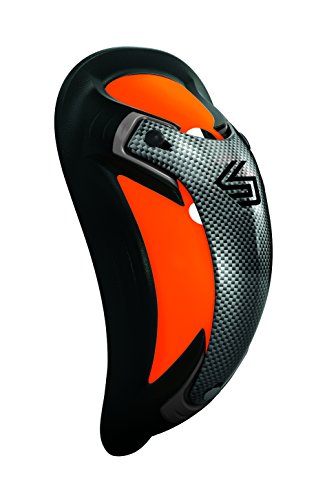
A groin protector is mandatory in most full-contact taekwondo settings, and the carbon flex cup is the one that actually gets worn consistently, thin enough to not affect mobility during high kicks, rigid enough to do its job. Get this at the same time as your mouthguard.
What we like
Carbon flex shell doesn't restrict hip mobility during chambered kicks
Required at most schools and all competitions; get it before you need it
What to know
Requires a compression short or cup jockstrap to hold in place during kicks
Female practitioners skip this; no female equivalent exists in taekwondo
Taekwondo has a learning curve that looks steep but clicks faster than most new students expect. Here's what actually happens in your first four weeks, and how to make the most of it.
Taekwondo has a reputation as a sport for kids. That reputation is wrong, or at least incomplete. Adults start taekwondo every week, progress through the belt system at their own pace, and find something in it (discipline, fitness, a community, a craft) that keeps them coming back for years.
What it also has is a real learning curve. The kicks are technical, the culture has customs you won’t recognize from any other sport, and the early weeks can feel disorienting in ways that have nothing to do with the physical difficulty. Knowing what to expect makes the disorientation go away faster.
This is what your first month actually looks like.
Week 1: Language and movement
Your first class will feel like a foreign country. Some of it is the language: every school uses Korean terminology, and instructors won’t always translate. A few terms you’ll hear constantly:
Dojan: the training floor (the space where you practice)
Sabumnim: the instructor (address them this way, not by first name)
Dobok: your uniform
Poomsae: forms: pre-choreographed sequences of blocks, kicks, and strikes
Charyot: attention position (stand at attention when you hear this)
Kyungnye: bow
The bow matters more than it might seem. You bow when you enter the dojan, when you greet your instructor, when you partner with someone for drills. It’s not ceremony for its own sake; it’s how the space signals that what happens here is different from the sidewalk outside. Lean into it.
The first thing you’ll actually practice is stances. Front stance. Back stance. Horse stance. These feel awkward because they are; you’re learning to position your weight differently than you do in any other context. Instructors correct stances more than almost anything else in early classes, and they’re right to. Good stances make every kick possible. Bad stances make every kick harder.
Week 2: Your first real kicks
By week two, most beginners have the front kick (ap chagi) and roundhouse kick (dollyo chagi) in some functional form. Functional means you can do them, not that they’re good.
The front kick is a push kick: chamber the knee, extend through the target, retract. The common beginner error is dropping the knee before the extension, which kills the power and telegraphs the kick. Slow it down. Knee up, kick through, knee back.
The roundhouse is harder. The hip rotation is what generates power, not the leg. Most beginners swing the leg without rotating the hip and wonder why their kicks feel weak. When an instructor tells you to “rotate your hip,” they mean pivot your standing foot and let your hip drive the kick. It takes about three weeks of repetition to stop thinking about it and start doing it naturally.
Don’t try to kick high yet. A technically sound kick at waist height is better (and scores better in sparring) than a sloppy kick at head height. Everyone wants to do head kicks. The ones who can do them consistently got there by mastering the mechanics at lower targets first.
Stretching is not optional. The kicking range of motion taekwondo requires is more than most adults have. Ten minutes of hip flexor and hamstring work every morning matters. Within two to three weeks, you’ll notice the difference in your chamber height.
Week 3: Poomsae and the culture of practice
By week three, your school will introduce your first poomsae: the basic pattern for white belts, usually called Taeguek Il Jang in WT schools or Chon-Ji in ITF schools. It’s eight to twenty-something moves in sequence: steps, blocks, kicks, punches.
Beginners often find poomsae frustrating because the point isn’t immediately obvious. You’re not fighting anyone. You’re not building a skill you can use directly. The point is that poomsae trains precision, transitions, and the mechanics of each technique in a context where you can pause and correct yourself. Treat it like a slow-motion diagnostic of your form. The practitioners with the cleanest poomsae are almost always the cleanest sparrers too.
A few things about the culture of a good taekwondo school that aren’t taught explicitly:
Arrive before class starts. Being on the floor, stretched, and at attention when class begins is the minimum. Rushing in at the last second is noticed.
Answer questions from your instructor with “Yes, sir” or “Yes, ma’am.” Most schools expect this, and it’s easier than navigating the exceptions.
Help lower belts. Once you’ve been there a month, there are people who’ve been there for three weeks. The culture of taekwondo is that you pass what you’ve learned down. It also accelerates your own learning.
Week 4: Before your first belt test
Most schools test white belts to their first color belt (often yellow or white-with-stripe) after four to eight weeks. Whether you test at month one or month three depends on your school, your attendance, and your progress. Either is fine.
Belt tests in taekwondo are not pass/fail in the way that word implies. If you’ve been attending regularly, your instructor has already decided you’re ready when they tell you to test. The test is a formal acknowledgment of what you’ve demonstrated over weeks of class, not a high-stakes exam.
What you’ll typically show at a beginner test:
Your poomsae, with reasonable accuracy and transitions
Basic kicks: front kick, roundhouse, possibly side kick
A one-step sparring sequence (choreographed response to an attack)
Korean terminology for stances and techniques covered so far
Show up, do what you’ve been practicing, bow when you’re supposed to. The uniform and the form matter less than the instructors would have you believe at this stage. What matters is that you were there for the weeks of practice that led to this.
Taekwondo improvement has a specific shape. The first four weeks are about learning enough to keep up in class. The next six months are about repetition turning mechanical knowledge into muscle memory. And then something shifts; you stop thinking about your feet and start reading the room.
The things that move you through the curve faster:
Attend twice a week minimum. Once a week is enough to stay enrolled, not enough to improve. The learning interval between once-a-week classes is too long; you spend half of each class re-learning what you forgot. Twice a week, you build on what you learned last time.
Ask for corrections. Instructors notice students who seek feedback and students who avoid it. The ones who actively ask (“Can you watch my roundhouse?”) improve faster, because they’re getting targeted information instead of general instruction.
Supplement your hip flexibility. Yoga classes, daily hip flexor stretches, and simple seated hurdle stretches are the exercises that directly translate to higher kicks and cleaner chambers. Twenty minutes three times a week adds up.
Watch experienced practitioners spar. You won’t understand everything you’re seeing yet. That’s fine. Your eye is calibrating. By month three, you’ll start seeing the patterns: who’s setting up combinations, who telegraphs kicks, how someone moves their feet before they attack.
Taekwondo doesn’t click in the first month. The mechanics feel clumsy, the Korean terms blur together, and your kicks land nowhere near where you’re aiming them. This is what everyone goes through, including the black belts you’re watching from across the room.
The people who make it to black belt are not the most naturally gifted athletes in the first month. They’re the ones who kept showing up.
Save your money
What you don't need yet
Beginners get pressured to buy a lot of stuff that doesn't help them play
better. Here's what we'd skip on day one.
Electronic scoring hogu — The WT-approved electronic body armor used in Olympic-style competition costs $200+ per piece. You won't need it until you're actively competing in WT-sanctioned tournaments.
Breaking boards — Board breaks are tested at belt promotions, but the school provides them. You don't need your own until you're training for a specific belt test.
Competition-grade dobok — A mid-weight training dobok works fine through your first few belt promotions. Save the Mooto or high-end competition uniform for when you're tournament-bound.
A wavemaster or freestanding bag — Train with a partner and school equipment first. A $200 freestanding bag is a good six-month purchase, not a day-one one.
Boxing gloves — Taekwondo uses hand protectors, not boxing gloves. Boxing gloves are the wrong tool for this sport and interfere with the hand techniques you'll actually use.
First week
Your first seven days
A short, real plan to get from gear-on-doorstep to actually playing.
Find a school and attend a trial class; most schools offer one free. · Action
Stretch daily. Taekwondo's kicking game depends on hip flexibility that most adults have lost. Even ten minutes of hip flexor and hamstring work each morning will matter within two weeks. · Action
Ask your instructor when sparring starts and what gear the school requires. Order it when they give you the go-ahead, not before. · Action
FAQ
Common questions
How much does it cost to start taekwondo?
Day one costs $40–70 for a dobok, plus class fees (typically $80–150 per month). Add $80–130 for sparring gear when your school introduces contact, usually around month two. Total first-year investment in gear is roughly $150–250, not counting monthly tuition.
Do I need any experience or flexibility to start?
None. Taekwondo schools are used to starting adults from zero. Flexibility comes with training; you don't need it to begin, just the willingness to stretch consistently. Tell your instructor you're new; every school has a beginner track.
What's the difference between WTF/WT and ITF taekwondo?
WT (World Taekwondo, formerly WTF) is the Olympic style: fast, high-kick-focused, point sparring with electronic scoring. ITF (International Taekwondo Federation) emphasizes patterns (called tuls instead of poomsae), lower stances, and hand techniques. Most schools in the US teach WT; check your school's affiliation before buying competition-specific gear.
Can I use my karate or martial arts gear for taekwondo?
A plain white gi works as a temporary dobok if your school is flexible. Sparring gear is not interchangeable; TKD uses foot protectors and a specific-style chest protector (hogup) that karate gear doesn't replicate. Check with your school what's accepted.
How long does it take to get a black belt in taekwondo?
Training consistently twice a week, most practitioners reach first-degree black belt (1st Dan) in three to five years. Schools that let students test frequently can get there faster; the real floor is the skills you need to demonstrate, not the calendar.
Is taekwondo good for self-defense?
The kicking skills and reflexes are genuinely useful, but traditional TKD sparring doesn't cover clinch work or ground defense. Schools that blend WT sparring with practical self-defense scenarios give you a more complete picture. It's a better answer than nothing, and the fitness and confidence benefits are real regardless.
World Taekwondo — The international governing body for Olympic-style taekwondo. Official rules, ranking system, and sanctioned events. The authoritative source for WT competition standards.
USA Taekwondo — The US national governing body for WT taekwondo. Find affiliated clubs, sanctioned tournaments, and the national ranking system here.
ITF Taekwondo — International Taekwondo Federation, the governing body for the original General Choi lineage of taekwondo. Relevant if your school teaches ITF-style patterns and sparring.
Black Belt Magazine — Long-running martial arts publication covering technique, history, and equipment across all disciplines. Good for broader martial arts context, less useful for competitive TKD specifics.
r/taekwondo — Active community for all skill levels. Gear questions, school-finding advice, sparring videos, and technique discussion. Skim the wiki before posting a beginner question; it covers most of them.
ATA Martial Arts — American Taekwondo Association, one of the largest school networks in the US. If your school is ATA-affiliated, their curriculum and belt progression is standardized across locations.
As an Amazon Associate, JustBeginning earns from qualifying purchases.
We may also earn commission from other affiliate programs linked on this
page. Editorial recommendations are independent; we don't choose
products based on commission rates.
Product prices and availability are accurate as of the date and time
indicated and are subject to change. Any price and availability
information shown on Amazon at the time of purchase will apply.
Our top pickAdidas ADI-START II WT Taekwondo Dobok