Learning to taste wine is mostly practice: tasting two or three wines side by side and paying attention. The gear is simple. Here's which glasses to buy, a good corkscrew, how to keep open bottles fresh for a few days, aroma kits that train your nose, and the books and notebooks that help you remember what you tasted.
By Colin B. · Published November 19, 2026 · Last reviewed November 19, 2026
Two all-purpose glasses, a waiter's corkscrew, a vacuum pump with stoppers and a beginner wine book come to about $45. Add a set of six glasses, argon spray and a tasting journal for about $130. Full aroma kits run $100 to $400 more. Wine not included.
We earn commission when you buy through links on this page, including
Amazon. See our affiliate disclosure.
Price tiers and budget totals shown above are editorial estimates;
actual prices vary.
At a glance
Our top pick in each category
The fastest path through this guide — each best-starter pick by category.
Scroll for the budget and upgrade alternatives.
One good glass shape is enough. A clear, thin all-purpose glass with a bowl that narrows at the top works for red, white and sparkling. Grape-specific glasses are nice later. Thick, colored or stemless tumblers make wine harder to judge.
Taste side by side. You learn faster comparing two or three wines at once than drinking one bottle a night. Try the same grape from two countries, or two grapes from one region. Pour about 2 oz of each.
Plan for leftovers. Tasting several bottles means most of each is left over. A vacuum pump or argon spray and the fridge keep opened bottles drinkable for about 3 to 5 days.
Temperature matters. Serve whites and sparkling around 45 to 50 F, and most reds around 60 to 65 F. Room temperature is usually too warm for reds. Twenty minutes in the fridge fixes it.
A tasting glass should be clear, thin at the rim and shaped like a tulip, with a wide bowl that narrows at the top. The narrow rim holds aromas in and the big bowl gives room to swirl. Fill it only about a third. One all-purpose shape handles red, white and sparkling while you learn. Get at least two of the same glass, so you can compare wines side by side.
Best starter
Zwiesel Glas
Pure Cabernet Red Wine Glasses, Set of 4
$47.28 as of Nov 19, 2026
★★★★★Our rating· In Stock
Thin, clear glasses with a tall tulip bowl that works well for reds and whites. They're made from tough Tritan crystal, so they survive the dishwasher and the occasional knock. Sold by Amazon. About $47, 4.7 stars from 1,657 ratings.
Signature Kentfield Estate All-Purpose Wine Glasses, Set of 4
$44.29 as of Nov 19, 2026
★★★★☆Our rating· In Stock
An inexpensive set with a proper tulip shape and clear glass. Thicker than crystal, but good enough to learn on and to share at a tasting with friends. Sold by Amazon. About $44, 4.4 stars from 672 ratings.
A very thin, light hand-blown glass that many sommeliers use for every wine. It shows aromas clearly and feels almost weightless, but it is fragile and costly. Sold by TheManufactory. About $78, 4.7 stars from 240 ratings.
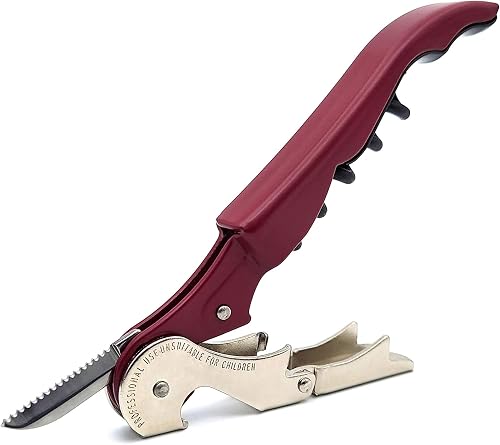
A waiter's corkscrew is a folding tool with a small knife for the foil, a spiral worm and a lever that rests on the bottle lip. A double-hinged lever pulls the cork in two short steps, which is easier and less likely to break the cork. Look for a worm with an open spiral, not a solid screw, since it grips corks better. A two-prong opener helps with old, crumbly corks.
The double-hinged corkscrew design that most others copy. A sharp foil cutter, a good worm and a two-step lever pull corks straight out with little effort. It fits in a pocket or drawer. Sold by High Gallery. About $28, 4.4 stars from 85 ratings.
A cheap, well-reviewed double-hinged corkscrew with a separate serrated foil cutter blade. It works much like the Pulltex for less money, and it is a fine spare for picnics. Sold by Zulay Deals. About $9.99, 4.6 stars from 19,402 ratings.
A worm plus two thin prongs that slide down the sides of the cork and hold it together. Made for old wines with soft, crumbly corks that a normal corkscrew would tear apart. Sold by The Durand. About $145, 4.8 stars from 702 ratings.
Tasting several wines means lots of opened bottles. Oxygen is what makes leftover wine go flat and sour. A vacuum pump removes some of the air, and argon gas spray lays a heavy layer over the wine to keep air off it. Both work best with the bottle in the fridge. Expect 3 to 5 good days. A needle system like Coravin pours wine through the cork, so the bottle never really opens.
Best starter
Vacu Vin
Original Wine Pump with 2 Vacuum Stoppers
$16.82 as of Nov 19, 2026
★★★★★Our rating· In Stock
The classic hand pump and rubber stoppers. A few pumps pull air out of the bottle, and it clicks when the seal is good. Cheap, simple and enough for most leftover bottles. Sold by Vacu Vin USA. About $16.82, 4.7 stars from 26,898 ratings.
A can of inert gas you spray into the bottle for a second before you cork it. The gas sits on top of the wine and keeps air away. One can covers many bottles. Sold by TT Connection. About $19.95, 4.6 stars from 393 ratings.
Pours wine through a thin needle and refills the space with argon, then you seal the bottle with its stopper. Good for tasting a glass from several bottles over a few weeks. Sold by Coravin Wine Preservation. About $199, 4.3 stars from 170 ratings.
A good beginner book explains the main grapes and regions so you know what to expect in the glass. A tasting journal gives you a place to write the wine, the price and a few words about how it looked, smelled and tasted. Reading old notes is how you notice your taste getting better. Any notebook works, but one with prompts keeps notes consistent. An aroma kit is the other way to train: smell the vials, then find the same notes in a glass.
Best starter
Karen MacNeil
The Wine Bible
$18.33 as of Nov 19, 2026
★★★★★Our rating· In Stock
A thick, readable reference covering every major wine region and how wine is made. A good second book once you want to know why a wine tastes the way it does. About $18.33, 4.8 stars from 2,550 ratings.
A hardcover notebook with pages laid out for tasting notes, plus tabbed sections and labels for organizing wines you liked. Small enough to take to a tasting room. Sold by Amazon. About $30, 4.7 stars from 525 ratings.
Twelve common red wine scents in small vials, with cards that explain each one. Smelling them side by side trains your nose faster than tasting alone. Le Nez du Vin kits do the same job but are hard to find. Sold by TASTERPLACE. About $74, 4.5 stars from 123 ratings.
You don't need a course to start tasting wine well. A month of side-by-side tastings is enough to tell the main grapes apart, describe what you smell, and judge acidity and tannin. Here's a week-by-week plan with three or four bottles a week.
Tasting is a skill you build by comparing. One wine on its own is hard to describe. Two next to each other tell you a lot. Pour small amounts, about 2 oz, and write a few notes every time.
Week 1: A tasting routine
Use the same five steps every time. Look at the color against a white sheet of paper. Swirl the glass on the table for a few seconds. Smell with short sniffs and write the first thing that comes to mind. Take a sip and hold it in your mouth for a few seconds. Swallow or spit, then count how many seconds the flavor lasts. That’s the finish. Do this with any bottle you already have.
Open a Sauvignon Blanc and an oaked Chardonnay, both chilled to about 45 to 50 F. Taste them back and forth. The Sauvignon Blanc should feel sharper and smell grassy or citrusy. The Chardonnay should feel rounder and may smell of butter or vanilla from oak. Add a dry Riesling if you can and notice the high acidity. Write down which words fit each glass.
Open a Pinot Noir and a Cabernet Sauvignon at about 60 to 65 F. Hold each glass over white paper and compare color. Pinot is lighter and you can see through it. Take a sip of each and notice the drying feeling on your gums. That’s tannin, and Cabernet has much more. Add a Malbec or Syrah as a third if you like. Keep leftovers in the fridge with a stopper.
Set out small bowls of lemon peel, green apple, cherries, black pepper, vanilla and fresh-cut grass, and smell them before your wines. Then have a friend wrap three bottles in paper bags and number them. Taste, take notes and guess the grape before unwrapping. You won’t get them all right. Look back at your week 2 and 3 notes and see what you missed.
Taste a Sauvignon Blanc and a Chardonnay side by side and write three words about each. · Action
Taste a Pinot Noir and a Cabernet Sauvignon side by side and compare tannin and color. · Action
Pump or gas the leftovers, put them in the fridge, and taste them again two days later. · Action
FAQ
Common questions
How do I taste wine properly?
Look at the color against something white. Swirl the glass to release aromas, then smell with short sniffs. Take a small sip, move it around your mouth, and notice sweetness, acidity, tannin, body and how long the flavor lasts after you swallow.
What glass should I use for tasting?
A clear, thin glass with a tulip-shaped bowl that narrows at the rim. It concentrates aromas and gives room to swirl. Fill it only about a third full. One all-purpose shape works for every style while you learn.
How long does an opened bottle last?
Most still wines last 3 to 5 days in the fridge with a stopper, a bit longer with a vacuum pump or argon. Light whites and rose fade faster than full-bodied reds. Sparkling wine needs a proper sparkling stopper.
Do I need an aroma kit?
No, but it helps. Smelling real fruit, spices and herbs from your kitchen trains your nose for free. An aroma kit gives you consistent samples of the common wine scents so you can name them faster.
Should I spit when tasting?
If you're tasting more than two or three wines, yes. Spitting lets you taste six or more wines and still judge the last one clearly. Any opaque cup works as a spit cup at home.
JustBeginning earns commission from affiliate programs. As an Amazon
Associate, we earn from qualifying purchases. This costs you nothing
extra and doesn't change our recommendations.
Prices and availability are accurate as of the date and time
shown and can change; the price on Amazon when you buy is what
applies.
How this works.
Our top pickPure Cabernet Red Wine Glasses, Set of 4


 Best starter