Autocross is a timed run through a cone course in a parking lot, one car at a time, in the car you already drive. It's the cheapest, safest way to learn car control. Track days come next. Here's the helmet rule, the tire and brake prep that matters, data that helps, and what to skip in your first season.
By Colin B. · Published November 12, 2026 · Last reviewed November 12, 2026
A Snell SA2025 helmet, a tire gauge and a roll of tape come to about $290, plus $40 to $80 per autocross entry. Add a torque wrench, track brake fluid and a GPS lap timer and you're near $600 before track-day fees.
We earn commission when you buy through links on this page, including
Amazon. See our affiliate disclosure.
Price tiers and budget totals shown above are editorial estimates;
actual prices vary.
At a glance
Our top pick in each category
The fastest path through this guide — each best-starter pick by category.
Scroll for the budget and upgrade alternatives.
Start with autocross, not a track day. Events cost $40 to $80, speeds rarely pass 60 mph, and there's nothing to hit but cones. You'll learn more about grip and car control in a few autocross seasons than in your first several track days, for a fraction of the money.
Your daily driver is fine. Stock cars win their classes at every event. Put money into the driver first: more seat time, a ride-along with a fast local, and an instructor if your club offers one. Mods can wait a season.
Check the helmet rule before you buy. Most clubs want a Snell SA or M rating from a recent cycle, and many autocross clubs lend loaner helmets. Track days are stricter and usually want an SA-rated car helmet. Buying the newest rating (SA2025) means it stays legal longest.
The gear
What you actually need
Helmets
Every club requires a helmet, and most check for a Snell sticker inside. SA ratings are made for cars: they're fire-resistant and tested for multiple impacts, and many clubs accept M (motorcycle) ratings for autocross only. Snell updates the standard every five years, and clubs typically accept the last two cycles, so SA2025 stays legal well into the 2030s. Fit matters more than brand: snug all around, no pressure points, and the helmet shouldn't roll when you shake your head.
Best starter
ILM
Snell SA2025 Full Face Auto Racing Helmet
$249.99 as of Nov 12, 2026
★★★★★Our rating· In Stock
A full-face fiberglass helmet certified to Snell SA2025, the newest car rating, so it'll pass tech at autocross and track days for years. It's drilled for a head-and-neck restraint later if you move into wheel-to-wheel racing. A budget brand, but the Snell sticker is what tech inspectors check. About $250. 159 reviews at 4.5 stars.
RaceQuip is one of the most common helmet brands in club racing, and the PRO25 is its SA2025 full-face. Better ventilation and a more refined fit than budget helmets, which you'll notice in a hot car on a summer afternoon. About $340. 26 reviews at 4.5 stars.
Tire pressure is the most powerful free adjustment you have. Street tires usually want more pressure for autocross than the door sticker says, to stop the sidewalls rolling over in hard corners. Check pressures hot, right after a run, and adjust in small steps. You also need to check your lug nuts with a torque wrench before every event; tech inspectors at track days will often ask.
Best starter
JACO
ElitePro Digital Tire Pressure Gauge
$29.90 as of Nov 12, 2026
★★★★★Our rating· In Stock
A backlit digital gauge on a flexible hose with a bleed valve, so you can read pressure and let air out in one step between runs. Accurate and easy to read in a sunny parking lot. About $30. 7,200+ reviews at 4.7 stars.
A gauge and inflator in one, for adding air from a compressor or air tank. If your event site has no air, pair it with a portable compressor or a friend's tank and you can raise pressures between runs. About $38. 6,000+ reviews at 4.7 stars.
1/2-Inch Drive Click Torque Wrench, 10 to 150 ft-lb
$44.97 as of Nov 12, 2026
★★★★☆Our rating· In Stock
A click-type torque wrench that covers lug nut specs on almost every car. Torque your wheels the night before, then recheck them after the first session at a track day. Comes in a case with an extension. About $45. 12,000+ reviews at 4.7 stars.
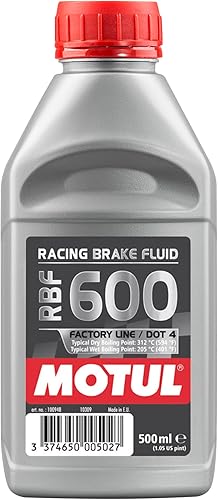
Autocross is easy on brakes. Track days are not. Repeated hard stops from high speed can boil ordinary brake fluid, and boiled fluid means a soft pedal that goes to the floor. Before your first track day, flush the system with fresh high-temperature fluid and make sure the pads have at least half their life left. A shop can do the flush, or you can do it yourself with a one-person bleeder.
Best starter
Motul
RBF 600 Brake Fluid DOT 4, 500ml
$20.46 as of Nov 12, 2026
★★★★★Our rating· In Stock
The standard first upgrade for track days. RBF 600 has a dry boiling point of around 594F, far above typical street fluid, and it mixes with ordinary DOT 3 and DOT 4. One bottle usually covers a full flush on a small car. Sold by Amazon. About $20. 2,500+ reviews at 4.9 stars.
Brake Bleeder Kit with One-Way Check Valve, 16oz Bottle
$22.89 as of Nov 12, 2026
★★★★☆Our rating· In Stock
A catch bottle with a one-way valve and magnetic mount, so you can bleed brakes by yourself: open the bleeder, pump the pedal, and the valve stops air from being sucked back in. Saves a shop bill every time you flush. About $23. 144 reviews at 4.8 stars.
Autocross clubs post your times for every run, so you don't need a timer to start. Data helps once you want to know where the time went: which corner you braked too early for, which line was faster. A phone on a solid mount running a free or cheap GPS lap app covers the basics. A dedicated GPS box records at a much higher rate, which makes the comparisons between runs far more accurate.
Best starter
VANMASS
Suction Cup Car Phone Holder
$25.98 as of Nov 12, 2026
★★★★★Our rating· In Stock
A strong suction mount for the windshield or dash that holds a phone steady enough for video and GPS lap apps through hard corners. The cheapest way to record every run and watch it back between sessions. About $26. 53,000+ reviews at 4.4 stars.
A small GPS logger that records your position 25 times a second, far faster than a phone. It pairs with your phone's app to overlay runs, compare laps and show exactly where you lost time. Works for autocross, track days and 0-60 runs. About $221. 120+ reviews at 4.3 stars.
A few cheap things make event day easier. Clubs need a big number and your class letters on both sides of the car, and wide painter's tape is the standard way to do it without hurting paint. Tire marking crayon on the sidewall shows how far the tire rolls over in corners, which tells you whether to add pressure. Bring a folding chair, water and sunscreen: you'll spend most of the day waiting or working the course.
Best starter
ScotchBlue
Original Multi-Surface Painter's Tape, 2 Inch
$7.79 as of Nov 12, 2026
★★★★★Our rating· In Stock
The autocross number kit nearly everyone uses. Wide blue tape lays down clean numbers and class letters on both doors and peels off at the end of the day without leaving residue. One roll lasts several events. About $8. 14,000+ reviews at 4.8 stars.
Draw a few lines across the edge of the tread and down the sidewall before a run. If the marks wear well onto the sidewall, the tire is rolling over and needs more pressure. A cheap way to tune pressures by evidence instead of guessing. About $15. 630+ reviews at 4.5 stars.
Your first autocross is mostly about not getting lost on course. By the end of a season you'll be reading grip, braking in a straight line and chasing tenths. Here's how to get through day one, what to work on over your first handful of events, and when to try a track day.
Autocross looks like racing, but it’s really a driving school with a stopwatch. You get a handful of runs, each under a minute, in a parking lot laid out with cones. Nobody else is on course with you. The worst thing that usually happens is a cone under your bumper and a two-second penalty.
That makes it the best place to learn what a car does at the limit. Here’s how to spend your first season.
Event 1: Get through the day
Arrive early. Registration, tech inspection and the drivers’ meeting all happen before the first car runs, and novices often get a guided course walk.
Empty the car before you leave home: floor mats out, trunk empty, nothing in the door pockets. Tech will check that the battery is tied down, the wheels are tight and the brakes feel firm. Put your number and class on both sides with painter’s tape.
Walk the course at least three times. The first walk is just to learn where it goes. The second, look for where you’ll brake and where you’ll turn. The third, walk it like you’ll drive it, looking ahead the way you’ll need to in the car.
Your goal for the first event is simple: no wrong turns. A slow clean run teaches you far more than a fast one where you got lost.
Events 2 to 4: Eyes up
The biggest beginner mistake is looking at the cone in front of the bumper. By then it’s too late. Look at the next element, two or three gates ahead, and your hands will follow.
Ask for a ride-along with a fast driver in your class or a novice instructor. Watch where they look and when they brake. Then ask them to ride with you. Most clubs are glad to help, and one ride beats a dozen videos.
Work on smooth inputs. Brake in a straight line, ease off as you turn in, and wait until the wheel is unwinding before you add throttle. Jerky inputs upset the car and cost more time than they feel like they save.
Events 5 to 8: Tune the car with a gauge
Now start measuring. Check tire pressures right after each run while the tires are hot. Draw a few lines with a tire crayon across the shoulder of each tire. If the marks wear down onto the sidewall, the tire is rolling over: add two psi and try again.
Record your runs with a phone on a mount and watch them back between runs. Compare your fastest and slowest. Usually the difference is one or two corners where you braked too early or turned in too soon.
Change one thing at a time. If you change pressure, line and braking point all at once, you’ll never know which helped.
You’re ready for an HPDE track day when you can finish a course clean every time, you’re comfortable at the limit of grip, and you’ve stopped being surprised by what the car does.
Track days are a different kind of hard. Speeds are much higher, sessions last 20 minutes or more, and brakes get far hotter. Before your first one, flush in fresh high-temperature brake fluid, check your pads have at least half their life, and read your insurance policy: most exclude track use. Novice groups put an instructor in the passenger seat and use passing zones only, so it’s a gentle way in.
Most importantly, keep doing autocross. It stays the cheapest seat time you can buy.
Beginners get pressured to buy a lot of stuff that doesn't help them play
better. Here's what we'd skip on day one.
Coilovers and suspension mods — They move your car into a tougher class and rarely help a new driver. Seat time beats parts for your whole first season.
200-treadwear competition tires — Sticky tires hide mistakes and wear out fast. Learn on your street tires, then upgrade once you've stopped improving.
A fire suit and racing shoes — Autocross and HPDE only need long sleeves, long pants and thin-soled shoes. Racing gear comes with wheel-to-wheel racing.
A head-and-neck restraint — It needs fixed racing harnesses to work. With street seatbelts it does nothing useful.
A dedicated track car — Drive what you have for a season. You'll know far better what you want after twenty events.
First week
Your first seven days
A short, real plan to get from gear-on-doorstep to actually playing.
Find a local autocross on MotorsportReg or your SCCA region's site and register for a novice-friendly event. · Action
Walk the course at least three times on event day. Knowing where the course goes is most of your first run. · Learn
Ask for a ride-along with an experienced driver or a novice instructor. Watching their eyes and hands teaches you more than any video. · Learn
Check hot tire pressures after each run and change one thing at a time. · Action
FAQ
Common questions
Is autocross bad for my car?
Not much. Expect extra tire and brake wear, roughly like a few hundred miles of spirited driving per event. Speeds are low and there's nothing hard to hit. Track days are harder on brakes, tires and fluids, which is why prep matters more there.
Does my car insurance cover track days?
Usually not. Most auto policies exclude timed or high-performance driving events, so a crash at a track day may not be covered. Read your policy and look at single-event HPDE insurance, which you can buy for a day. Autocross damage is rare, but the same exclusions often apply.
What should I wear?
Long pants, a cotton or long-sleeve shirt, and thin-soled shoes so you can feel the pedals. Avoid synthetic fabrics that melt. Bring sunglasses, sunscreen and water, since you'll work a course station between runs.
Do I need a special car?
No. Any safe, mechanically sound car with good brakes and tires can autocross, including SUVs at many events. Clubs sort cars into classes so you compete against similar cars. Tech inspection checks for loose items, a tight battery, solid wheels and good brakes.
What does a track day cost?
Typically $200 to $500 per day for an HPDE event, which includes classroom sessions and an in-car instructor for novices. Add fuel, a set of brake pads every few events, faster tire wear and optional track insurance.
How fast do you go in autocross?
Mostly 30 to 60 mph, with a lot of turning and braking in between. A run usually takes under a minute, and you get several timed runs per event. It feels much faster than it is because the cones are close and the course keeps changing direction.
JustBeginning earns commission from affiliate programs. As an Amazon
Associate, we earn from qualifying purchases. This costs you nothing
extra and doesn't change our recommendations.
Prices and availability are accurate as of the date and time
shown and can change; the price on Amazon when you buy is what
applies.
How this works.
Our top pickSnell SA2025 Full Face Auto Racing Helmet

 Best starter