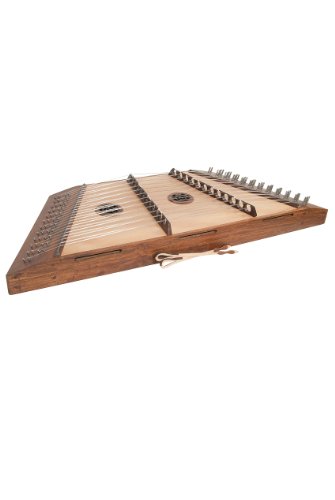
The hammered dulcimer is a struck zither, dozens of strings played with small padded hammers. It is not the mountain dulcimer (which you strum in your lap). Once you hear one at a folk festival, the sound gets under your skin. Here's exactly what you need to start playing, and what you can wait on.
By Colin B. · Published June 13, 2026 · Last reviewed June 13, 2026
Roosebeck 16/15 Hammered Dulcimer
— The Roosebeck 16/15 gives you enough range for real folk tunes at a price that won't sting if dulcimer doesn't stick.
Budget for the instrument ($200-450), a stand ($40-70), hammers ($20-40), and a gig bag ($40-60). Buying used cuts the instrument cost nearly in half.
We earn commission on qualifying Amazon purchases — see our
affiliate disclosure.
Price tiers and budget totals shown above are editorial estimates;
actual Amazon prices vary.
At a glance
Our top pick in each category
The fastest path through this guide — each best-starter pick by category.
Scroll for the budget and upgrade alternatives.
The hammered dulcimer and the mountain dulcimer are two completely different instruments. The mountain dulcimer lies in your lap and is strummed or fretted. The hammered dulcimer stands on a stand, and you strike 60-plus strings with small padded hammers. Same word in the name, nothing else in common. If you saw it at a folk festival or renaissance fair, that was probably the hammered kind.
A $150 dulcimer is possible, but approach it honestly. Cheap instruments need constant tuning, have inconsistent bridges, and can make a beginner think they're doing something wrong when the instrument is just bad. The $350-500 range gets you real stability. Buying used is the smartest move at any budget: a five-year-old mid-grade dulcimer beats a new budget instrument every time.
You need a stand before you can play. Unlike a guitar you hold or a piano you sit at, the hammered dulcimer rests on a stand (or its own folding legs) at roughly table height. Budget for this from day one. Some instruments include legs; most don't.
The instrument is the investment. Most beginners should target the 15/14 course size (15 treble courses, 14 bass), which covers enough musical keys to learn real tunes without being overwhelming. The brands you'd buy at a folk festival (Dusty Strings, McSpadden, Folkcraft) rarely sell on Amazon; what you find there is mostly Roosebeck and budget imports. Roosebeck is workable for getting started. For your second instrument, buy from a dedicated maker.
Hammered Dulcimers — what's the difference?
A few common shapes, each making a different trade.
12/11 Course
Compact starter. Covers D and G keys, good for cautious budgets.
Courses
12 treble / 11 bass
Keys
D, G (limited)
Weight
Lighter, more portable
Best for Budget-conscious beginners, players who want portability
Tradeoff Limited range; some folk tunes don't fit without retuning
Professional range. More notes, more setup complexity, serious investment.
Courses
17 treble / 16+ bass
Keys
Nearly all folk and classical keys
Weight
Heavier, less portable
Best for Players who've been playing 1+ years and want maximum range
Tradeoff Significantly more expensive; complex tuning for beginners
Best starter
Roosebeck
16/15 Hammered Dulcimer
$$$
★★★★★Our rating
The 16/15 gives you 16 treble and 15 bass courses, enough range to play in D, G, A, and adjacent keys that cover most folk and Celtic repertoire. Roosebeck is the most consistently stocked entry-level brand available new on Amazon, and the 16/15 size hits the sweet spot of enough instrument to grow into without the cost of a boutique maker.
What we like
16/15 course range covers most folk and Celtic keys from day one
More stable tuning and consistent bridges than budget imports
Right size to grow into for a year or more of playing
What to know
Needs 30-45 min of initial tuning right out of the box
Not at the quality level of boutique makers like Dusty Strings
The 12/11 is narrower in range but lighter, more portable, and noticeably cheaper. If you mostly want to play D and G tunes (the majority of beginner folk music), this has enough. It's the right call if you're not yet certain the instrument will stick.
What we like
Lighter and more portable than the 15/14, fits in a smaller bag
Covers D and G: enough for most beginner folk tunes
Lower commitment price if you're still deciding on the instrument
What to know
Limited range means some tunes don't fit without retuning
Smaller soundboard projects noticeably less volume than the 15/14
Musicmakers sells quality dulcimer kits that build into instruments that rival mid-grade finished dulcimers. If you're handy and patient, you'll get more instrument for your money than buying finished at this price. If you want finished, shop Dusty Strings or McSpadden direct (neither sells on Amazon) once you've been playing 6-12 months and know you're committed.
What we like
Kit format delivers more instrument per dollar than equivalent finished dulcimers
Quality materials from a dedicated folk instrument supplier
Building it yourself gives you deep understanding of how it works
What to know
Requires assembly: a weekend project, not plug-and-play
Limited recourse if assembly goes wrong; buy finished if you are not handy
The hammers (sometimes called mallets) are what you strike the strings with, and they affect your tone as much as anything short of the instrument itself. Traditional hammers are wooden with a padded leather or felt head. Lightweight hammers suit a delicate touch; heavier hammers produce more volume with less effort. Most beginners should start with standard padded hammers and adjust from there. Some players end up with three or four pairs for different musical moods.
Best starter
Folkcraft
Deluxe Hammered Dulcimer Hammers
$
★★★★★Our rating
Folkcraft makes instruments and accessories and knows exactly what a hammered dulcimer hammer needs to do. These padded hammers strike cleanly, give you honest feedback on your technique, and hold up for years. The standard starting point for most players.
What we like
From a dedicated folk instrument maker who understands the tool
Padded heads produce warm tone without excessive string noise
Lightweight enough to play for an hour without hand fatigue
What to know
Sold as a fixed-weight pair; no option to mix weights
Basic finish; not a show piece, but they work reliably
Two-sided hammers have a padded head on one end and a harder bare-wood head on the other, giving you two distinct tones from a single pair. Flip them mid-song to shift from a soft, round sound to something brighter and more percussive. Worth trying once you've developed some baseline technique.
What we like
Two distinct tones in one pair: padded warmth and bare-wood brightness
Expands your tonal range without buying a second set of hammers
What to know
Flipping mid-song requires practice; awkward for beginners
Heavier than single-sided hammers; hand fatigue builds faster
The hammered dulcimer doesn't sit in your lap or on your shoulder. It perches on a stand (or its own folding legs) at roughly table height, angled slightly toward you. Some dulcimers come with attached folding legs; most don't. Without a stand, you're resting the instrument on a table (workable) or your knees (not great). A proper stand puts the instrument at the right playing angle and frees your arms to move without hunching.
Best starter
Roosebeck
Portable Hammered Dulcimer Stand
$120.68 as of Jun 22, 2026
★★★★★Our rating· Only 13 left in stock - order soon.
A purpose-built folding stand for hammered dulcimers. Sets up in seconds, folds flat for transport, and positions the instrument at the correct playing angle. The right height for most sitting players. The practical first stand for sessions and home practice alike.
What we like
Purpose-built for hammered dulcimers: right height and angle out of the box
Folds flat for transport to sessions and festivals
Positions the instrument securely without a non-slip pad
What to know
Less compact than leg sets that attach directly to the instrument
Fixed angle; does not adjust tilt for personal preference
★★★★☆Our rating· Only 1 left in stock - order soon.
An X-style keyboard stand works for a hammered dulcimer in a pinch: stable, height-adjustable, and cheap. Not as clean as purpose-built legs (you lose direct attachment and the dulcimer can shift), but a perfectly legitimate way to start until you know exactly what setup you want.
What we like
Height-adjustable to dial in your exact preferred playing angle
Folds flat and travels easily to sessions and jams
What to know
Dulcimer sits loose; needs a non-slip mat to prevent shifting
Not designed for the instrument; attachment point is improvised
Hammered dulcimers are not fragile in the way a violin is, but tuning pins and bridges are vulnerable to impact, and the strings can snag on loose fabric. A padded gig bag is the minimum for any transport. If you play outdoors at festivals regularly or check the instrument for travel, a hard case is worth the extra cost. Most players use a soft gig bag for local sessions and upgrade to a hard case before their first plane trip.
Best starter
Musicmakers
Hammered Dulcimer Padded Gig Bag
$$
★★★★★Our rating
A padded gig bag from Musicmakers, a dedicated folk instrument supplier. Sized and padded for hammered dulcimers with handles and accessory pockets for your hammers and tuner. The practical choice for local sessions and car transport. Measure your instrument before ordering.
What we like
Padded and sized by a folk instrument specialist who knows the proportions
Accessory pockets hold hammers, tuner, and extra strings
Handles and carry strap for session transport
What to know
Soft sides won't protect against hard impacts; get a hard case for air travel
Must measure your instrument to confirm fit before ordering
A hard-shell carrying case from Folkcraft, a dedicated dulcimer maker. Dense foam interior cradles the instrument, latched closures keep everything secure, and the robust exterior protects against the impacts that soft bags can't handle. Worth the upgrade for festival travel, air travel, or anytime the instrument rides in a vehicle repeatedly.
What we like
Hard shell protects bridges and pins from real impacts a gig bag won't stop
From a dedicated dulcimer maker who designed it for the instrument
What to know
Heavier and bulkier than a gig bag for daily carry
Sized for 12/11 instruments; verify fit for larger dulcimers before ordering
Hammered dulcimer teachers are not as common as guitar or piano teachers, which means books and video courses do more of the early work. The good news is the instructional ecosystem is genuinely excellent: a handful of experienced players have put their methods in print, and online communities are active and welcoming. Start with a structured beginner method, then find a local session group or online community as soon as possible. Playing with other people accelerates everything.
Best starter
Mel Bay
You Can Teach Yourself Hammered Dulcimer by Madeline MacNeil
$27.17 as of Jun 22, 2026
★★★★★Our rating· In stock
Madeline MacNeil's Mel Bay method is the go-to beginner book. It starts from absolute zero: how to hold the hammers, how to tune, and how to play your first tunes in a logical sequence. Includes audio recordings so you can hear how each exercise should sound. Most dulcimer teachers hand this to students on day one.
What we like
Starts from zero: hammers, tuning, and first tunes in clear sequence
Audio examples let you hear how each exercise should sound
Recommended by most hammered dulcimer teachers as the first text
What to know
Audio production is dated; YouTube tutorials feel fresher for visual learners
Covers basic folk tunes only; you'll need more resources for Celtic or classical
The Hammered Dulcimer: A History by Paul M. Gifford
$127.21 as of Jun 22, 2026
★★★★☆Our rating
The comprehensive reference for anyone serious about the instrument's history, tuning theory, and technique. Not a beginner method (don't start here) but invaluable once you've got the basics. Gifford traces the dulcimer from its Persian origins to its American folk revival, with serious chapters on construction and temperament. The kind of book you return to for years.
What we like
The authoritative reference: history, theory, and construction in one book
Tuning theory chapters explain why the instrument is laid out as it is
What to know
Not a beginner method; save this for after your first month of playing
The hammered dulcimer has a real learning curve, but the first milestone arrives faster than you'd expect. Here's what actually happens in your first thirty days, and how to make them count.
The hammered dulcimer is one of those instruments that looks harder than it is from a distance and harder than it looks once you’re actually playing. The first few sessions feel like a puzzle — where are these notes? why does tuning take so long? — and then something clicks, usually around week two, and the puzzle starts making sense.
This is what your first month actually looks like, with the things worth focusing on and the things you can safely ignore until later.
Week 1: Getting your bearings
The dulcimer arrives and the first thing you notice is how many strings there are. A 15/14 course instrument has 60 to 65 individual strings (most courses are paired — two strings tuned to the same note, struck together for volume). That number is intimidating until you realize that the note layout repeats in a predictable pattern, and you really only need to find about a dozen notes to play your first tunes.
Tune it before anything else. New instruments go significantly out of tune from shipping and humidity changes. Download a free chromatic tuner app (GuitarTuna works, as does any standard chromatic tuner), get a dulcimer tuning wrench, and work through the strings systematically. Standard tuning is GDAD from bass to treble. Budget 30 to 45 minutes for this first tuning session. After that, 10 to 15 minutes before each session keeps things in shape. After a month or two, the strings stop stretching and tuning becomes much quicker.
Understand the layout before you play. The hammered dulcimer is tuned in a circle-of-fifths pattern that means many notes appear in two places on the instrument: once on the treble bridge and again on the bass bridge. This is confusing at first and incredibly useful later. Spend 20 minutes with a note layout chart before you try to play your first tune. Folkcraft’s website has a clear diagram. Find where D, G, A, and C live. Everything else follows from those four.
Hold the hammers correctly. The hammers should rest loosely in your fingers, not gripped tightly. Think of them like a pencil you’re bouncing lightly on the strings, not a drumstick you’re swinging hard. The motion comes from the wrist, not the arm. Light, consistent contact produces a cleaner tone than heavy strikes. Your instinct will be to hit harder; resist it.
By the end of week one, you should have a feel for the layout and a rough handle on tuning. Week two is about playing actual music.
Start with D major tunes. The majority of beginner folk music lives in D and G, and the dulcimer is set up to make these keys natural. “Boil Them Cabbage Down,” “Old Joe Clark,” and “Shady Grove” are all in D, are all widely available as free tabs, and all fit comfortably within the range of even a 12/11 course instrument.
Tablature (tab) is your friend. Dulcimer tab uses a system of bridge indicators (T for treble, B for bass) and numbers to tell you which string to strike. It’s a different system than standard music notation, easier to learn for beginners, and used extensively in the dulcimer community. You don’t need to read sheet music to play the dulcimer. Most session tunes are shared as tab on free sites like dulcimertab.info and through the various Facebook groups.
Play slowly, then slowly, then slightly faster. The most common beginner mistake is rushing. Your hammers need time to clear each string before you strike the next, and your brain needs time to translate the tab position to physical motion. Ten minutes of slow, clean playing builds more skill than an hour of sloppy fast playing.
The second week is also when you’ll have your first frustrating session — a day where nothing sounds right and your tuning feels perpetually off. That’s normal. New instruments take a few weeks to settle. Keep tuning consistently and the stability will come.
Week 3: Finding the community
At some point in the first month, you should play with other people. The hammered dulcimer community is one of the warmest in folk music, and playing in a group context transforms how fast you improve.
Find a local folk session. Celtic and old-time sessions often welcome dulcimer players. Search Meetup, your local folk club, or the Hammered Dulcimer Facebook group for sessions in your area. At a session, you sit in a circle and take turns leading tunes while everyone else follows. Your job as a beginner is to listen, play softly, and not try to lead until you know the tune cold.
Music camps are the fast track. If you want to accelerate your first year significantly, look at Augusta Heritage Center in West Virginia or Centrum in Port Townsend, Washington. Both run week-long folk music camps with dedicated hammered dulcimer tracks. The combination of instruction, practice time, and playing with other dedicated beginners compresses months of progress into a week.
Take a lesson around week three or four. Not at week one — you don’t have enough context yet to know what to ask. After three weeks, you have real questions: why does this note sound weak? am I holding the hammers wrong? how do I cross bridges cleanly? A 60-minute lesson with a teacher who can watch you play will identify the two or three things actively slowing you down.
The thing nobody tells you about dulcimer tuning
The hammered dulcimer is a high-maintenance instrument compared to most. Guitars go out of tune; dulcimers go really out of tune, especially when new, especially in seasonal humidity transitions. Most beginners in their first month spend more time tuning than they expect.
This is not a failure of the instrument or of you. It’s just the nature of a string instrument with 60-plus strings and a soundboard that responds to humidity. Two things help: a hygrometer in your instrument room (keep humidity between 45-55%) and consistent tuning before every session. The strings will stabilize. After three months, you’ll tune it once and it’ll hold for a week.
A chromatic clip-on tuner makes this faster than a phone app in a noisy room, though the app works fine for home practice.
With consistent practice (20 to 30 minutes most days), a month of hammered dulcimer gets you:
Tuning the instrument in under 15 minutes
Playing 4 to 8 simple folk tunes in D and G at a moderate tempo
Finding any note on the treble bridge reliably
Basic hammer technique that doesn’t cause hand fatigue
That’s a real foundation. Month two is when you add G and A tunes, start crossing bridges more fluidly, and begin to develop the rhythmic bounce that makes dulcimer playing sound like itself rather than a tentative recitation of notes.
The folk dulcimer community has a phrase for the moment when the instrument clicks: “it gets in your blood.” They mean it. Players who stick past the first month tend to stick for decades.
Save your money
What you don't need yet
Beginners get pressured to buy a lot of stuff that doesn't help them play
better. Here's what we'd skip on day one.
A clip-on electronic tuner (at first) — A free chromatic tuner app on your phone works fine for beginners. The clip-on version is nicer but not necessary until you're tuning in noisy session environments.
Spare strings — Strings rarely break in normal play. Get a full replacement set after a year so you have them when one snaps, not before.
A second dulcimer — The multi-dulcimer setup is real in serious folk communities, but you'll know when you need it. Start with one.
A pickup or microphone — The hammered dulcimer is naturally loud enough for sessions and small rooms. Amplification becomes relevant only when you're playing venues bigger than a living room.
Custom-made hammers — Many experienced players eventually commission custom hammers from makers. That conversation happens after you've developed enough technique to know what you want.
First week
Your first seven days
A short, real plan to get from gear-on-doorstep to actually playing.
Order the instrument and a stand together. Playing on a proper stand from day one builds correct posture and striking angle. · Buy
Download a free chromatic tuner app and tune the dulcimer before every session. Hammered dulcimers go out of tune easily when new; consistent tuning also trains your ear. · Action
Spend 20 minutes understanding the note layout before you try to play a melody. The dulcimer is tuned in a repeating pattern across the treble and bass bridges; knowing where D, G, A, and C live changes everything. · Learn
r/Dulcimer · Active community; friendly to beginners asking layout questions
Play your first simple melody in D major. 'Boil Them Cabbage Down' or 'Shady Grove' have the right range. Go slowly; comfortable hammer control matters more than speed. · Learn
Buy the MacNeil beginner book and work through the first five exercises in order before moving on. · Buy
Find a local folk session or hammered dulcimer group. The Augusta Heritage Center and Centrum hold annual music camps with dulcimer workshops; local folk clubs often have regular sessions. · Action
What's the difference between a hammered dulcimer and a mountain dulcimer?
Completely different instruments. The mountain dulcimer is a fretted instrument held in your lap that you strum or fret like a simplified guitar. The hammered dulcimer is a large flat instrument on a stand with 60-plus strings, played by striking them with two small hammers. Same word in the name, nothing else in common.
How hard is the hammered dulcimer to learn?
Easier than violin or classical guitar, harder than ukulele. You can play simple folk melodies within a few weeks. The main challenges are tuning (60-plus strings to keep in tune), the unusual layout (notes repeat across treble and bass bridges), and developing an even striking touch. Most beginners play recognizable tunes within a month.
How much does a beginner hammered dulcimer setup cost?
A workable starter instrument runs $200-450 new. Add $50-100 for a stand, hammers, and a gig bag. Total starter cost is typically $300-550. Buying used cuts the instrument cost by 30-50%, which is the smartest move at any budget.
How do I tune a hammered dulcimer?
With a chromatic tuner (app or clip-on) and a dulcimer tuning wrench. Standard tuning is GDAD from bass to treble. New instruments go out of tune frequently as strings stretch and settle; plan to tune before every session for the first two months. After that, you'll only need to touch it up.
Can I find hammered dulcimer teachers or sessions?
Yes, though they're less common than guitar or piano. Folk music centers, music camps (Augusta Heritage Center and Centrum in particular), and Celtic and folk festivals often have workshops. Online, Sam Edelston and Karen Ashbrook have well-regarded teaching resources. The Hammered Dulcimer Facebook group maintains a teacher directory.
What size hammered dulcimer should I buy first?
A 15/14 course instrument (15 treble courses, 14 bass) is the standard recommendation. It covers enough musical keys to play real folk and Celtic repertoire without the complexity of a full professional instrument. The 12/11 is cheaper and lighter but has limited range. Start with the 15/14 if budget allows.
Folkcraft Instruments — One of the most accessible makers for beginners. Their website has a solid hammered dulcimer basics section, including tuning guides and note layout charts.
Dusty Strings — Seattle-based maker of some of the most respected beginner and intermediate dulcimers available. Their instruments don't sell on Amazon; buy direct. Their instrument comparison page is the clearest guide to sizing decisions.
McSpadden Dulcimers — Tennessee-based family maker with decades of reputation. A reliable step up from entry-level. Check for used McSpaddens before buying anything new at this price.
Augusta Heritage Center — Annual folk music camp in West Virginia with dedicated hammered dulcimer workshops. One of the best immersive ways to accelerate your first year.
Hammered Dulcimer (Facebook Group) — The largest online community of hammered dulcimer players. Active Q&A, teacher directory, and tab-sharing. Where to go when you have a tuning question at 10pm.
r/Dulcimer — Covers both mountain and hammered dulcimer. Welcoming to beginners. Search before asking; tuning and beginner setup questions have good existing threads.
As an Amazon Associate, JustBeginning earns from qualifying purchases.
We may also earn commission from other affiliate programs linked on this
page. Editorial recommendations are independent; we don't choose
products based on commission rates.
Product prices and availability are accurate as of the date and time
indicated and are subject to change. Any price and availability
information shown on Amazon at the time of purchase will apply.


 Best starter