A fishing kayak gets you onto water that bank anglers can't reach, quietly and for the price of a good rod and reel, without a boat, trailer or fuel. Here's which kayak to start with, the safety gear that isn't optional, and the small accessories that make fishing from a kayak easy instead of frustrating.
By Colin B. · Published November 5, 2026 · Last reviewed November 5, 2026
Kayak Fishing Life Jacket
— A high-back fishing life jacket that clears the seat and has pockets for tackle.
LeverLoc Anchor Trolley Kit
— An anchor trolley lets you anchor from the bow or stern, which is far safer than the side.
Budget total
$320
Typical total
$780
An inflatable fishing kayak with a paddle and pump, a life jacket and a leash gets you on the water for about $320. A hard-shell angler kayak, a better paddle, a fishing PFD, an anchor setup, leashes and a dry bag come to around $780, before rods and tackle you may already own.
We earn commission when you buy through links on this page, including
Amazon. See our affiliate disclosure.
Price tiers and budget totals shown above are editorial estimates;
actual prices vary.
At a glance
Our top pick in each category
The fastest path through this guide — each best-starter pick by category.
Scroll for the budget and upgrade alternatives.
Buy a sit-on-top. Fishing kayaks are almost all sit-on-tops because they're stable, drain themselves, and you can climb back on if you fall off. Width matters more than length for stability; 30 inches or wider feels steady for a beginner.
Think about transport and storage first. A 10 foot hard kayak weighs 40 to 50 pounds and needs a roof rack or truck bed. If you have neither, an inflatable or a modular kayak that splits into pieces is the practical choice.
Wear your life jacket, always. Most kayak fishing deaths involve someone who wasn't wearing one. Fishing PFDs are comfortable enough to wear all day, and dress for the water temperature, not the air.
Paddle sit-on-tops are the classic start: simple, cheap and reliable. Pedal kayaks free your hands for fishing and cover water faster but cost twice as much and weigh more. Inflatables pack into a car trunk and store in a closet, at the cost of tracking and wind performance. Whatever you buy, look for flush rod holders, a tank well for a crate, and a seat you can sit in for hours.
Fishing Kayaks — what's the difference?
A few common shapes, each making a different trade.
Paddle sit-on-top
Hard plastic angler kayak you paddle. Stable, simple and the usual first boat.
A 9.5 foot angler kayak with a flat, multi-chine hull for stability, an Ergolounge seat, rod holders and a removable ExoPak storage box. At 44 lb it's light enough to car-top and carry alone. About $512, 275 lb capacity.
A wider tunnel-hull angler kayak with a high-low Ergocast seat and room to stand and cast. About $711. The step up for anglers who want more stability and deck space.
A pedal-drive fishing kayak that splits into sections, so it fits in a car without a rack. Hands-free propulsion, a wide W-hull and 380 lb capacity. About $1,098.
A tough 3-ply inflatable with a paddle, pump, rod holders and removable skegs for about $227. 1,200+ reviews. The cheapest way to try kayak fishing without a rack or garage.
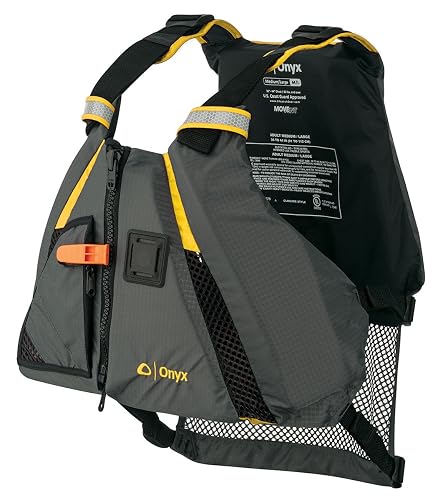
A fishing PFD is built to wear all day: a high back that clears a kayak seat, open arms for casting, and pockets for pliers and tackle. US Coast Guard approval is what matters legally. Buy one that fits snugly; a loose life jacket rides up over your head in the water.
Best starter
Onyx
Kayak Fishing Life Jacket
$91.99 as of Nov 5, 2026
★★★★★Our rating· In Stock
A US Coast Guard approved fishing PFD with a high back that sits above the seat, lots of pockets and a tool holder, about $92. 4,400+ reviews at 4.7 stars.
A lighter, cooler USCG approved paddling vest with mesh venting, about $86. A good choice in hot weather or if you paddle as much as you fish. 4.8 stars.
Many kayaks come without a paddle. A fishing paddle is a little longer for wider kayaks and often has a notch or hook for grabbing line or snags. Lighter paddles are less tiring over a day. 230 to 250 cm suits most fishing kayaks.
Best starter
Pelican
Poseidon Angler Paddle
$63.74 as of Nov 5, 2026
★★★★★Our rating· In Stock
An adjustable aluminum-shaft paddle with reinforced fiberglass blades and a hook-retrieval notch, about $64. Sized for fishing kayaks. 2,700+ reviews.
An anchor holds you on a spot, but anchoring a kayak from the side can tip it in wind or current. An anchor trolley runs your anchor line to the bow or stern so the kayak swings into the wind. Never anchor in fast-moving water, and keep a knife within reach to cut the line.
Best starter
YakAttack
LeverLoc Anchor Trolley Kit
$37.95 as of Nov 5, 2026
★★★★★Our rating· In Stock
A made-in-USA anchor trolley kit with pulleys, rope and a LeverLoc cleat, about $38. Lets you set anchor at the bow or stern and adjust position from your seat. 797 reviews at 4.7 stars.
Anything that isn't leashed will eventually sink. Coiled leashes keep paddles and rods attached when you set them down or flip. A roll-top dry bag keeps your phone, keys and a spare layer dry.
Best starter
OCEANBROAD
Stretchable Kayak Paddle Leash, 4-7 ft
$4.99 as of Nov 5, 2026
★★★★★Our rating· In Stock
A coiled leash for about $5 that keeps your paddle attached to the kayak. Buy a few; they're cheap insurance. 2,700+ reviews.
Your first trips are less about catching fish and more about learning the kayak: launching, paddling with gear, anchoring and handling a fish without tipping. Here's what each early trip should teach you.
Kayak fishing feels awkward for about two trips. You’ve got a paddle, a rod, a tackle box and a kayak that moves every time you do. By the fifth trip it’s second nature, and you’ll be fishing water nobody on the bank can reach.
Trip 1: No fishing, just the kayak
Leave the rods at home. Go to a calm, shallow launch on a warm day and wear your life jacket.
Launch from the side, with the kayak parallel to the shore in shin-deep water. Sit down first, then swing your legs in.
Paddle for an hour. Get a feel for how it tracks, turns and drifts in wind.
Tip it over on purpose in waist-deep water. Flip the kayak back over, then climb on from the side: grab the far edge, kick, and slide your belly across before you turn to sit.
That last one is the most important thing you’ll do all season. Knowing you can get back on takes the fear out of everything else.
Bring one rod, a small box of lures and a leash. Stay within a short paddle of the launch.
Set your paddle across your lap or in its holder when you cast, and leash it. Cast mostly forward and to the sides; casting behind you from a seat is awkward. Keep your tackle in one small box you can reach without twisting.
Trip 3: Rig for how you actually fish
By now you know where your hands want things. Put your rod holder where you can reach it, your pliers in a PFD pocket, and a crate in the tank well. Most beginners over-rig. Fewer things, in the right places, is better.
Trip 4: Anchoring and drifting
With an anchor trolley, drop the anchor off the bow or stern, never the side. The kayak will swing to point into the wind, which is stable. In light wind, try drifting instead: let the wind push you along a shoreline or weed edge while you cast ahead of the kayak.
Never anchor in fast current, and keep a knife where you can reach it.
When you hook something decent, keep the rod tip up and let it tire out away from the kayak. Bring it alongside, not over the front where the line can wrap your paddle. Lip-grip or net it close to the hull, keep your weight centered, and don’t lean out to reach.
A fish pulling a kayak around is half the fun. You’ll be surprised how far a big one can tow you.
What not to worry about yet
Don’t buy a fish finder, a motor or a pile of mounts. Don’t head into big water, wind or current yet. Small lakes and calm mornings are where you’ll learn fastest, and where most beginner kayak anglers catch their first good fish.
Save your money
What you don't need yet
Beginners get pressured to buy a lot of stuff that doesn't help them play
better. Here's what we'd skip on day one.
A fish finder — Useful later, but learn to read water first. Start without the wiring and battery.
A trolling motor — Adds weight, cost and registration rules. Paddle or pedal for your first season.
A stake-out pole — Great in shallow flats, but an anchor trolley covers most beginner spots.
A full rigging kit — Add rod holders and mounts once you know where your hands reach naturally.
New rods and reels — Your existing spinning gear works fine from a kayak. Shorter rods are a little easier.
First week
Your first seven days
A short, real plan to get from gear-on-doorstep to actually playing.
Check your state's fishing license and kayak registration rules. · Learn
Pick a small, calm lake and stay close to shore on your first trips. · Action
FAQ
Common questions
What's the best fishing kayak for a beginner?
A stable sit-on-top angler kayak around 10 feet long and 30 or more inches wide. It's easy to paddle, easy to climb back onto and light enough to load alone.
Is a pedal kayak worth it for beginners?
If you'll troll, fish wind or current, or fish all day, pedals are a big help because your hands stay free. They cost twice as much, though, so many people start with a paddle kayak.
Can you stand up in a fishing kayak?
In wider, stable models, yes. Practice in calm, shallow water first, and always wear your life jacket. Narrow kayaks under about 32 inches aren't meant for standing.
Do I need a license to kayak fish?
You need a fishing license in most states. Some states also require registering kayaks, especially with a motor. Check your state wildlife agency.
How do I anchor a fishing kayak safely?
Use an anchor trolley so the anchor line comes off the bow or stern, never the side. Don't anchor in moving water, and keep a knife handy to cut the line if needed.
Are inflatable fishing kayaks any good?
Good ones are, especially if you lack storage or a roof rack. They're slower and more affected by wind than hard kayaks, but they're much easier to store and transport.
JustBeginning earns commission from affiliate programs. As an Amazon
Associate, we earn from qualifying purchases. This costs you nothing
extra and doesn't change our recommendations.
Prices and availability are accurate as of the date and time
shown and can change; the price on Amazon when you buy is what
applies.
How this works.
Our top pickSentinel 100X Angler Sit-on-Top Fishing Kayak


 Best starter