Bodyboarding is the quickest way to start riding waves. You lie on a short foam board, kick with fins and catch waves that would take months to stand up on with a surfboard. The gear is cheap, but the board you choose matters more than people think. Here's sizing, EPS vs PE vs PP cores, why fins are essential, and what to wear.
By Colin B. · Published November 12, 2026 · Last reviewed November 12, 2026
A 42-inch EPS board, Churchill fins, a leash and fin savers come to about $140. Add a 3/2 wetsuit for cooler water and you're near $330. Warm-water riders can swap the wetsuit for a rash guard.
We earn commission when you buy through links on this page, including
Amazon. See our affiliate disclosure.
Price tiers and budget totals shown above are editorial estimates;
actual prices vary.
At a glance
Our top pick in each category
The fastest path through this guide — each best-starter pick by category.
Scroll for the budget and upgrade alternatives.
Size the board to your body. Stood on its tail, a bodyboard should reach roughly to your belly button, or from your chin to just above your knees when held against you. Most adults between about 5 feet 3 and 5 feet 10 ride 40 to 42 inches. Heavier riders size up an inch or two.
Skip the $20 foam boards from beach stores. They have no proper slick bottom, flex until they crease, and often snap in the first decent wave. A real bodyboard with a stiff core and a slick (HDPE or Surlyn) bottom is faster, catches waves more easily and lasts for years.
Fins come first after the board. Kicking with fins is how you catch waves early and get back out through the white water. Bodyboarding without fins is mostly getting tumbled. Add fin savers so a lost fin isn't gone for good.
A bodyboard has a foam core, a soft deck to lie on, and a hard, slick bottom that planes across the water. The core sets how it feels. EPS is light, buoyant and cheap, ideal for beginners. PE is heavier and flexier, giving a smooth, controlled ride in cooler water. PP (polypropylene) is light and stiff for fast, warm-water riding. Crescent tails grip the wave better for most riders.
Bodyboards — what's the difference?
A few common shapes, each making a different trade.
EPS core
Light, floaty and cheap. The best core for learning on.
Light and stiff, for speed and projection in warm water.
Feel
Fast and responsive
Price
About $150 to $300
Best for Progressing riders in warm water
Tradeoff Too stiff for cold water and costs more
Best starter
Thurso Surf
Bodyboard 42-Inch, Lightweight EPS Core
$64.99 as of Nov 12, 2026
★★★★★Our rating· In Stock
A proper beginner bodyboard with an EPS core, a slick bottom and a leash in the box. It's stiff enough not to fold in real waves, and light enough to kick into them easily. The 42-inch size fits most adults. About $65. 620+ reviews at 4.6 stars.
Morey invented the Boogie Board, and the Mach 12 is a modern beginner-to-intermediate board with channels for grip and a crescent tail. Comes with a coiled leash. About $85. 52 reviews at 4.6 stars.
A PE-core board with a soft IXPE deck and a slick HDPE bottom. Heavier and flexier than EPS, which gives a smoother, more controlled ride and suits cooler water. A good choice if you live near cold surf. About $115. 120+ reviews at 4.5 stars.
A step-up board from BZ, one of the classic bodyboard makers, with its stiffer Phuzion core, an HDPE slick bottom and a crescent tail. More speed and control once you're riding along the face of waves. About $180. 23 reviews at 4.4 stars.
Short-blade fins let you kick hard into waves and swim back out through the white water. Bodyboarding fins are shorter and stiffer than snorkel fins, so you can kick fast without tiring. Fit them snug: loose fins come off in the first wipeout. Wear fin socks if they rub, and strap on fin savers so lost fins stay attached to your ankles.
Best starter
Churchill
Makapuu Swim Fins, Gum Rubber
$44.99 as of Nov 12, 2026
★★★★★Our rating· In Stock
The classic short rubber fin used by bodyboarders and bodysurfers for decades. Stiff, efficient blades that give powerful kicks, and rubber that lasts for years. Sized by shoe size. About $45. 1,100+ reviews at 4.4 stars.
Rubber straps that loop around your ankle and the fin heel, so a fin that slips off in a wipeout stays with you. Cheap insurance for an expensive pair of fins. About $20. 48 reviews at 4.8 stars.
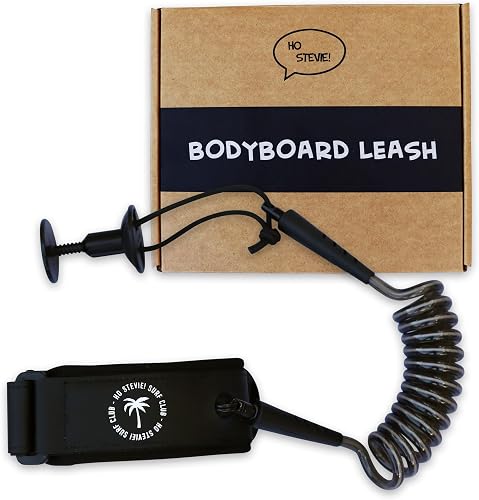
A leash keeps your board close after a wipeout, so you're not swimming after it and it's not hitting other people. Bodyboard leashes are coiled to stay out of the way. Wrist leashes are simpler to use. Bicep leashes keep the cord away from your hands while you ride and are what most experienced riders prefer.
Best starter
Dakine
Bodyboard Coiled Wrist Leash
$28.30 as of Nov 12, 2026
★★★★★Our rating· In Stock
A coiled leash with a padded wrist cuff and a strong board plug attachment. Easy for beginners to put on and stays out of the way while you kick. Sold by Amazon. About $28. 38 reviews at 4.2 stars.
A coiled leash with an adjustable padded bicep cuff, which keeps the cord clear of your hands so you can grip the rails while riding. A good upgrade once you're catching waves regularly. About $35. 43 reviews at 4.2 stars.
Lying on a board rubs your chest and stomach, and the sun off the water is fierce. In warm water, a long-sleeve rash guard prevents board rash and sunburn. In water under about 68F, a 3/2mm full wetsuit keeps you warm enough to stay out for an hour or more. It should fit snug everywhere, with no baggy spots that fill with water.
Best starter
O'Neill
Men's Reactor-2 3/2mm Back Zip Full Wetsuit
$159.95 as of Nov 12, 2026
★★★★★Our rating· In Stock
A good-value full wetsuit from one of the oldest surf brands. 3/2mm neoprene keeps you warm in cool spring and fall water while staying flexible enough to kick and paddle. A back zip makes it easy to get on. From about $160 depending on size. 1,300+ reviews at 4.4 stars.
A long-sleeve UPF 50+ rash guard that stops board rash on your chest and sunburn on your back. All you need in warm water, and a comfortable layer under a wetsuit. From about $40 depending on size. 7,300+ reviews at 4.4 stars.
You can catch a wave on a bodyboard in your first hour. Riding along the face of a wave takes a few more sessions. Here's a five-session plan that covers ocean safety, catching white water, timing green waves and your first turns.
Bodyboarding is the friendliest way into wave riding. You don’t need to stand up, so you’ll ride waves in your first session. The skill is in reading the ocean and timing your kick, and that comes faster with a plan.
Session 1: Safety and the white water
Pick a beach with lifeguards and small waves, ideally knee to waist high. Before you go in, watch the water for five minutes. Look for rip currents: darker, calmer channels between breaking waves, often with foam or debris moving out to sea. Stay away from them, and from rocks and piers.
Put your fins on at the water’s edge and walk in backward so you don’t trip. In waist-deep water, wait for a wave that’s already broken into white water. Turn toward shore, lie on the board, and kick hard as it reaches you. You’ll feel it pick you up and push you toward the beach. That’s it. Do it twenty times.
Your chest should be on the top half of the board, hips near the tail, with your hands gripping the nose. Too far back and the board stalls. Too far forward and the nose digs in and flips you. Shift an inch at a time until the board glides flat.
Keep your legs in the water, kicking from the hips with straight-ish knees. Your fins should mostly stay under the surface.
Session 3: Unbroken waves
Now paddle a little further out to where waves are just starting to break. Get there by kicking and pushing the board’s nose under oncoming white water (a duck dive), or by turning sideways and letting small waves wash over you.
Watch for a wave that’s steepening but not yet breaking. Turn, kick hard and lean slightly forward as it lifts you. You’ll start earlier and ride longer than in the white water. Missing waves is normal at first; you’re learning the timing.
Instead of going straight toward shore, angle across the wave. To go right, put your left hand on the nose and your right hand on the middle of the right rail, and lean your chest slightly right. The board will draw a line along the face. This is called trimming, and it’s where the fun really starts.
Session 5: Turns and consistency
Practice small turns by shifting weight and pressing a rail, then turning back toward the breaking part of the wave. Count how many waves you catch per session and aim to beat it.
From here, keep surfing different conditions, and watch experienced riders to see where they wait and when they kick. Most of bodyboarding is learning the ocean, and that only comes with time in the water.
Need gear? Our bodyboarding gear guide covers board size, cores, fins, leashes and wetsuits.
Save your money
What you don't need yet
Beginners get pressured to buy a lot of stuff that doesn't help them play
better. Here's what we'd skip on day one.
A high-end PP board — Pro-level boards shine once you're riding down the face of waves. Learn on EPS first.
A board bag — Keep your board out of hot cars and direct sun, and it'll last without one. Add a bag for travel.
Surf wax — Bodyboard decks are textured foam. Wax isn't needed for most riders.
A 4/3mm wetsuit — Unless your water is very cold, a 3/2 covers most of the year. Buy thicker if you keep getting cold.
First week
Your first seven days
A short, real plan to get from gear-on-doorstep to actually playing.
Measure your board size: stand it on its tail and check it reaches about your belly button. · Learn
Buy a real bodyboard and a pair of short fins. · Buy
Stand the board on its tail. It should come up to about your belly button, or reach from your chin to just above your knees when held against your body. Most adults ride 40 to 42 inches. Heavier riders and beginners can go an inch or two bigger for extra float.
Is bodyboarding easier than surfing?
Much easier to start. You don't have to stand up, so you can ride waves in your first session. Getting good still takes time: learning to ride along the face of the wave, turn and do tricks is a real skill.
Do I really need fins?
Yes. Fins let you kick into waves early and swim back out through the white water. Without them you'll miss most waves and tire quickly. They also make you safer in currents.
Why does my cheap foam board keep bending?
Cheap beach-store boards have soft cores and no proper bottom skin, so they crease and eventually snap. A real bodyboard with an EPS, PE or PP core and a slick bottom stays stiff, rides faster and lasts years.
How do I avoid getting hurt?
Stay in waves you're comfortable with, keep away from rocks and piers, and shield your head with your arms when you fall. Wear a leash so your board doesn't hit anyone. Learn to spot rip currents, and swim parallel to shore if you're caught in one.
JustBeginning earns commission from affiliate programs. As an Amazon
Associate, we earn from qualifying purchases. This costs you nothing
extra and doesn't change our recommendations.
Prices and availability are accurate as of the date and time
shown and can change; the price on Amazon when you buy is what
applies.
How this works.
Our top pickBodyboard 42-Inch, Lightweight EPS Core


 Best starter