Welcome to one of the quietest corners of antique collecting. Genuine 18th-century cartography costs less than most people assume, and the knowledge you build compounds over years. Here's what you actually need to start, and what can wait until you know what you're looking for.
By Colin B. · Published June 6, 2026 · Last reviewed June 6, 2026
Archival supplies run $50-100. A solid reference book is $30-60. Maps themselves range from $30 for a common 19th-century atlas page to several hundred for a desirable piece. Budget for knowledge first.
We earn commission on qualifying Amazon purchases — see our
affiliate disclosure.
Price tiers and budget totals shown above are editorial estimates;
actual Amazon prices vary.
At a glance
Our top pick in each category
The fastest path through this guide — each best-starter pick by category.
Scroll for the budget and upgrade alternatives.
Pick a specialty before you spend any money on maps. Antique cartography spans five centuries and a price range from $30 to over $100,000. The collectors who build meaningful collections fast decided early: a country, a century, or a theme like railroad maps or city views. Without a focus you accumulate a scattered pile that costs as much as a real collection and means considerably less.
Reproductions are everywhere, and some are convincing. The most important skill in map collecting is telling originals from later reprints and modern facsimiles. Original copperplate engravings show crisp hatching under a loupe and ink that sits above the paper surface. Modern reprints show a regular dot grid under 10x magnification. This distinction is worth learning before you spend anything substantial.
Condition affects value more than most people expect. A map with tears, heavy foxing (brown spots from oxidation), or missing sections can trade at 30-50% of a Fine copy from the same atlas. The beginner temptation is to buy a damaged early map at a bargain. Start instead by buying one excellent-condition later map: you'll learn what good looks like, and you'll have something worth reselling if the hobby doesn't stick.
The single most important purchase you'll make as a map collector isn't a map. It's what you put the map in. Most paper damage in private collections comes from acid migration, handling oils, and light exposure. Archival polyester (Mylar) sleeves are the gold standard: chemically inert, crystal clear, and they fit flat maps from folio atlas pages to large wall maps. Get these before your first map arrives.
Archival Storage — what's the difference?
A few common shapes, each making a different trade.
Polyester (Mylar) Sleeves
Best for long-term flat storage. Chemically inert, optically clear.
Material
Polyester film
Best use
Long-term flat storage
Inertness
Highest (no off-gassing)
Best for Any map you intend to keep long-term
Tradeoff More expensive per sleeve than polypropylene; fixed standard sizes
Lineco is the standard archival brand in libraries and conservation labs across North America. These polyester (Mylar) envelopes are chemically inert, won't off-gas acids onto your maps, and seal cleanly without adhesive contacting the paper. Order sizes that fit your target format: folio atlas pages need around 11x15 inches, octavo sheets need smaller.
What we like
Chemically inert polyester: the archival standard in libraries worldwide
Crystal-clear for visual inspection without opening or handling
Self-sealing closure holds securely with no adhesive on the map
What to know
Fixed standard sizes; unusual map dimensions may not fit exactly
More expensive per sleeve than polypropylene alternatives
A workable interim solution for maps you're actively evaluating. Polypropylene is not as chemically inert as polyester, but it's far better than a manila folder or cardboard box. Use these for active sorting, and move anything you're keeping long-term into proper Mylar sleeves. At this price, keep a stack on hand for fairs and dealer visits.
What we like
Available in bulk at low cost, easy to stock up
Clear for sorting and quick evaluation of large acquisitions
What to know
Not archival grade; upgrade before permanent storage
Can leave faint transfer marks over many years of contact
★★★★☆Our rating· Only 16 left in stock - order soon.
Once you have five or more flat maps, a clamshell box houses the collection in one archival unit. Acid-free boards, a secure close, and consistent climate buffering protect a whole collection rather than requiring you to handle individual sleeves constantly. The standard upgrade path once you've outgrown the stack-of-sleeves approach.
What we like
Houses multiple flat maps in one archival unit, reducing handling
Acid-free boards provide a stable, buffered storage environment
Much more stable than a stack of individual sleeves in a drawer
What to know
Overkill until you have at least 5 maps worth protecting
Standard sizes may not fit all map dimensions; custom adds lead time
★★★★☆Our rating· Only 1 left in stock - order soon.
When a rolled map arrives in the mail or you need to transport a large piece, a sturdy tube protects it in transit. This isn't an archival-grade conservation tube, so don't use it for long-term storage; it's a practical transit solution while you arrange proper flat storage. True archival tubes come from museum suppliers and are worth seeking out for anything valuable.
What we like
Safely stores or transports maps that are already rolled
Acid-free interior protects during the humidification and flattening process
What to know
Never use for flat maps — rolling old paper can crack it
Caps can trap humidity if stored horizontally; store upright
Most antique maps should not hang on walls long-term. UV wavelengths fade hand-coloring and oxidize paper in years, not decades. If you choose to display a map, use conservation-grade UV-protective glazing and keep it out of direct sunlight. Consider rotating your display and storing maps flat the rest of the time. The frame you buy now determines how long your map stays beautiful.
Best starter
MCS
16x20 Archival Frame with 11x14 Mat Opening
$$
★★★★★Our rating
A museum-style frame with UV-protective glazing is the responsible way to display an antique map. UV wavelengths fade hand-coloring in years, not decades. MCS's museum-grade acrylic stops 99% of UV and won't yellow over time. Available in standard sizes that fit common atlas map formats with a 2-inch mat border.
What we like
UV-protective glazing blocks 99% of the wavelengths that fade maps
Ready-made in standard sizes, no custom framing lead time
What to know
Acrylic glazing scratches easily; keep a microfiber cloth handy
Standard mat cuts hide the map's margins; some collectors prefer float
Float mounting shows the full sheet, including the decorative borders and margins that dealers and collectors value. A float mount holds the map on archival matboard with no overlap, no hidden edges. The preferred display method for maps with attractive title cartouches or bold borders. Worth the extra cost for a fine piece.
What we like
Shows the full sheet including borders, margins, and title cartouches
The preferred display method among dealers and serious collectors
What to know
Exposed edges make every condition flaw fully visible
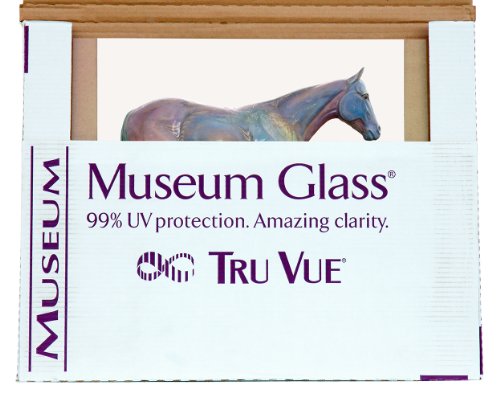
When you're having a map professionally framed, ask for Tru Vue Museum Glass. It's the conservation industry standard: 99% UV protection, anti-reflective coating, and optically clear at low angles. Buy a sheet to upgrade an existing frame that lacks museum glass, or use it for a custom DIY framing project.
What we like
Conservation industry standard: 99% UV protection, anti-reflective
Optically clear at oblique angles, no green tint at frame edges
What to know
Heavier than acrylic; verify frame hardware before installing
More expensive than standard UV-coated glass, but worth the difference
The knowledge investment pays more than any single map purchase. A good reference tells you which cartographers were most prolific, which editions are original versus later reprints, what condition grading looks like in practice, and roughly what things are worth. Dealers price maps assuming buyers don't know these things. Collectors who've done the reading buy better and pay less.
Best starter
Phaidon
Antique Maps by Carl Moreland and David Bannister
$30.98 as of Jun 22, 2026
★★★★★Our rating· Only 1 left in stock - order soon.
The essential first reference for any map collector. Covers the major cartographers, dating methods, condition terminology, and auction value ranges. Written by two of the most respected figures in the antique map trade. Read this before your first map purchase and re-read it after your fifth. Nothing else gives you a faster foundation.
What we like
Covers all major European cartographic traditions from the 15th century
Written by practitioners in the trade, not academics
Includes condition terminology and pricing context still relevant today
What to know
Out of print; condition varies across used copies
Stronger on European maps than American or Asian cartography
★★★★☆Our rating· Only 11 left in stock - order soon.
Not a collector's manual but essential context: twelve landmark maps from across history, each examined in depth. Understanding why mapmakers made the choices they did, what conventions they inherited, and what each map tells us about its era is the knowledge that makes your collection cohere rather than just accumulate.
What we like
Makes the history of cartography readable and engaging for any level
Twelve deep dives into the most important maps ever made
What to know
History book, not a collecting guide; won't help you grade or price
★★★★☆Our rating· Only 1 left in stock - order soon.
The professional reference. Four volumes covering thousands of mapmakers, their active dates, known work, and distinguishing characteristics. Vol. 1 covers A-D; buy subsequent volumes as your focus narrows. What dealers use to attribute unsigned maps and verify edition sequences. Irreplaceable once you're collecting seriously.
What we like
The professional standard for attributing and dating unsigned maps
Covers thousands of mapmakers across five centuries of cartography
What to know
Four volumes and a serious investment in money and shelf space
A reference work; consult it for specific cartographers, don't read linearly
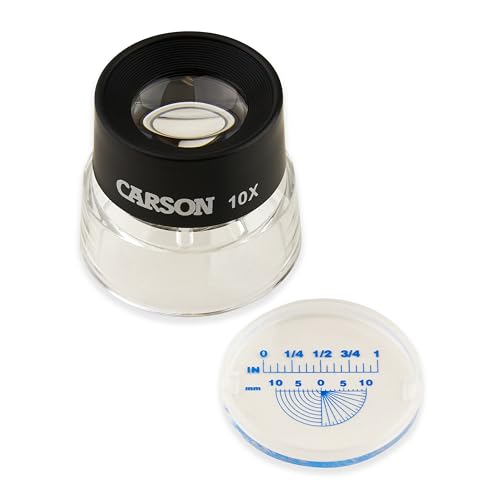
You cannot evaluate maps without magnification. A 10x loupe reveals paper chain lines (the wire marks left by the paper mold), ink texture, and repairs to tears or wormholes. UV light exposes repairs and paper inconsistencies invisible in normal light. Neither tool is expensive. Both are essential before you spend more than $50 on a map.
Best starter
Carson
LumiLoupe 10x Stand Magnifier
$9.99 as of Jun 22, 2026
★★★★★Our rating· In Stock
A 10x magnifier is the first tool you need for evaluating any map. Under magnification, original copperplate engravings show crisp hatching and ink that sits above the paper surface; lithographs show a flat dot pattern; modern reprints show a regular dot grid of offset printing. You can make this call in 30 seconds once you know what you're looking for.
What we like
Reveals ink texture and paper chain lines invisible to the naked eye
Distinguishes original engravings from offset reprints in seconds
Compact enough to carry to map fairs and dealer visits
What to know
10x magnifies hand tremor; brace your hand or use a stand version
Skill, not the tool, is what separates originals from fakes
A true longwave UV light reveals repairs that are invisible under normal illumination. Repaired tears and wormholes show as dark patches that fluoresce differently from the surrounding paper. Essential before any purchase over $100, and surprisingly useful for detecting paper inconsistencies that affect value significantly.
What we like
Reveals paper repairs invisible under normal light
Exposes fluorescing adhesives that indicate previous restoration
What to know
Cheap 395nm lights barely work; insist on true 365nm wavelength
Takes practice to interpret what you see; study alongside dealers first
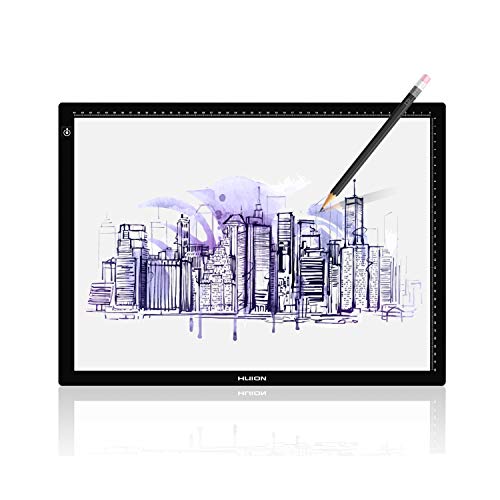
A flat light box lets you view transmitted light through a map to reveal watermarks, the chain-line pattern of laid paper, and repairs. Watermarks are one of the most reliable tools for dating and attributing paper. Hold an original atlas page up to a window and you'll see the maker's mark; a light box makes the same job possible at your desk any time.
What we like
Reveals watermarks for dating and attribution with transmitted light
Shows paper chain lines that confirm laid paper versus modern stock
What to know
Watermark reading is a skill; learn from a reference book first
Too much light can temporarily stress old paper; keep sessions brief
Antique maps occasionally need basic care: removing loose surface dirt before storage, or stabilizing a small edge tear before it propagates. The key rule is do as little as possible. Most conservation work on valuable maps belongs with a trained conservator, not a novice with supplies. For your first dozen maps, a soft brush and the right storage environment is enough.
Best starter
Winsor and Newton
Foundation Watercolour Brush Set
$17.00 as of Jun 22, 2026
★★★★★Our rating· Only 5 left in stock - order soon.
Soft synthetic hair brushes designed for watercolor painting are also the right tool for gentle surface cleaning of antique paper. The flat and filbert shapes in this set let you work across both broad areas and tight corners. Use the lightest possible touch. Winsor and Newton's quality control is excellent and the bristles won't shed onto your map.
What we like
Soft synthetic hair is gentle enough for aged paper surfaces
Multiple shapes (flat, filbert) adapt to different map areas and formats
What to know
Won't remove embedded dirt, foxing, or stains; those need a conservator
Natural bristles can release oils; keep a dedicated brush for maps only
Lineco's mulberry (kozo) paper is the conservation standard for hinging artwork and stabilizing small tears. Extremely thin and strong, it adheres with a diluted methylcellulose paste and is nearly invisible on the reverse. Use this to stabilize a small edge tear before it propagates further. For maps worth more than $200, hire a conservator instead.
What we like
Japanese kozo tissue is the conservation standard for stabilizing tears
Extremely thin and strong; nearly invisible on the reverse when done well
What to know
Requires practice to apply correctly; do not use on anything valuable first
Wrong adhesive choice is irreversible; use only conservation-grade paste
Antique maps reward the patient collector. Here's what actually happens in your first year: the thrill of the first purchase, the education of the first mistake, and how to develop the eye that separates a great piece from a convincing fake.
Map collecting has no open-play courts. There’s no beginner session where a friendly regular lends you a paddle and shows you the ropes. You walk into an antique fair, or you land on a dealer’s website, and the maps look roughly the same whether they’re $80 or $8,000. The gap between them is knowledge — and most of it takes time to build.
This is what the first year of collecting actually looks like: the phases, the mistakes, and the things worth doing in order.
Months 1–2: Build your eye before you buy
The single most useful thing you can do before spending money on maps is look at a lot of them for free. The David Rumsey Map Collection has over 150,000 historical maps digitized at high resolution. Spend a few hours browsing. You’re not studying; you’re calibrating.
What you’re looking for is a sense of the cartographic traditions. There’s a difference in character between a Dutch Golden Age atlas map, a French royal survey, an English sea chart, and an American county map. These traditions use different conventions, different decorative vocabulary, different typefaces. Once you’ve seen a few hundred maps online, you’ll start to feel these differences instinctively — and that instinct is what protects you from paying atlas-page prices for a modern facsimile.
While you’re looking, decide on a focus. Pick one country, one century, or one theme. The most common beginner mistake is buying a scattered handful of appealing maps without a unifying idea. A New England coastal survey from 1780, a hand-colored map of India from 1850, and a Civil War battle map may each be lovely, but they don’t make a collection — they make a pile. Focus also makes research easier: you learn the same cartographers and publishers repeatedly, and your knowledge compounds.
Buy the reference book first. Carl Moreland and David Bannister’s Antique Maps is the standard starting point for the English-language collecting world. It covers the major cartographers and publishers, gives you a framework for dating and attributing maps, and explains the condition terminology you’ll see in dealer descriptions. Used copies are inexpensive. Read it before you buy anything over $50.
Then buy a 10x loupe. Under magnification, you can tell original copperplate engravings from lithographs from modern offset reprints in about 30 seconds once you know what to look for. Copperplate engravings (pre-1820, roughly) show crisp hatching lines with ink that sits slightly above the paper surface. Lithographs (post-1820) show a flat printed impression. Modern digital reprints show the regular dot grid of offset printing. Practice on things you already own, not things you’re considering buying.
Your first purchase should be modest: under $150, from a reputable dealer, in a well-defined condition. Reputable dealers describe condition honestly. “Very Good” means some toning or light foxing but a clean, complete impression. “Good” usually means noticeable wear. “Fine” or “Excellent” means a nearly perfect copy. Don’t start with auction houses; the buyer’s premium is steep and returns are essentially impossible. Start with a specialist dealer who can answer questions.
Months 6–9: The education of the first mistake
Most collectors make a mistake in the first six months. The mistake is usually overpaying for a reproduction, buying a heavily restored map without noticing the restoration, or getting a piece that’s described as “18th century” but is actually a later facsimile of an 18th-century original. None of these are catastrophic if the amount is small. All of them are educational.
The tool that catches most of these errors is a UV flashlight. A true 365nm UV light (not the cheap 395nm versions that are nearly useless for documents) reveals repairs that are invisible under normal light. Repaired tears and restored wormholes fluoresce differently from the surrounding paper. Replaced or enhanced hand-coloring sometimes glows brightly under UV. For any purchase over $100, examine it under UV before committing.
The second tool is the watermark. Old laid paper (the standard substrate for European maps through the 18th century) has a maker’s watermark embedded in the paper itself, visible when you hold the sheet up to a bright light. Published watermark references let you date paper precisely: a map printed on paper with a watermark from 1780 cannot be a facsimile printed in 1900. Learning to read watermarks turns your light box from a novelty into an authentication tool.
Months 9–12: Building a real collection
By month nine, you have a focus, a few pieces you understand well, and a clearer sense of what you’re looking for. This is when the advice shifts from “buy carefully” to “buy well.”
Buying well means: price is secondary to quality. A Fine example of a map you love is almost always a better purchase than a Good example of a slightly rarer map. Condition is permanent; rarity is a nice-to-have. Serious collectors often spend more per piece as they go deeper, but buy fewer pieces, and end up with a collection that’s worth significantly more than its purchase price.
It also means: develop relationships with two or three dealers who specialize in your area. Good dealers know their inventory, they’ll alert you to pieces that fit your focus before they post them publicly, and they’ll tell you honestly when something isn’t worth the asking price. The antique map world is small and reputation matters; dealers who’ve seen your taste for a year know what to show you.
By the end of year one, you’ll have a real opinion about what you collect, a handful of pieces you’re genuinely proud of, and at least one anecdote about a mistake that taught you more than a purchase did.
Save your money
What you don't need yet
Beginners get pressured to buy a lot of stuff that doesn't help them play
better. Here's what we'd skip on day one.
A climate-controlled storage vault — A cool, stable room away from direct light and humidity swings does the job. Vaults are for collections worth $50,000+.
Professional deacidification services — Irreversible if done wrong. For maps under $200, proper archival storage is more valuable than chemical treatment.
A Christie's or Sotheby's account — Start with antique fairs, reputable dealers, and online marketplaces. Auction house premiums are high and the learning curve is steep.
Early 16th-century portolan charts — Beautiful and expensive, and the fake problem in this category is severe. Build your eye for a year before spending this kind of money.
Flat-file map cabinets — Nice to have eventually, but acid-free clamshell boxes do the same job for a fraction of the cost while your collection is small.
First week
Your first seven days
A short, real plan to get from gear-on-doorstep to actually playing.
Order archival Mylar sleeves before any maps. Get them in a few sizes so the first piece you buy has a home when it arrives. · Buy
Decide on a focus. Pick one country, century, or theme and research what's available in your price range before buying anything. · Action
Browse a reputable dealer's website to understand the market. Barry Lawrence Ruderman and Barry Ruderman Antique Maps both publish educational content alongside their inventory. · Learn
Find your nearest antique map fair. The ABAA and IMCoS both list events, and attending in person is the fastest education you can get. · Action
ABAA Map Dealers · Antiquarian Booksellers Association directory includes reputable map specialists
FAQ
Common questions
How much do antique maps cost?
The range is enormous: $30-100 for a common 19th-century atlas map in good condition, $150-600 for a desirable 18th-century regional map, and thousands to tens of thousands for rare early examples. Most beginners do well starting in the $50-200 range while they develop their eye.
How do I know if a map is genuine or a reproduction?
Under a 10x loupe, original copperplate engravings show crisp hatching with ink that sits above the paper surface. Lithographs (post-1820) show a flat printed pattern. Modern offset reprints show a regular dot grid. Old hand-pressed paper also has visible chain lines under transmitted light and real fold lines from being bound in an atlas.
Where do I buy antique maps?
Reputable specialist dealers are the safest starting point: Barry Lawrence Ruderman, Jonathan Potter, and Old World Auctions are well-regarded online. Antique fairs and map society events are excellent for handling pieces in person. eBay and Etsy carry maps but also carry many reproductions; use them only once you can evaluate independently.
Should I display my maps or store them flat?
Store flat for preservation, display selectively for enjoyment. If you hang a map, use UV-protective glazing, keep it out of direct sunlight, and rotate it with stored pieces every few years. Light is the primary enemy of hand-colored antique paper.
Does condition matter more than age in map collecting?
Often yes. A Fine 18th-century map typically commands a higher price than a damaged 17th-century one from the same region. Collectors value crisp margins, bright original color, clean paper, and minimal foxing. Condition is one of the first things you should learn to grade.
Is map collecting a good investment?
The best collections appreciate, but collecting for investment is a trap for beginners. Buy what you find genuinely interesting. Collectors who buy for passion develop the knowledge that leads to good purchases; collectors who buy for investment often overpay for the wrong things.
David Rumsey Map Collection — Over 150,000 historical maps freely accessible online. The single best tool for calibrating your eye and researching specific cartographers. Free.
Barry Lawrence Ruderman Antique Maps — One of the largest antique map dealers online. Their blog and educational content are worth reading even before you buy.
IMCoS (International Map Collectors' Society) — The main collectors' society. Publishes the IMCoS Journal, organizes fairs and symposia, and is a good source for connecting with other collectors.
Old Maps Online — Aggregates maps from libraries and archives worldwide. Excellent for researching what authentic examples of a specific map look like.
Antique Map Price Record — Auction result database. Useful for understanding what the market actually pays for specific maps, cartographers, and conditions.
MapForum — Online journal for the antique map trade. Articles on attribution, dating, condition, and specific cartographic traditions. A good supplement to Moreland and Bannister.
As an Amazon Associate, JustBeginning earns from qualifying purchases.
We may also earn commission from other affiliate programs linked on this
page. Editorial recommendations are independent; we don't choose
products based on commission rates.
Product prices and availability are accurate as of the date and time
indicated and are subject to change. Any price and availability
information shown on Amazon at the time of purchase will apply.
Our top pickLineco Self-Sealing Crystal Clear Mylar L-Velopes