Military history made tangible: medals, uniforms, documents, and field equipment from the wars that shaped the modern world. Entry-level pieces are affordable, the community is serious about authenticity, and the right reference book is worth more than any single piece you buy.
By Colin B. · Published June 6, 2026 · Last reviewed June 6, 2026
A reference book runs $35-50. Add a shadowbox ($60-100) and archival supplies ($25-40). Pieces range from $15 ribbon bars to $500+ named medals.
We earn commission on qualifying Amazon purchases — see our
affiliate disclosure.
Price tiers and budget totals shown above are editorial estimates;
actual Amazon prices vary.
At a glance
Our top pick in each category
The fastest path through this guide — each best-starter pick by category.
Scroll for the budget and upgrade alternatives.
Buy the reference book before you buy anything else. A $40 price guide will save you from a $200 reproduction that an experienced collector would spot in seconds. Authentication is hard, fakes are common, and dealers know the market far better than you do on day one.
Specialize from the start. Militaria spans thousands of years and every major conflict. Collectors who focus on one era and one country build real expertise; those who buy everything end up with a random pile. Pick WWII American, WWI British, or Civil War and stay there for your first year.
Condition and provenance both matter, but provenance matters more. A medal with a name, unit, and service record is worth multiples of an otherwise identical unidentified piece. When you can buy the paperwork along with the piece, do it.
The gear
What you actually need
Reference Books
This is the most important purchase you will make. Not just a reference book: the reference book for your era. A good price guide tells you what real pieces look like, what they are worth, and what common reproductions get wrong. Militaria fakes are sophisticated and expensive. The $40 you spend on a reference guide pays for itself on your very first purchase.
Reference Books — what's the difference?
A few common shapes, each making a different trade.
World War II
Most popular era. Best documentation, widest availability.
Entry price
$20-500
Fake risk
High
Shows
Most frequent
Best for First-time collectors; largest selection under $500; American, German, and Pacific theaters
Tradeoff Most reproductions in circulation; requires a solid reference library
Older and rarer. Higher price floor, fewer reproductions.
Entry price
$50-1000+
Fake risk
Moderate
Shows
Specialist events
Best for Collectors who want to specialize fast; documentation often better than WWII
Tradeoff Condition issues common; prices higher than WWII for comparable item types
Civil War
Deepest U.S. collector market. High expertise and high prices.
Entry price
$100-5000+
Fake risk
Very high
Shows
Active relic circuit
Best for History buffs with a regional connection; very active show and dealer circuit
Tradeoff Sophisticated forgery market; real expertise required before spending seriously
Vietnam Era
Most affordable modern militaria. Prices still rising.
Entry price
$10-200
Fake risk
Low
Shows
Underrepresented
Best for Budget-conscious collectors; condition usually better than WWII; wide availability
Tradeoff Reference materials are thinner; market less established than WWII
Best starter
Krause Publications
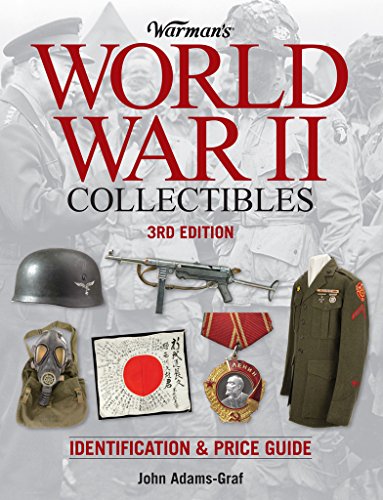
Warman's World War II Collectibles: Identification and Price Guide
$240.00 as of Jun 22, 2026
★★★★★Our rating· Only 1 left in stock - order soon.
The most-cited American WWII militaria reference. Covers uniforms, medals, field equipment, and photography with current market values for each category. You will open this book before every purchase you make in your first year. Skip it and you will pay for the education through bad buys instead.
What we like
The standard American WWII reference, used by dealers and serious collectors
Current market values across hundreds of item categories
Photo-heavy: easy to compare your pieces against documented examples
What to know
American-focused; limited on German, Japanese, or Soviet pieces
Printed price data lags the live market by 1-2 years
★★★★☆Our rating· Only 1 left in stock - order soon.
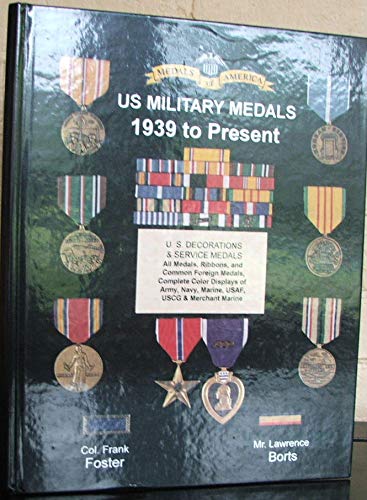
Narrower than Warman's but far deeper on American medals. Covers every U.S. service award with issue history, authentic construction details, and what reproductions get wrong. If medals are your primary focus, start here. Often available used for $15-20.
What we like
Deep on medals specifically, with authentication details the broad guides skip
Covers every U.S. service award from WWII through present
Warman's Civil War Collectibles: Identification and Price Guide
$32.89 as of Jun 22, 2026
★★★★☆Our rating
If your focus is the Civil War rather than WWII, this is the equivalent reference. The Civil War collector market is the deepest in American militaria, and the forgery rate is high enough that a specialist guide is non-optional. Covers weapons, accoutrements, uniforms, documents, and currency.
What we like
The Civil War equivalent of the WWII Warman's: a true standard reference
Covers weapons, uniforms, documents, and currency with current values
Detailed enough to serve as a forgery-detection tool at shows
What to know
Civil War only; not useful for WWII or other eras
High-stakes era: this book alone is not enough, supplement with dealer expertise
A military shadow box is the classic display format for medals, ribbons, insignia, and a service photo, all in one framed arrangement on the wall. Tabletop cases with glass lids work better for three-dimensional pieces like helmets or canteens. You do not need a display case before you have pieces to put in it, but knowing which format fits your focus before you start accumulating saves a second purchase.
Best starter
Reminded
Military Shadow Box Display Case
$82.99 as of Jun 22, 2026
★★★★★Our rating· In Stock
A clean, purpose-built shadow box for military displays. The flag compartment holds a standard burial flag and the interior backing accepts pins for medals, ribbons, insignia, and a 4x6 service photo. The latch is solid and the finish is wall-worthy. It is what most people end up with after trying a cheaper frame first.
What we like
Purpose-built with flag compartment and backing for medals and insignia
Interior backing accepts standard pins for flexible arrangement
Solid latch and finished exterior suitable for a living room wall
What to know
Limited depth; helmets and 3D equipment pieces will not fit
Standard size only; custom arrangements need a frame shop
If you need a frame and backing to start organizing medals and photos before committing to a dedicated military case, CountryArtHouse offers solid construction at a fair price. Add black velvet from a fabric store as backing material and you have a functional display for less.
What we like
Solid construction at a budget price point
Available in multiple sizes to fit your specific layout
Works with any backing material you choose
What to know
No flag compartment and no built-in backing treatment
DIY setup required; takes 30 minutes and a trip to a fabric store
When your collection grows beyond what a shadow box can hold, a glass-front cabinet is the right upgrade. Adjustable shelves handle mixed piece sizes, the glass front keeps dust off while keeping everything visible, and most models lock. Ideal for helmets, canteens, equipment, and anything too large or three-dimensional for a flat shadowbox.
What we like
Adjustable shelves handle mixed sizes and large 3D equipment
Glass front keeps dust out while keeping the collection visible
Locking on most models, which matters for valuable pieces
What to know
Large footprint; requires planning your room layout before purchase
Militaria deteriorates in predictable ways: metal pits and corrodes, fabric rots, paper browns and becomes brittle. Most of this damage happens in storage, not on display. Archival poly flips protect medals and small documents from reactive surfaces. Silica gel desiccant controls humidity. Acid-free envelopes protect paper from off-gassing. None of this is expensive and all of it matters more than you expect before the first piece arrives.
Best starter
Guardhouse
2x2 Coin Safe Archival Flips (100-pack)
$30.99 as of Jun 22, 2026
★★★★★Our rating· In Stock
The standard storage flip for medal and coin collectors. Non-reactive, acid-free, and sized perfectly for individual medals, insignia, and small documents. Store each piece in its own labeled flip and you have an organized, searchable collection that will not corrode itself over time.
What we like
Non-reactive, acid-free material that will not accelerate metal corrosion
Standard size fits most medals, insignia, and small artifacts
Inexpensive: buy a pack before your first piece arrives
What to know
Standard 2x2 only; large medals and documents need different sleeves
Flips are not rigid; do not stack heavy items on top
Humidity is the silent killer of militaria. A pack of desiccant in your storage box costs $10 and eliminates the condition that causes metal to pit, cloth to mold, and leather to crack. Rechargeable versions can be dried in the oven and reused for years.
What we like
Prevents corrosion, mold, and leather cracking in any storage container
Rechargeable versions last years and pay for themselves quickly
Works in any enclosed storage box or display case
What to know
Must be checked and recharged or replaced periodically
Not a substitute for proper archival materials; use both
For discharge papers, letters, photographs, and any other paper component of your collection, Lineco's acid-free envelopes are the archivist's standard. Regular paper envelopes off-gas acids that brown and embrittle documents within years. Lineco envelopes do not.
What we like
Acid-free construction prevents document browning and brittleness
Museum archivist standard for long-term paper storage
Multiple sizes for photos, letters, and full discharge papers
What to know
Paper documents only; not for medals, insignia, or 3D items
Slightly more expensive per unit than standard envelopes
Reproductions are everywhere in militaria, and the good ones fool experienced collectors. Two tools cover most authenticity checks: a 10x jeweler's loupe for examining construction details and maker's marks, and a UV flashlight that reveals modern synthetic dyes and reproduction materials under blacklight. Neither is expensive, and together they will pay for themselves on your first serious purchase at a show.
Best starter
Fancii
10X Illuminated Jeweler's Loupe with LED Light
$
★★★★★Our rating
A 10x loupe lets you read maker's marks, inspect stitching quality, examine die work on badges, and check metal construction details against your reference book. The LED illumination matters: you need to see inside a badge clutch or beneath a medal suspension, not just around it.
What we like
10x magnification is the standard for maker's marks and die inspection
LED illumination reveals details invisible in ambient show lighting
Pocket-sized for use at shows; check pieces before you commit to buying
What to know
LED requires AAA batteries; keep a spare on hand
10x is enough for most checks; some coin work benefits from 20x
Modern synthetic dyes fluoresce under UV light in ways that period-correct materials do not. A UV flashlight lights up a reproduction ribbon, reveals a repainted helmet, or flags a document forgery in seconds. Particularly useful for cloth items, ribbons, and field equipment where the loupe is less helpful.
What we like
Instantly reveals modern synthetic dyes in reproduction ribbons and cloth
Fast check for painted equipment and document forgeries
Small enough to carry in a jacket pocket at any show
What to know
Not conclusive alone; needs reference knowledge to interpret results
Limited usefulness on metal pieces; the loupe is better there
Most new collectors buy something wrong in their first month. Here is what actually matters: building the reference library, training your eye, and finding the community before you spend seriously.
There is a version of this hobby where you spend $300 and own three pieces you can tell your friends about. There is another version where you spend $300 and own three reproductions that no dealer will ever buy back. The difference between them is almost entirely about doing the reading before you buy.
This is what your first year actually looks like, with the mistakes most collectors make and the ones worth avoiding.
Month 1: Read before you buy
The best collectors are also the best-read collectors. That is not a coincidence.
Before you buy a single piece, get the reference book for your era. Not any book: the right one. Warman’s WWII Collectibles if you are starting with American WWII material. A comparable specialist guide if you are drawn to Civil War, WWI, or another period. Read it cover to cover once. Then keep it on your desk.
Here is why this matters: militaria fakes have gotten very good. Not “slightly off” but “fools experienced dealers at shows” good. The techniques for spotting them are documented, but they live in the reference literature, not in your intuition. A reproduction WWII ribbon bar has the right colors and the right layout, but the edge stitching is wrong and the backing material fluoresces under UV light. You will not notice that until you have seen it in a reference photo and know what to look for.
The other thing to do in month one is join r/Militaria and read the pinned authentication FAQ in full. Then start posting photos of things you see at local shops, asking for ID help. The community is blunt, which is exactly what you want right now.
The biggest mistake new collectors make is buying across too many eras and countries at once. You end up with a random pile and no expertise in any of it.
Pick one focus and stay there for your first year. WWII American is the most popular choice because the material is plentiful and the reference literature is excellent. Civil War is the deepest American collector market but also the most sophisticated forgery environment. Vietnam Era is accessible and affordable, with condition usually better than WWII. Pick the era that genuinely interests you as history. You will learn faster when you care about what the pieces represent.
Handle things before you buy them. This sounds obvious, but it is the most important practice in collecting. Local antique shops and flea markets are full of militaria of mixed quality and authenticity. Go, handle dozens of pieces, and buy nothing. You are building a reference library in your hands: what a real WWII service medal feels like, how heavy a genuine field canteen is, what period-correct stitching looks like on a uniform patch. None of this is learnable from a photograph.
Once you have your tools, a 10x illuminated loupe and a UV flashlight, bring them to every shop visit. Check maker’s marks against your reference book. Run the UV light over ribbons and cloth items. You will not know what everything means at first, but you are building the habit.
A militaria show compresses years of learning into a weekend.
Shows put authentic pieces and obvious reproductions side by side. Dealers who specialize in one narrow area, World War I German headgear, Civil War artillery accoutrements, WWII Pacific theater insignia, have spent decades developing expertise they will share freely if you ask the right questions. “What should I look out for in this category?” is always the right question.
Search for militaria shows in your region. Most mid-sized cities have at least one annual show. OMSA and ASMIC both maintain event calendars. Larger shows happen annually in major cities and draw dealers from across the country.
Go to the first show with a clear budget: bring only cash, decide your limit before you arrive, and commit to buying nothing until the last hour of the second day. The first day is for looking, talking to dealers, and noting what interests you most. The second day is for buying one or two things you have done your homework on.
The one-piece rule for year one: every piece you buy in your first year should be something you can identify completely from your reference book. The era, the issuing country or service branch, the approximate value range, and the two or three authentication tells that distinguish the real from the reproduction. If you cannot answer all four of those for a piece, do not buy it yet.
Months 9-12: Build the collection on purpose
By the end of your first year, you should have a sense of where you want to go. Most collectors discover their real focus somewhere in months six through nine: a specific conflict, a specific branch, a specific type of item.
That specialization is where the hobby gets genuinely interesting. A collector who focuses on, say, WWII U.S. Army Air Forces insignia accumulates real expertise. They start to recognize rare variants. They build a network of other specialists who let them know when something unusual comes up. They know enough to identify the pieces that generalist dealers have mispriced.
The reference library grows with the collection. Every specialist area has specific reference books that the broad guides do not cover. Add them as you go.
On provenance: the most satisfying pieces in any militaria collection are the ones with a story. A discharge paper, a service photo, a letter from the front, a name and unit on a medal reverse. When you buy pieces with documented provenance, you are preserving history, not just acquiring objects. That is the version of this hobby worth staying in for decades.
A few things compound your learning dramatically once you have the basics:
Build a proper reference library. One general guide plus two or three specialist books for your focus area. Schiffer Military History publishes deep-reference titles for most specialties. Used copies are often available for half the cover price.
Find a mentor. Most established collectors are generous with knowledge if you approach them at a show with genuine curiosity and specific questions. Offer to help set up or break down a dealer’s table at a show in exchange for an hour of conversation.
Set a provenance standard. Decide now that you will only buy pieces with at least minimal documentation: where the piece came from, even if only “purchased at [show] in [year].” Document every piece you acquire. Your future self will thank you.
A year in, you will have something better than a collection: you will have expertise. That is the part that makes it worth the time.
Save your money
What you don't need yet
Beginners get pressured to buy a lot of stuff that doesn't help them play
better. Here's what we'd skip on day one.
A locking museum display cabinet — A labeled shoebox with archival flips is perfectly fine for your first 20 pieces. Buy the cabinet when your collection justifies the space.
Edged weapons or firearms — Swords, bayonets, and deactivated firearms are popular but require specialized storage, state-by-state legal awareness, and deeper authentication skills. Start with medals and insignia.
High-value named pieces — A named, documented medal is worth 3 to 10 times an identical anonymous one. Wait until you can confidently authenticate before spending at that level.
Collection insurance — Worth getting once your collection exceeds $2,000 in replacement value. Before that, a locked case and careful storage handle most of the risk.
First week
Your first seven days
A short, real plan to get from gear-on-doorstep to actually playing.
Order the reference book for your target era before you buy a single piece. · Buy
Search for a militaria show within driving distance. Most regions have at least one annual event. · Action
OMSA events · Orders and Medals Society of America: show calendar, resources, and a respected community
Post a photo of an unidentified piece on r/Militaria for an ID. The community is helpful and honest. · Action
FAQ
Common questions
How much does it cost to start collecting militaria?
Plan $75 for a reference book and basic archival supplies before buying anything. Your first pieces can be ribbon bars, patches, and insignia for $15-50 each, or named medals for $100-500. The reference book is the most important purchase. It will save you multiples of its cost in avoided bad buys.
How do I know if a piece is authentic?
Three tools: a reference book to compare construction against documented examples, a 10x loupe to check maker's marks and die work, and a UV flashlight to detect modern synthetic materials. None of these are conclusive alone. Authentication improves with experience, but the reference book is where you start.
Where should I buy militaria?
Shows are the best starting point: you can handle pieces, talk to knowledgeable dealers, and see fakes next to authentic examples. eBay has huge volume but reproductions are common; stick to sellers with long track records and detailed photos. Avoid generic antique malls until you know what you are looking for.
Should I collect one era or spread across multiple?
Specialize, at least to start. Collectors who focus on one era and one country build authentication skills faster, recognize value better, and accumulate a reference library that is actually useful. Pick the era you find most personally meaningful and stay there for your first year.
How should I store pieces I am not displaying?
Each piece in its own archival flip or acid-free sleeve, labeled with provenance notes. Add silica gel desiccant to keep humidity low. Store away from direct light. Documents and photos need acid-free envelopes, not regular paper or plastic bags. The right supplies are cheap and preserve condition permanently.
Are there militaria shows I can attend?
Yes, and they are the fastest way to learn. Shows let you handle dozens of pieces, talk to dealers with decades of experience, and calibrate your eye against real examples. Search for militaria shows in your region. OMSA and ASMIC both maintain event calendars for their memberships.
OMSA — Orders and Medals Society of America — The main American organization for medal collectors. Annual convention, publications, and a community of serious collectors and researchers. Best starting point for anyone focused on medals.
r/Militaria — Active subreddit. Post photos for authentication and identification help. The community is strict about reproductions, which is exactly what you want when calibrating your eye.
Rock Island Auction Company — One of the most respected auction houses for militaria. Catalog descriptions are heavily researched and serve as reference material even when you are not bidding.
WorthPoint — Price history database. Search past sold prices for any item type to understand fair market value. Subscription required, but the trial period covers most initial research.
Advance Guard Militaria — Respected U.S. dealer and reference site. Their catalog photos are detailed enough to serve as authentication reference even if you are not buying.
As an Amazon Associate, JustBeginning earns from qualifying purchases.
We may also earn commission from other affiliate programs linked on this
page. Editorial recommendations are independent; we don't choose
products based on commission rates.
Product prices and availability are accurate as of the date and time
indicated and are subject to change. Any price and availability
information shown on Amazon at the time of purchase will apply.
Our top pickWarman's World War II Collectibles: Identification and Price Guide