Good news: this is the cheapest hobby on the site. A cushion to sit on and ten minutes is enough to start. The gear is not the barrier; the sitting still is. Here's what actually helps a new practice stick, and what to skip until you know this is for you.
By Colin B. · Published June 6, 2026 · Last reviewed June 6, 2026
A cushion and one book is a complete starter kit. Apps are free to try. The rest can wait until you have a regular practice.
We earn commission on qualifying Amazon purchases — see our
affiliate disclosure.
Price tiers and budget totals shown above are editorial estimates;
actual Amazon prices vary.
At a glance
Our top pick in each category
The fastest path through this guide — each best-starter pick by category.
Scroll for the budget and upgrade alternatives.
The most common beginner mistake is buying equipment before establishing a habit. You don't need a cushion to start meditating; you can sit in a chair. Buy the cushion after you've meditated ten times. The purchases that survive are the ones that reward a practice already in motion.
Apps first, gear second. Insight Timer is free and has thousands of guided meditations. Headspace and Waking Up are worth paying for once you know you want to continue. Neither requires any physical gear.
Don't buy a singing bowl to motivate yourself into starting. This is the classic hobby trap: buying stuff feels like doing the thing. Sit first. Buy later.
Your posture matters more than your technique when you're starting out. Slumping in a soft chair for twenty minutes produces a wandering mind and a sore back. A firm cushion that tilts your pelvis slightly forward lets your spine stack naturally, which is the physical prerequisite for sitting still for any useful length of time. The choice between a zafu, a bench, and a chair support comes down to one thing: can your hips get comfortable cross-legged on the floor? If yes, zafu. If no, bench.
Cushion & Seat — what's the difference?
A few common shapes, each making a different trade.
Zafu (round cushion)
Most versatile. Best for cross-legged or half-lotus sitting.
Fill
Buckwheat hulls
Height
5-7 in
Best for
Cross-legged, half-lotus
Best for Most beginners. The default choice if your hips are reasonably flexible.
Tradeoff Does not help if cross-legged position is painful for your hips or knees
Buckwheat-filled zafu at a fair price. The firm fill supports the pelvic tilt that makes long sits possible, and the removable cover handles daily use without complaint. Well-reviewed by people who actually sit on it every morning.
What we like
Buckwheat fill holds the pelvic tilt that prevents slouching mid-session
Removable, washable cotton cover survives daily use
Carry handle and side storage pocket genuinely useful
What to know
Buckwheat shifts over time; refluff every few weeks
Not helpful if cross-legged position is painful for your hips
Under $35 and made in the US. The organic buckwheat fill performs identically to pricier options, and several color choices make it easy to match your space. The right buy if you want to start sitting before committing to a premium cushion.
What we like
Under $35 and performs like cushions twice the price
Made in the US; ships in a few days from domestic stock
What to know
Cover stitching is less refined than premium options
Limited height; taller meditators may want a second zafu stacked
The clearest choice in kneeling meditation benches. Bamboo construction with magnetic folding hinges, padded seat, and a carry bag. Folds completely flat. Once you know the kneeling position works for your body, this is the right tool.
What we like
Eliminates the hip and knee pain that ends cross-legged practice
Folds flat; fits in a drawer or under a bed between sessions
What to know
Ankles and shins need two weeks to adapt to the kneeling position
Mindfulness has a vast literature and most of it is redundant. A few books are genuinely foundational. Jon Kabat-Zinn invented the secular MBSR framework that most apps and courses are built on; his work is still the clearest entry point. James Nestor's 'Breath' is the book that brought breathwork to a mainstream audience and synthesized the science without the woo. Pick one and read it before buying anything else.
Best starter
Hachette Books
Wherever You Go, There You Are
$8.39 as of Jun 22, 2026
★★★★★Our rating· In stock
The clearest introduction to mindfulness in print. Short chapters, no religious framing, grounded in how the mind actually works. Jon Kabat-Zinn invented the secular framework that every app and course is built on. Read this first.
What we like
Short chapters readable before a morning sit
Secular and jargon-free; no spiritual prerequisite
What to know
Conceptual, not a structured program; no day-by-day curriculum
The book that made breathwork a mainstream conversation. James Nestor spent years experimenting on his own breathing and synthesizes the science accessibly. If the breathwork side of this practice draws you more than the meditation side, start here instead of Kabat-Zinn.
What we like
Explains the science behind nasal breathing and CO2 tolerance clearly
Readable and engaging without veering into woo territory
What to know
Some sections lean on anecdote; not every claim has strong peer review
Less actionable than a guided course; pairs better with a practice
The full MBSR program in book form. This is the evidence-based clinical framework behind most workplace mindfulness programs. More structured than 'Wherever You Go' as it's an actual curriculum you can work through. Read this after six weeks of regular sitting, not before.
What we like
Evidence-based MBSR curriculum: sitting, body scan, and yoga
Dense and clinical in a good way; explains the research behind each practice
What to know
Long and intimidating if you have not already established a habit
Using your phone to time meditation puts the distraction machine in your hand. A dedicated timer removes that temptation entirely. Tingsha bells (small finger cymbals) are the low-cost entry: one strike to start, one to end. The physical ritual cues the brain to shift state in a way a buzzing phone does not. A Tibetan singing bowl is the upgrade if you want the sustained resonance that helps settle you faster. Neither is essential; both are genuinely nice once you're sitting regularly.
Best starter
Silent Mind
Tingsha Meditation Bells
$
★★★★★Our rating
Two small brass cymbals on a cord. Strike them together and they ring for 20-30 seconds. One strike to start your session, one to end it. The physical ritual creates a reliable mental transition cue. Cheap, portable, and more effective than it sounds.
What we like
Physical ritual cues brain to shift into practice mode
Portable; fits in a pocket for travel or office sessions
What to know
No timing function; you still need a clock to track session length
Cheap versions ring flat; stick with reviewed brands
A 4-inch hand-hammered singing bowl with wooden mallet and cushion ring. The resonance is longer and fuller than tingsha. Run the mallet around the rim and the tone sustains for a full minute. Worth it once you're sitting daily and want to invest more in the ritual.
What we like
Sustained resonance encourages settling into practice faster
Hand-hammered; each bowl has a slightly unique tone
What to know
Rim-playing technique takes a few sessions to get right
Writing after a session catches insights before they evaporate and builds a feedback loop on what's actually working. A prompted journal is more useful for beginners than blank pages because it answers the question 'what do I write?' Skip this category entirely until you've meditated at least a week. Buy only if writing feels appealing, not because you think you should.
Best starter
Intelligent Change
The Five Minute Journal
$29.98 as of Jun 22, 2026
★★★★★Our rating· Only 1 left in stock - order soon.
The most widely used prompted journal on the market. Morning and evening entries, each under five minutes. Gratitude, intention, reflection. Not mindfulness-specific, but a near-perfect complement to a morning sit. The prompts are direct and actionable.
What we like
Morning and evening prompts take under five minutes combined
Gratitude and intention framing pairs naturally with a daily sit
What to know
Six months per journal; ongoing cost if you keep the habit
Prompts repeat across entries; can feel mechanical after a few months
★★★★☆Our rating· Only 1 left in stock - order soon.
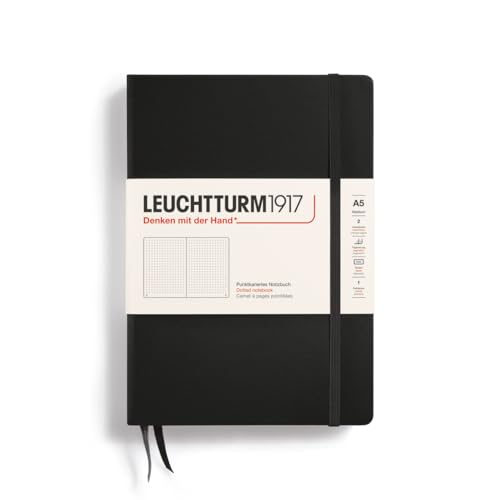
A blank notebook is cheaper and more flexible than prompted options. Leuchtturm1917's build quality is exceptional for the price: ribbon bookmark, numbered pages, durable hardcover. If you prefer free-writing after a session without being prompted, this is the better tool.
What we like
Blank pages work with any journaling style, prompted or free
Numbered pages and table of contents help you find insights later
What to know
No structure; some beginners freeze staring at blank pages
Works best if you already know what you want to write
Most breathwork practices need zero equipment: box breathing, 4-7-8, and coherent breathing are all pattern-based. Where gear helps is for training your diaphragm and observing your nervous system response. A physical breathing trainer adds resistance to your exhale, strengthening the diaphragm over weeks. A pulse oximeter lets you see in real time how CO2 practices shift your physiology. Neither is essential in your first month. Get them when the basic breath patterns feel too easy.
Best starter
PN Medical
The Breather Respiratory Muscle Trainer
$49.95 as of Jun 22, 2026
★★★★★Our rating· In Stock
A mouthpiece with separate inhale and exhale resistance dials that trains your diaphragm and breathing muscles. PN Medical's original device, used in respiratory therapy and increasingly by athletes focused on breath training. Start at the lowest setting and add resistance weekly. Ten minutes a day builds real diaphragmatic strength in two to three weeks.
What we like
Dual resistance dials train inhale and exhale muscles independently
Clinically validated; same device used in respiratory therapy programs
What to know
Results take two to four weeks of daily use to become noticeable
Dial settings have a learning curve; start at the lowest and work up
A ring-worn oximeter that tracks blood oxygen and heart rate continuously during breathwork. Useful for CO2-heavy practices like Wim Hof or extended box breathing, where you can see your nervous system response in real time. Overkill for most beginners; compelling for anyone serious about the physiology side of breathwork.
What we like
Real-time SpO2 and heart rate shows exactly how breathwork shifts physiology
Ring form factor stays on during practice without distraction
What to know
Overkill unless you actively track data and want feedback
Breath retention carries real risks; learn the practice before using gear
Most people quit after a week because they think they're doing it wrong. You're not doing it wrong. Here's what the first month actually looks like, and why it gets easier.
The single most common thing beginners say after their first two weeks of meditation is some version of “I don’t think I’m doing it right.” They sat down, tried to focus on their breath, their mind wandered to a grocery list or an embarrassing memory from 2014, and they concluded that this meant they were failing.
They are not failing. That is the practice.
Here is what your first thirty days actually look like, what to expect in each phase, and the few things that genuinely matter versus the many things that feel important but don’t.
Days 1-7: Just show up
The only goal of your first week is to sit down at the same time every day. That’s it. Not to achieve a quiet mind. Not to feel anything in particular. Just to do the thing at the designated time.
Five minutes is enough. Ten is better, but five minutes of real practice is worth more than twenty minutes of procrastinating over whether you’re ready to start.
What will actually happen: You’ll sit down, close your eyes, focus on your breath for approximately four seconds, and then think about seventeen unrelated things. You’ll notice you’ve drifted, return to the breath, drift again, return again. You’ll feel like you’re wasting your time.
You are not wasting your time. The noticing and returning is the exercise. The wandering is not a bug; it’s what gives you something to practice with.
The most useful framing for this week: treat your attention like a muscle you’re working. Each time you catch your mind wandering and bring it back, you just did one rep. You don’t need the reps to feel profound. You just need to do them.
If you don’t know where to start, download Insight Timer (free) and pick any guided meditation tagged “beginner.” The guide’s voice will do the noticing-and-returning prompting for you, which is useful scaffolding for the first week.
By day eight or nine, the novelty has worn off and the habit hasn’t fully formed. This is the highest dropout week.
The mind is still loud. Sessions feel unproductive. The gap between what you imagined meditation would be like and what it actually is becomes apparent. You thought you’d feel calmer. Instead you feel impatient, or bored, or oddly anxious about whether you’re anxious.
A few things that help this week:
Anchor on sensation, not absence. Most beginners try to make their mind quiet, which is roughly like trying to make a river stop moving by staring at it. Instead, anchor on a specific physical sensation: the feeling of air entering your nostrils, the rise and fall of your chest, the weight of your hands in your lap. Sensation is concrete. “Quiet” is not.
Try box breathing as a reset tool. Four counts in, four hold, four out, four hold. This is not meditation technique, it’s a physiological interrupt. When a session feels particularly chaotic, two rounds of box breathing before you start will bring your heart rate down and give your attention something structured to work with. The US Navy SEALs use this for acute stress management because it reliably shifts the nervous system into a calmer state within about ninety seconds.
Don’t extend sessions yet. The instinct when sessions feel unproductive is to sit longer. Don’t. Ten consistent minutes is better than twenty inconsistent ones. Extend duration only when ten minutes starts to feel comfortable, not before.
Days 15-21: The first real shift
Somewhere in this window, something small changes. You’ll have a session where the mind settles noticeably faster than it did in week one. Or you’ll catch yourself doing box breathing automatically during a stressful moment without having decided to. Or you’ll notice you’re slightly less reactive in a conversation, and then notice that you noticed.
These are not dramatic. They are subtle enough that you might dismiss them. Don’t.
On breathwork specifically: If you’ve been exploring breathwork beyond simple breath-focusing, this is when the distinctions between practices start to matter.
Coherent breathing (five to six breaths per minute, about five seconds in, five seconds out) activates the heart rate variability response and is the most studied version of slow breathing. Do it for ten minutes and your nervous system measurably settles.
Extended exhale breathing (longer out than in, like four counts in and six out) specifically activates the parasympathetic branch. This is the mechanics behind “take a deep breath” actually working.
Wim Hof-style practices (rapid deep breathing followed by breath holds) work very differently: they raise blood pH and create lightheadedness and tingling. These can feel intensely physical and are safe for most healthy people in a supervised context. They’re not what you should be doing in week two. Get there later, if at all.
By the end of the month, the habit starts to feel like a habit rather than a decision you make fresh every morning. Sessions are longer because you’re comfortable with them, not because you forced it.
A few things worth adding in the final week:
A session journal. Not elaborate: one or two sentences after you sit. “Restless today, kept returning to the breath.” “Settled faster than yesterday, maybe because I did box breathing first.” The log externalizes what’s working and gives you data on your own practice. The Five Minute Journal has useful prompts if you don’t know what to write.
Extend to fifteen minutes. If ten is comfortable, fifteen is where most research on benefits kicks in. Twenty is the sweet spot for long-term practice. Get to fifteen this week if you haven’t already.
Decide on your app, if you want one. After thirty days you have enough context to know what you actually want. Headspace is better if you want structured courses and gentle pacing. Waking Up is better if you want a deeper understanding of what’s happening and why. Insight Timer stays free forever and has everything you’ll ever need. There’s no wrong choice.
What you will still struggle with at day 30
Even after a month, a few things remain hard. This is normal:
Morning sessions after bad sleep. The mind is foggy and the body wants to go back to bed. This is the hardest version of the practice. Sit anyway, even for five minutes.
Skipped days. You will miss days. The research is clear: one skipped day does not meaningfully interrupt a habit if you return the next day. Missing three days in a row is where momentum fades. One day off is maintenance; three days off is starting over.
Judging the session. You’ll rate sessions as “good” or “bad” based on whether your mind was quiet. This is the wrong metric. A session where your mind was loud and you kept returning is more valuable than one where you drifted pleasantly for twenty minutes without practicing anything.
The goal at thirty days is not a quiet mind. It is a practice. Those are different things, and the practice is the one that compounds.
Save your money
What you don't need yet
Beginners get pressured to buy a lot of stuff that doesn't help them play
better. Here's what we'd skip on day one.
A Muse EEG headband — Biofeedback for brainwave states. Useful eventually, but you won't feel the difference until you've logged 50+ hours of practice. Start sitting first.
An expensive guided course — Insight Timer's free library plus one foundational book covers everything a $300 course does. Pay for a course after six months if you want structured accountability.
Incense, essential oils, and candles — Nice atmosphere, but not what determines whether a practice sticks. Don't let setting up the perfect space become a reason not to sit today.
A yoga mat — For pure meditation, a cushion is enough. Get a mat when you add a movement practice, not before.
A dedicated sound machine — White noise and ambient sound apps on your phone work the same way. Spend on gear that affects your practice, not your atmosphere.
First week
Your first seven days
A short, real plan to get from gear-on-doorstep to actually playing.
Download Insight Timer and do one 10-minute guided meditation today. Don't buy anything else yet. · Action
Insight Timer · Free. No subscription required. 100,000+ guided meditations.
Try box breathing for five minutes: four counts in, four hold, four out, four hold. Do it three times this week and notice how your body responds. · Action
Order a zafu cushion. Sit on the floor in a chair-free spot once before it arrives so you feel the difference when it shows up. · Buy
Block the same ten minutes every morning for the next two weeks. Same time, same spot. The ritual does more than the duration at this stage. · Action
After five sessions, decide whether to try a paid app. Headspace is better structured for pure beginners. Waking Up is stronger on the theory. · Learn
Headspace · Structured beginner courses. Soft on theory, strong on habit-building.
Waking Up · Sam Harris. Theory-heavy, secular. Free access available on request.
FAQ
Common questions
Do I need equipment to start meditating?
No. A chair works fine. The only thing you need is ten minutes and somewhere to sit. Buy a cushion once you've sat on the floor a few times and want to sit better, not as a pre-commitment to starting.
What's the difference between mindfulness and breathwork?
Mindfulness is the broad practice of observing your experience without judgment, using breath as one of many anchors. Breathwork specifically manipulates your breath pattern to shift your physiological state: slower breathing calms the nervous system; CO2-heavy practices like Wim Hof create more acute physical effects. Both are worth learning; they complement each other well.
Which meditation app should I start with?
Insight Timer (free) first. Try ten sessions across a week. After that, if you want more structure, Headspace is better for absolute beginners; Waking Up is better if you want to understand what's actually happening in your brain and why.
How long should I meditate as a beginner?
Start at five minutes. That's not too short. Five minutes of actual present-moment attention is harder than it sounds. Most research on benefits kicks in around ten to fifteen minutes of daily practice. Twenty is the sweet spot once you can reliably stay present for fifteen.
What is box breathing and does it work?
Box breathing (four counts in, four hold, four out, four hold) activates the parasympathetic nervous system. The evidence is solid enough that the US Navy SEALs use it for acute stress management. Try it for five minutes before a stressful meeting and see what happens.
Is a zafu better than sitting in a chair?
For most people, yes, but only slightly at first. A zafu tilts your pelvis forward so your spine stacks naturally, which makes longer sits more comfortable. If you're just starting out, use whatever gets you sitting. Upgrade to a cushion once you know you'll use it regularly.
Insight Timer — The largest free meditation library. Start here before paying for anything. The beginner courses are well-structured and the timer function works without a subscription.
Waking Up — Sam Harris's app. Theory-grounded, secular, free access for anyone who requests it. The best option if you want to understand the underlying philosophy.
Ten Percent Happier — Dan Harris's app and podcast. Skeptic-friendly framing, well-known teachers, strong beginner courses.
UMass MBSR Program — The original 8-week Mindfulness-Based Stress Reduction course, where Jon Kabat-Zinn developed secular mindfulness training. The gold standard for evidence-based practice.
Breathwrk — Dedicated breathwork app with guided sessions for focus, sleep, stress, and energy. Good free tier. The best starting point for breathwork-specific practice.
r/meditation — Active community with a solid beginner FAQ and wiki. Skip the 'what's the best app' debates and read the pinned guides.
As an Amazon Associate, JustBeginning earns from qualifying purchases.
We may also earn commission from other affiliate programs linked on this
page. Editorial recommendations are independent; we don't choose
products based on commission rates.
Product prices and availability are accurate as of the date and time
indicated and are subject to change. Any price and availability
information shown on Amazon at the time of purchase will apply.