Poetry needs almost nothing: a notebook, a pen, and 30 minutes of quiet. The gear isn't the point; the reading and writing is. But the right notebook makes you want to reach for it, a good craft book gives you a framework, and a few key anthologies show you what the form can actually do. Here's what to buy, and what to skip.
By Colin B. · Published June 6, 2026 · Last reviewed June 6, 2026
Poetry costs almost nothing to start. A notebook and a pack of pens gets you there for under $25. Add a craft book and an anthology and you're at $65 total, which covers you for a year.
We earn commission on qualifying Amazon purchases — see our
affiliate disclosure.
Price tiers and budget totals shown above are editorial estimates;
actual Amazon prices vary.
At a glance
Our top pick in each category
The fastest path through this guide — each best-starter pick by category.
Scroll for the budget and upgrade alternatives.
You don't need anything expensive to write poetry. A $2 composition notebook and a BIC pen is how most great poets have worked. Buy nice things because you enjoy them, not because you think they'll make you write better.
Read before you write. This is the advice every poetry teacher gives and every new poet ignores. Spend your first two weeks reading more than you write. Read widely: poems in form, poems in free verse, poems from different decades. What you read shapes what you write.
Don't start with rhyme and meter unless you're genuinely drawn to them. Free verse is not a cop-out; it's a different set of constraints. Figure out what you're actually drawn to before locking in a style.
Your notebook is the most important piece of gear in poetry, not because expensive paper writes poems, but because a notebook you reach for actually gets used. Leuchtturm1917 is the practical favorite: fountain-pen friendly paper, numbered pages, a built-in index, and sized for a jacket pocket. Go lined if you want structure, blank if you want freedom to experiment with visual arrangements, dot-grid if you want both.
Notebooks — what's the difference?
A few common shapes, each making a different trade.
Lined
Traditional ruled lines. Best for prose notes and verse. The default for most new poets.
Ruling
5mm
Best for
Structured drafting, rhymed verse
Best for Beginners, formal poetry, structured drafting
Tradeoff Less flexibility for shaped poems or visual arrangements
Total freedom for shaped poems, visual arrangements, and drawing.
Ruling
None
Best for
Visual poetry, concrete poetry
Best for Visual poets, concrete poetry, artists who also write
Tradeoff Lines can drift on blank pages; harder to write densely
Dot-Grid
Dots that guide without constraining. Works for writing and visual notes.
Ruling
5mm dot grid
Best for
Flexible layout, sketching and writing
Best for Poets who also sketch or diagram; flexible writers
Tradeoff Dots visible in photocopies and scans
Best starter
Leuchtturm1917
Medium A5 Hardcover Notebook
$25.95 as of Jun 22, 2026
★★★★★Our rating· Only 6 left in stock - order soon.
The gold standard for writers who actually use their notebooks. Fountain-pen friendly paper, numbered pages, two ribbon bookmarks, and a table of contents so your drafts stay findable. Sized right to carry daily without feeling like you're hauling a schoolbook.
What we like
Fountain-pen friendly paper with minimal feathering or bleed
Numbered pages and index keep your drafts findable
Two ribbon bookmarks hold your current draft and a reference page
What to know
Premium price for a notebook; budget options write just as well
Half the price of a Leuchtturm1917 and honestly not much worse for most writers. Decent paper, sturdy hardcover, and it comes in a dozen colors. The right choice if you're not sure this will stick.
What we like
Half the price of premium journals with solid paper quality
Sturdy hardcover holds up in a bag without warping
What to know
Rougher paper than Leuchtturm; fountain pens may feather slightly
No page numbers or index; tracking drafts takes more effort
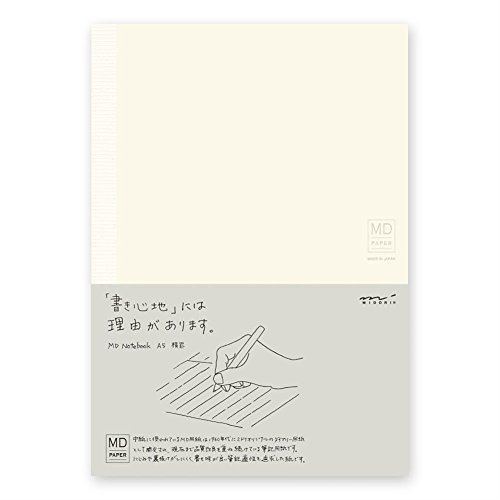
MD paper is among the best paper you can buy in a notebook. Fountain pens glide, ink never bleeds, and the cream-white color is easy on the eyes for long sessions. If you've found that you love writing daily, this is the upgrade worth making.
What we like
MD paper is the best fountain-pen experience in a retail notebook
Cream-white pages reduce eye strain on long writing sessions
What to know
Soft cover needs a slip case to survive regular bag use
Higher price; save this for when you know you'll fill it
Poets argue about pens with the same intensity they argue about poetic form. The honest answer: a Pilot G2 and a $300 fountain pen produce words at the same rate. Buy the pen you like to hold. That said, there is something real about a pen that makes writing feel pleasurable. You're more likely to sit down and fill a page with a pen you enjoy using. If you've never tried a fountain pen, the Pilot Metropolitan is the gentlest entry point.
Best starter
Pilot
G2 Fine Point Gel Pens (12-Pack)
$13.95 as of Jun 22, 2026
★★★★★Our rating· In Stock
The pen every writer defaults to when asked what they actually use. Smooth, reliable, rarely skips, and the fine point keeps your handwriting legible on small lines. A 12-pack means you're never hunting for a pen when the urge to write hits.
What we like
Smooth gel ink flows without skipping across most paper types
Fine 0.7mm point keeps drafts legible even in cramped margins
Refillable; replace the cartridge when you find a barrel you like
What to know
Slightly scratchy compared to a fountain pen on long sessions
Finer points can skip on heavily textured or rough paper
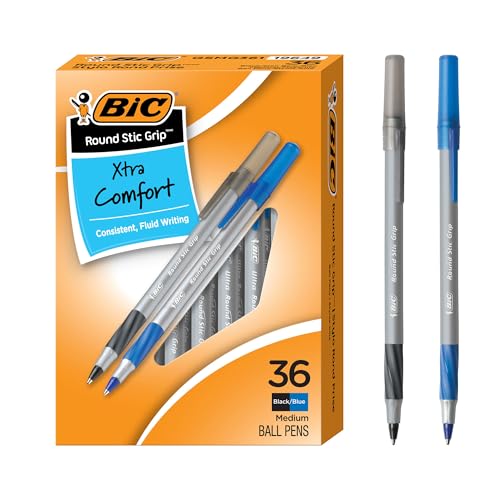
Poetry has historically been written on whatever was available. A BIC works. The ink is reliable, the cost is negligible, and you'll never stop yourself from writing because you don't want to waste a nice pen.
What we like
So cheap you'll never hesitate to scribble a draft or cross it out
Reliable in cold, heat, and on every paper type without fuss
What to know
Thicker line than gel pens; cramps small or compact handwriting
No ceremony to it; some writers find cheap pens reduce motivation
The fountain pen that converts skeptics. Smooth nib, well-balanced body, easy cartridge swaps. Writing with a fountain pen slows you down in the best way: each word feels considered. The Metropolitan is the entry point that doesn't feel like a compromise.
What we like
Smooth nib makes handwriting feel effortless and deliberate
Works with Pilot cartridges or a converter for bottled ink
What to know
Needs consistent upright angle; hard-pressers may struggle at first
Takes a session or two to develop comfortable fountain pen technique
A good craft book doesn't make you a poet; reading and writing poems does. But a good craft book accelerates everything. It names patterns you've already sensed, gives you exercises when you're stuck, and offers a map of the territory before you wander too far. Stephen Fry's guide is the one to start with. It's opinionated in the best way, grounded in form, and actually fun to read.
Best starter
Stephen Fry
The Ode Less Travelled by Stephen Fry
$9.99 as of Jun 22, 2026
★★★★★Our rating· In Stock
Fry is a working poet who loves the craft, and his enthusiasm for form is contagious. Starts with meter and builds to complex forms. Manages to make scansion genuinely entertaining. The best craft book we know for someone starting from scratch who wants a real foundation in how poetry works.
What we like
Covers meter, rhyme, and form with depth that actually teaches
Written with real wit; reads like a book, not a textbook
Exercises throughout give you something to work on immediately
What to know
UK-centric examples; American readers may need to look up some refs
Heavy on formal poetry; add a free-verse companion if that's your draw
Oliver's handbook is the complement for free-verse writers. Shorter, gentler, and more focused on image and voice than on formal mechanics. If you're drawn to contemporary poetry that doesn't rhyme or scan in classical ways, start here instead of with Fry.
What we like
Approachable and short; covers voice, image, and sound concisely
Oliver writes from experience as a working poet, not an academic
What to know
Less systematic than Fry; lighter on formal mechanics and meter
The Poet's Companion by Kim Addonizio and Dorianne Laux
$10.16 as of Jun 22, 2026
★★★★☆Our rating· In Stock
The most comprehensive of the three. Covers subject, voice, image, sound, form, and the writing life across 300 pages of practical guidance. Each chapter ends with exercises. This is the book you return to repeatedly; it covers ground you didn't know you needed until you needed it.
What we like
The most comprehensive beginner craft book available
Every chapter has exercises that push your writing forward
Covers voice, form, subject, and revision in a single volume
What to know
At 300 pages, can feel overwhelming if you dip in randomly
Read poems before you write them. Seriously, the single biggest thing separating good early poetry from forgettable early poetry is how much the writer has read. An anthology gives you range: different periods, different forms, different voices. You'll notice what you're drawn to, what leaves you cold, and why. That's data. Use it.
Best starter
Garrison Keillor
Good Poems edited by Garrison Keillor
$20.99 as of Jun 22, 2026
★★★★★Our rating
Keillor chose poems he could read aloud and have people understand on first hearing. The result is the most accessible serious poetry anthology in print: no difficult modernist puzzles, no academic posturing. Just good poems that stick with you.
What we like
Curated for accessibility; poems land on first reading
Wide range of American poets across the last hundred years
What to know
Tilts American and 20th-century; limited international range
Accessible curation means fewer formally complex poems
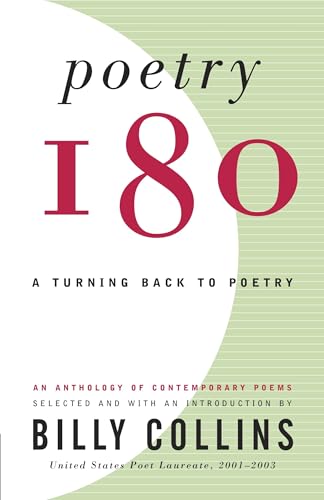
Former US Poet Laureate Billy Collins compiled 180 poems that are all genuinely accessible without being thin. Excellent for reading one poem a day, which is actually the best practice for building a poet's ear.
What we like
One-poem-per-day pacing builds a real reading habit over six months
Collins's editorial taste runs toward clarity without simplicity
What to know
Curated for adolescents; some experienced readers find it thin
Heavy American focus; light on international and translated work
Two books that earn their shelf space: a rhyming dictionary (indispensable for formal verse, useful for finding sonic connections even in free verse) and a good thesaurus. Poets use a thesaurus differently than prose writers: you're not looking for synonyms, you're looking for words with the right syllable count, the right sound, the right weight. A physical thesaurus is faster for this than a digital one.
Best starter
Merriam-Webster
's Rhyming Dictionary
$4.85 as of Jun 22, 2026
★★★★★Our rating· In Stock
Organized by ending sound rather than alphabetically, which is exactly how you need a rhyming dictionary to work when you're hunting for a word. Small enough to slip into a bag alongside your notebook. The standard reference for working poets writing in form.
What we like
Organized by ending sound, not alphabetically; works for real use
Pocket-sized and pairs naturally with your writing notebook
What to know
Narrower than digital rhyming tools for very obscure or rare words
Less useful if your poetry is primarily free verse
Roget's concept-based organization makes it dramatically better than synonym-list thesauruses for poets. You start from an idea and find the word that fits your meter and tone, not just the nearest synonym. The 8th edition has 350,000+ entries.
What we like
Concept-based organization finds the right word, not just a synonym
350,000+ entries; the most comprehensive physical thesaurus available
What to know
Concept-based navigation takes 10 minutes to learn; read the intro
Most people who try poetry approach it the wrong way: they wait for inspiration, then try to write something beautiful, then abandon it when it reads like a greeting card. That’s not how poetry works. That’s not how any writing works.
Here’s the reality: your first month of writing poetry is mostly about accumulating bad drafts. That’s the actual job. The good stuff comes later, and it comes because you did the work of filling pages with bad stuff first.
This is what the first month actually looks like.
Week one: Read before you write
The single best investment you can make before writing a word is to read poems. Not to analyze them, not to study them, just to read them and notice what happens.
Go to the Poetry Foundation’s website and read 20 poems over the course of a week. Don’t pick poems by subject; let the search randomize. You’ll find some that do nothing for you and some that stop you cold. Pay attention to the ones that stop you. Ask yourself: what just happened? Was it a line break? An image? A sound?
You don’t need to answer the question rigorously. You just need to start noticing.
One exercise that has worked for centuries: copy a poem you love by hand, word for word, punctuation and all. Not to plagiarize it, but to feel it differently. Copying a poem is different from reading it. Your hand follows the rhythm. You slow down enough to notice the choices.
After a week of this, you’ll have a better sense of what you’re drawn to than after a year of reading about poetry theory.
Pick a subject and write toward it. The subject doesn’t matter; pick one that’s been in your head lately. The goal of the first draft is to get something on paper, not to write a good poem.
Here’s the most important thing to understand about early drafts: they are not poems. They’re raw material. You’re not trying to produce a finished poem in a sitting; you’re trying to accumulate material you can work with.
A few starting points that tend to work well:
Describe one thing precisely. Not abstractly (“love is complicated”) but specifically (“the way she holds her coffee cup with both hands even when it’s too hot”). Specificity is the whole game in poetry. Abstract claims tell readers nothing. Specific images let readers see.
Write toward a memory. Not a meaningful one necessarily; a small one. The smell of something. A sound from childhood. Something you saw last week on the street. The smaller and more specific the memory, the better. Grand memories tend to produce grand rhetoric, which is the enemy of good poems.
Try a haiku. Five syllables, seven syllables, five syllables. The constraint is not the point; the constraint forces you to choose one image and make it do all the work. This is good practice for longer forms.
Write every day this week. Even if it’s just three lines. Even if they’re bad. Especially if they’re bad. The goal is to prove to yourself that you can write something, then do it again.
Week three: Revise one poem
Pick one poem from last week’s drafts. Not the best one; pick the one that interests you most, or the one you can’t quite figure out.
Read it aloud. This is not optional. Poems live in the ear. The moment you read your poem aloud, you’ll hear everything that doesn’t work: the line that stumbles, the word that’s almost right but isn’t, the place where the rhythm collapses.
Now make one change. Just one. Not a complete rewrite; choose one thing to improve. Maybe the last line is soft and you need to cut it. Maybe there’s a word that’s doing the wrong thing (“beautiful” almost always is). Make that one change and read it aloud again.
Repeat until it sounds right.
This is revision. Most beginning poets avoid it because they think it means the original draft was bad. It doesn’t. It means you have material to work with.
A few revision questions that help:
Is the first line doing enough work? The first line is the hardest to write and the most important to get right. It sets the whole poem’s pitch.
Does every line earn its place? If you can remove a line and the poem is stronger, remove it.
What’s the poem actually about? Not its subject, its meaning. Sometimes the poem you thought you were writing isn’t the poem you wrote. Follow the better one.
By the end of the month, you should have 10-15 drafts, one or two of which have been revised at least once. Read through all of them.
Notice patterns. Do you keep returning to the same subjects? Do your poems tend to end on images or on statements? Are your lines long or short by instinct? None of these are right or wrong. They’re your tendencies, and knowing them helps you write toward them or deliberately against them.
You are not a bad poet because your first month of poems isn’t publishable. Every working poet has a drawer full of drafts that never went anywhere. That drawer is how they learned. Fill yours.
A few things that will change your slope of improvement dramatically:
Find other readers. Not family. Find someone who reads poetry seriously and ask if they’d look at one poem. The right reader can see things you can’t. One sharp reader is worth a hundred workshop participants who’ll tell you it’s “really good.”
Read the craft book. Stephen Fry’s guide will tell you what you’ve been doing intuitively and give you more tools. Read it alongside your drafts, not instead of them.
Give yourself at least six months. Poetry takes longer than almost any other writing discipline to feel natural. The poets who persist are not more talented than the ones who quit; they simply sat with the discomfort longer.
Save your money
What you don't need yet
Beginners get pressured to buy a lot of stuff that doesn't help them play
better. Here's what we'd skip on day one.
A typewriter — Romantic, but slow and loud. The writing rhythm is different enough from handwriting that it's a distraction at first.
Handmade artisan paper — Save it for fair copies of finished work. You'll go through too many sheets in drafts to justify the cost.
A workshop subscription — You need 15-20 drafts before feedback is genuinely useful. Workshops reward writers who've already written a lot.
Dictation software — Most poets find their ear develops better through the physical act of writing by hand. Digital tools can come later.
A fountain pen above $100 — The Pilot Metropolitan at $20 is 90% of the fountain pen experience. Earn the upgrade with a year of writing.
First week
Your first seven days
A short, real plan to get from gear-on-doorstep to actually playing.
Buy a notebook and write today's date on the first page. Don't wait for the right moment. · Buy
Find a local open mic and attend as audience, not performer. You'll learn more from watching than from nerves. · Action
FAQ
Common questions
Do poems have to rhyme?
No. Most contemporary published poetry doesn't rhyme in the strict sense. Rhyme is a tool, not a requirement. Free verse has its own rules: deliberate line breaks, rhythm, image, sound. Don't force rhyme if it doesn't come naturally; it often makes poems feel sing-songy and strained.
How long should a poem be?
As long as it needs to be and not one line longer. Many of the best contemporary poems are under 20 lines. If you're padding to hit a length, cut. If you stop before the poem is done, keep going.
What's the difference between free verse and formal poetry?
Formal poetry follows rules: a sonnet has 14 lines in iambic pentameter with a specific rhyme scheme; a villanelle has 19 lines with two refrains. Free verse has no fixed rules but has conventions: deliberate line breaks, sonic texture, earned imagery. Neither is easier; they give you different constraints to work against.
Should I share my poems while I'm just starting out?
Share when you're ready, not before. Premature feedback usually lands as discouragement. Write 15-20 drafts first, then find a trusted reader who reads poetry and will tell you the truth. Online communities like r/PoetryFeedback exist for this.
How do I know when a poem is done?
Paul Valery said poems are never finished, only abandoned. The practical answer: when you read it aloud and nothing snags. When you can't find a better word for any word that's there. Put it in a drawer for a week, then read it again with fresh eyes.
What should I read as a beginning poet?
Start accessible: Billy Collins, Mary Oliver, Naomi Shihab Nye. Then move to harder contemporary voices: Tracy K. Smith, Ocean Vuong, Louise Gluck. Then the historical canon: Keats, Dickinson, Whitman, Hopkins. Start where the language feels alive and close.
Poetry Foundation — The central archive for American and international poetry. Thousands of free poems searchable by poet, form, and subject. Also publishes Poetry Magazine, the most prestigious journal in the field.
Academy of American Poets (poets.org) — The Academy's site has poet bios, curated reading lists, and a free Poem-a-Day email newsletter. Subscribe. It's the best daily poetry habit you can build.
Poetry Magazine — The oldest poetry journal in the US, published continuously since 1912. Free to read online. The standard for what serious contemporary poetry looks like.
Rattle — More accessible than Poetry Magazine and actively publishes poets outside the MFA system. A good calibration on serious contemporary poetry without academic gatekeeping.
r/Poetry and r/PoetryFeedback — r/Poetry for reading and discussing; r/PoetryFeedback for critique on your own work. Skip the feedback subreddits until you have 10+ drafts. The r/Poetry wiki has a solid recommended reading list.
As an Amazon Associate, JustBeginning earns from qualifying purchases.
We may also earn commission from other affiliate programs linked on this
page. Editorial recommendations are independent; we don't choose
products based on commission rates.
Product prices and availability are accurate as of the date and time
indicated and are subject to change. Any price and availability
information shown on Amazon at the time of purchase will apply.
Our top pickLeuchtturm1917 Medium A5 Hardcover Notebook