The first rule of scanner listening: look up your county on RadioReference before you buy anything. If your police and fire run digital P25 or DMR, a $130 analog scanner hears nothing. Here's how to pick the right scanner, which antennas help, how programming works, and what's legal.
By Colin B. · Published November 18, 2026 · Last reviewed November 18, 2026
If your county is analog, a Uniden BC125AT, Eneloop rechargeables and a Bingfu magnet-mount antenna come to about $180. For digital P25 systems, the SDS100 and the same antenna are about $715, or $740 with an external speaker.
We earn commission when you buy through links on this page, including
Amazon. See our affiliate disclosure.
Price tiers and budget totals shown above are editorial estimates;
actual prices vary.
At a glance
Our top pick in each category
The fastest path through this guide — each best-starter pick by category.
Scroll for the budget and upgrade alternatives.
Check RadioReference before you spend a dollar. Search your county and look at the system type. Conventional analog FM works on any scanner. P25 Phase I or II and DMR need a digital scanner, which starts around $400. Buying the wrong type is the most common beginner mistake.
Encryption can't be fixed with money. Many police departments now encrypt some or all of their talkgroups, marked E on RadioReference. No legal scanner can decode them. Fire, EMS, public works, rail and air traffic are often still open, so check what's left before you buy.
Listen online first. Broadcastify streams many counties live for free. If what you hear holds your interest for a week, a scanner is worth buying. If your county is fully encrypted, an online stream may be all you can get.
Know the law. Listening at home is legal across the US. Some states limit scanners in cars, or ban using them to commit a crime or to avoid police. Licensed ham operators are often exempt. Check your state's rules if you plan to use one in a vehicle.
Pick the scanner by what your county uses, which RadioReference shows. Analog scanners like the BC125AT hear conventional FM channels, air traffic, rail and marine radio, but not digital systems. Digital trunking scanners decode P25 Phase I and II, which most US police and fire systems use, and load your area by ZIP code. Uniden's SDS models handle simulcast systems, where many towers broadcast at once, better than older scanners. DMR and NXDN decoding is a paid add-on license on Uniden SDS scanners, so check whether your area needs it.
Scanners — what's the difference?
A few common shapes, each making a different trade.
Analog handheld
Conventional FM, air, rail and marine. No digital systems.
Price
About $140
Hears P25
No
Programming
Manual or free software
Best for Counties still on analog, and air and rail fans.
The handheld most scanner hobbyists recommend. It decodes P25 Phase I and II, handles simulcast systems better than older scanners, and you program it by entering your ZIP code. Free Sentinel software keeps the database current. Sold by Amazon. About $700, 4.4 stars from 1,291 ratings.
Bearcat BC125AT Analog Handheld Scanner, 500 Channels
$139.99 as of Nov 18, 2026
★★★★☆Our rating· In Stock
The best-selling analog handheld. It hears conventional analog police, fire, air, rail and marine radio, has Close Call to catch nearby transmitters, and runs on AA batteries. Only buy it if RadioReference shows analog systems in your area. Sold by Amazon. About $140, 4.0 stars from 9,703 ratings.
The desk or car version of the SDS100, with a large 3.5 inch color display and a bigger speaker. Pair it with an outdoor antenna for the best reception you can get. Sold by Amazon. About $750, 4.5 stars from 923 ratings.
A cheaper digital handheld that decodes P25 Phase I and II for about $400. It's older than the SDS100 and weaker on simulcast systems, but it's a good choice for areas with simple digital systems. Sold by Amazon. 4.1 stars from 1,195 ratings.
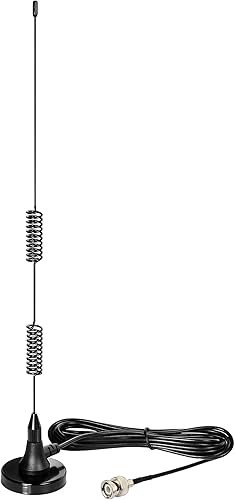
The antenna is the cheapest way to hear more. The short rubber antenna on a handheld is a compromise. Moving the antenna higher and near a window helps most. A magnet-mount antenna on a metal surface (a filing cabinet, a baking sheet, the car roof) with a cable to the scanner is the easy first upgrade. A discone on the roof or in the attic is the big upgrade for a base scanner. Most handhelds use a BNC connector, so check yours before buying.
Best starter
Bingfu
20-1300MHz Police Scanner Antenna, Magnetic Base, BNC
$15.99 as of Nov 18, 2026
★★★★★Our rating· In Stock
A cheap wideband magnet-mount antenna with a 10-foot cable and a BNC plug that fits most scanners. Stick it on a metal surface by a window or on a car roof. About $16, 4.2 stars from 1,201 ratings.
A 6-inch flexible whip tuned for 25 to 1300 MHz receive, a better antenna for carrying a handheld than the stock one. Sold by Hamcity, a ham radio retailer. About $41, 4.5 stars from 96 ratings.
A classic wideband discone for a roof, mast or attic, covering everything from VHF low band to 1300 MHz and beyond. It's the antenna to pair with an SDS200 base scanner. Sold by Hamcity. About $163, 4.5 stars from 84 ratings.
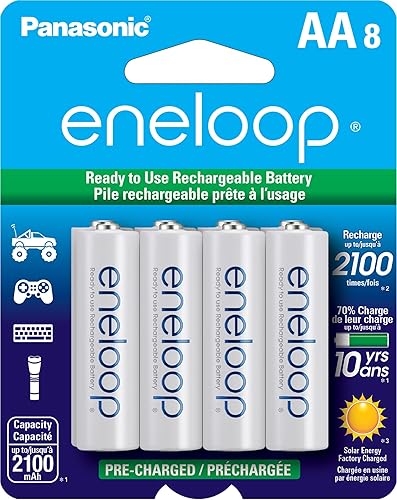
Two small add-ons make a scanner easier to live with. Analog handhelds like the BC125AT run on AA batteries, and good rechargeables last far longer than alkalines. A handheld's tiny speaker sounds thin and gets drowned out in a car or a noisy room. An external communications speaker plugs into the headphone jack and makes voices much clearer.
Best starter
Panasonic
eneloop AA Rechargeable Batteries, 8-Pack
$23.99 as of Nov 18, 2026
★★★★★Our rating· In Stock
The standard low self-discharge rechargeable AA. They hold their charge for months in a drawer and recharge up to 2,100 times. The BC125AT can charge NiMH cells in the scanner over USB. Sold by Amazon. About $24, 4.8 stars from 17,331 ratings.
A rugged external speaker that plugs into the scanner's headphone jack and makes voices much easier to understand at a desk or in a car. Sold by Amazon. About $29, 4.4 stars from 1,374 ratings.
A new scanner out of the box can sound like static and silence. Two weeks of setup and listening turns it into a live feed of your town: dispatch, fire calls, traffic stops and the rail yard. Here's how to research, program and actually understand what you hear.
Scanner listening is part research, part radio. The research comes first, because the right scanner and settings depend on how your local agencies talk.
Days 1 to 3: Research your area
Open RadioReference, find your state and county, and read the page. Write down each system: its name, type (conventional, P25, DMR) and the talkgroups you care about. Note any marked E, which means encrypted. Then look at nearby counties too, since you’ll often hear them.
Listen to Broadcastify feeds for your area while you research. You’ll learn what normal traffic sounds like.
Install Uniden Sentinel (or your scanner’s software), connect the scanner by USB, and update the firmware and the full database. Then set your ZIP code on the scanner. The SDS and BCD scanners load every system within range of your location.
Next, make a favorites list with only the systems and talkgroups you want. Scanning everything in range is noisy. A short list of police dispatch, fire dispatch and a few others is much easier to follow.
Every agency has its own codes. Search for your local 10-codes and signal codes, and keep a list next to the scanner. Learn the unit numbering too: who is a patrol car, a supervisor, an engine or a medic unit.
Use the hold button when a talkgroup gets interesting, and the avoid button for talkgroups you never want to hear.
If some calls break up, move the scanner near a window, raise it higher, or try a better antenna. A magnet-mount antenna on a metal surface near a window helps a lot. On digital systems, choppy audio can be simulcast distortion, and choosing a single tower site in the settings often fixes it.
Update the scanner's database and firmware with Sentinel before first use. · Action
Set your location by ZIP code and pick service types: police, fire, EMS. · Action
Learn the common radio codes and 10-codes your local agencies use. · Learn
FAQ
Common questions
Do I need a digital scanner?
Only if your area uses digital systems. Look up your county on RadioReference. If police and fire are listed as P25 or DMR, you need a digital scanner like the Uniden SDS100 or SDS200. If they are analog FM, a $130 analog scanner works.
Can a scanner hear encrypted police channels?
No. Encrypted talkgroups can't be decoded by any legal scanner, and trying is illegal. You'll hear unencrypted channels like fire, EMS and dispatch on many systems, but some departments encrypt everything.
Is it legal to own a police scanner?
Yes, owning and listening at home is legal across the US. A few states restrict scanners in vehicles, and many states make it a crime to use one while committing another crime. Check your state's laws for mobile use.
Handheld or base scanner?
Handhelds work in the house, in the car and at events. Base scanners like the SDS200 have a bigger speaker and better reception with an external antenna, and stay plugged in at home. Pick by where you'll listen most.
Why can I hear some calls but not others?
Usually range or simulcast distortion. Digital systems often broadcast from several towers at once, which some scanners decode badly. A better antenna, a different tower site, or a newer scanner like the SDS series usually helps.
JustBeginning earns commission from affiliate programs. As an Amazon
Associate, we earn from qualifying purchases. This costs you nothing
extra and doesn't change our recommendations.
Prices and availability are accurate as of the date and time
shown and can change; the price on Amazon when you buy is what
applies.
How this works.
Our top pickSDS100 True I/Q Digital Handheld Scanner


 Best starter