GMRS is a licensed radio service for families and groups: more power than bubble-pack walkie-talkies, real antennas, and access to repeaters that can stretch your range to dozens of miles. The license costs $35, covers your family for ten years, and has no test. Here's handheld vs mobile, what range to expect, and the antenna upgrades that matter.
By Colin B. · Published November 12, 2026 · Last reviewed November 12, 2026
The $35 FCC license plus one Wouxun KG-805G handheld comes to about $115. A mobile Midland MXT275 with a magnet-mount antenna, a handheld and a better handheld antenna puts you near $370 including the license.
We earn commission when you buy through links on this page, including
Amazon. See our affiliate disclosure.
Price tiers and budget totals shown above are editorial estimates;
actual prices vary.
At a glance
Our top pick in each category
The fastest path through this guide — each best-starter pick by category.
Scroll for the budget and upgrade alternatives.
Get the license first. It's $35 through the FCC's online system, takes a few days to arrive, needs no exam, and covers you plus your immediate family for ten years. Everyone in the family can then transmit under your call sign.
Expect less range than the box claims. Handheld to handheld, a mile or two is typical in hilly or wooded terrain, more on open water or from a hilltop. Height and antennas matter far more than wattage. A mobile radio with a roof antenna, or a nearby repeater, is how you get real distance.
Know the difference from FRS. FRS radios need no license but are limited to 2 watts with fixed antennas and no repeaters. GMRS radios can run 5 watts on a handheld and up to 50 watts in a vehicle, take better antennas, and can use repeaters. GMRS and FRS radios can talk to each other on shared channels.
A handheld is where most people start: one for each person on a hike, a ski day or a convoy. Look for 5 watts, a removable antenna so you can upgrade it, repeater channels, and type acceptance under FCC Part 95 (it'll say so on reputable listings). Programmable radios that work with the free CHIRP software make it easy to add local repeaters.
Best starter
Wouxun
KG-805G GMRS Two-Way Radio
$79.99 as of Nov 12, 2026
★★★★★Our rating· In Stock
A well-built 5-watt handheld with 22 GMRS channels and 8 repeater channels set up out of the box, plus room for 128 custom channels. It charges over USB-C, has a removable antenna and is IP54 weather resistant. A favorite in GMRS communities for being simple and tough. About $80. 122 reviews at 4.5 stars.
A rugged IP67 handheld that adds GPS location sharing, text messaging between radios and Bluetooth for headsets, all controlled from a phone app. Useful for groups spread out on trails who want to see where everyone is. About $155. 690+ reviews at 4.2 stars.
A pair of easy, family-friendly radios with NOAA weather alerts, headsets and rechargeable batteries. They're repeater capable but have fixed antennas, so they're best for families who want simple radios that just work. About $160 for two. 10,700+ reviews at 4.4 stars.
A mobile radio mounts in your car or truck, runs off the vehicle's 12-volt power and transmits at up to 15 to 50 watts through a roof antenna. It's the single biggest range upgrade in GMRS, and the standard setup for overlanding and convoy travel. Micromobile radios put most of the controls in the handset, so the small radio body can tuck under a seat.
Best starter
Midland
MXT275 15W MicroMobile GMRS Two-Way Radio
$199.99 as of Nov 12, 2026
★★★★★Our rating· In Stock
The most popular vehicle GMRS radio. All the controls are in the handset, so the radio body hides away, and 15 watts through an external antenna easily outranges any handheld. It's repeater capable and includes NOAA weather alerts. About $200. 1,800+ reviews at 4.6 stars.
The full 50 watts the rules allow for mobile GMRS, in the same micromobile layout as the MXT275. Worth it if you travel in remote areas, want to reach distant repeaters, or run with groups spread over many miles. About $440. 275 reviews at 4.6 stars.
Antennas matter more than watts. A better antenna on a handheld often adds as much range as doubling power, and on a vehicle, a roof-mounted antenna clears the metal body that otherwise blocks the signal. GMRS antennas are tuned around 462 to 467 MHz, so buy one made for GMRS rather than a dual-band ham antenna. Check the connector type matches your radio.
Best starter
Nagoya
NA-771G GMRS Antenna, 15.6 Inch, SMA-Female
$20.98 as of Nov 12, 2026
★★★★★Our rating· In Stock
A flexible whip tuned specifically for GMRS. It's longer and more efficient than the stubby antennas most handhelds ship with, for noticeably better range for about $21. Sold by BTECH. About $21. 1,100+ reviews at 4.6 stars.
A magnet-mount roof antenna made for Midland's micromobile radios. It goes on and off the roof in seconds, so there's no drilling, and the cable runs through a door seal. The easy way to get a mobile radio's antenna up high. About $35. 870+ reviews at 4.7 stars.
What we like
No drilling
Made for Midland micromobiles
Easy to move between vehicles
What to know
Magnet mounts don't work on aluminum or fiberglass roofs
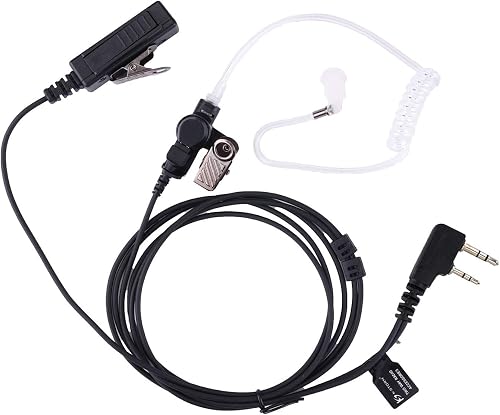
A speaker mic clips to a shoulder strap or backpack, so you can talk without pulling the radio out of a pocket. That makes a huge difference on bikes, skis and hikes. Most programmable handhelds use the common Kenwood-style two-pin jack, but check your radio before buying.
Best starter
BTECH
QHM22 Weatherproof Heavy Duty Speaker Mic
$24.89 as of Nov 12, 2026
★★★★★Our rating· In Stock
An IP54 weather-resistant speaker mic with a strong clip and a 3.5mm earpiece jack. It uses the Kenwood two-pin plug that fits BTECH, Baofeng, Wouxun and many other programmable handhelds. About $25. 2,600+ reviews at 4.4 stars.
Acoustic Tube Earpiece with PTT Mic, Kenwood 2-Pin
$16.89 as of Nov 12, 2026
★★★★☆Our rating· In Stock
A clear acoustic-tube earpiece with an inline push-to-talk button and mic, using the same Kenwood two-pin plug. Quieter and more discreet than a speaker mic, so only you hear incoming calls on a busy ski lift or campsite. About $17. 1,000+ reviews at 4.1 stars.
GMRS is easy to start and easy to get wrong in small ways: talking without your call sign, expecting miles of range from a handheld, or never finding the local repeater. Here's a four-week plan from license to a working family radio setup.
GMRS radios are simple to use, but a little knowledge goes a long way. Most of the difference between a frustrating setup and a reliable one comes from understanding range, antennas and repeaters. Here’s a month-long plan.
Week 1: License and first radio
Apply for your license on the FCC’s website. You’ll create an FCC Registration Number (FRN), apply for GMRS in the ULS system and pay $35. There’s no exam. Your call sign usually arrives within a few days, and it covers your immediate family for ten years.
While you wait, charge your radio and read the manual. Learn three controls: changing channels, adjusting volume and squelch, and switching between high and low power. Squelch silences static when nobody is talking. Set it just high enough to cut the hiss.
Once your call sign arrives, you’re on the air. Say your call sign at the end of each conversation and at least every 15 minutes while you’re talking. That’s the main rule to remember.
Week 2: Learn real range
Do a range test with a friend or family member. One person stays put. The other walks or drives away, calling every few minutes, and notes where the signal gets scratchy and where it drops entirely.
You’ll notice that hills, buildings and trees matter much more than distance. Moving 20 feet uphill can bring a dead signal back to life. Holding the radio vertically and above your shoulders helps too. Radio waves at GMRS frequencies travel roughly by line of sight.
Then swap in a better antenna and repeat. The improvement is usually obvious.
Week 3: Find a repeater
Repeaters are the secret to long-range GMRS. Look up repeaters near you on myGMRS. Each listing shows the channel and a tone code (sometimes called a CTCSS or DCS code). Most repeaters are private, so request access from the owner through the site.
Program the repeater into your radio. On simple radios, choose a repeater channel and set the tone. On programmable radios, the free CHIRP software makes this much easier: plug in a programming cable, download the radio’s settings, add the repeater and upload.
Key up, say your call sign and ask for a radio check. Repeater communities are often friendly to new users and will tell you how you sound.
If you travel by car or truck, a mobile radio is the biggest upgrade you can make. Mount the radio body under a seat or on the console, run power from the battery or a fused accessory circuit, and put the antenna as high as you can. A magnet mount in the middle of the roof works well and needs no drilling.
Program the same channels into every radio in your group, including your home repeater. Agree on a primary channel and a backup. Write them on a card in each glove box so everyone, including family members who rarely use the radios, knows where to find each other.
By the end of the month you’ll have a setup that works on trail, on ski days, in convoys and when cell service drops.
Choosing radios? Our GMRS gear guide covers handhelds, mobile radios, antennas and accessories worth buying.
Save your money
What you don't need yet
Beginners get pressured to buy a lot of stuff that doesn't help them play
better. Here's what we'd skip on day one.
A base station and tower antenna — Home setups are great later. Learn on a handheld and a vehicle radio first, and see what range you actually need.
A ham radio license — It's a separate hobby with an exam. GMRS covers family and group travel without it.
Your own repeater — Use existing repeaters near you first. Owning one means site access, maintenance and coordination.
Amplifiers — Handhelds are limited to 5 watts by the rules, and a better antenna gives more benefit with no legal risk.
First week
Your first seven days
A short, real plan to get from gear-on-doorstep to actually playing.
Apply for your GMRS license through the FCC's online system. It's $35, no test, and covers your immediate family. · Action
Yes. GMRS requires an FCC license to transmit, unlike FRS. The good news is it's $35, has no exam, lasts ten years and covers your immediate family. You apply online and usually get your call sign within days.
How far can GMRS radios reach?
Handheld to handheld, expect about 1 to 2 miles in hilly or wooded terrain and more in open country or from high ground. Vehicle radios with roof antennas often reach 5 to 15 miles. Through a well-placed repeater, 20 to 50 miles or more is common.
Is GMRS better than ham radio?
It's simpler, not better. Ham radio offers far more bands, power and long-distance options but requires an exam. GMRS is designed for family and group communication with minimal fuss, which makes it popular for overlanding, camping and emergency plans.
Can GMRS radios talk to my old FRS walkie-talkies?
Yes, on the channels the two services share (channels 1 to 22). FRS radios can't use repeaters, and the person on the FRS radio is limited to low power, so range will be set by the weaker radio.
What is a repeater?
A repeater is a radio on a hill or tower that receives your signal on one frequency and rebroadcasts it on another at higher power. It lets handhelds talk across a city or valley. Most are privately owned, so ask the owner before using one.
JustBeginning earns commission from affiliate programs. As an Amazon
Associate, we earn from qualifying purchases. This costs you nothing
extra and doesn't change our recommendations.
Prices and availability are accurate as of the date and time
shown and can change; the price on Amazon when you buy is what
applies.
How this works.


 Best starter