The One Piece Card Game is Bandai's trading card game built on the anime. It's fast, readable and one of the friendliest TCGs to learn, because every deck is built around a single Leader card. The hard part is buying: prices swing wildly online. Here's where to start, what to pay, and the few accessories you need.
By Colin B. · Published November 12, 2026 · Last reviewed November 12, 2026
One starter deck and a pack of sleeves come to about $40 at Amazon prices, less at a local game store. Add the two-player Learn Together set, a deck box, a playmat and a binder and you're near $125.
We earn commission when you buy through links on this page, including
Amazon. See our affiliate disclosure.
Price tiers and budget totals shown above are editorial estimates;
actual prices vary.
At a glance
Our top pick in each category
The fastest path through this guide — each best-starter pick by category.
Scroll for the budget and upgrade alternatives.
Check the suggested retail price first. Bandai lists it on the official site, and starter decks are usually around $12 to $20. Third-party sellers on Amazon and eBay often charge two or three times that for popular sets. A local game store usually sells at or near retail, and that's also where you'll find people to play.
Start with a preconstructed deck, not boosters. Every starter deck is a legal, playable 50-card deck plus a Leader and DON!! cards. Booster packs are a lottery: fun to open, but a slow and expensive way to build something you can play.
Watch for Japanese and Asian-English products. They're sold widely online at lower prices, but Japanese-language cards aren't legal in English-language tournaments. Check the listing says English if you want to play at events.
The gear
What you actually need
Starter decks
A One Piece deck is one Leader card, 50 main-deck cards and 10 DON!! cards that work as your energy. Leaders come in six colors (red, green, blue, purple, black and yellow), and each color plays differently: red is aggressive, green ramps DON!!, blue controls the hand, and so on. A starter deck gives you a complete, coherent deck in one color. Pick a Leader whose character and style you like, since you'll upgrade the deck around them.
Best starter
Bandai
Learn Together Deck Set LT-01
$62.04 as of Nov 12, 2026
★★★★★Our rating· In Stock
Ready-to-play decks themed on Luffy, Zoro and Nami, a two-player playsheet, deck cases and extra cards to experiment with. It's designed to teach the game step by step, so two new players can learn together instead of reading the rulebook cover to cover. About $62 on Amazon. 147 reviews at 4.6 stars.
A complete starter deck built around Portgas D. Ace and Whitebeard, two fan-favorite characters. You get a 51-card constructed deck with the Leader, 10 DON!! cards, a playsheet and a small bonus pack, so it's legal at store events the day you open it. About $29 on Amazon. 199 reviews at 4.6 stars.
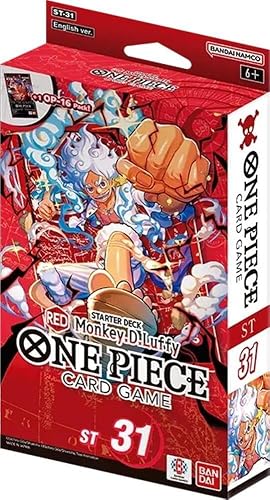
A newer starter deck led by Luffy in red, the most straightforward color: attack, pressure your opponent's life, and win fast. A good pick if you want the main character and an easy-to-learn style. About $39 on Amazon. 20 reviews at 4.8 stars.
Two OP-14 booster packs plus a DON!! card in one small box. A fun way to try opening packs and add a few cards to your starter deck without committing to a full booster box. About $47 on Amazon. 37 reviews at 4.1 stars.
One Piece cards are standard TCG size (63 by 88mm), so any standard sleeve fits. Sleeves protect your cards from wear and spills, and they make shuffling easier. You need 51 for a deck plus Leader, so one 100-pack covers two decks. Matte sleeves shuffle better and reduce glare. Bandai's official character sleeves look great but sell out quickly and cost more.
Best starter
Dragon Shield
Matte Standard Size Card Sleeves, 100 Count
$11.00 as of Nov 12, 2026
★★★★★Our rating· In Stock
The sleeve most tournament players use. A matte finish that shuffles smoothly, thick enough to last hundreds of games, and consistent sizing so no card stands out in your deck. About $11. 40,000+ reviews at 4.8 stars.
Clear, glossy basic sleeves that protect cards for casual play and storage. Fine for your first deck or for sleeving cards in a binder. About $8. 1,700+ reviews at 4.4 stars.
A deck box keeps your sleeved deck together in a bag. A binder holds the cards you're not playing, and makes trading at the store easy. A playmat gives you a smooth surface that protects cards from rough tables. None of these is essential on day one, but all three get used every week once you play at a store.
Best starter
Ultra Pro
Eclipse 2-Piece Deck Box
$13.99 as of Nov 12, 2026
★★★★★Our rating· In Stock
A sturdy two-piece box that holds a sleeved 50-card deck, your Leader and DON!! cards with a little room to spare. The lid slides off cleanly and stays put in a backpack. About $14. 200+ reviews at 4.0 stars.
A zippered binder with side-loading pockets so cards don't slide out. Holds 360 cards, enough for spare cards and trade binders for a long time. About $30. 9,200+ reviews at 4.8 stars.
A plain black rubber-backed playmat that grips the table and gives your cards a smooth surface. Cheap, simple and the right size for a One Piece board. About $8. 1,300+ reviews at 4.8 stars.
Your first One Piece games will be slow while you learn DON!!, attacking and counters. A month later you'll be playing at store events and tuning your own deck. Here's a week-by-week plan to get there without overspending on packs.
The One Piece Card Game is quick to pick up. You’ll know the basic turn after one game. Playing well takes longer, mostly because of two systems: DON!!, which works as your energy, and counters, which decide whether attacks land.
Here’s how to spend your first month.
Week 1: Learn the turn
Open your starter deck, sleeve it, and read the rules once. Then play a game against yourself, both sides face up. It sounds silly and works better than anything else.
Every turn follows the same pattern. Draw a card (the player going first skips this on turn one). Add two DON!! cards from your DON!! deck (the first player gets only one on their first turn). Then spend DON!! to play characters and events, or attach DON!! to your Leader and characters to make them hit harder. Finally, attack.
Your Leader’s life cards are your health. When your Leader takes a hit, you add a life card to your hand. Lose your last life card and take one more hit, and you lose. That means getting hit also gives you cards, which keeps games close.
When you’re attacked, you can block with a character that has the blocker ability, or play counter cards from your hand to raise your defending card’s power. Many characters have a counter value printed on their side for exactly this.
This is the heart of the game. Every card in your hand is either something to play or protection. Spend too much on your turn and you’ll have nothing left to defend with. Play a few games focused only on this choice.
Learn the rest of the timing too: characters can’t attack the turn they’re played unless they have rush, and resting characters can be attacked.
Week 3: Go to a store
Find a store running One Piece events through Bandai’s official locator and go to a casual night. Tell people you’re new. One Piece players are generally glad to teach, and you’ll learn more in one evening than in a week at home.
Bring your sleeved deck in a deck box, a playmat if you have one, and a little cash for a pack or two if the store runs prize support. Pay attention to how experienced players manage their DON!! and when they hold back counters.
Week 4: Upgrade with singles
After ten or so games, you’ll notice the cards you always wish you’d drawn and the ones that sit in your hand. Write them down.
Upgrade by buying single cards, not boosters. Look up a deck list for your Leader online, compare it to your starter deck, and buy the three or four cards that matter most from a local store or a marketplace with buyer protection. Keep the total under the price of a booster box, and you’ll end up with a much stronger deck than opening packs would give you.
If you want a second deck, try a different color to learn a new style of play. That’s when the game really opens up.
Ready to buy? Our One Piece Card Game gear guide covers which starter deck to pick, fair prices, and the sleeves and storage worth having.
Save your money
What you don't need yet
Beginners get pressured to buy a lot of stuff that doesn't help them play
better. Here's what we'd skip on day one.
A sealed booster box — Boxes are a big, random spend. Play a starter deck for a few weeks, then buy the exact singles you need.
Chase cards and alternate arts — Rare art versions play exactly like the common version. Use the cheap printing until you know you'll keep the deck.
Grading and slabs — That's collecting, not playing. Start with sleeves and a binder.
Several starter decks at once — Learn one color well first. It's easier to see what to upgrade once you've played twenty games with it.
First week
Your first seven days
A short, real plan to get from gear-on-doorstep to actually playing.
Pick one starter deck, or the Learn Together set if you're learning with someone. · Buy
Learn the counter step: knowing when to block and when to spend counter cards decides most early games. · Learn
Play at least ten games before buying upgrades, then list the cards you keep wishing you had. · Action
FAQ
Common questions
Is the One Piece Card Game hard to learn?
It's one of the easier TCGs. Every turn you gain DON!! cards to spend, play characters and attack. Your Leader's life cards act as both health and a source of extra cards. Most people are playing comfortably after three or four games.
Which color should I start with?
Red is the most straightforward: play characters, attack and pressure your opponent. Green and blue add more decisions. Honestly, pick the Leader you like most, because enjoying your deck matters more than small power differences at a casual level.
Why are prices on Amazon so high?
Bandai prints limited runs and demand often outstrips supply, so resellers buy up stock and relist it. Starter decks have a suggested retail price on the official site. A local game store usually sells at or near that price, especially at launch.
Can I play with Japanese cards?
Casually, yes, but Japanese-language cards aren't legal at English-language tournaments. If you want to play in store events, buy English products and check listings carefully.
How do I avoid fake cards?
Buy sealed products from local stores and reputable retailers, and buy singles from established marketplaces with buyer protection. Counterfeits often have off colors, blurry text or wrong card stock. Very cheap rare cards are a warning sign.
Bandai TCG+ Store Locator — Find official store events, tournaments and local game stores that run One Piece nights near you.
r/OnePieceTCG — Deck lists, leader tier discussions and honest advice on what's worth buying at current prices.
JustBeginning earns commission from affiliate programs. As an Amazon
Associate, we earn from qualifying purchases. This costs you nothing
extra and doesn't change our recommendations.
Prices and availability are accurate as of the date and time
shown and can change; the price on Amazon when you buy is what
applies.
How this works.

 Best starter