Pen and ink is drawing with no eraser, which sounds scary and turns out to be freeing. You build tone with lines and dots, commit to every mark, and get bold, graphic results fast. The kit is cheap: a few fineliners, a brush pen and good paper. Here's fineliners vs brush pens vs dip pens, waterproof ink, paper that doesn't bleed, and adding watercolor.
By Colin B. · Published November 12, 2026 · Last reviewed November 12, 2026
A Micron six-pack, a Fudenosuke brush pen pair and a mixed media pad come to about $37. Add a Pocket Brush Pen, a dip pen set with India ink, Bristol board and a pocket watercolor set and you're near $110.
We earn commission when you buy through links on this page, including
Amazon. See our affiliate disclosure.
Price tiers and budget totals shown above are editorial estimates;
actual prices vary.
At a glance
Our top pick in each category
The fastest path through this guide — each best-starter pick by category.
Scroll for the budget and upgrade alternatives.
Start with fineliners. Technical pens with fixed nib sizes, like the Pigma Micron, are easy to control and great for learning hatching, stippling and line weight. Brush pens add bold, expressive strokes. Dip pens are the most expressive of all but take practice, so add them once you're comfortable.
Buy waterproof, pigment-based ink. It won't smear when you erase pencil underneath or add watercolor on top. Microns, Faber-Castell Pitt pens and India ink are all waterproof once dry. Many cheap gel and felt pens are not.
Paper matters as much as the pen. Thin printer paper bleeds and feathers. Smooth Bristol board gives the crispest lines, and heavier mixed media paper handles both ink and light watercolor. Keep a cheap sketchbook for daily practice and better paper for finished pieces.
Fineliners are felt-tip technical pens with a fixed line width, printed as a number on the cap. Small sizes like 005 and 01 are for fine hatching and detail, while 05 and 08 are for outlines and bold shading. Using several widths in one drawing adds depth instantly. Hold them upright and use light pressure; pressing hard crushes the tip.
The fineliner most illustrators start with. Six black pens in different line widths, with archival pigment ink that's waterproof and fade resistant once dry, so you can erase pencil or paint over it. About $13. 62,000+ reviews at 4.8 stars.
India ink pens with a mix of fine tips and a brush tip in a carry wallet. The ink is waterproof and lightfast, and the tips are a bit sturdier than Microns, which suits people with a heavier hand. About $19. 9,300+ reviews at 4.7 stars.
Brush pens make lines that swell and taper with pressure, which brings drawings to life and fills large black areas quickly. Firm, small brush tips like the Fudenosuke are easy to control. Real-bristle brush pens like the Pentel Pocket Brush give the most expressive strokes but take practice. Both are great for inking comics, lettering and bold sketches.
Best starter
Tombow
Fudenosuke Brush Pen, 2-Pack, Soft and Hard Tip
$5.87 as of Nov 12, 2026
★★★★★Our rating· In Stock
Two small, firm felt brush pens, one hard and one soft. They're easy to control, so you can learn thick-to-thin strokes without the wobble of a real brush. Great for line weight, fills and lettering. Sold by Amazon. About $6. 41,000+ reviews at 4.7 stars.
A refillable pen with real synthetic bristles, loved by comic artists and sketchers for its rich black ink and dramatic thick-to-thin lines. Comes with two refill cartridges. Sold by Amazon. About $12. 3,200+ reviews at 4.7 stars.
Dip pens use a steel nib in a holder, dipped into a bottle of ink. Flexible nibs make lines that change width with pressure, the classic look of old illustrations and cartoons. They're cheap, endlessly varied and a little messy. Use India ink, which dries waterproof and very black. Wipe nibs clean after each session so they don't rust.
Best starter
Speedball
Sketching Set with Penholders and Pens
$12.49 as of Nov 12, 2026
★★★★★Our rating· In Stock
Penholders and a selection of drawing nibs, from fine and stiff to flexible and expressive, so you can find what suits your hand. The classic way to try dip pen drawing for very little money. About $12. 2,100+ reviews at 4.5 stars.
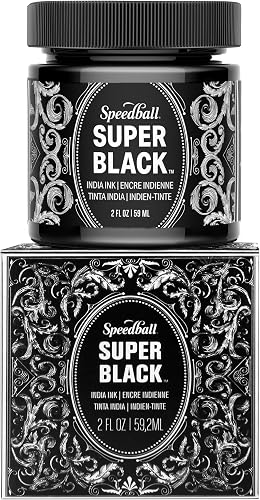
A dense, opaque black India ink that dries waterproof. It works in dip pens and with brushes for solid blacks and washes, and a 2 ounce bottle lasts a long time. About $10. 5,500+ reviews at 4.6 stars.
Ink shows every flaw in paper. Smooth, hard-surfaced paper keeps lines crisp and stops nibs catching. Bristol board is the classic choice for finished ink drawings and comics. Mixed media paper is a little more textured and heavier, so it handles ink plus light watercolor washes. For daily practice, a cheaper sketchbook is fine as long as the ink doesn't bleed through.
Best starter
Canson
XL Mix Media Pad, 9 x 12, 60 Sheets
$18.10 as of Nov 12, 2026
★★★★★Our rating· In Stock
Sixty sheets of heavy, smooth paper that takes fineliners, brush pens and light watercolor without bleeding or buckling much. Inexpensive enough to use for daily practice, good enough for finished pieces. Sold by Amazon. About $18. 48,000+ reviews at 4.8 stars.
Bright white, ultra-smooth Bristol board for crisp, clean ink lines. The surface pen and ink illustrators and comic artists reach for, and it handles erasing pencil underdrawings well. About $13. 540+ reviews at 4.7 stars.
Ink and watercolor is a classic pairing: draw first in waterproof ink, let it dry, then add simple washes of color. A small pocket set is all you need. Learning from a good book helps too. The classic texts on pen and ink were written a century ago and still teach hatching, texture and tone better than most videos.
Best starter
Winsor & Newton
Cotman Watercolor Sketchers' Pocket Set
$24.17 as of Nov 12, 2026
★★★★★Our rating· In Stock
A compact set of half-pan watercolors with a small brush and a mixing lid. Fits in a pocket or bag, so you can add washes to ink sketches anywhere. Sold by Amazon. About $24. 20,000+ reviews at 4.7 stars.
The classic guide to pen and ink technique, first published in the 1920s and still in print. It covers line, tone, texture and composition with hundreds of examples from master illustrators. About $32. 760+ reviews at 4.7 stars.
Ink rewards confident lines and patient shading. In a month of short daily sessions you can go from shaky marks to drawings with real tone, texture and depth. Here's a week-by-week plan, from line drills to your first ink and wash sketch.
The big difference between ink and pencil is that ink doesn’t erase. That’s what makes it so good to learn with. It forces you to plan a little, commit to each line, and build tone deliberately. Twenty minutes a day for a month is enough to see a real change.
Week 1: Confident lines
Spend the first week on drills. Fill pages with straight lines, drawn quickly and decisively from your elbow and shoulder rather than your wrist. Then curves, ellipses and circles. Ghost each line first: move your hand over the path a couple of times without touching the paper, then commit.
Your lines will be wobbly. That’s fine. Quick, confident lines look better than slow, careful ones even when they’re slightly off.
Ink has no gray, so you make tone with marks. Draw a row of five boxes and fill them from white to black using hatching: parallel lines, closer together for darker tones. Do it again with cross-hatching (layers of lines at different angles) and with stippling (dots). Then try contour hatching, where lines follow the curve of a form.
Now draw a few simple shapes, such as a sphere, a cube and a cylinder, and shade each one with a light source from one side. This is the core skill of pen and ink, and it will feel slow at first.
Week 3: Draw from life
Pick everyday objects: a mug, a shoe, a plant, a piece of fruit. Draw lightly in pencil if you like, then ink over it. Use a thin pen for texture and a thicker pen for the outline. Leave the lightest areas pure white paper. Contrast is what makes ink drawings pop.
Try a brush pen for the darkest shadows and for bold outlines. Notice how varying line weight, thick near shadows and thin in the light, makes a drawing feel three-dimensional.
Draw a simple scene in waterproof ink: your desk, a window, a street from a café. Wait until the ink is completely dry. Then add a few loose washes of watercolor, two or three colors at most, letting the ink do the detail work.
By the end of the month, look back at your first line drills. The difference will surprise you. From here, keep a small sketchbook with you and fill a page a day.
Need supplies? Our pen and ink gear guide covers fineliners, brush pens, dip pens, paper and watercolor sets.
Save your money
What you don't need yet
Beginners get pressured to buy a lot of stuff that doesn't help them play
better. Here's what we'd skip on day one.
Technical rapidograph pens — Refillable technical pens are precise but clog and need careful cleaning. Disposable fineliners do the same job for beginners.
Expensive fountain pens — They're lovely for writing, but most can't use waterproof drawing ink. Stick to fineliners and dip pens.
A light box — Useful for tracing pencil roughs onto final paper later. Draw directly to start.
Colored ink sets — Master black and white first. Tone and contrast are the heart of ink drawing.
First week
Your first seven days
A short, real plan to get from gear-on-doorstep to actually playing.
Get a set of fineliners in several widths and a pad of heavier paper. · Buy
Not always. Light pencil guides help with complex scenes, and you can erase them once waterproof ink is dry. Drawing straight in ink is great practice, though, because it trains you to commit to lines and stop overworking.
What do the numbers on Micron pens mean?
They're line widths. Smaller numbers are finer: 005 is about 0.20mm and 08 about 0.50mm. Use the fine ones for texture and detail, and the thicker ones for outlines and bold shading.
How do I fix mistakes in ink?
Mostly, you work them into the drawing. Add more lines, turn a mistake into a shadow or texture, or start again. White gel pens and white gouache can cover small errors on finished pieces.
Why does my ink smudge when I erase?
It hasn't dried yet, or the ink isn't waterproof. Give pigment fineliners a few minutes and India ink longer before erasing. Use a soft kneaded eraser and gentle pressure.
Can I add watercolor over pen drawings?
Yes, if the ink is waterproof and fully dry. Microns, Pitt pens and India ink all work. Test your pen first on a scrap of the same paper, and use heavier paper so it doesn't buckle.
JustBeginning earns commission from affiliate programs. As an Amazon
Associate, we earn from qualifying purchases. This costs you nothing
extra and doesn't change our recommendations.
Prices and availability are accurate as of the date and time
shown and can change; the price on Amazon when you buy is what
applies.
How this works.


 Best starter