A folding bike solves the problems a normal bike can't: no room in the apartment, a train in the middle of the commute, a car trunk instead of a rack. The tradeoffs are weight, fold size and ride feel. Here's how 16-inch and 20-inch folders differ, what Brompton and Tern get you, and the budget folders that are actually fine.
By Colin B. · Published November 12, 2026 · Last reviewed November 12, 2026
A ZiZZO Campo, a light set and a compact U-lock come to about $340. A Dahon Dream with a better lock, lights, a mini pump and a carry bag is near $680. A Brompton or Tern from a dealer starts well above that.
We earn commission when you buy through links on this page, including
Amazon. See our affiliate disclosure.
Price tiers and budget totals shown above are editorial estimates;
actual prices vary.
At a glance
Our top pick in each category
The fastest path through this guide — each best-starter pick by category.
Scroll for the budget and upgrade alternatives.
Decide how often you'll fold it. If you fold twice a day for a train or an office, fold speed and folded size matter more than anything, and a Brompton or Tern is worth saving for. If you mostly fold it to store at home or toss in a car, a budget 20-inch folder does the job.
Lift it before you buy it. Most folders weigh 25 to 35 pounds, and a heavy one carried up stairs every day gets old fast. Check the listed weight and the latch quality. A cheap hinge that develops play is the most common way budget folders go wrong.
Wheel size sets the ride. 16-inch wheels fold smallest but feel twitchy and rough on bad roads. 20-inch wheels are the sweet spot for most riders: more stable, more tire choices, and still compact. Above 20 inches, the folded size starts to defeat the point.
Folding bikes fall into two groups. Premium folders like Brompton (16-inch) and Tern (20-inch) fold in seconds into a tight, rollable package and hold up to years of daily folding. They're sold through bike shops, not on Amazon, and start around $1,000 to $1,500. Budget 20-inch folders cost a few hundred dollars, fold more slowly into a larger shape, and are great for occasional folding, storage and car trips. The bikes below are budget and mid-range picks you can buy online.
Folding bikes — what's the difference?
A few common shapes, each making a different trade.
16-inch compact (Brompton style)
Folds smallest, fits under a desk or train seat, but feels twitchy on rough roads.
Fold time
About 10 to 20 seconds
Price
From about $1,000 new
Best for Daily train commuters and small apartments
Tradeoff Expensive, and few budget options are any good
20-inch folder
More stable and comfortable, with more tire choices. Folds bigger.
Fold time
About 15 to 30 seconds
Price
About $250 to $1,500
Best for Most riders: commuting, storage, car trips, RVs and boats
Tradeoff Too big for some trains and under-desk spaces
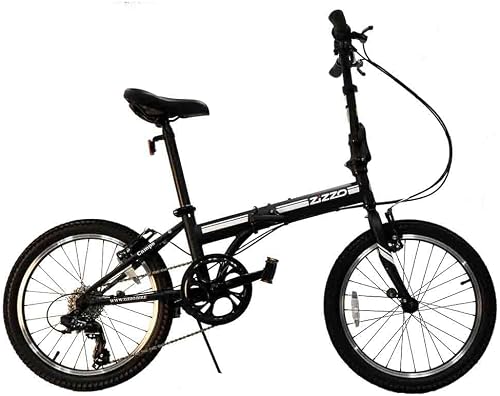
A 20-inch folder with a light aluminum frame, Shimano 7-speed gearing, an adjustable stem, fenders and a rear rack. It folds in a few steps into a car trunk or closet, and it's the budget folder with the most consistently happy owners. Sold by ZiZZO. About $250. 527 reviews at 4.4 stars.
A steel-frame 7-speed folder from Schwinn with fenders, a rear rack and a carrying bag. A sturdy, simple choice for keeping in an RV, a boat or a car trunk, where weight matters less than price. Sold by Amazon. About $270. 2,400+ reviews at 4.2 stars.
Dahon has been making folding bikes for decades, and the Dream D6 is its entry model. A quick fold, an aluminum frame and a 6-speed drivetrain, with hinge quality that holds up better to daily folding than no-name budget folders. Sold by Dahon's official store. About $499. 111 reviews at 4.4 stars.
The best lock for a folding bike is taking it inside with you. When you can't, a compact U-lock is the strongest option for its weight. Lock the frame to something solid, not just the wheel. Folding bikes are easy to carry away, so don't leave one locked outside overnight. A folding link lock is a good compromise if you want something that tucks into a frame holder.
Best starter
Kryptonite
Evolution Mini-7 Bike U-Lock, 13mm Steel Shackle
$89.99 as of Nov 12, 2026
★★★★★Our rating· In Stock
A compact hardened-steel U-lock that fits small folding-bike frames and slips into a bag. It comes with a frame bracket and a cable for securing the front wheel. Strong enough for daytime city locking. Sold by Amazon. About $90. 14,000+ reviews at 4.5 stars.
The same compact shape as the Evolution with a slightly lower security rating, for about $30 less. A sensible lock for quick stops in lower-risk areas. Sold by Amazon. About $59. 820+ reviews at 4.4 stars.
Hardened steel bars that fold into a compact block and clip into a frame holder. It reaches around thicker posts than a mini U-lock, and it rides on the bike rather than in your bag. About $90. 270+ reviews at 4.4 stars.
A folding bike usually means commuting, and commuting means riding in the dark, in rain and far from home. Rechargeable lights that charge over USB are the first add-on. A mini pump that fits a bag keeps a soft tire from ending your ride. Small wheels lose pressure faster than big ones, so check them weekly.
Best starter
Ascher
Ultra Bright USB Rechargeable Bike Light Set
$26.99 as of Nov 12, 2026
★★★★★Our rating· In Stock
A bright front light and a red rear light that both charge over USB and strap on without tools, so they're easy to move or take off when you lock the bike. One of the most-reviewed light sets on Amazon. About $27. 32,000+ reviews at 4.4 stars.
A mini pump with a hose and a fold-out foot pad, so it works like a tiny floor pump instead of a hand pump. Much easier to reach real pressure on small 20-inch tires. Sold by Amazon. About $38. 390 reviews at 4.3 stars.
Some trains, buses and buildings require folding bikes to be bagged. A carry bag also keeps grease off car seats and lets you check the bike as luggage on some trips. Look for a bag sized to your wheel size with a shoulder strap. Thin, packable bags fold into a pouch you can leave on the bike.
Best starter
CamGo
20 Inch Folding Bike Bag, Waterproof
$28.99 as of Nov 12, 2026
★★★★★Our rating· In Stock
A thick waterproof bag sized for 20-inch folders, with a padded shoulder strap and a zip-around opening. Good for trains, car trunks and keeping the bike clean in storage. About $29. 810+ reviews at 4.4 stars.
A lighter, cheaper bag sized for 14- to 20-inch folders. Thin enough to roll up and carry, so you can cover the bike when a train or bus requires it. About $20. 50 reviews at 4.3 stars.
A folding bike only earns its keep once the fold is second nature and your commute is planned around it. Here's a two-week plan to set the bike up, practice the fold until it's fast, and work out the train, the office and the stairs.
The first ride on a folding bike feels a little odd. The small wheels steer quickly, the long seatpost flexes a bit, and the fold seems fiddly. All of that fades within two weeks if you set the bike up properly and practice the parts that happen off the bike.
Days 1 to 3: Set it up
Have a bike shop look the bike over, especially if it arrived in a box. Budget folders often need the brakes and gears adjusted, and a shop can check that the hinge latches close tightly with no play.
Set the seat height so your leg is almost straight with your heel on the pedal at the bottom of the stroke. Folding bikes have long seatposts, so there’s usually a minimum insertion line: never raise the post above it. Then set the handlebar height so you’re sitting fairly upright. That’s more comfortable and easier to control on small wheels.
Pump the tires to the pressure on the sidewall. Small wheels lose air faster than big ones, so make this a weekly habit.
Fold and unfold the bike ten times in a row, three days in a row. Do it slowly at first, following the manual step by step, then speed up. Most folds go in the same order: drop the seat, fold the frame, fold the handlebar, fold the pedals.
Learn where to grab the folded bike so it doesn’t swing open. Practice carrying it up a flight of stairs. If it’s heavy, find the balance point and hold it there.
Check every latch is fully closed before riding. A half-closed hinge is the most common folding bike mistake, and the one that hurts.
Days 8 to 10: A test commute
On a weekend, ride your full commute at a relaxed pace. Fold at the station, carry it on board, and unfold at the other end. Time each step.
On the bike, give yourself more space than usual. Small wheels catch on potholes and drain grates more easily, so scan ahead and go around them instead of over them. Brake earlier on wet roads.
Work out where the bike lives at each end of the trip. Under a desk, in a closet, or in a corner of your apartment. Ask your building or office if there’s a rule on bikes indoors; folded bikes are usually welcome when full-size bikes aren’t. Keep a bag handy if your train or bus requires bikes to be covered.
Charge your lights on the same day each week. Wipe the chain and add a little lube every couple of weeks. Once a month, check the hinges for any wobble and tighten them as the manual describes.
By the end of two weeks the fold should take under half a minute, and you’ll know whether you love it enough to consider a Brompton or Tern down the line.
Ready to choose a bike? Our folding bike gear guide compares wheel sizes, budget and premium folders, and the lock, lights and bag to add.
Save your money
What you don't need yet
Beginners get pressured to buy a lot of stuff that doesn't help them play
better. Here's what we'd skip on day one.
A premium folder before you know your routine — Ride a budget folder for a few months. If you fold it daily, that's the case for a Brompton or Tern.
Upgraded tires and saddles — Stock parts are fine to start. Change them once you know what bothers you on your actual commute.
A hard-shell travel case — Only worth it for flying with the bike. A soft bag covers trains, buses and cars.
An electric folding bike — Motors and batteries make folders much heavier. Try a pedal folder first if you'll carry it often.
First week
Your first seven days
A short, real plan to get from gear-on-doorstep to actually playing.
Check your train, bus and building rules for folding bikes, including whether they must be bagged. · Learn
Have a bike shop check the assembly, brakes and hinge latches. Budget bikes often ship slightly out of adjustment. · Action
Practice folding and unfolding ten times in a row at home until it's smooth. · Action
Set the seat height so your leg is almost straight at the bottom of the pedal stroke. · Learn
Ride your full commute on a weekend first, including the fold at the station. · Action
FAQ
Common questions
Is a Brompton worth the money?
If you fold every day, often yes. A Brompton folds in seconds into the smallest package of any common folder, rolls along on its own wheels when folded, and holds its resale value well. If you fold occasionally, a budget 20-inch folder gives you most of the benefit for a fraction of the price.
Are folding bikes slower than regular bikes?
A little. Small wheels lose more speed over bumps and feel less stable at high speed. On city commutes with stops and traffic lights the difference is small. Good 20-inch folders with proper gearing keep up with most commuter bikes.
Can a tall or heavy rider use a folding bike?
Usually, but check the listed maximum rider weight and the seatpost and stem height range. Many folders fit riders up to about 6 feet 2 inches. Taller riders often need a longer seatpost, which some brands sell as an option.
Can I take a folding bike on a train or plane?
Most trains and many buses allow folded bikes at all hours, even when full-size bikes are banned. Some require a bag. Airlines usually treat them as checked luggage, so you'll want a padded case for flights.
Do folding bikes break easily?
Well-made folders are durable, but the hinges and latches are the weak points. Check them regularly for play or wobble, keep them clean, and tighten or service them as the manual describes. Cheap folders tend to develop loose hinges first.
JustBeginning earns commission from affiliate programs. As an Amazon
Associate, we earn from qualifying purchases. This costs you nothing
extra and doesn't change our recommendations.
Prices and availability are accurate as of the date and time
shown and can change; the price on Amazon when you buy is what
applies.
How this works.


 Best starter


