Home machining means making precise metal parts yourself, usually on a benchtop lathe in a garage or basement. It's slow, absorbing and very satisfying. Here's the machine most people start on, the tooling and measuring tools you need before it's useful, and the honest gap between the machine's price and a working setup.
By Colin B. · Published November 5, 2026 · Last reviewed November 5, 2026
A 7x14 mini lathe with a basic carbide tool set, calipers, safety glasses and cutting fluid is about $700. Adding a better tool kit, a dial indicator and a drill press brings a usable starter shop to around $900. Plan on the tooling costing a good chunk on top of the machine.
We earn commission when you buy through links on this page, including
Amazon. See our affiliate disclosure.
Price tiers and budget totals shown above are editorial estimates;
actual prices vary.
At a glance
Our top pick in each category
The fastest path through this guide — each best-starter pick by category.
Scroll for the budget and upgrade alternatives.
Budget for tooling, not just the machine. A lathe arrives able to spin but not to cut well. Cutting tools, measuring tools, cutting fluid and a few accessories add a few hundred dollars before you're making real parts.
A mini lathe is a kit you finish. Inexpensive 7x14 lathes ship covered in grease, with loose adjustments and rough edges. Plan an afternoon to clean it, adjust the gibs and check alignment. That tune-up is how you learn the machine, and it makes a big difference to how well it cuts.
Bolt it to something solid, and respect it. A benchtop lathe needs a sturdy bench and a household outlet. Never wear gloves, loose sleeves or dangling jewelry near a spinning chuck, and never leave the chuck key in the chuck.
The lathe is where most home machinists start: it spins the work while a cutting tool shapes it, making shafts, bushings, knobs and threaded parts. A 7x14 mini lathe (7 inch swing, 14 inches between centers) runs on household power and fits on a bench. A used American lathe like a South Bend or Atlas is heavier and often better made, but needs checking for worn ways and missing parts.
Lathes — what's the difference?
A few common shapes, each making a different trade.
New mini lathe
Benchtop 7x14 with variable speed. Arrives complete but needs a tune-up.
Swing
7 in
Price
~$600
Best for Most beginners with limited space
Tradeoff Lighter build, needs cleaning and adjusting
A 7x14 benchtop lathe with variable speed and a digital speed readout, a 4 inch three-jaw chuck, metal gears and an LED light. About $620. It's the class of machine most home machinists start on; plan an afternoon to clean and adjust it.
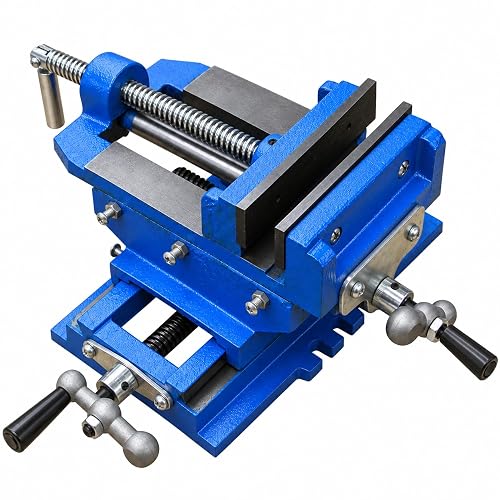
You'll need to drill accurate holes long before you need a mill. A drill press with a cross-slide vise handles that and very light slotting. It is not a real mill: its bearings aren't built for side loads, so don't expect to mill steel with it. A proper mini mill or mill-drill is a big step in cost and the usual second machine.
Best starter
WEN
10 Inch Benchtop Drill Press, Variable Speed (DP1062V)
$203.98 as of Nov 5, 2026
★★★★★Our rating· In Stock
A 10 inch cast-iron drill press with variable speed and a laser guide, about $204. Variable speed matters for metal, where you want low RPM for big bits.
Cutting tools decide whether the lathe cuts cleanly or chatters. Indexable carbide insert tools are easiest for beginners: when an edge dulls, rotate or replace the insert instead of grinding. Most mini lathes take 3/8 inch shank tools. Learning to grind high-speed steel bits is a great skill later, but carbide gets you cutting today.
Best starter
Joogto
Indexable Lathe Turning Tool Kit, 21 Pieces, 3/8 Inch
$45.99 as of Nov 5, 2026
★★★★★Our rating· In Stock
Seven 3/8 inch holders for turning, facing, grooving, threading and boring, plus 14 carbide inserts, for about $46. It covers nearly every first project. 4.6 stars from 390+ buyers.
Machining is measuring. Calipers measure diameters and lengths to a thousandth of an inch; a dial indicator on a magnetic base shows you when a part is centered or a surface is flat. Be wary of very cheap name-brand look-alikes online; counterfeit Mitutoyo calipers are common.
Best starter
iGaging
Absolute Origin 0-6 Inch Digital Caliper
$47.77 as of Nov 5, 2026
★★★★★Our rating· In Stock
A well-regarded stainless digital caliper that keeps its zero when switched off, with inch and metric modes, for about $48. A big step up in reliability from bargain calipers.
Two cheap things matter every time you cut: eye protection, because hot chips fly, and cutting fluid, which makes drilling and tapping steel far easier and saves your tools.
Best starter
3M
Solus 1000 Safety Glasses, Anti-Fog
$18.18 as of Nov 5, 2026
★★★★★Our rating· In Stock
Comfortable ANSI Z87 safety glasses with an anti-fog coating for about $18, so you'll actually keep them on. 7,800+ reviews.
A small bottle of cutting fluid for drilling, tapping and turning steel, about $5. A few drops make cuts smoother and tools last longer. 6,100+ reviews.
Five small projects take you from switching the lathe on to cutting threads: facing, turning to size, drilling on center, knurling and threading. Here's the order to do them in, and what each one teaches.
The lathe rewards patience more than anything. Every project teaches one skill and one habit, and the habits matter as much as the skills. Work through these in order on aluminum or brass before you touch steel.
Before you start: the tune-up and the rules
Clean the shipping grease off everything, oil the ways, and adjust the gibs so the carriage and cross slide move smoothly without play. Check that the tool sits exactly at the center height of the work; shim it until it does.
The rules, every time:
Safety glasses on. Hot chips fly.
No gloves, loose sleeves or jewelry near the spinning chuck.
Take the chuck key out of the chuck before you switch on. Every time.
Project 1: Face a bar
Chuck a short piece of aluminum bar, sticking out no more than about twice its diameter. Bring the tool to the end and feed it across the face toward the center. That’s facing.
You’ll learn how speed, depth of cut and feed rate change the finish. A shiny, flat face with a tiny nub or none at the center means your tool is on center height. A big nub means it isn’t.
Now turn along the length of the bar. Take light cuts, measure with calipers, and aim for a specific diameter, say 0.500 inches. The handwheel dials tell you how far the tool moved; calipers tell you the truth. On a lathe, moving the cross slide in 0.010 inches usually takes 0.020 off the diameter, because you cut both sides.
Hitting a number within a thousandth or two is the moment the hobby clicks.
Project 3: Center drill and drill
Put a center drill in the tailstock chuck, start a small center hole in the faced end, then follow with a drill. Go slow, use cutting fluid, and back the drill out often to clear chips. This is how you make bushings and spacers, the most useful parts a beginner can make.
Project 4: A knurled knob
Knurling presses a diamond grip pattern into the surface. It’s satisfying and forgiving. Make a simple knob or a tool handle: turn it, knurl the grip section with plenty of oil and steady pressure, then chamfer the edges with the tool angled slightly.
Set the gears for a common thread like 1/4-20 or M6 per your lathe’s chart, and cut a short thread on a turned section with a threading insert, taking many tiny passes. Check it against a nut. When a nut spins on to a thread you cut yourself, you’re a machinist.
What not to worry about yet
Don’t buy a mill, a DRO or a four-jaw chuck yet. Don’t machine stainless steel. And don’t chase mirror finishes on a mini lathe; clean, accurate and safe is the goal. Make small, useful parts, measure everything, and keep notes on the speeds and depths that worked.
Save your money
What you don't need yet
Beginners get pressured to buy a lot of stuff that doesn't help them play
better. Here's what we'd skip on day one.
A CNC machine — Learn manual machining first. It teaches the feeds, speeds and setups CNC relies on.
A full mill — A lathe plus a drill press covers most beginner projects. A mill is the second big machine.
A digital readout (DRO) kit — Handy, but learning to work from the handwheel dials teaches you the machine.
A four-jaw chuck — Great for odd shapes later. The included three-jaw chuck handles round stock fine.
Expensive premium inserts — Budget carbide inserts are fine while you learn what speeds and depths work.
First week
Your first seven days
A short, real plan to get from gear-on-doorstep to actually playing.
Clear and level a sturdy bench near a household outlet. · Action
Order a mini lathe, a carbide tool kit and calipers. · Buy
A 7x14 benchtop mini lathe is the usual start: it runs on household power, fits a bench and costs around $600. A used South Bend or Atlas can be better value if you know how to check it for wear.
How much does it cost to start home machining?
Expect about $700 to $900 for a mini lathe plus the tooling, measuring tools and safety gear that make it useful. The machine alone isn't enough to make good parts.
Can a drill press be used as a milling machine?
Only for very light work in soft metals. Drill press bearings aren't designed for side loads, so heavy milling is inaccurate and can damage the machine. A mini mill is the right tool for milling.
What metal should I practice on?
6061 aluminum and brass are easiest. Free-machining steel like 12L14 is a good next step. Avoid stainless steel at first; it's tough on small machines.
Is home machining dangerous?
It can be. The big rules: no gloves, loose clothing or jewelry near spinning parts, always wear eye protection, never leave the chuck key in the chuck, and keep hands away from the work while it turns.
Do I need 220V for a home lathe?
No. Benchtop mini lathes and drill presses run on standard 110 to 120 volt household power. Big industrial lathes need 220V or three-phase.
Little Machine Shop — The best-known supplier for 7x mini lathes and mills, with free guides on setup, tuning and the tooling these small machines need.
Blondihacks (YouTube) — A hobbyist machinist explaining every step clearly. Her lathe series is the best free beginner course there is.
JustBeginning earns commission from affiliate programs. As an Amazon
Associate, we earn from qualifying purchases. This costs you nothing
extra and doesn't change our recommendations.
Prices and availability are accurate as of the date and time
shown and can change; the price on Amazon when you buy is what
applies.
How this works.
Our top pick7x14 Metal Lathe with Digital Display, 550W


 Best starter