The folk harp, the Celtic harp, the lever harp — different names for the same instrument: a real harp you can afford, carry yourself, and start playing within a few months. Here's exactly what to buy first, what's worth the spend, and what you can skip until you know this is your thing.
By Colin B. · Published June 10, 2026 · Last reviewed June 10, 2026
The harp itself is the big spend — budget $500-700 for a solid starter. Tuner, book, and strings add another $65-100. Unlike most hobbies, the accessories are cheap; the instrument is not.
We earn commission on qualifying Amazon purchases — see our
affiliate disclosure.
Price tiers and budget totals shown above are editorial estimates;
actual Amazon prices vary.
At a glance
Our top pick in each category
The fastest path through this guide — each best-starter pick by category.
Scroll for the budget and upgrade alternatives.
The harp is 90% of your starting budget. Spend it wisely: a well-made $600-700 starter harp is worth far more than two $300 harps. The cheap end of the market has real quality control problems.
Lever placement matters more than string count. A 26-string harp with levers on every string is dramatically more useful than a 34-string harp with levers on only the diatonic notes. Check the lever count before you buy.
Used harps are excellent value. The lever harp community has a strong resale market — Harp Column classifieds and Facebook harp groups always have used Harpsicle and Dusty Strings instruments at 70% of list price. A well-maintained used harp beats a new budget instrument every time.
You will need someone to show you lever setting the first time. Most harp shops offer free setup appointments. A badly set lever buzzes and won't play cleanly — it's not a defect in the harp, it's a setup step you can fix in ten minutes once someone walks you through it.
The gear
What you actually need
Harps
The instrument is the only expensive decision you'll make. Everything else costs under $100. The main choice: a 26-string lap harp or a 34-36 string floor harp. Both are lever harps — they have small mechanical levers on each string that let you raise a string by a half-step, changing keys without retuning. A 26-string covers three-plus octaves and handles most Celtic and folk repertoire beautifully. It's lighter, less expensive, and easier to carry. Start here. Buy a floor harp when you know you're committed and need more bass range for performing.
Harps — what's the difference?
A few common shapes, each making a different trade.
26-String Lap Harp
Portable, beginner-priced, covers most folk and Celtic repertoire.
Strings
22–26
Range
3+ octaves
Weight
5–10 lbs
Best for Beginners, students, players who transport their instrument
Tradeoff Limited bass range; some arrangements need a floor harp
Rees Harps has been making the Harpsicle line since the 1980s, and the Fullsicle is their best starter: 26 strings with levers on every string, so you can play in any key from day one. Well-regulated out of the box, good resale value, and Rees sells all the parts you'll ever need. The harp most teachers point beginners toward.
What we like
Made by Rees Harps, 40+ years building lever harp starters
Full levers on all 26 strings — play in any key from day one
Strong resale value; easy to sell if you decide to upgrade
What to know
Lighter tone than professional instruments
Plastic levers on base model; brass levers are an upgrade cost
The lowest-cost way to try lever harp. Roosebeck's Heather covers beginner folk repertoire at 22 strings, and at under $400 it's the try-before-you-commit option. Expect to have it set up by a harp tech first — quality control varies and most instruments need small adjustments before they play cleanly.
What we like
Under $400 — the cheapest functional entry into lever harp
22 strings covers most beginner folk and Celtic repertoire
What to know
Inconsistent QC; many need professional setup before playing well
Shorter lifespan than premium harps; consider a used Harpsicle instead
When you're ready to spend real money on a 26-string lever harp, Rees Harps' SE Fullsicle is the American-made step up. Solid cherry wood body, concert-quality Rees levers on all 26 strings, and built in Indiana by the same workshop that makes the standard Fullsicle. The tone is noticeably richer than the entry model. Buy this once you've confirmed harp is a long-term instrument for you.
What we like
Made in the USA from solid cherry wood — noticeably richer tone
Concert-quality Rees levers on all 26 strings, precisely regulated
Retains value well; resells easily in the lever harp community
What to know
Still a lap harp — no extended bass range of a floor instrument
Significant price jump from the entry Fullsicle; commit before buying
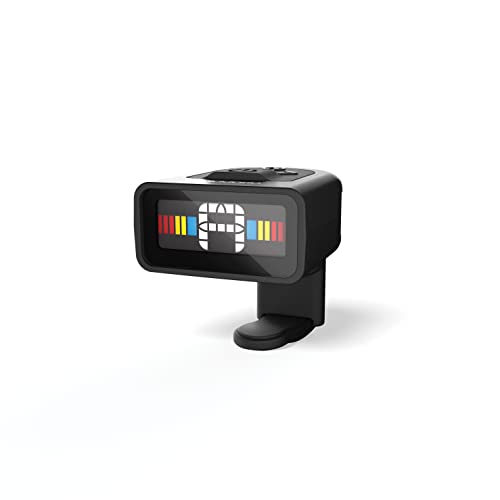
A lever harp needs tuning every single day — sometimes mid-session when fresh strings settle or a temperature change shifts the pitch. You need a chromatic clip-on tuner that attaches to the soundboard and reads vibration rather than sound. Standard mic-based tuners miss the fundamental pitch on harp's low strings in any room that isn't silent. Clip-on chromatic tuners fix this for under $20.
Best starter
D'Addario
NS Micro Clip-On Tuner
$21.99 as of Jun 22, 2026
★★★★★Our rating· In Stock
The NS Micro clips onto your soundboard, reads vibration instead of air, and is accurate to within one cent. The display rotates to any angle and it folds flat when not in use. At under $20, it's the tuner harpists recommend most to each other — and the one you'll still use after 10 years.
What we like
Reads soundboard vibration — accurate even in noisy spaces
Accurate to within 1 cent, better than most clip-on tuners
Rotating display works at any angle on the soundboard
What to know
Small display can be hard to read when seated at the harp
Hinge clip loosens with heavy use; tighten the screw occasionally
Bigger display and a wider clip than most tuners, which matters for thick harp soundboards. Many harpists prefer Snark's visibility in bright practice rooms. Slightly bulkier than the D'Addario but equally accurate and often $5 cheaper.
What we like
Bright display easy to read in lit rooms and outdoors
Wide clip grips thick harp soundboards securely
What to know
Plastic body shows wear after a year of regular use
Bulkier than the D'Addario; less sleek on a finished harp
The lever harp has a rich library of beginner method books written specifically for folk and Celtic harp, not adapted from orchestral pedal harp methods. Get a book before your harp arrives — lever notation (markings that show when to flip a lever mid-song) is its own visual language, and understanding it before you start playing saves real confusion. Sylvia Woods is the author the lever harp community recommends most to beginners.
Best starter
Sylvia Woods
Teach Yourself to Play the Folk Harp
$15.95 as of Jun 22, 2026
★★★★★Our rating· In Stock
Sylvia Woods' primary beginning text is the most widely recommended starting method in the lever harp community. It teaches reading lever notation, basic chord accompaniment, and 50 folk and classical pieces progressing from single-note melodies to full two-hand arrangements. Most lever harp teachers will ask you to have this book before your first lesson.
What we like
The most recommended beginner text in the lever harp community
50 pieces progress from first notes to full two-hand arrangements
Written for folk/Celtic harp, not adapted from pedal harp methods
What to know
Pacing is for total beginners; slow if you already read music
★★★★☆Our rating· Only 20 left in stock (more on the way).
Once you've worked through the beginner method, this collection of 50 traditional Irish melodies gives you real songs — jigs, reels, and airs arranged for lever and pedal harp. Lever notation included throughout. It's where most students first feel like actual harpists rather than students.
What we like
Traditional Celtic tunes arranged idiomatically for lever harp
Full lever notation included throughout every piece
A padded gig bag is essential for any harp you transport — even at home, a harp's exposed soundboard dents against furniture or door frames. Purpose-made harp bags have a shaped foam interior that supports the neck and prevents the soundboard from resting on hard material, a full-length zipper, and backpack straps for hands-free carrying. They're sized by string count, so measure your harp's height before ordering.
Best starter
Roosebeck
Padded Harp Gig Bag
$68.00 as of Jun 22, 2026
★★★★★Our rating· Only 9 left in stock - order soon.
Padded foam interior, full-length zipper, and backpack straps — everything a gig bag needs to do. It keeps your instrument from getting dinged during transport and protects the soundboard at home. Sized for 22-26 string harps; confirm your instrument dimensions before ordering.
What we like
Shaped foam keeps soundboard from resting on hard surfaces
Backpack straps make solo carrying practical on stairs or transit
What to know
Sized for specific string counts; measure before ordering
Fabric exterior won't protect against hard impacts or airline cargo
★★★★☆Our rating· Only 20 left in stock - order soon.
If you started on the Roosebeck Heather (the budget 22-string pick), this is your matching padded case. Nylon exterior, foam padding, and a shoulder strap sized for that instrument. Don't buy it blind for a Fullsicle or other 26-string harp — the Heather runs shorter than most 26-string instruments, so measure your harp's height before ordering.
What we like
Exact fit for the Roosebeck Heather — no guesswork on sizing
Padded foam interior protects soundboard from dents and dings
What to know
Sized for the Heather (22 strings) — may not fit 26-string harps
Fabric exterior won't survive hard impacts or checked luggage
The lever harp looks intimidating but it isn't. Here's what actually happens in the first three months — the surprises, the sticking points, and when it starts to feel like music.
The lever harp looks complicated. It has 26 strings, dozens of little metal levers along the neck, and it costs several hundred dollars before you play a single note. None of that means it’s hard to start. It means it rewards seriousness — and that the people who stick with it for three months almost always keep going.
This is what those first three months actually look like.
Week one: tuning, posture, and the sound of open strings
The first thing you’ll do with your new harp is tune it. And then tune it again. And then again.
New harp strings stretch for the first few weeks after installation, which means the instrument goes flat between sessions — sometimes within a single session if the room temperature changes. This is not a defect and it’s not specific to budget instruments. It’s physics. Clip your tuner onto the soundboard, work string by string from bottom to top, and do it every time you sit down to play. By the end of week two, most strings will hold their pitch for a full practice session.
Posture first, before you play a note. Sit in a chair with a firm seat — not a couch. Pull the harp toward you until the column (the front pillar) rests against your right knee and the soundboard faces forward. The neck curves up and back over your right shoulder. Both hands reach the strings at a natural angle, elbows slightly bent. If anything hurts — wrists, shoulders, forearms — stop and adjust. Harp is not supposed to be uncomfortable.
Start by plucking open strings one at a time. No sheet music. No method book yet. Just touch each string lightly near the middle of its length, pull inward slightly, and let go. The string should ring cleanly. If it buzzes, a lever may be set too close to the string — ask a teacher or harp tech to show you how to adjust it.
Month one: reading lever notation and your first tunes
Lever notation is the thing that makes harp sheet music look different from piano music. Little symbols at the beginning of a piece tell you which levers to flip up (raising the string a half-step, sharping it) before you begin playing. Midway through a piece, a symbol tells you when to flip a lever during a pause, changing key for the next section.
Once you understand the system, it’s logical. But it takes a few weeks of working through a beginner method book before it becomes automatic. The Sylvia Woods method handles this well: she introduces levers slowly, one new concept per group of pieces, and by the time you’re thirty pages in, flipping levers while reading music feels as normal as pressing a piano key.
In month one, aim for this by the end of the four weeks:
Can tune all strings to pitch without assistance in under ten minutes
Can pluck a single-hand melody (right hand only) cleanly, without inadvertently buzzing adjacent strings
Understands lever notation enough to set levers for a simple piece before playing
Has attempted at least one two-hand piece, even slowly
That’s a full month’s work for most beginners. Don’t rush it.
Month two: the left hand, chord accompaniment, and muscle memory
Month two is when two-hand playing becomes the focus, and it’s where most beginners feel genuinely challenged for the first time. The left hand on a lever harp plays bass notes and simple chord patterns while the right hand carries the melody. Coordinating them is the same challenge pianists face in early learning — your brain has to drive two independent things at once.
The standard beginner accompaniment pattern is arpeggio: bass note on beat one, then middle-register chord tones on beats two and three. In 3/4 time (which most folk music uses), this gives you a gentle rolling motion that sounds beautiful as soon as you can execute it cleanly. It takes most beginners two to three weeks of daily practice before the left hand stops demanding conscious attention.
A few things to know in month two:
Placement matters. The right hand plays near the top third of each string; the left hand plays in the lower half. Playing near the bridge (bottom of the string) gives a thinner, more nasal tone. Playing too high up the string softens it. Find the sweet spot.
Your nails matter, too. Harp technique requires short, smooth fingernails on the plucking fingers. Long nails catch and create a clicking sound instead of a clean tone. Trim them regularly.
Slow is not slow. Playing a piece slowly and cleanly is more valuable than playing it at tempo with errors. Your fingers learn patterns through repetition, and they learn the errors just as efficiently as they learn the correct notes. Play correctly at a pace where that’s possible.
Month three: real tunes and your first complete pieces
By month three, something shifts. The mechanics of playing have receded enough that you can hear the music rather than managing the instrument. You’re not counting strings anymore. Your left hand finds the bass notes without much thought. The levers feel familiar.
This is when most beginners learn their first piece all the way through — not an exercise, an actual tune. A simple Celtic air. A folk melody. Something you’d play for someone.
A few things that help month three land well:
Play for someone. Not a performance — just play for a family member or friend, however imperfectly. The experience of making music for another person is different from practicing alone, and it changes how you relate to the instrument.
Look up simple tunes online. YouTube has hundreds of beginner lever harp tutorials with the sheet music annotated. Harper Tasche’s channel is the most practical starting point. Watching another harpist’s hands is genuinely educational in a way that sheet music alone isn’t.
Don’t compare your timeline to anyone else’s. Lever harp progress is individual. Adults who already read music often advance faster through the notation side and slower through the physical technique. Children sometimes do the reverse. Neither path is wrong.
The things that trip up beginners (and how to handle them)
Every lever harp beginner runs into the same handful of problems:
Accidentally touching adjacent strings. Your fingers land on the right string but the plucking motion grazes the string above or below it. Fix: practice in very slow motion with no music, focusing only on the plucking hand. Isolate the movement until it’s precise.
Buzzing strings. A string buzzes against a lever that’s been flipped to the wrong position. When this happens: flip all levers down to neutral, retune from scratch, then set only the levers the piece requires. One misset lever can make a whole section sound broken.
Forgetting to flip a lever mid-piece. Mark lever changes in pencil on your sheet music. Some players circle them in red. The notation is in the score but your eye has to find it fast while playing — annotation helps.
The tuning plateau. Around week three or four, many beginners feel like they can never get the harp perfectly in tune. This is often because: (a) one string in the middle octave is pulling the others sharp as they harmonize against it, or (b) the harp needs its levers regulated by a tech. If careful tuning still sounds off after two full sessions, book a tech appointment. Lever regulation is a 30-minute procedure that costs $50-80 and transforms how the instrument plays.
What hour fifty looks like
Three months of regular practice — four to five days per week, thirty to forty-five minutes per session — puts most beginners at somewhere around forty to sixty hours of actual playing time. At that point you’ll typically have:
A dozen or more complete pieces you can play from start to finish
Fluent two-hand playing at moderate tempos
The ability to set levers for a new piece correctly the first time
Strong opinions about what you want to play next
The lever harp community is small, loyal, and remarkably welcoming to beginners. Local harp societies run by the American Harp Society hold workshops, rentals, and beginner programs in most metro areas. Harp Column’s classifieds keep you connected to a wider world of players. And the first time you sit down with another harpist and trade tunes back and forth, you’ll understand why people stay with this instrument for decades.
Save your money
What you don't need yet
Beginners get pressured to buy a lot of stuff that doesn't help them play
better. Here's what we'd skip on day one.
A pedal harp — Pedal harps weigh 80 lbs, cost $10,000-40,000, and require different technique. They're orchestral instruments. Most folk and Celtic harpists never switch.
Gut strings — Gut strings give a warmer tone but cost 5-10x more than nylon, need more frequent replacement, and are sensitive to humidity. Nylon is the right starting material.
A dedicated harp bench — A lap harp rests on your left leg while seated in any firm chair. A floor harp leans against your right shoulder. Neither requires special furniture until you're performing regularly.
Lever lubricant or maintenance tools — Modern lever harps are low-maintenance. You'll need a harp tech once a year for regulation, but you don't need to service the levers yourself as a beginner.
A flight hard case — A padded gig bag handles cars, buses, and bikes. Hard flight cases cost $300-600 and are only necessary if you're checking your instrument as airline baggage.
First week
Your first seven days
A short, real plan to get from gear-on-doorstep to actually playing.
Order your harp so it has time to arrive and settle before your first real practice session. · Buy
Harp Column · The main trade publication for all things harp
When the harp arrives, tune it carefully with your clip-on tuner. It will go out of tune within hours as strings stretch — retune daily for the first two weeks. · Action
Work through the first ten exercises in the Sylvia Woods book. Focus on clean string contact, not speed. · Action
FAQ
Common questions
What's the difference between a lever harp and a pedal harp?
A lever harp has small mechanical levers you flip by hand to raise a string by a half-step. A pedal harp uses foot pedals to change all strings of the same note simultaneously across every octave — faster in performance, but the instrument weighs 80 lbs and costs $10,000 minimum. Lever harp is the accessible version: portable, affordable, and the right starting point for folk, Celtic, and early music. Most folk harpists never switch to pedal.
How many strings do I need to start?
A 26-string lever harp covers three-plus octaves and handles most folk, Celtic, and beginner classical repertoire. It's the most popular starting size. Some beginners start on 22 strings (more portable, cheaper), and a few start on 34-36 strings if they already play piano and know they'll need the full range. If in doubt, start with 26.
Do I need to read music to learn lever harp?
You don't need to read music before you start, but you'll need to learn basic music reading to use most method books and sheet music. The most widely used beginner method (Sylvia Woods) assumes no prior reading experience and teaches it from scratch. Reading simple treble clef notation takes most beginners two to three months of regular practice.
How long does it take to play a real song?
Most beginners can play a recognizable simple tune within two weeks. A full two-hand arrangement of a Celtic air takes two to three months of regular practice. By the end of year one, most students can perform a short recital piece confidently.
How often do strings break?
Beginners break more strings than experienced players — maybe three to five per year in the first year, mostly high nylon strings that snap when a lever is set incorrectly or fingers pluck at a bad angle. After the first year, most players go months without a break. Keep a replacement set on hand.
How often does a lever harp need tuning?
Every day, especially in the first few months and with any new string installation. Harp strings are long and respond to temperature and humidity — a 10-degree temperature change can push strings noticeably flat. Tuning takes five to ten minutes and most harpists do it before every practice session.
Harp Column — The main trade publication for the harp world. News, reviews, technique articles, teacher directory, and classifieds with used instruments.
American Harp Society — National organization for harpists. Local chapters in most regions, workshops, competitions, and a teacher directory searchable by location.
Sylvia Woods Harp Center — The most trusted independent harp retailer and resource hub. Instruments, sheet music, strings, accessories, and video tutorials.
Dusty Strings — Premier maker of folk and Celtic harps in Seattle. Their website has excellent buyer's guides and maintenance resources even if you buy elsewhere.
Harper Tasche (YouTube) — Practical, beginner-friendly tutorials for lever harp. Covers tuning, lever setting, technique, and repertoire. The best video starting point.
r/Harp — Active community of harp players at all levels. Good for specific questions about instruments, teachers, and repertoire. Search before posting.
As an Amazon Associate, JustBeginning earns from qualifying purchases.
We may also earn commission from other affiliate programs linked on this
page. Editorial recommendations are independent; we don't choose
products based on commission rates.
Product prices and availability are accurate as of the date and time
indicated and are subject to change. Any price and availability
information shown on Amazon at the time of purchase will apply.