Sudoku is one of the most portable hobbies there is: a cheap book, a sharp pencil, and a quiet seat is all you need. The puzzles scale from genuinely easy to genuinely hard, the tools stay simple, and the satisfaction of a completed grid never stops feeling good. Here's what to get first.
By Colin B. · Published June 7, 2026 · Last reviewed June 7, 2026
A puzzle book and a mechanical pencil is all you need. Total startup cost is under $40, and the pencil lasts for years.
We earn commission on qualifying Amazon purchases — see our
affiliate disclosure.
Price tiers and budget totals shown above are editorial estimates;
actual Amazon prices vary.
At a glance
Our top pick in each category
The fastest path through this guide — each best-starter pick by category.
Scroll for the budget and upgrade alternatives.
Start with easy puzzles, not hard ones. The numbers 1-9 in sudoku are just symbols — the whole game is constraint logic. Once you understand 'this cell must be a 6 because every other number already appears in this row, column, and box,' you have the foundation. Easy puzzles make that logic visible. Hard puzzles layer advanced techniques on top of it. Don't skip the foundation.
Don't use hint buttons. Every sudoku app and most websites offer hints. They'll get you out of jams but teach you nothing except dependence. Use pencil and paper instead: make a tentative mark, keep working, and erase if you're wrong. Getting yourself unstuck is exactly the skill you're building.
A mechanical pencil is worth the $10 upgrade. Pen-and-paper solving is more satisfying than a phone app for most people: no notifications, no dead battery, no algorithmic nudging. A mechanical pencil has a consistent line width, never dulls, and erases cleanly. You'll appreciate it after the first puzzle where you need to back out three wrong marks.
The puzzle book is the whole hobby. Will Shortz is the go-to name: his collections use clean, consistently graded puzzles that teach technique without unfair shortcuts. Start with an easy volume (200+ puzzles) before the hard one — the difficulty gap between 'easy' and 'hard' sudoku is real, not just marketing. Work through an entire book before buying the next one; pattern recognition compounds with volume.
Sudoku Books — what's the difference?
A few common shapes, each making a different trade.
Easy / Beginner
Solvable with naked singles alone. The right start for everyone.
Avg. solve time
10-20 min
Technique needed
Naked singles only
Best for First-time solvers, casual daily habit, building confidence
Tradeoff Stops being challenging once you have ~50 puzzles under your belt
Will Shortz Presents Ferociously Fun Sudoku: 200 Easy Puzzles
$14.08 as of Jun 22, 2026
★★★★★Our rating· In Stock
Will Shortz has edited the NYT crossword since 1993 and his sudoku collections are graded with the same care. The easy volumes start with genuinely manageable puzzles and ramp gradually — finish this book and you'll have the foundations for any sudoku collection. Buy this before the hard volume; the difficulty gap is bigger than it looks.
What we like
Will Shortz grading is the most reliable difficulty calibration in the genre
200 puzzles per book: months of material at one puzzle a day
Compact paperback fits in a bag, pocket, or nightstand drawer
What to know
No technique explanations; you'll need to look up strategies online
500+ puzzles for under $8. The grading is less precise than Will Shortz but the volume is the point: the more grids you complete, the faster pattern recognition develops. Good for travel, or for the pile on your coffee table you chip away at slowly. When you just want more puzzles without overthinking the brand.
What we like
500+ puzzles per volume: the best pure volume-per-dollar in the category
Large print format, easier to work with than some compact editions
What to know
Difficulty grading is inconsistent; occasional 'easy' puzzles that aren't
Paper quality is thin — pencil marks show through to the next page
Will Shortz Presents Hard Sudoku Volume 1: 200 Challenging Puzzles
$8.09 as of Jun 22, 2026
★★★★☆Our rating· In Stock
When easy puzzles start finishing in under 10 minutes, the hard volumes introduce techniques that actually require work: X-wing, swordfish, naked pairs. Not gimmick-hard — legitimately challenging. Expect to spend 30-60 minutes per puzzle. Complete an easy book first; jumping to hard too early is just frustrating.
What we like
Correctly hard: requires real technique, not just more patience
Same reliable Will Shortz grading, now at the difficult end
What to know
Requires technique knowledge easy books don't teach — do your homework
Not for beginners; start with easy volumes and work up
Five overlapping 9x9 grids sharing corner cells, requiring you to track multiple constraint sets simultaneously. Not for beginners, but one of the most interesting format variants once you've finished hundreds of standard grids. Samurai sudoku is harder than the hardest regular sudoku because you can't solve any one grid in isolation.
What we like
Format variant that genuinely changes how you approach constraint logic
Keeps experienced solvers challenged after regular sudoku becomes routine
What to know
Steep learning curve even for experienced sudoku solvers
Long time commitment per puzzle; not for casual 20-minute sessions
The puzzle community has strong pencil opinions. Mechanical pencils win because the line width stays consistent and you never need to sharpen. A 0.5mm lead makes small correction marks easy to read, and the tip precision is genuinely better for working in tight grid cells. Standard No. 2 pencils work but dull, smear, and make erase marks messy. The upgrade to a mechanical pencil is $10-20 and lasts for years.
Best starter
Pentel
GraphGear 1000 Automatic Drafting Pencil 0.5mm
$9.30 as of Jun 22, 2026
★★★★★Our rating· In Stock
The mechanical pencil that serious puzzle solvers eventually land on. Fixed 0.5mm tip means no constant rotating or dulling, the grip is comfortable for long sessions, and it writes with controlled pressure that makes erasing clean. Sounds like overkill for a puzzle hobby; it's actually a $20 investment that lasts years and never makes you wish you'd spent more.
What we like
Fixed 0.5mm tip never dulls, consistent line width every time
Metal grip and barrel lasts for years; not a use-and-discard pencil
Retractable tip protects pocket and bag without a cap to lose
What to know
Tip mechanism can jam under hard pressure; use normal writing force
Heavier than cheap plastic pencils; takes a session to adjust
★★★★☆Our rating· Only 19 left in stock - order soon.
Under $5, writes cleanly, and the stainless steel barrel means it won't snap like a cheap plastic pencil. The 0.5mm lead is the right width for puzzle grids. Not as refined as the GraphGear — the tip isn't retractable — but for a first mechanical pencil, this is the honest choice before you're sure you want to spend more.
What we like
Under $5 with the same 0.5mm line width as premium pencils
Stainless steel barrel survives bag and pocket without breaking
What to know
Non-retractable tip means it needs a cap, which you'll lose
Grip section less comfortable than the GraphGear for 60+ minute sessions
The machinist's mechanical pencil. Full brass body, precise weight balance, and a knurled grip that doesn't shift during long sessions. Noticeably better than the GraphGear for people who solve an hour a day. The price ($35-45) reflects what it is: a tool you'll still be using in ten years.
What we like
Brass barrel and balanced weight make it the best long-session pencil
Knurled grip never slips regardless of how long you've been writing
What to know
Heavier than most pencils; takes adjustment if you're used to light tools
Overkill for casual solvers — start with the GraphGear first
Once you've solved a few hundred sudoku, variety is the natural next step. Nonograms (also called Picross or Griddlers) use number clues to fill in grid cells that reveal pixel-art images — satisfying in a completely different way from sudoku. Kakuro is like a crossword where the fills are numbers that sum to the clue. Mensa-style logic puzzles ditch the grid entirely and test deductive reasoning directly. All use the same constraint-logic muscles as sudoku; one variety collection is a natural companion.
Best starter
Mensa
Best Brain Benders: 100 Puzzles and Word Games
$8.99 as of Jun 22, 2026
★★★★★Our rating· In Stock
The Mensa logic collections mix deductive reasoning, sequence puzzles, and grid logic in ways that exercise a different part of the brain than sudoku. Good for when sudoku starts to feel mechanical. These puzzles don't have a fixed algorithm — each one asks you to reason from scratch, which is harder and more interesting than applying a memorized technique.
What we like
Mixed puzzle types expose you to logical reasoning beyond sudoku's grid
Difficulty calibrated by Mensa; challenges without being arbitrary
What to know
Each puzzle type has rules to learn; more upfront overhead than sudoku
Hanjie Puzzle Book for Adults: 50 Fun Puzzles with Solutions
$8.53 as of Jun 22, 2026
★★★★☆Our rating· In Stock
Hanjie is the UK name for nonograms (also called Picross) — row and column number sequences that you fill into a grid to reveal a pixel-art image when solved. The constraint logic is identical to sudoku, but the payoff is visual. Great for variety days when sudoku feels repetitive. Once you finish one book, you'll be comfortable with the format for life.
What we like
Visual payoff when solved makes nonograms uniquely satisfying to finish
Constraint logic transfers directly from sudoku; shorter learning curve
What to know
Large puzzles take 60-90 minutes — plan accordingly
Black-and-white grid can be hard to read in low light
Kakuro looks like a crossword where every answer is a sequence of digits that sums to a clue number. It blends sudoku's constraint logic with the structure of a crossword grid. Harder to learn than sudoku but deeply satisfying once the approach clicks. This is the natural third puzzle type after you've mastered sudoku and nonograms.
What we like
Blends crossword structure with sudoku logic for a fresh challenge
Combination-sum constraints create a unique solving feel
What to know
Steep learning curve for the first 10 puzzles before rules feel natural
Requires a number-combinations reference until you memorize common sums
You can solve sudoku with no accessories at all. The items that actually improve the experience: an eraser that doesn't smear or leave crumbs in your book's spine, a portable book stand if you solve at a desk (your neck over an hour of looking down will notice), and a timer if you want concrete feedback on your improving speed. Total cost under $40 for all three — none of it requires replacing.
Best starter
Staedtler
Mars Plastic Eraser
$
★★★★★Our rating
The go-to eraser for puzzle solvers. Erases graphite cleanly without smearing and leaves no pink residue in book spines or grid cells. Puzzle erasing is different from school erasing — you do it repeatedly in tight spaces, so a sharp-edged eraser that holds its shape matters more than it seems.
What we like
Erases cleanly in tight grid cells without smearing neighboring marks
Square edge holds its shape for precision erasing — doesn't round off
What to know
Wears down faster than larger erasers; buy the multipack
Slightly harder than soft vinyl erasers; needs firm but not heavy pressure
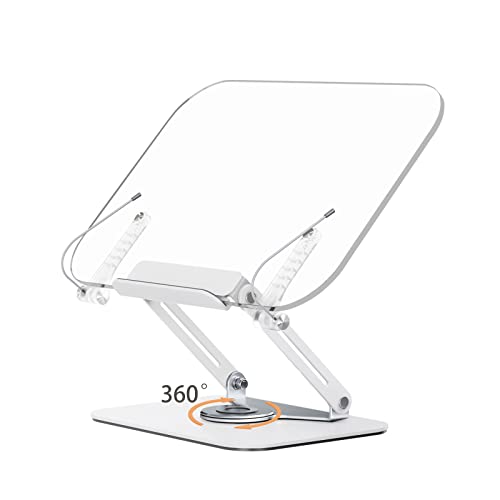
If you solve at a desk, a book stand keeps your puzzle book upright and tilted toward you, which is dramatically more comfortable for sessions over 30 minutes. Your neck and shoulders notice the difference fast. Sturdy enough to hold paperback puzzle books flat without them curling closed, and it folds flat for storage.
What we like
Keeps puzzle books upright and tilted — solves neck fatigue at a desk
Folds flat and travels well in a bag
What to know
Overkill for casual solvers; skip it if you're lying on a couch
Arm width varies by model; confirm it holds your book format before buying
A simple pencil pouch to keep your mechanical pencil, erasers, and spare lead together. Not essential, but once you have a $20 GraphGear you'll want to stop chasing it around your bag. Any compact zipper pouch works; this one is durable and slim enough to travel in a notebook bag without adding bulk.
What we like
Keeps pencil, erasers, and spare leads together in your bag
Slim enough not to add noticeable bulk to a notebook bag
What to know
Not necessary until you have a pencil worth protecting
Canvas versions wear at the zipper faster than nylon
Most beginner sudoku books don't teach you how to solve puzzles — they just give you puzzles. A good technique reference fills that gap. You don't need one until you've completed 50+ easy puzzles and started hitting walls on medium difficulty; at that point, learning 3-4 named techniques unlocks hundreds of puzzles that would otherwise feel impossible. One strategy book covers the entire skill ladder from beginner to expert.
Best starter
Grandmaster Puzzles
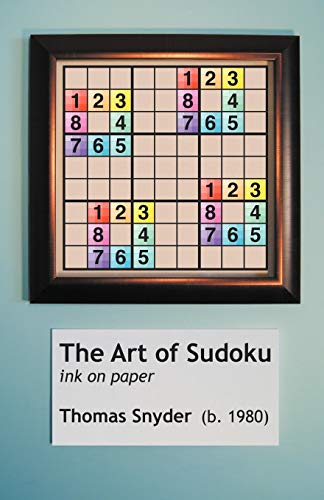
The Art of Sudoku by Thomas Snyder
$9.99 as of Jun 22, 2026
★★★★★Our rating· In Stock
Thomas Snyder is a three-time World Sudoku Champion. His approach book lays out solving techniques from naked singles to extreme strategies in a clean progression, with worked examples for each one. Better than YouTube tutorials because the reasoning is explained, not just demonstrated. One reference that covers the whole ladder.
What we like
Written by a three-time world champion; every technique is field-tested
Worked examples show the reasoning, not just the solution
What to know
Not a puzzle collection; read alongside a sudoku book, not instead
Intermediate/advanced techniques assume you've finished easy books first
A shorter, cheaper alternative to a full technique book. Covers the core techniques (naked singles, hidden singles, naked pairs, pointing pairs) in a beginner-friendly format without assuming prior puzzle experience. Good if you want to understand why you're stuck without committing to a full strategy manual.
What we like
Short and focused: covers essential techniques without overwhelming depth
Beginner-friendly language; no assumed puzzle knowledge
What to know
Doesn't cover advanced techniques; you'll need a fuller reference later
Independently published; production quality varies by edition
Sudoku isn't hard to start — pick up a book and go. But there's a specific skill ladder, with predictable walls and predictable breakthroughs, and knowing what's coming makes the first month a lot less frustrating.
Sudoku has a reputation for being easy to start. It is, but that phrase covers some distance. You can pick up a puzzle book today and start filling in numbers immediately. But “making progress” and “actually solving puzzles” are different things, and the gap between them closes faster when you understand the structure of what you’re learning.
This is what your first month actually looks like — the technique you need, the walls you’ll hit, and what to do when you get stuck.
Week one: The one technique that starts everything
Most beginners sit down with a sudoku and start looking at cells they can guess at. That’s the wrong approach, and it’s why puzzles seem to require luck.
Sudoku has no luck. Every puzzle has exactly one solution, reachable by pure logic. The reason it feels like guessing early on is that you haven’t learned to see the constraint structure yet.
The first technique to learn is called naked singles (also called “sole candidates”). It works like this: look at an empty cell. List every number that already appears in that cell’s row, column, and box. If only one number is missing, that’s the answer. Every easy sudoku is essentially a chain of naked singles — find one, fill it in, and it reveals more.
Spend week one just finding naked singles. Don’t worry about anything else. Easy puzzles will fall to this technique alone, often completely. When a puzzle doesn’t yield immediately, it means naked singles are hiding: you’ve filled in enough to create them, but haven’t scanned the grid carefully enough yet.
The mistake everyone makes: scanning only rows or only columns. Scan rows, then columns, then boxes — all three, for every pass through the grid.
After 15-20 easy puzzles, naked singles become automatic. The grid starts to feel like it has rhythm. This is when you need the second technique: hidden singles.
A hidden single is a cell where a particular number can only go in one place within a row, column, or box — even if that cell has multiple possible numbers. The cell isn’t obviously forced; the number is forced into it by elimination from other candidates.
Example: look at a row with several empty cells. Place a 7 somewhere in the puzzle and ask: given all the 7s already in this grid, which cells in this row could possibly hold a 7? If only one cell is possible, put it there. You’ve found a hidden single.
This shift — from “what can go in this cell” to “where can this number go in this region” — is the biggest early cognitive leap in sudoku. It feels awkward for a few puzzles, then suddenly obvious.
Once you can find both naked singles and hidden singles reliably, you can solve any easy puzzle. Medium puzzles will become accessible. You will still get stuck, but now when you’re stuck, you’re stuck at a real technique boundary, not just missing something obvious.
The wall most beginners hit around day 10 isn’t the puzzle. It’s switching between the two scans without forgetting to do both.
The jump from easy to medium sudoku requires a new tool: pencil marks (also called candidates).
On medium puzzles, naked and hidden singles dry up. You can stare at the grid for 20 minutes and see no obvious move. This isn’t the puzzle defeating you — it means you need to write down possibilities, not just fill in answers.
Pencil marks work like this: in each empty cell, write in small numbers every candidate that’s still possible for that cell. Fill in the whole grid with candidates. Now scan again. New patterns emerge that were invisible before: pairs of cells in a row that each share only the same two candidates (naked pairs), boxes where a number’s candidates are all in one row (pointing pairs). These patterns let you eliminate candidates even when you can’t directly fill in a number.
You don’t need to learn all the advanced techniques in month one. Learn pencil marks first. Just filling in candidates correctly and looking for naked pairs will unlock most medium puzzles.
The most common mistake: writing in candidates for some cells but not all, then trusting the incomplete picture. Either pencil-mark the whole grid or none of it. A partial candidate grid creates false confidence.
Week four: When to move on and what to do with hard puzzles
By week four, if you’ve been solving daily, easy puzzles finish in under 15 minutes and medium puzzles feel manageable with pencil marks. This is a good moment to assess.
Don’t push to hard puzzles yet unless medium ones feel routine. The jump from medium to hard requires techniques (X-wing, swordfish, coloring) that aren’t discoverable by intuition — you need to deliberately look them up, understand them, and practice them specifically. Trying to solve hard sudoku without those techniques leads to guessing, which loops you back to the approach that didn’t work in week one.
When you do move to hard puzzles, use a technique reference alongside the puzzle book. Sudopedia (sudopedia.enjoysudoku.com) lists every named technique indexed by difficulty. When you’re stuck, identify which technique should apply, read the explanation once, and see if you can find that pattern in your current grid. This is faster than staring at the puzzle for an hour.
The right move at a genuine wall: put the puzzle down and come back tomorrow. The grid will look different after a break. Not as a metaphor — your brain actually processes differently after rest.
Beyond sudoku: when variety helps
Around the 50-100 puzzle mark, some solvers find sudoku starting to feel mechanical — the techniques become pattern-matching rather than active reasoning. This is normal and not a problem.
The fix is variety. Nonograms (Picross) use identical constraint logic but a completely different grid structure, which makes familiar reasoning feel fresh again. Kakuro blends sudoku’s number constraints with a crossword-style grid. Mensa-style logic puzzles drop the grid entirely and ask you to reason from given clues.
None of these require learning sudoku all over. The core skill — eliminating impossibilities to find what must be true — transfers completely. Most experienced puzzle solvers rotate through 2-3 types and find each one sharpens the others.
Things you’ll fail at (and that’s expected)
Every beginner hits the same walls:
Filling in answers too confidently before candidates are clear. Pen-first solvers make this mistake constantly. The single biggest upgrade is switching to pencil and using it freely.
Scanning rows only. You’ll miss naked singles that were obvious in columns or boxes. Build the habit of triple-scanning (row, column, box) from the start.
Giving up just before the unlock. Stuck puzzles often have one move hiding in a corner of the grid. Before abandoning a puzzle, do a fresh candidate scan from scratch — not continuing from where you were, but starting over.
Moving to hard puzzles too fast. Every technique in sudoku builds on the previous one. Hard puzzles are not “more of the same” — they’re qualitatively different, and struggling on them without the right techniques is just frustrating, not educational.
Nobody solves every puzzle in their first month. Finishing 70% of the easy ones and 40% of the mediums is a strong first month. The percentage climbs fast.
Save your money
What you don't need yet
Beginners get pressured to buy a lot of stuff that doesn't help them play
better. Here's what we'd skip on day one.
Sudoku solver apps — They'll get you out of jams, but the hint button teaches nothing except dependence. Learn on paper first; the app becomes useful for checking your logic once you're experienced.
Hard or expert puzzle books before finishing an easy one — The jump from easy to hard sudoku requires specific techniques you can't discover by struggling. Complete an easy book first, then a medium one. The difficulty gap is real.
Specialty pencil cases and organizers — A simple zipper pouch or pencil holder is enough. Wait until you know you'll be solving daily before investing in a dedicated puzzle kit.
Speed-solving timers before you can reliably finish puzzles — Timing your solve adds pressure before it adds feedback. Get consistent at finishing first; then timing helps you track improvement.
Competition entry in year one — The World Sudoku Championship and regional events are genuinely fun, but the community timing apps and casual Discord challenges are a better starting point while you're still learning techniques.
First week
Your first seven days
A short, real plan to get from gear-on-doorstep to actually playing.
Order a beginner sudoku book — the Will Shortz Easy volume is the right start. · Buy
Learn one technique: naked singles. Search 'naked singles sudoku' and watch the first 5-minute video. That one technique solves most easy puzzles. · Learn
Solve your first puzzle without looking anything up. Even if you're stuck for 20 minutes. · Action
Set a daily slot: 20-30 minutes, same time, same spot. Sudoku is a habit hobby — consistency beats marathon sessions. · Action
Finish the whole book before buying another. Resist the urge to buy a variety pack on day three. · Action
FAQ
Common questions
Do I need to be good at math to solve sudoku?
No. The numbers 1-9 in sudoku are just symbols — you're never adding or multiplying. Replace them with letters or shapes and the puzzle works identically. Sudoku is pure logic, not arithmetic.
What's the actual difference between easy and hard sudoku?
Easy puzzles can be solved by finding cells where only one number is possible (called 'naked singles'). Hard puzzles require chains of logic where no single cell is obvious — you have to eliminate possibilities across multiple rows, columns, and boxes simultaneously. It's a qualitative leap, not just a quantitative one.
What are nonograms and how are they different from sudoku?
Nonograms (also called Picross or Griddlers) give you number clues for each row and column that tell you how many consecutive cells to fill in — and in what runs. When you solve the grid, a pixel-art image appears. The underlying constraint logic is similar to sudoku, but the payoff is visual rather than numerical.
How long should a sudoku puzzle take me?
Easy puzzles: 10-20 minutes for beginners, 3-5 minutes once experienced. Medium: 20-40 minutes. Hard: 45-90 minutes. These are rough benchmarks; solving speed improves quickly over the first 50 puzzles.
Is it okay to guess in sudoku?
Every valid sudoku has exactly one solution reachable by pure logic. Guessing is technically valid but teaches you nothing and can require lots of backtracking. If you're stuck, look up the technique that applies rather than guessing. Guessing is a crutch that prevents skill development.
Are there sudoku competitions?
Yes — the World Sudoku Championship is held annually and has national qualifying rounds. Cracking the Cryptic on YouTube covers competition-level puzzles if you want to watch before you enter. For casual competition, the Sudoku.com app has speed-solving leaderboards.
What's a good daily puzzle habit?
One puzzle a day, same time, no screen. Most serious solvers do it first thing in the morning or before bed. The NYT sudoku is a good daily format once you're past beginner level — it scales from easy Monday to hard Sunday, the same model as their crossword.
Cracking the Cryptic (YouTube) — The most popular puzzle channel on the internet. Mark Goodliffe and Simon Anthony solve everything from standard sudoku to bizarre variant puzzles. Excellent viewing once you know the basics; their enthusiasm is contagious.
Sudopedia — The definitive technique reference. Every named sudoku strategy, indexed by difficulty, with diagrams and worked examples. Bookmark this: when you're stuck on a puzzle and don't know why, this is where you find the name of the technique you need.
NYT Games — Sudoku — A new puzzle every day at five difficulty levels. The de facto daily standard for most solvers. Free tier includes the easy puzzle; subscriber access unlocks hard and expert.
r/sudoku — Active community for technique help and puzzle sharing. The wiki has a solid beginner guide and technique index. Post a photo when you're genuinely stuck — the community will explain the next step without spoiling the solution.
Logic Masters Germany — The main hub for competition-level puzzles and variant sudoku. More advanced than you need at the start, but worth knowing about when you've finished the basic books and want to see how deep the rabbit hole goes.
Grandmaster Puzzles — Puzzles and books by world champions, including Thomas Snyder. Quality is extremely high; these are not mass-market books. Subscribe to the daily puzzle newsletter when you're confident in medium-hard sudoku.
As an Amazon Associate, JustBeginning earns from qualifying purchases.
We may also earn commission from other affiliate programs linked on this
page. Editorial recommendations are independent; we don't choose
products based on commission rates.
Product prices and availability are accurate as of the date and time
indicated and are subject to change. Any price and availability
information shown on Amazon at the time of purchase will apply.
Our top pickWill Shortz Presents Ferociously Fun Sudoku: 200 Easy Puzzles