Speed reading sits between a party trick and a genuine skill, depending on how you approach it. Most people read at 200-250 words per minute; with deliberate practice, 400-500 wpm at solid comprehension is realistic. The tools that get you there cost almost nothing. Here's what actually works.
By Colin B. · Published June 11, 2026 · Last reviewed June 11, 2026
A single technique book is genuinely all you need to start. Add a good lamp, a stand, and a timer for a proper daily practice setup.
We earn commission on qualifying Amazon purchases — see our
affiliate disclosure.
Price tiers and budget totals shown above are editorial estimates;
actual Amazon prices vary.
At a glance
Our top pick in each category
The fastest path through this guide — each best-starter pick by category.
Scroll for the budget and upgrade alternatives.
Speed without retention is just skimming. The real goal is words per minute you actually absorb, not peak scanning speed. Any technique claiming 1,000+ wpm with full comprehension is marketing, not research. Realistic gains: 200 wpm to 400-500 wpm over 4-6 weeks of consistent daily practice.
Twenty minutes of deliberate daily practice beats a three-hour weekend marathon. Speed reading is a motor skill, like touch typing. Frequency matters more than total hours. Before buying anything, block 20 minutes each morning this week and practice with what you already have.
Measure your starting point before you do anything else. Find a book you haven't read, read for exactly three minutes, count the words, divide by three. That's your baseline WPM. Write it down now so you have a real number to beat in four weeks.
The speed reading book market is full of inflated claims. Three books actually deliver: one for beginners who want a drill-based daily program, one for readers who want the most rigorous method available, and one that takes the opposite view entirely and argues comprehension is the foundation speed must be built on. All three are worth reading. Start with the first.
Technique Books — what's the difference?
A few common shapes, each making a different trade.
Drill-Based / Speed-First
Daily timed exercises that build eye speed, then layer in comprehension.
Best for
Complete beginners
Time/day
15-20 min
Timeframe
2-4 weeks to see gains
Best for Anyone who wants a structured daily program and measurable WPM gains quickly
Tradeoff Speed gains arrive before comprehension gains; expect a retention dip early on
Written by a corporate reading instructor, this book gives you a specific 10-day drill program rather than vague advice. Day one you learn to track with your hand; day three you start timed sprints; by day eight you're working on skimming and scanning as deliberate techniques. Short exercises fit a 20-minute window. Most people see measurable WPM gains within two weeks of following it.
What we like
10-day program with specific daily drills you can actually follow
Teaches hand-pacing, the most effective basic eye-speed technique
Short exercises fit a 20-minute daily practice window perfectly
What to know
Examples use newspaper print; you'll need to adapt to your books
Retention and memory techniques are secondary, not primary focus
The most drill-intensive speed reading book on the market, written by a teacher who ran reading courses for decades. Exercises build progressively and the pacing is relentless. If you've finished a beginner book and want a full speed curriculum, this is where serious readers go next.
What we like
Most systematic drill progression of any speed-reading book available
Exercises build on each other deliberately; skipping ahead doesn't work
Written by a classroom reading instructor with decades of real students
What to know
Requires 30-45 minutes per session; not a casual 10-minutes-a-day book
Physical book only; no digital edition means no Kindle practice option
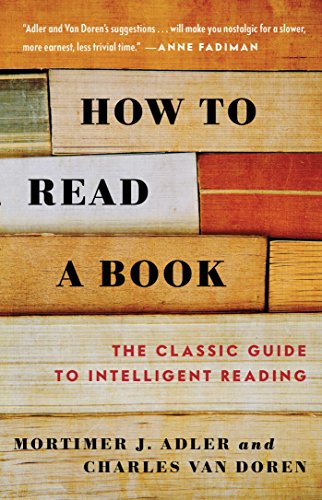
Not a speed reading book, but the one serious readers always end up recommending. Adler argues most people read passively and that comprehension comes from active engagement with structure, argument, and vocabulary. Once you have speed, this is what stops you from reading fast and retaining nothing.
What we like
The definitive book on comprehension, the half of reading speed ignores
Structural reading framework dramatically improves retention of nonfiction
Pairs perfectly with a speed technique book: speed + Adler = full package
What to know
Not a beginner book; finish a speed-training title first
Philosophical tone feels slow given how concisely the ideas could be stated
Eye strain is the main reason people cut reading sessions short. Dim, harsh, or flickering light makes your eyes work harder than necessary and drains focus faster. A good adjustable desk lamp with tunable color temperature eliminates most of it. This is the boring infrastructure that makes 90-minute practice sessions sustainable.
Best starter
TaoTronics
LED Desk Lamp
$$
★★★★★Our rating
Five brightness levels, three color temperature modes, a USB charging port, and a memory function that restores your last setting. The arm adjusts to direct light exactly where you need it without glare bouncing off the page. For a focused reading setup at under $40, this covers everything that matters.
What we like
5 brightness levels and 3 color temps give real eye-comfort control
USB charging port on the base keeps your phone out of reach but topped up
Memory function restores your preferred setting every time you turn it on
What to know
Touch controls trigger easily; can bump brightness accidentally mid-session
Arm reach is moderate; won't light a large desk from a single corner
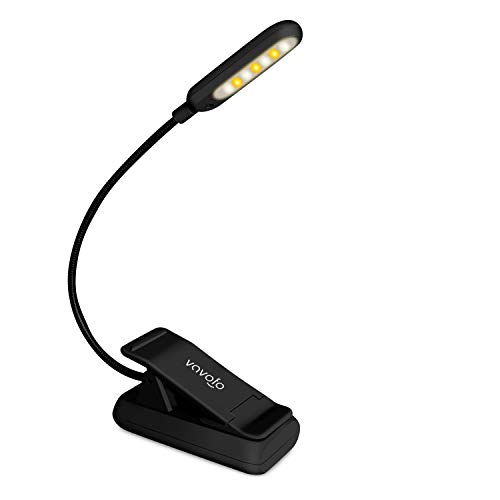
A rechargeable clip-on light with a flexible neck, nine brightness levels, and two color temperatures. For reading in bed, travel, or any spot where a desk lamp isn't practical, this is the right answer. The clip holds firmly on hardcover spines and grips a book stand equally well.
What we like
Rechargeable via USB-C; no AA batteries to track down
Clips to book spine or stand and lights the page without disturbing others
What to know
Four-hour battery on medium brightness; needs daily recharging
Flexible neck loses tension after several months of frequent repositioning
Built specifically for extended reading and screen use, with a wide 90-degree light spread that eliminates harsh page shadows. The auto-brightness sensor adjusts output as the room changes. For anyone reading more than an hour daily, the cumulative eye-fatigue reduction over a month is genuinely noticeable.
What we like
Auto-dimming sensor adjusts as room light changes; you never fiddle with it
90-degree arc eliminates page shadows even with a book on a stand
What to know
$100+ price tag; only makes sense for committed daily readers
Tall footprint needs a real desk with clearance, not a crowded side table
Holding a book in your hands forces you to hunch and restricts the hand-pacing technique that speed reading depends on. A stand puts the page at eye level, keeps your neck neutral, and frees both hands. For anyone practicing 30+ minutes daily, this is one of the highest-value low-cost upgrades available.
Best starter
Vivo
Tilting Bamboo Book Stand
$
★★★★★Our rating
Bamboo-and-metal construction with a proper adjustable tilt angle (flat to nearly vertical), a stable wide base, and page clips that hold any book thickness. The angle holds firm under a heavy hardcover without creeping. Under $30 and it will outlast any cheap plastic stand by years.
What we like
Bamboo-and-metal frame stays rigid under heavy hardcovers
Wide angle range covers everything from nearly flat to nearly vertical
Page clips hold the book open hands-free without tape or weights
What to know
Page clips leave faint pressure marks on glossy dust jacket covers
Base takes up more desk real estate than compact plastic alternatives
An acrylic-and-aluminum adjustable stand under $15 with a 360-degree rotating base and page clips. Lighter and more portable than metal stands. Folds flat for storage. If you're not sure you'll use a stand consistently, start here before spending more.
What we like
Under $15 with a 360-degree rotating base for flexible positioning
Acrylic construction is lighter and scratch-resistant on desk surfaces
What to know
Lightweight means it can shift if bumped during a pacing session
Smaller base; heavy hardcovers need extra support from the page clips
Seven locking angle positions, a fold-flat profile, and a platform wide enough for oversized textbooks. If your practice materials include heavy reference books, printed binders, or large-format texts, the sturdier frame is worth the extra spend over a basic stand.
What we like
Seven locking angle positions; always finds the right height
Wide platform holds oversized textbooks and binders without tipping
What to know
Heavier than simpler stands; this lives on a desk, not in a bag
Designed for laptops; book page clips are not included
Speed reading is a measured skill. If you aren't timing yourself, you're guessing at progress, and guessing demoralizes faster than a real plateau. A dedicated visual timer is more useful than your phone: it doesn't interrupt you with notifications, and the visual countdown element reinforces the urgency that drives real speed gains.
Best starter
Time Timer
Original 8 Inch
$$
★★★★★Our rating
A visual timer where a red disk disappears as time passes, giving you a constant sense of how much remains without number-checking. Beloved by educators, therapists, and focused-work practitioners for decades. For 15-minute reading sprints, seeing the disk shrink keeps you in the session instead of reaching for your phone.
What we like
Visual countdown keeps you in the reading zone without number-checking
No phone required; no notifications to pull you out of focus
60-minute range covers both short sprints and longer timed sessions
What to know
Audible mechanical click at the end; no silent mode for shared spaces
Analog only; no built-in session logging or WPM tracking
A simple count-up and countdown timer under $15. Not elegant, but it does the one job: tells you when your 20-minute sprint is over. The count-up mode is useful for open-ended benchmarking sessions where you want to record elapsed time without a preset limit.
What we like
Under $12 with both count-up and countdown modes in one unit
Magnetic back sticks to a lamp base or metal shelf at eye level
What to know
Loud beep alarm with no volume adjustment
Buttons feel cheap; some units report button failures within a year
Colored transparent strips that overlay on a page to reduce visual crowding and help the eye track lines without skipping back. Used in educational reading programs for decades. Some adult speed readers find them genuinely useful; others notice no effect. Worth a few dollars to find out which you are.
What we like
Reduces line-skipping and visual crowding for many readers
Multiple colors let you find which tint works for your eyes specifically
What to know
No measurable effect for some readers; response is purely individual
Slightly awkward to hold in place while turning pages
Speed reading has a reputation problem. On one side you have infomercial promises of 2,000 words per minute with perfect comprehension. On the other, skeptics who say it’s all a scam. The reality sits in the middle: you can realistically double your reading speed while keeping good retention, and the method to get there is unglamorous (the same kind of deliberate motor-skill practice that makes you a faster typist or a better driver).
Here’s what your first 30 days actually look like.
Before you start: measure yourself
Before you change anything, establish a baseline. Find a book you haven’t read. Start a timer, read for exactly three minutes at your normal pace, count the words you covered, divide by three. That’s your words per minute.
Most adults land between 200 and 250 wpm without training. If you’re at 150, you have more room to grow. If you’re at 300, you’re already a faster-than-average reader. Either way, write the number down with today’s date. You’ll want it in four weeks.
Don’t try to impress yourself on this test. The point is an accurate baseline, not a flattering one.
The single most effective beginner technique is also the one that feels most childish: using your finger (or a pen) to track under each line as you read.
Here’s why it works. The adult reader’s default habit is to let the eye wander: backward to recheck a word, forward to skip ahead, sideways to scan context. All of this is involuntary, mostly unconscious, and it slows reading down significantly. A physical guide forces the eye to move forward at a consistent pace and stops the backward drift called regression.
In your first week, do this:
Pick a book you’re genuinely interested in. Not a textbook you hate. Not a novel you’re reading for obligation. Material you actually want to understand.
Read for 15 minutes with a finger pacer, moving your finger at a pace that feels slightly uncomfortable, faster than you’d naturally go but not so fast you’re losing comprehension.
Stop. Summarize in one sentence what you just read. If you can’t, you pushed too fast. Dial back 10%.
Do this every day. The goal in week one is not measurable speed gains. The goal is making the hand-trace feel automatic so that by week two, you’re not thinking about the technique.
Most people will see a small, real WPM gain by day five. Don’t get excited yet. That initial bump is partly technique and partly the Hawthorne effect of paying attention to something for the first time. The real gains come later.
Week two: pushing the pace
By the second week, the hand motion should feel natural. Now you start deliberately pushing against your comfort zone.
The technique here is called pacing above your reading speed: move your finger faster than you can actually comprehend the text for 2-3 minutes, then drop back to a pace where you can follow again. This trains your eye muscles to move more fluidly and gradually expands the range of what “readable” feels like.
It is uncomfortable. Your comprehension will drop during the faster segments. This is fine. You’re not trying to absorb those passages; you’re training the mechanism that will carry you at higher speeds once your brain catches up.
Structure your sessions like this in week two:
5 minutes at a comfortable pace (your new normal, not your old baseline)
2 minutes pushing faster than you can follow
5 minutes at comfortable pace again
2 minutes pushing
Finish with 5 minutes at comfortable pace
Retest your WPM at the end of week two. Most people see a 30-50% gain from baseline. Some see more. The spread is wide because it depends heavily on how much regression you were doing before. Readers who were unconsciously backtracking a lot will see the fastest early gains.
Around week two or three, many people hit a wall. Their WPM is up but they feel like they’re missing things. This is real, and it’s temporary, but it’s worth understanding what’s actually happening.
Reading speed and reading comprehension are trained on slightly different timescales. Speed is a physical skill: eye movement, saccade distance, peripheral word recognition. Comprehension is a cognitive skill: working memory, inference, prior knowledge. When you push speed up quickly, the physical apparatus gets there before the cognitive apparatus catches up.
The fix is not to slow back down. The fix is to add active comprehension habits alongside the speed training.
After each reading session, spend five minutes on recall. Put the book face down and write (or say aloud) everything you remember from what you just read. Don’t check. Just reconstruct. This practice, called retrieval practice or the testing effect, is the single most evidence-backed method for improving retention of anything you read.
Do retrieval practice every session in weeks two and four. Skip it in weeks one and three if needed, but not both.
Week three: chunking
The third week is where speed reading starts feeling less like effort and more like a different way of reading.
Most slow readers process text one word at a time. Trained readers process words in groups, called chunking or phrase reading. Your eye lands on a fixed point and takes in two, three, or four words at once, not by seeing a wider blur but by recognizing the phrase as a unit of meaning.
You can’t directly practice this by trying to chunk. You practice it by moving your finger faster and trusting your brain to catch up. The brain will. The phrase-reading mode is already in there; you use it in everyday speech. Speed reading training unlocks the same capacity for text.
One useful drill: read a paragraph once at normal pace. Then read it a second time at twice the pace, just trying to get the gist. Then once more at normal pace. Most people find that the third pass is faster than the first, even without deliberate effort. The second pass, fast and incomplete, primes the pattern-recognition system.
Week four: test yourself honestly
At the end of week four, rerun the same baseline test: three minutes, same style of material, count the words. Compare to your week-one number.
Most people who practiced consistently will have doubled their WPM. Some will be at 1.5x. A few will be at 2.5x. The number matters less than the trajectory: if you’ve been building daily habits and testing honestly, you’re set up to keep improving.
What doesn’t work: practicing only with easy material. You’ll get fast at easy material and slow at hard material. Deliberately practice on books that challenge you a little. The compression-and-expansion cycle of hard-then-easy material builds the most durable speed.
What comes next
After 30 days, you have the motor skill. The next gains come from comprehension work.
Mortimer Adler’s How to Read a Book is the best resource for this part of the journey. Adler’s argument is that most people read passively; they process words but don’t interrogate argument, structure, or evidence. His analytical reading framework, once internalized, makes every book more accessible and every fast reading session more productive.
The combination of a speed technique and Adler’s comprehension framework is what actual fast readers are using, whether or not they call it that.
Save your money
What you don't need yet
Beginners get pressured to buy a lot of stuff that doesn't help them play
better. Here's what we'd skip on day one.
Speed reading course ($200-500) — The same techniques covered in these courses are in the books above for $20. Save the seminar money until you've finished a book and know what technique you actually want to develop.
Premium speed reading app subscriptions — Free tiers of Spreeder, Readsy, and similar RSVP tools are identical to paid tiers for early practice. Pay only once you're using the tool daily and have hit the free limits.
Blue light glasses — Fix your lighting environment first. Blue light glasses address a symptom; a good lamp with warm color temperature removes the cause.
An eye-tracking device — Commercial gaze-tracking hardware is a novelty at this stage. Your finger does the same job as a pacer and costs nothing.
A dedicated study desk — A kitchen table with a book stand and a good lamp is better than most purpose-built reading setups. Invest in the tools, not the furniture.
First week
Your first seven days
A short, real plan to get from gear-on-doorstep to actually playing.
Measure your baseline WPM today before doing any training. · Action
Order the technique book so it arrives before the weekend. · Buy
Set up a consistent reading spot with direct, adjustable light. Natural window light works; so does a good desk lamp. · Action
Read the first two chapters of the technique book on the first day you have it. · Learn
Do your first timed sprint on day two: 15 minutes of hand-paced reading on material you know well. · Action
Retest your WPM at the end of day seven. Write down the number next to your baseline. · Action
FAQ
Common questions
Does speed reading actually work?
Yes, with an important caveat. You can realistically double your reading speed while maintaining comprehension. Claims of 1,000+ wpm with full retention are not supported by research; that speed forces your brain into skimming mode. Realistic, sustainable gains put most people in the 400-600 wpm range after 4-6 weeks of daily practice.
What WPM is considered fast for a beginner?
Most adults read 200-250 wpm without training. College-level readers average 300 wpm. Reaching 400-500 wpm with solid comprehension is a realistic 6-week goal. Beyond 600 wpm, comprehension starts to degrade for most people regardless of technique.
Should I use my finger as a pacer?
Yes, at least to start. Running your finger under each line at a slightly uncomfortable pace forces your eyes to keep up instead of drifting back. It feels slow and deliberate at first; after a few sessions it becomes automatic. Most speed reading books teach this as step one.
Will my comprehension suffer?
In the first week or two, yes. Your brain is adjusting to a new input speed and retention dips temporarily. Stick with it. By week three, comprehension typically returns to baseline at the new higher speed. The drill-based books account for this in their progression.
How long until I see real improvement?
Most people see a measurable WPM gain within 5-7 days of daily practice. Significant improvement, meaning doubling your baseline speed at good comprehension, typically takes 4-6 weeks. The variable is consistency: 20 minutes every day beats 2 hours on the weekend, every time.
Do I need to read physical books or does this work with ebooks?
Both work, but physical books are easier for early hand-pacing practice. Ebooks work better for RSVP (rapid serial visual presentation) techniques where words flash one at a time. The beginner books we recommend are designed for print, but the principles transfer to digital once you have the technique down.
Spreeder — Free browser-based RSVP speed reader. Paste any text and practice at any target WPM. The free version is sufficient for months of training.
ReadSpeeder — Clean, browser-based speed reading trainer with WPM testing built in. Good for establishing and tracking your baseline.
Kwik Brain Podcast (Jim Kwik) — Popular podcast on memory, speed reading, and learning techniques. Accessible and practical; more applied than academic.
r/speedreading — Active community. Good for technique questions and hearing real progress reports from people at every level. Skip the miracle-claim posts.
As an Amazon Associate, JustBeginning earns from qualifying purchases.
We may also earn commission from other affiliate programs linked on this
page. Editorial recommendations are independent; we don't choose
products based on commission rates.
Product prices and availability are accurate as of the date and time
indicated and are subject to change. Any price and availability
information shown on Amazon at the time of purchase will apply.