Pen turning is the quickest route into woodturning: a small lathe, a block of wood or acrylic, and in an hour you're holding a pen you made. Pens make great gifts and teach every core lathe skill. Here's which mini lathe to buy, the mandrel and bushings that hold the blank, which pen kits to start with and how to get a glassy finish.
By Colin B. · Published November 8, 2026 · Last reviewed November 8, 2026
A WEN mini lathe, a mandrel kit with drill bit and bushings, ten slimline kits, wood blanks, a budget carbide tool set and medium CA glue come to about $364. Our picks, with a better tool set, thin CA for finishing and Micro-Mesh pads, are about $415.
We earn commission when you buy through links on this page, including
Amazon. See our affiliate disclosure.
Price tiers and budget totals shown above are editorial estimates;
actual prices vary.
At a glance
Our top pick in each category
The fastest path through this guide — each best-starter pick by category.
Scroll for the budget and upgrade alternatives.
Start with slimline kits. They use one 7mm drill bit, thin blanks and simple hardware, so they're the cheapest and most forgiving pens to learn on. Once you can turn a slimline cleanly, every other kit is a variation.
Wood or acrylic? Wood blanks are cheaper, easier to turn and forgiving of a dull tool. Acrylic blanks give bright colors and a glassy shine but chip if you're heavy-handed and need careful sanding. Learn on wood.
You need a way to drill straight holes. Blanks have to be drilled down the center for the brass tube. A drill press is ideal; a vise and a steady hand drill can work for slimlines. Factor that in if you don't have a drill press already.
A mini lathe with variable speed is the right size for pens and small projects. Look for a #2 Morse taper in the headstock and tailstock, which pen mandrels need, and variable speed so you can turn slower while roughing and faster while finishing. More power and a longer bed matter for bowls and spindles, not pens.
Best starter
WEN
3421 3.2-Amp 8" by 12" Variable Speed Mini Benchtop Wood Lathe
$238.48 as of Nov 8, 2026
★★★★★Our rating· In Stock
A compact benchtop lathe with variable speed, an 8-inch swing and 12 inches between centers. Plenty of capacity for pens, bottle stoppers and small bowls, at a price that makes sense for a new hobby. About $238. 1,400+ reviews at 4.4 stars.
A heavier mini lathe with a 10-inch swing, 18 inches between centers and a 1/2 hp motor. A good choice if pens might lead to bowls and larger spindle work. About $400. 206 reviews at 4.5 stars.
A pen mandrel is a steel rod that fits the lathe's headstock and holds the drilled blanks while you turn them. Bushings sit on either side of each blank and show you exactly how thin to turn so the pen parts fit. A mandrel saver supports the end of the mandrel at the tailstock so it doesn't bend and spoil your concentricity.
Everything to mount your first pen: a #2 Morse taper mandrel, a mandrel saver tailstock center, a 7mm drill bit and five 7mm bushings. About $30. 610 reviews at 4.7 stars.
002/MT2 Pen Mandrel Saver with TRIM-001 Barrel Trimming System and Tube Insertion Tool
$59.85 as of Nov 8, 2026
★★★★☆Our rating· In Stock
A mandrel kit with a 7mm drill bit and live mandrel saver, plus a universal barrel trimming system that squares blank ends to the tube and a tool for pressing tubes in straight. Squared ends are the secret to pens without gaps. About $60. 69 reviews at 4.3 stars.
A pen kit is all the hardware: brass tubes, the tip, the twist mechanism, the clip and the cap. You supply the blank. Slimline kits are the classic first pen because they use thin blanks, one 7mm drill bit and simple assembly. Bolt action, cigar and fountain pen kits come next and need their own bushings and drill sizes.
Best starter
BRW
10-Pack 7mm Slimline Pen Kits, 5 Finishes
$28.99 as of Nov 8, 2026
★★★★★Our rating· In Stock
Ten slimline twist pen kits in five plating finishes, enough to practice, make mistakes and still have gifts left over. Uses the 7mm drill bit and bushings from a standard mandrel kit. About $29. 228 reviews at 4.4 stars.
PKCPBAPAK Bolt Action 30 Cal Ballpoint Pen Kit Starter Set
$39.95 as of Nov 8, 2026
★★★★☆Our rating· In Stock
Three bolt action pen kits that look like a rifle bolt, plus the matching bushing set. A hugely popular gift pen once you've mastered slimlines. Blanks and the drill bit are not included. About $40. 401 reviews at 4.7 stars.
Pen blanks are small square sticks, usually about 3/4 inch square and 5 inches long. Wood is the easiest start: it cuts cleanly with carbide tools and forgives a few catches. Acrylic and acetate blanks give vivid color and depth but chip if you push too hard, so take light cuts and keep tools sharp.
Best starter
Generic
Exotic Wood Pen Blanks 12-Pack
$17.49 as of Nov 8, 2026
★★★★★Our rating· In Stock
Twelve wood blanks in a mix of species, including bloodwood, so you can see how different woods turn and finish. Enough for several slimline pens. About $17. 326 reviews at 4.4 stars.
Ten colorful acrylic acetate blanks for when you're ready to try plastics. They polish to a deep shine without a CA finish. About $25. 43 reviews at 4.7 stars.
Carbide tools are the easiest way to start turning. Instead of sharpening a traditional gouge, you rotate or replace a small carbide insert when it dulls. A square cutter roughs a blank round, a round cutter shapes and a pointed or diamond cutter adds detail. Traditional skew chisels give a cleaner finish but take practice and a sharpening setup.
Best starter
Generic
Carbide Tipped Wood Turning Tools Set (Rougher, Finisher, Detailer)
$49.98 as of Nov 8, 2026
★★★★★Our rating· In Stock
A set of carbide-tipped turning tools with rougher, finisher and detail cutters, among others. No sharpening needed: rotate the insert when it dulls. A complete starting kit for pens and small projects. About $50. 682 reviews at 4.6 stars.
Wood Lathe Tools Set with Carbide Lathe Tools and Bowl Sander
$77.89 as of Nov 8, 2026
★★★★☆Our rating· In Stock
A larger carbide set with a bowl sander included, for turners who expect to move from pens into bowls and bigger spindles. About $78. 89 reviews at 4.6 stars.
CA glue does two jobs in pen turning. Medium CA glues the brass tubes into the drilled blanks. Thin CA, built up in several layers and polished, gives wood pens the hard, glossy finish you see on store-bought pens. Micro-Mesh pads take sanding from scratch-free to mirror-smooth, especially on acrylics.
Best starter
STARBOND
Medium Super Glue Pro Kit (2 oz)
$14.79 as of Nov 8, 2026
★★★★★Our rating· In Stock
A medium-viscosity CA glue with precision tips, the right thickness for gluing pen tubes into blanks. It gives you a few seconds to slide the tube in straight. About $15. 10,300+ reviews at 4.7 stars.
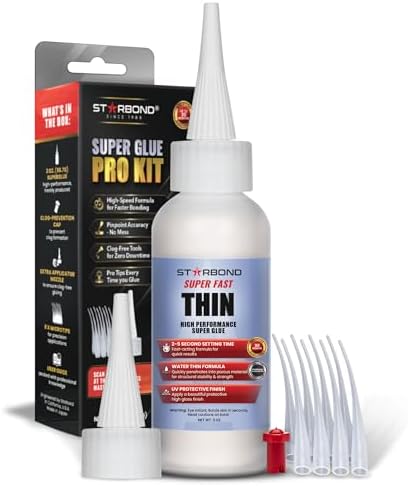
Thin CA for the classic pen finish: wipe on a few coats with a paper towel while the lathe spins slowly, then sand and polish. About $15. 15,000+ reviews at 4.6 stars.
Cushioned sanding pads in very fine grits that take a CA or acrylic finish from hazy to mirror-bright. Rinse and reuse for many pens. About $21. 2,600+ reviews at 4.7 stars.
Pen turning is best learned by making a lot of pens. Here's how to get through your first ten slimlines: safe setup, drilling and gluing, turning to the bushings, a glossy finish and assembly, with what to change on each one.
Every pen turner’s first pen has a flaw: a gap, a bump, a cloudy finish. That’s fine. The skills come from repetition, and slimline kits are cheap enough that ten pens is a sensible first goal.
Before pen one: Set up safely
Bolt the lathe to a solid bench at elbow height. Wear safety glasses and a dust mask, tie back hair and roll up sleeves. Keep the tool rest close to the work, about an eighth of an inch away, and always spin the blank by hand before switching on.
Pens 1 to 3: Drilling, gluing and squaring
Cut a blank into two pieces a little longer than the kit’s tubes. Mark which ends meet in the middle so the grain lines up. Clamp each piece and drill straight down the center with the 7mm bit, clearing chips often so the bit doesn’t overheat.
Scuff the brass tubes with sandpaper, coat them with medium CA and push them in with a twist. Once the glue cures, square the ends flush with the tubes using a barrel trimmer or disc sander. This single step prevents most gaps in finished pens.
Slide the bushings and blanks onto the mandrel in the order the kit shows, snug the mandrel saver against the end and start at a moderate speed. Rough the blank round with the square carbide cutter using light, sweeping passes.
Then shape. Turn down until the blank is just proud of the bushings, then take the last few passes very gently until it’s flush. Try a gentle curve or a slight bead; slimlines look best with a slim waist toward the center.
Pens 7 to 8: Sanding and finishing
Sand through the grits, from about 180 up to 600, with the lathe at low speed. Stop and sand along the length between grits to remove circular scratches.
For a glossy finish, apply a few coats of thin CA with a folded paper towel while the lathe spins slowly. Let it cure, then level any ridges with fine sanding or Micro-Mesh pads and polish. Practice on spare blanks until it’s even.
Press the parts together in a vise with wood blocks or soft jaws, following the kit diagram exactly, especially the depth of the twist mechanism. Write with it, then make two more as gifts. Giving pens away is the best motivation to keep improving.
What not to worry about yet
Don’t worry about fountain pens, exotic resin blanks, traditional gouges or a bigger lathe. Make ten slimlines and you’ll know exactly what to try next.
Around $360 to $420 for a mini lathe, mandrel kit, carbide tools, pen kits, blanks and glue. The lathe is most of that. After setup, a slimline pen costs only a few dollars in hardware and wood.
Do I need a drill press?
It's the easiest way to drill straight holes, which matter for a pen that looks right. Slimlines can be drilled with a hand drill and a vise if you're careful, but a drill press saves many ruined blanks.
What's the best first pen kit?
A 7mm slimline. It uses one drill bit, a thin blank and simple hardware, and most mandrel kits come with the right bushings. Once you can turn slimlines cleanly, move up to bolt action or cigar kits.
How do I get a glossy finish on a wood pen?
Sand to about 600 grit, then apply several thin coats of thin CA glue with a paper towel while the lathe spins slowly. Let it cure, level it with fine sanding or Micro-Mesh, and polish to a shine.
Why is there a gap between the pen parts?
Usually the blank ends weren't squared to the tubes before turning. A barrel trimmer or disc sander squares them so the parts meet cleanly. Turning past the bushings can also leave a step.
Is pen turning safe?
With basic care, yes. Wear safety glasses and a dust mask, keep sleeves and hair away from the lathe, use light cuts and keep the tool rest close to the work. Ventilate when using CA glue.
JustBeginning earns commission from affiliate programs. As an Amazon
Associate, we earn from qualifying purchases. This costs you nothing
extra and doesn't change our recommendations.
Prices and availability are accurate as of the date and time
shown and can change; the price on Amazon when you buy is what
applies.
How this works.
Our top pick3421 3.2-Amp 8" by 12" Variable Speed Mini Benchtop Wood Lathe


 Best starter