Gel plate printing is monoprinting without a press: roll paint onto a squishy gel plate, press in stencils, leaves or textures, lay paper on top and pull a one-of-a-kind print. It's fast, forgiving and addictive. Here's which plate size to buy, the brayer and paints that work, and the papers and stencils worth having.
By Colin B. · Published November 8, 2026 · Last reviewed November 8, 2026
A Gel Press 8x10 plate, a 4-inch brayer, a craft paint set and deli paper come to about $59. Our picks, the Gelli Arts plate, a 6-inch brayer, Liquitex paints, stencils and a mixed media pad, are about $109.
We earn commission when you buy through links on this page, including
Amazon. See our affiliate disclosure.
Price tiers and budget totals shown above are editorial estimates;
actual prices vary.
At a glance
Our top pick in each category
The fastest path through this guide — each best-starter pick by category.
Scroll for the budget and upgrade alternatives.
Start with an 8x10 plate. It's big enough for journal pages and cards, small enough to fit on a kitchen table, and it's the size most tutorials use. Smaller plates are fun for travel, bigger ones for large art paper once you're hooked.
Ordinary acrylic paint works. You don't need special printmaking ink. Regular acrylics give crisp layers because they dry fast; open or slow-drying acrylics give you more time to work. Start with a cheap set and see what you like.
Paper choice changes everything. Smooth, lightweight paper picks up the most detail, which is why printers love deli paper and copy paper. Heavier mixed media paper is better for finished pieces and collage.
Gel printing plates are flexible, reusable slabs that grab paint and release it cleanly onto paper. Gelli Arts and Gel Press are the two main makers, and both are excellent. Plates last for years if you keep them covered and away from sharp tools. Size is the real decision: the plate sets the largest print you can pull.
Gel plates — what's the difference?
A few common shapes, each making a different trade.
6x6 or smaller
Cheap, portable and ideal for cards, tags and testing ideas.
Typical price
About $15 to $20
Print size
Cards, tags, ATCs
Space
Any table
Best for Trying the hobby, travel, small projects
Tradeoff You'll want a bigger plate quickly
8x10
The all-rounder. Fits most stencils and journal pages.
The plate that made gel printing popular, in the size most tutorials use. Reusable, durable and easy to clean with a baby wipe. About $33. 3,900+ reviews at 4.8 stars.
A big plate for prints you'll frame, large collage papers and full sheets of art paper. Pair it with a 6-inch or wider brayer. About $67. 3,900+ reviews at 4.8 stars.
A brayer is the roller that spreads paint into a thin, even layer on the plate. Soft rubber brayers are the standard for gel printing because they flex into texture and don't dent the gel. Match the roller width to your plate: a 6-inch brayer covers an 8x10 plate in two passes, a 4-inch takes three or four.
Best starter
Speedball
Deluxe Soft Rubber Brayer (6 Inches)
$24.99 as of Nov 8, 2026
★★★★★Our rating· In Stock
A soft 40/42 durometer rubber roller on a heavy-duty steel frame. The 6-inch width spreads paint quickly and evenly across an 8x10 plate. About $25. 3,200+ reviews at 4.8 stars.
What we like
Right width for an 8x10 plate
Soft rubber flexes over texture
Sturdy steel frame
What to know
Rest it on its frame so the roller doesn't flatten
A simple 4-inch soft rubber brayer that does the job for less. Fine for small plates and for spot-rolling a second color. About $15. 289 reviews at 4.7 stars.
Gel printing uses ordinary acrylic paint, rolled thin. Student and craft acrylics work well; you'll go through a lot of paint, so value matters more than artist-grade pigment at first. Fast-drying acrylics let you stack layers quickly, while slow-drying open acrylics give you more time to draw into the paint or pull ghost prints.
Best starter
Liquitex
BASICS Acrylic Paint Set, 12 x 22ml Tubes
$22.97 as of Nov 8, 2026
★★★★★Our rating· In Stock
Twelve colors of a trusted student acrylic with good pigment and smooth body that rolls out well. A great way to learn which colors you reach for. About $23. 14,000+ reviews at 4.7 stars.
Twelve 2-ounce bottles of craft acrylic for about the price of lunch. Thinner and less intense than Liquitex, but perfectly fine for practice prints and backgrounds. About $12. 2,400+ reviews at 4.8 stars.
The same Liquitex BASICS colors in 4-ounce tubes, more than five times the paint of the small set. The value buy once you're printing every week. About $62. 14,000+ reviews at 4.7 stars.
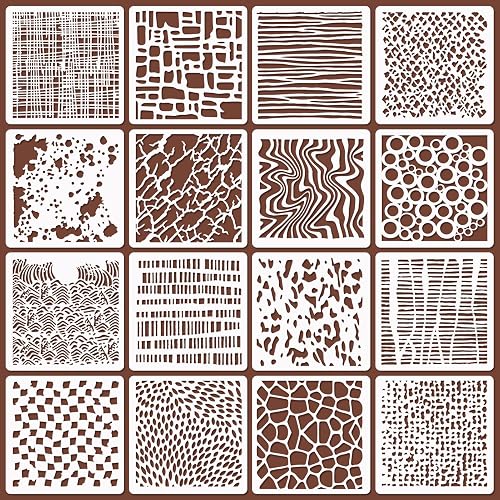
Stencils, masks and texture tools are how you make marks on the plate. Lay a stencil on wet paint and pull a print to get the negative, then lift the stencil and print again for the positive. Combs, bubble wrap, leaves, lace and string all work too, so raid the kitchen drawer and recycling bin before buying lots of tools.
Best starter
Generic
16 Pcs Layering Stencils for Painting, 6"x6" Mixed Texture
$9.89 as of Nov 8, 2026
★★★★★Our rating· In Stock
Sixteen 6x6 texture stencils with dots, waves, bubbles and other patterns that layer well on an 8x10 plate. A cheap way to build a library of marks. About $10. 86 reviews at 4.8 stars.
16pc Stencils for Painting, 6x6 Small Mixed Texture
$8.39 as of Nov 8, 2026
★★★★☆Our rating· In Stock
Another set of sixteen 6x6 texture stencils, including burlap and grid patterns. A good second set to mix with the first. About $8. 110 reviews at 4.5 stars.
Small texture tools from Gelli Arts that you press into wet paint on the plate to add patterns. Great for adding detail without buying more stencils. About $20. 201 reviews at 4.6 stars.
Thin, smooth paper picks up the most detail, so many printers pull dozens of practice prints on deli paper or plain copy paper. Heavier mixed media paper holds up better to multiple layers and is the choice for finished pieces, cards and journal pages. Avoid very textured watercolor paper at first, because it misses fine detail.
Best starter
Canson
XL Mix Media Pad 9x12
$18.10 as of Nov 12, 2026
★★★★★Our rating· In Stock
A heavy, smooth mixed media paper that takes many layers of acrylic without buckling, at a price that won't make you precious about it. The 9x12 size covers an 8x10 plate with a little border. About $18. 48,000+ reviews at 4.8 stars.
Thin, dry waxed deli paper that grabs fine detail and turns translucent when you glue it, which makes it a favorite for collage and art journals. A hundred sheets for under $7. About $7. 1,600+ reviews at 4.8 stars.
Gel printing is easy to start and endlessly deep. Here's a two-week plan that takes you from your first blotchy single-color print to layered pieces with stencils, ghost prints and found textures.
The best thing about gel printing is that every print is a little experiment. The worst thing is that it’s easy to make piles of muddy brown paper. A few habits early on make the difference.
Days 1 to 3: One color, done well
Squeeze three or four pea-sized drops of paint onto the plate. Roll the brayer in different directions until the paint is an even, thin film that looks like velvet. If it looks shiny and wet, you have too much.
Lay a sheet of copy or deli paper on top and rub the back firmly all over with your palm. Peel it off in one smooth motion. That’s a print. Do it again with a different color. Pull at least twenty single-color prints: you’re learning how much paint, how thin and how much pressure.
Between colors, pull a second print on scrap paper to clean the plate, then wipe it with a baby wipe.
Roll a color, lay a stencil on the wet paint and pull a print. The paper picks up paint everywhere except under the stencil. Now lift the stencil off the plate and pull again: the ghost print shows the stencil’s pattern in reverse. Two very different prints from one roll of paint.
Try masks too. Cut simple shapes from copy paper, lay them on the inked plate and print. Then use leaves, lace, bubble wrap or a comb dragged through the paint. Texture is the heart of gel printing, and most of it is free.
Days 8 to 11: Layering
Now build one print over several rounds. Start with your lightest, most transparent color and let it dry on the paper, which takes a few minutes with regular acrylics. Then print a second color over it, with a stencil or texture, and keep going.
Rules of thumb that save prints from mud: work light to dark, leave some of each earlier layer showing, and limit yourself to three or four colors that you know mix well. Complementary colors such as orange and blue turn brown where they overlap, so use them on purpose.
Pick your favorite prints and use them. Trim them into cards, glue deli paper prints into an art journal, or cut them up for collage. Seeing your prints become something finished tells you what to make more of.
What not to worry about yet
Don’t worry about bigger plates, special inks or perfect registration. Spend your money on paper and paint, and pull lots of prints. Volume teaches gel printing faster than anything else.
An 8x10. It's the size most tutorials use, fits most stencils and makes prints big enough for journal pages and cards. A 6x6 is a cheap way to test the idea, and a 12x14 is great once you want larger prints.
Gelli Arts or Gel Press?
Both make excellent plates, and Gel Press is often a little cheaper. Either will serve you for years, so buy whichever is the better price in the size you want.
What paint do I use on a gel plate?
Ordinary acrylic paint. Craft and student acrylics are fine and cheap. Fast-drying paint suits layering; slow-drying open acrylics give you more time to draw into the paint. Avoid oil paints, which are messy to clean off the plate.
How do I clean a gel plate?
Most of the time, just pull extra prints until the plate is nearly clean, then wipe with a baby wipe or a damp paper towel. For stained plates, a little gentle soap and water works. Let it dry and store it on its plastic cover.
Why are my prints patchy?
Usually too much paint or uneven rolling. Use a few small drops, roll in several directions until the paint looks like velvet, and rub the back of the paper firmly all over with your hand before lifting.
Can I make my own gel plate?
Yes, with gelatin and glycerin, and lots of people try it. Homemade plates are cheap but go moldy and break down within weeks. A commercial plate lasts years and makes the hobby less fussy.
JustBeginning earns commission from affiliate programs. As an Amazon
Associate, we earn from qualifying purchases. This costs you nothing
extra and doesn't change our recommendations.
Prices and availability are accurate as of the date and time
shown and can change; the price on Amazon when you buy is what
applies.
How this works.


 Best starter