Great movie sound at home comes from a clear center channel, one good subwoofer placed well, and a 20-minute calibration most people skip. Here's when a soundbar is the smart buy, when a receiver and speakers win, how 5.1 differs from Atmos, and how to size a screen or projector for your room.
By Colin B. · Published November 16, 2026 · Last reviewed November 16, 2026
A Polk Signa S4 soundbar with its sub is about $450. A 3.1 receiver system (Denon AVR-S770H, Polk XT20 fronts, XT30 center, Klipsch R-120SW sub and wire) is about $1,500. Add a second XT20 pair as surrounds, Klipsch Atmos modules and an Epson 2350 projector and you're near $3,000.
We earn commission when you buy through links on this page, including
Amazon. See our affiliate disclosure.
Price tiers and budget totals shown above are editorial estimates;
actual prices vary.
At a glance
Our top pick in each category
The fastest path through this guide — each best-starter pick by category.
Scroll for the budget and upgrade alternatives.
Check the room first. Measure your seat to the screen. At about 9 feet, a 75 to 85 inch TV feels immersive. Projectors want a dark room and 10 to 12 feet or more for a 100 inch screen. Bare walls and hard floors make any system sound harsh, so plan on a rug and curtains.
Pick a path. A soundbar with a sub is simple, shared-room friendly and hides wires. A receiver with separate speakers costs a bit more up front but sounds bigger and can be upgraded one speaker at a time. Don't mix the two by buying a cheap receiver and great speakers, or the reverse.
Spend on the center channel and the sub. Dialogue comes from the center, and the subwoofer carries the movie's impact. A clear 3.1 system beats a muddy 7.1. Add surrounds and Atmos height speakers later.
A soundbar is the simple path: one bar under the TV, usually a wireless subwoofer, and a single HDMI cable. Get one with a separate subwoofer and a dedicated center channel for clear dialogue. Some add rear speakers for true surround. The tradeoff is upgrades: you replace the whole system rather than one speaker at a time, and even great bars can't match the width of separate speakers.
Best starter
Polk Audio
Signa S4 Dolby Atmos Sound Bar with Wireless Subwoofer
$449.00 as of Nov 16, 2026
★★★★★Our rating· In Stock
A 3.1.2 Atmos soundbar with upfiring drivers, a center channel for dialogue and a wireless sub, at a fair price. It's a big step up from TV speakers for movies and sports, and sets up in minutes over HDMI eARC. About $449. 1,400+ reviews at 4.3 stars.
AX5140Q 5.1.4 Soundbar with Wireless Subwoofer and Rears
$348.99 as of Nov 16, 2026
★★★★☆Our rating· In Stock
A full surround package in one box: soundbar, wireless subwoofer and rear speakers with upfiring Atmos drivers. Real rear speakers give movies a sense of space a front-only bar can't. About $349. 180+ reviews at 4.0 stars.
One of the best-sounding single soundbars, with strong bass for its size, Atmos height effects and Sonos room tuning. It works with Sonos surrounds and subs later, so it can grow into a full system. About $1,099. 760+ reviews at 4.5 stars.
An AV receiver is the hub of a speaker system. It switches your HDMI sources, decodes Dolby and DTS, powers the speakers and runs room calibration with an included microphone. A 7.2 receiver is the sweet spot: it handles 5.1, 7.1 or 5.1.2 Atmos and two subwoofers. Make sure it has HDMI 2.1 inputs if you game on a PS5 or Xbox, and eARC to get sound from TV apps.
Best starter
Denon
AVR-S770H 7.2 Channel Home Theater Receiver
$700.00 as of Nov 16, 2026
★★★★★Our rating· In Stock
A 7.2 receiver with 8K HDMI inputs, Dolby Atmos and DTS:X, and Audyssey room calibration with the microphone included. It runs a 5.1.2 Atmos system now and two subs later, and HEOS streaming is built in. About $700. 240+ reviews at 4.2 stars.
The 5.2 version of the S770H, with the same HDMI and calibration features but no Atmos height channels. Fine if you're sure you'll stay at 5.1. It costs only a little less, so most people should spend up. About $649. 270+ reviews at 4.4 stars.
Yamaha's 7.2 receiver with YPAO room calibration, Atmos, HDMI 2.1 and MusicCast streaming, and a clean, simple design. A good alternative if you prefer Yamaha's warmer sound and app. About $800. 750 reviews at 4.2 stars.
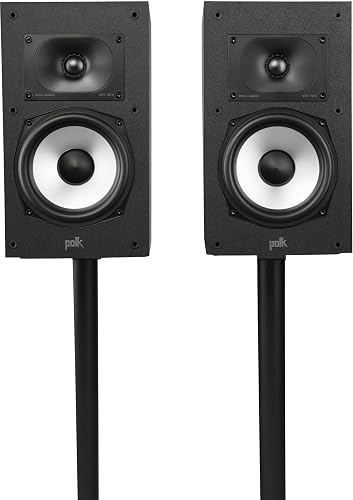
Your left and right speakers carry music and most of a movie's soundtrack. Bookshelf speakers on stands are the best value. They pair with a subwoofer to cover deep bass, so you don't need towers to start. Look for speakers rated at 6 or 8 ohms that your receiver drives easily, and buy surround speakers from the same brand later so voices sound the same as they move around the room.
Best starter
Polk Audio
Monitor XT20 Bookshelf Speakers (Pair)
$279.00 as of Nov 16, 2026
★★★★★Our rating· In Stock
Clear, balanced bookshelf speakers that are easy for any receiver to drive. They work as fronts now and as matching surrounds later, and Polk's XT line includes a center, Atmos modules and subs. About $279 a pair. 600+ reviews at 4.7 stars.
Horn-loaded tweeters give these a lively, punchy sound that makes movies feel dynamic, and they play loud with little power. Some find them bright with music. About $290 a pair. 1,300+ reviews at 4.8 stars.
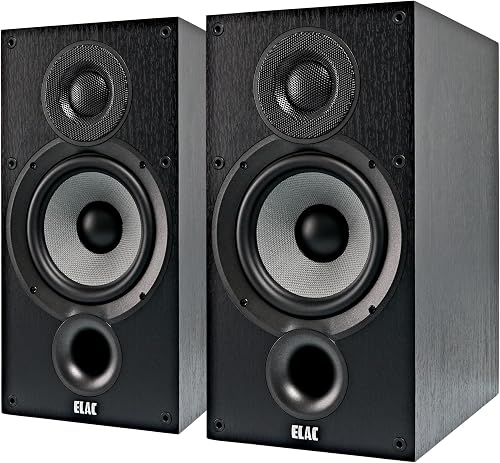
Larger 6.5-inch bookshelf speakers designed by Andrew Jones, with fuller bass and a smoother, more natural sound for music and movies. A good pick if you listen to as much music as you watch movies. About $329 a pair. 2,500+ reviews at 4.7 stars.
The center channel carries almost all dialogue, so it's the most important speaker in a movie system. Buy it from the same line as your fronts so voices don't change tone as they pan across the screen. Atmos height speakers come last: upfiring modules sit on top of your front speakers and bounce sound off the ceiling, which works best with flat ceilings about 8 to 10 feet high.
Best starter
Polk Audio
Monitor XT30 Compact Center Channel Speaker
$179.00 as of Nov 16, 2026
★★★★★Our rating· In Stock
The matching center for the XT20, so dialogue sounds consistent as it moves across the front of the room. Compact enough to sit under most TVs. About $179. 480+ reviews at 4.7 stars.
Upfiring Atmos modules that sit on top of your front speakers and bounce height effects off the ceiling, with no in-ceiling install. Add them once your 5.1 is set up and calibrated. About $155 a pair. 1,400+ reviews at 4.7 stars.
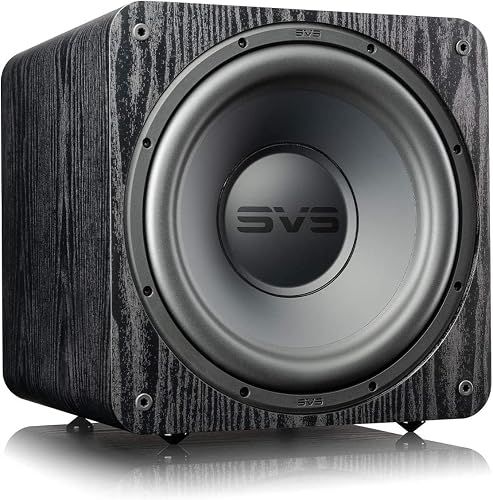
The subwoofer handles everything below about 80Hz: explosions, engines and the low end of a soundtrack. One good sub, placed where bass sounds smooth at your seat, matters more than its size or spec sheet. Ported subs play louder and deeper for the money. Sealed subs sound tighter and work better in small rooms. Try the sub crawl to find the right spot before you settle on a corner.
Best starter
Klipsch
R-120SW 12-Inch Subwoofer
$329.00 as of Nov 16, 2026
★★★★★Our rating· In Stock
A ported 12-inch sub that plays loud and deep for the price, and has been a favorite first sub for years. It pairs with any brand of speakers. About $329. 2,800+ reviews at 4.8 stars.
A compact sealed 12-inch sub with 325 watts and an app for setting crossover, phase and room EQ from your seat. Tight, accurate bass that suits music as well as movies, from a company known for subwoofers. About $599. 790+ reviews at 4.7 stars.
A projector gives you a 100 to 120 inch picture for less than a TV that size, but it needs a room you can make dark. Check the throw distance for your room (how far back the projector must sit for your screen size) and plan where to mount it. Brighter projectors cope better with some light. For a living room that can't get dark, a large TV is usually the better buy.
Best starter
Epson
Home Cinema 2350 4K PRO-UHD Smart Projector
$1,099.99 as of Nov 16, 2026
★★★★★Our rating· In Stock
A bright 3LCD projector with 4K enhancement, HDR, low input lag for gaming and Android TV built in. Epson's 3-chip design avoids the rainbow effect some people see on single-chip projectors. About $1,100. 180+ reviews at 4.1 stars.
A 1080p 3LCD projector for movie nights on a 100 inch screen. It skips 4K and the smart features, so you'll plug in a streaming stick, but it's bright and saves about $300. About $800. 4.6 stars from a smaller number of reviews.
Plain copper speaker wire works as well as expensive cable. 16 gauge is fine for runs up to about 50 feet. Run it along baseboards or under rugs, and label each end before connecting. If your room echoes after you've added a rug and curtains, acoustic panels at the side-wall reflection points tame harsh sound and make dialogue clearer. Treat the room after setup, not before, so you know what needs fixing.
Best starter
Amazon Basics
16-Gauge Speaker Wire, 100 ft
$10.40 as of Nov 16, 2026
★★★★★Our rating· In Stock
100 feet of polarity-marked 16 gauge speaker wire, enough for a full 5.1 system in most rooms. Nothing more expensive will sound different at normal lengths. About $10. 79,000+ reviews at 4.7 stars.
Dense polyester panels that cut echo and harsh reflections, light enough to hang with adhesive or small nails. Six large panels cover both side-wall reflection points and more. About $80. 1,600+ reviews at 4.2 stars.
A great home theater is a good room, a decent screen and speakers set up properly, in that order. Here's a month-long plan to measure, pick between a soundbar and a receiver, place your speakers, and run the calibration that makes it all sound right.
People spend most of their money on the screen and most of their frustration on sound. The good news is that speaker placement and a 20-minute calibration fix most of the problems, and they’re free.
Week 1: Measure the room and your seat
Measure from your main seat to where the screen will go. A common rule: for 4K, the screen’s diagonal can be about 1.2 to 1.5 times closer than your viewing distance suggests, so at 9 feet a 75 to 85 inch screen feels immersive without being too much. At 12 feet, a 100 inch projector screen starts to make sense.
Note the room’s problems too: big windows (bad for projectors in daytime), bare floors and walls (echo), and whether your couch is pushed against the back wall (this usually makes bass boomy).
If the room is shared, the TV is on a wall and you don’t want wires, a good soundbar with a subwoofer is the right call. If you want separate speakers you can upgrade one at a time, an AV receiver with bookshelf speakers and a sub will sound bigger for the same money.
Start with 3.1 or 5.1. A solid center channel matters most because it carries dialogue. Atmos height speakers are fun, but add them last.
Front left and right: form a rough equilateral triangle with your seat, tweeters near ear height, toed in slightly.
Center: directly above or below the screen, angled toward ear height.
Surrounds: to the sides of the seat or slightly behind, a foot or two above ear level.
Subwoofer: try the “sub crawl.” Put the sub in your seat, play a bass-heavy track, and crawl along the front of the room. Where the bass sounds smooth and even is where the sub goes.
Pull speakers a foot or more off the walls if you can. Use speaker wire sized for the run (16 gauge is fine for most rooms) and label each end.
Run the receiver’s microphone calibration (Audyssey on Denon, YPAO on Yamaha, Sony’s DCAC) with the mic at ear height in your main seat, plus the extra positions it asks for. Then check that the crossover is set to about 80Hz for all speakers. On the TV, switch to Filmmaker, Movie or Cinema mode and turn off motion smoothing.
If the room still sounds echoey, a thick rug and curtains do more than anything else. Acoustic panels at the first reflection points (where a mirror on the side wall would show you a speaker) are the next step.
Do the sub crawl: put the subwoofer in your seat, play bass-heavy music and find where it sounds even along the front wall. · Action
Run your receiver's microphone calibration with the mic at ear height in your seat. · Action
FAQ
Common questions
Soundbar or AV receiver?
Choose a soundbar if you want simple setup, few wires and a shared living room. Choose a receiver and speakers if you want the best sound for the money and the freedom to upgrade one piece at a time. At around $1,000 and up, a receiver system usually sounds bigger.
Is Dolby Atmos worth it?
Yes, once you have a solid 5.1. Atmos adds height speakers (in the ceiling, on the wall or upfiring) for rain, helicopters and big scenes. It matters less than a good center channel and sub, so add it second.
How big a screen should I get?
At about 9 feet from your seat, 75 to 85 inches feels immersive for 4K. At 11 to 12 feet, a 100 inch projector screen works well. Bigger is usually better than people expect, as long as the room can get dark for a projector.
Where should the subwoofer go?
Wherever the bass sounds smoothest at your seat, not wherever it looks best. Do the sub crawl: put the sub in your seat, play bass and move along the front wall. Corners give more output but can sound boomy.
Do I need acoustic panels?
Not at first. A thick rug, curtains and a sofa absorb a lot. If the room still sounds echoey, put panels at the first reflection points on the side walls, where a mirror would show you a front speaker.
JustBeginning earns commission from affiliate programs. As an Amazon
Associate, we earn from qualifying purchases. This costs you nothing
extra and doesn't change our recommendations.
Prices and availability are accurate as of the date and time
shown and can change; the price on Amazon when you buy is what
applies.
How this works.
Our top pickAVR-S770H 7.2 Channel Home Theater Receiver


 Best starter